
Dish guide
Cao Lau: The Noodle Dish You Can Only Eat in Hoi An (and Where to Try It)
Cao lau is the dish people remember from Hoi An. Here's why the noodles taste different from anywhere else in Vietnam, where to eat it, and how to tell the real version from the tourist-trap one.
May 26, 2026 · 7 min read
Last updated: 9 September 2026 — written by Fin, a local guide in Hoi An.
Quick answer: what is cao lau and why does it only exist here?
Cao lau is a bowl of thick, chewy rice noodles with slow-braised pork, fresh herbs, bean sprouts, and crispy puffed-rice crackers — and it can only be made authentically in Hoi An because the dough requires water from the historic Bá Lễ well (a 16th-century well with a specific mineral content) and ash from trees on the Cham Islands (Cù Lao Chàm), used to soak the rice during preparation. The dish reflects Hoi An's trading-port history: dense chewy noodles from the Japanese soba tradition (Japanese merchants built the Covered Bridge), braised pork from Chinese roast-pork technique (Chinese assembly halls still stand a block from the river), and the herbs and rice are Vietnamese. One bowl costs 35,000–55,000 VND ($1.50–$2.50) at a family kitchen — the same bowl at a tourist restaurant on Trần Phú runs 90,000–120,000 VND and rarely tastes as good.
Key takeaways
- The noodles are the centrepiece: greyish-brown, dense, chewy, with a slight smoky aftertaste — the opposite of the soft slippery noodles in phở or bún bò.
- Two ingredients make it unique: Bá Lễ well water (for the dough) and Cham Island ash (for soaking the rice). Neither exists outside Hoi An — any cao lau served elsewhere is an approximation.
- The broth is minimal: just a few spoonfuls of pork stock at the bottom of the bowl, enough to coat the noodles — not enough to drink. A swimming broth means the kitchen is hiding bad noodles.
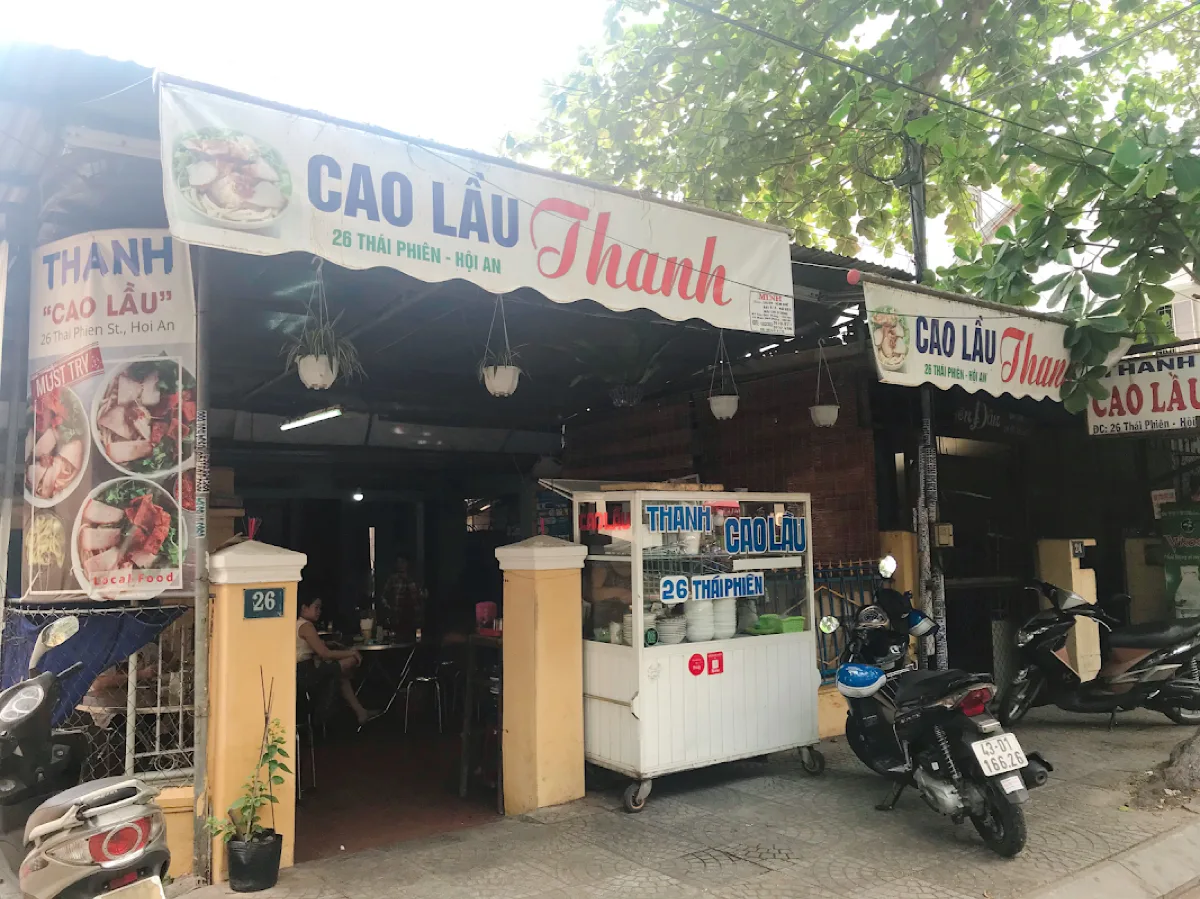
- Where to eat: family kitchens on Trần Cao Vân and Lê Lợi streets, not the tourist-trap stalls on Trần Phú. Reliable public options: Quán Cao Lầu Thanh on Thái Phiên street or Cao Lầu Không Gian Xanh on Trần Phú.
- Best timing: cao lau fits the afternoon snack window (ăn xế, 1pm–4pm) when Hoi An's street food vendors gather on Lê Lợi street — but family kitchens serve it from late morning through evening.
What cao lau actually is
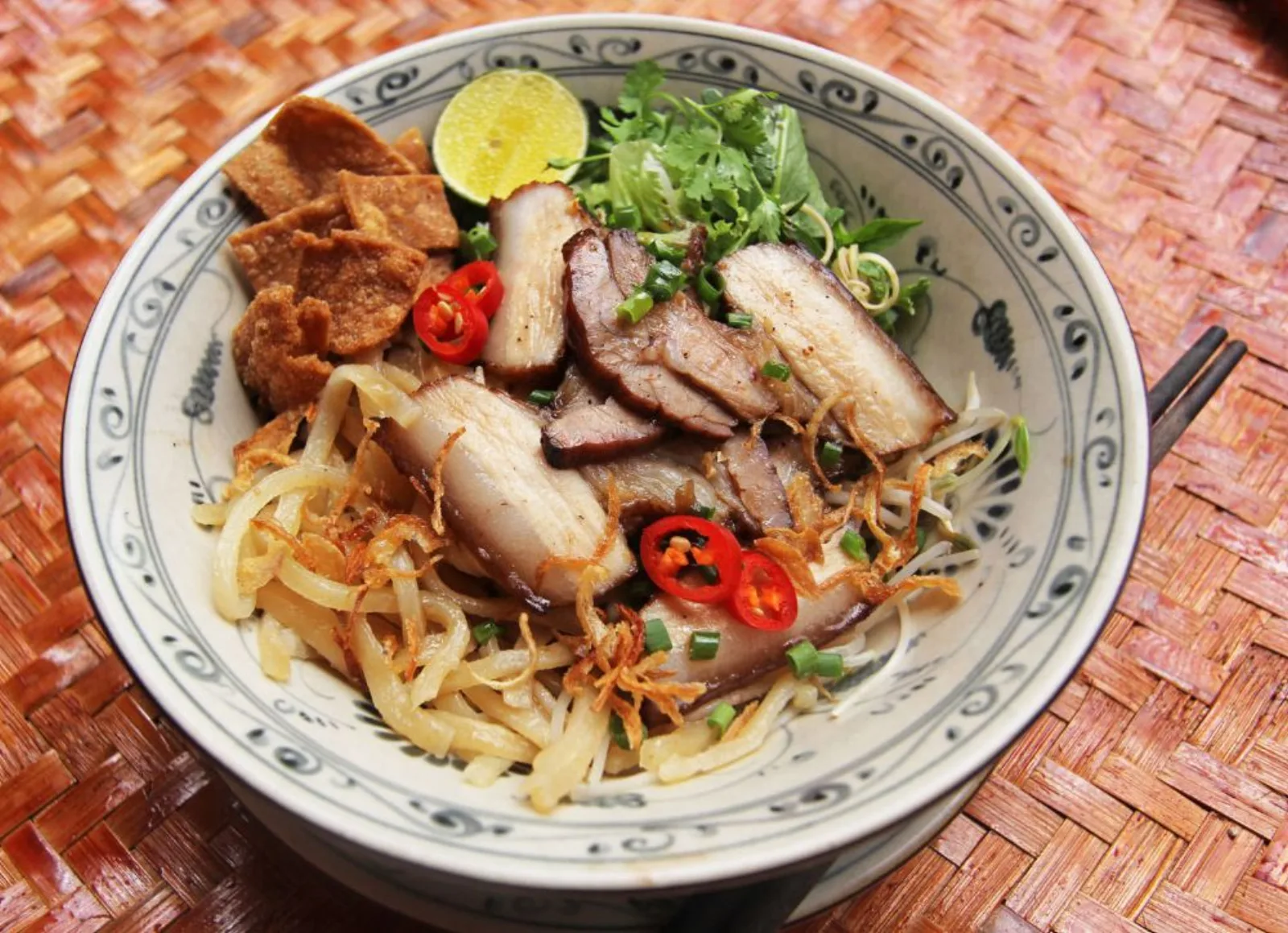
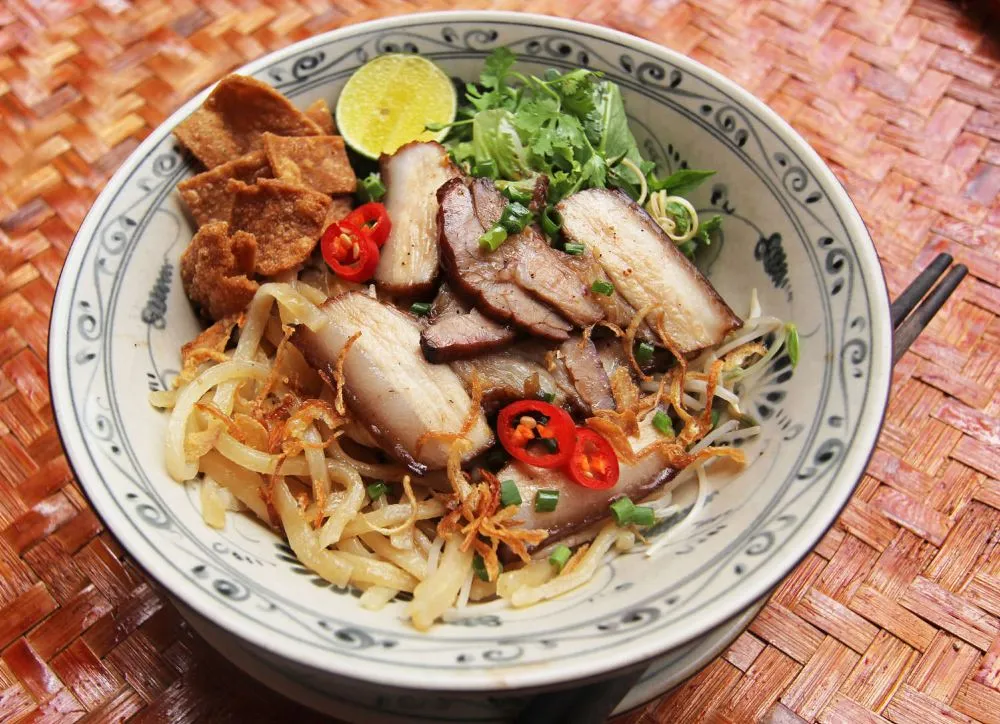
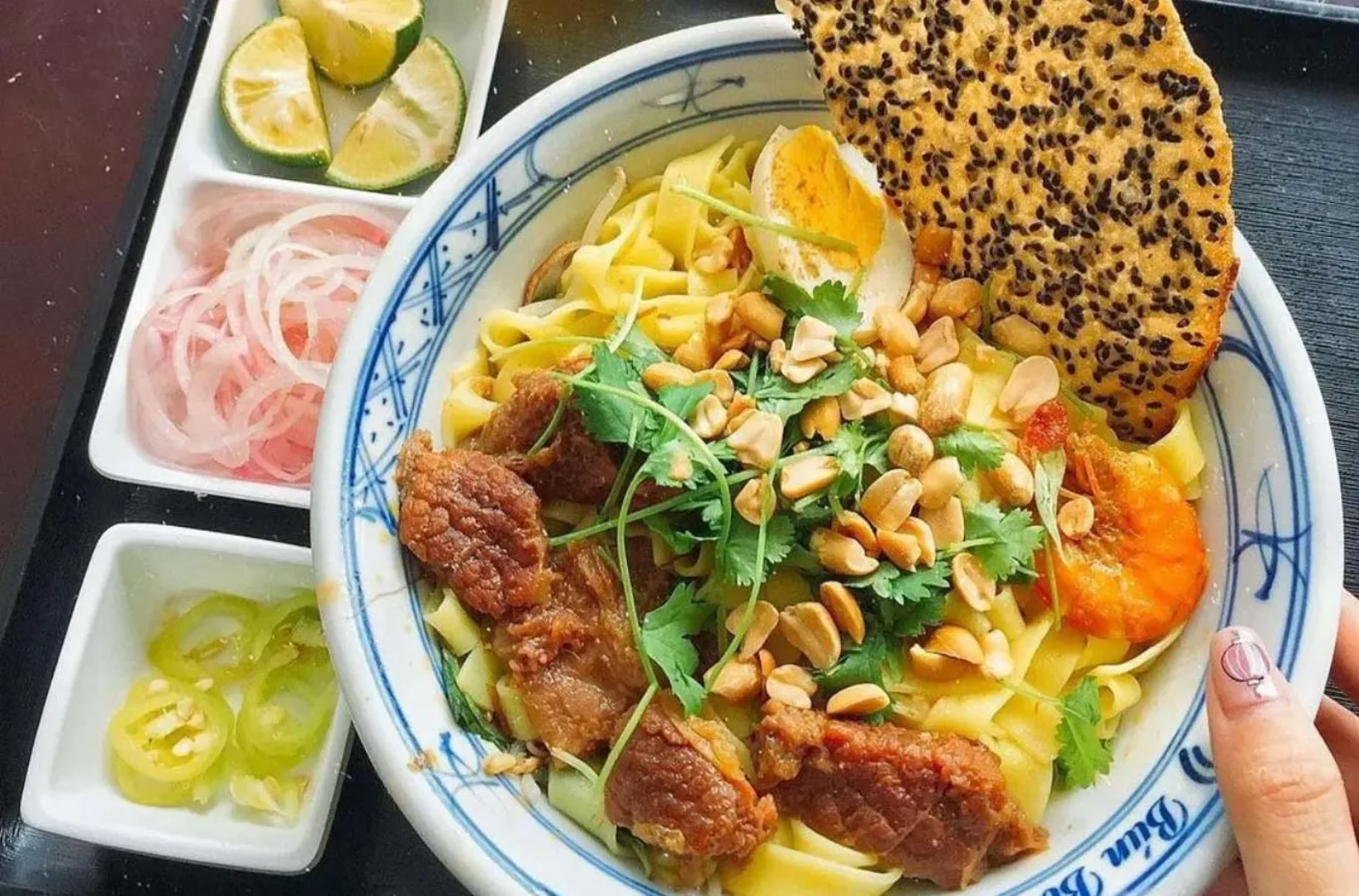
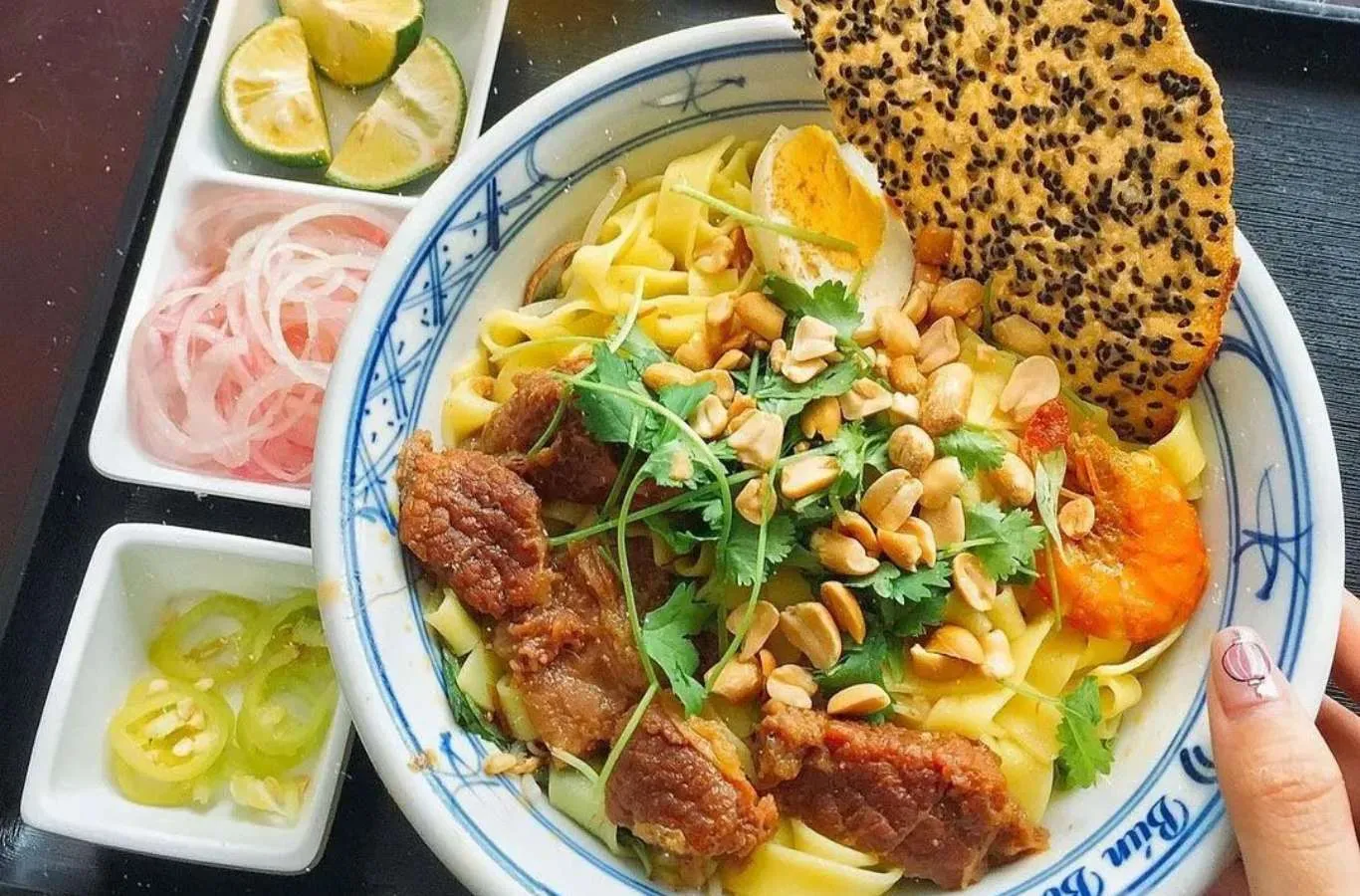
Cao lau is the signature noodle dish of Hoi An. The noodles are thicker and denser than any other Vietnamese noodle — they resist your chopsticks slightly when you pick them up. On top: thin slices of deeply caramelised pork (slightly sweet, like Chinese roast pork), fresh herbs (mint, basil, cilantro), bean sprouts, and golden puffed-rice crackers the size of large coins, made fresh from leftover dough.
Unlike phở or bún bò, cao lau is not a soup. There are just a few spoonfuls of pork stock at the bottom of the bowl — enough to coat the noodles and carry the flavour, not enough to drink. Every element is meant to be eaten together in one bite: noodle, pork, herb, and cracker.
Why cao lau only exists in Hoi An
Two ingredients available nowhere else make this dish what it is.
First, water from the Bá Lễ well. This 16th-century well in the centre of the Old Town produces water with a specific mineral content that changes the texture of the rice-noodle dough. Families across town buy buckets of Bá Lễ water every morning. Chemically, the noodles taste different if you use anything else — there is no substitute, and no version of cao lau served outside Hoi An can claim to be authentic for this reason.
Second, ash from Cham Island trees. The rice is soaked in water mixed with ash from the wood of trees on Cù Lao Chàm, the archipelago 18km off the Hoi An coast. This is what gives the noodles their greyish-brown colour and the faint smoky aftertaste that defines the dish.
The dish itself is a small piece of Hoi An's trading-port history you can eat. The dense chewy noodles descend from the Japanese soba tradition — Japanese merchants lived in Hoi An in the 16th and 17th centuries and built the Japanese Covered Bridge (20.4m long, built ~1593). The braised pork echoes Chinese roast-pork technique — Chinese assembly halls like the Trung Hoa Assembly Hall (Ming Dynasty, 1465–1487) still stand a block from the river. The herbs and rice are Vietnamese. Cao lau is what happens when three cultures share a trading port for 200 years and someone gets hungry.
How to recognise good cao lau
Four signs tell you whether the bowl in front of you is the real thing:
- The noodles. They should be greyish-brown, not white. They should resist your chopsticks slightly. If they slip apart like rice noodles in phở, they are not made with Bá Lễ water and Cham Island ash — you are eating an imitation.
- The broth. Just a few spoonfuls at the bottom — enough to coat, not enough to drink. A swimming broth means the kitchen is hiding bad noodles with too much liquid.
- The pork. Sliced thin, deeply caramelised on the edges, slightly sweet. Not pink, not pale. Cao lau pork should look like Chinese roast pork because that is what the dish descends from.
- The crackers. Crispy, golden, the size of large coins, scattered on top. They are made fresh from leftover dough — soggy crackers mean a kitchen pre-made them hours ago.
Where to eat cao lau in Hoi An
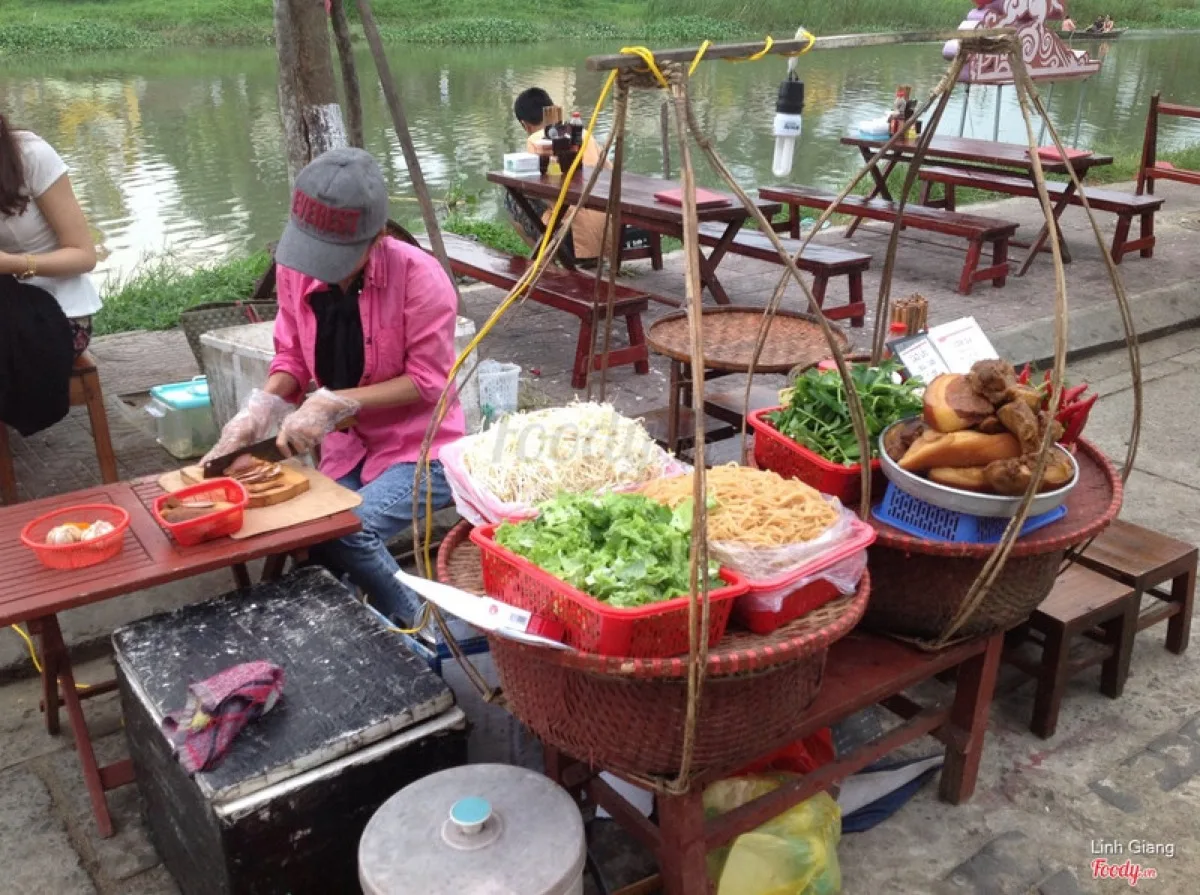
The best family kitchens are not on any restaurant list. Most are inside wooden houses along Trần Cao Vân and Lê Lợi streets, with no English sign out front. On the Hoi An food tour, cao lau is the first dish on the route — I take you to the family kitchen, explain the well water in the kitchen itself (you can watch them carry the buckets in), and let you taste it before we move on to white rose dumplings, bánh mì, and a riverside dessert.
If you are walking on your own and want a reliable bowl:
| Where | Price a bowl | Bá Lễ water | Notes |
|---|---|---|---|
| Quán Cao Lầu Thanh, Thái Phiên st. | Under 50,000 VND | Yes | Family-run, no English sign, mornings are best. The bowl to have. |
| Cao Lầu Không Gian Xanh, Trần Phú st. | 50,000–60,000 VND | Yes | Also family-run and authentic, easier to find from the street. |
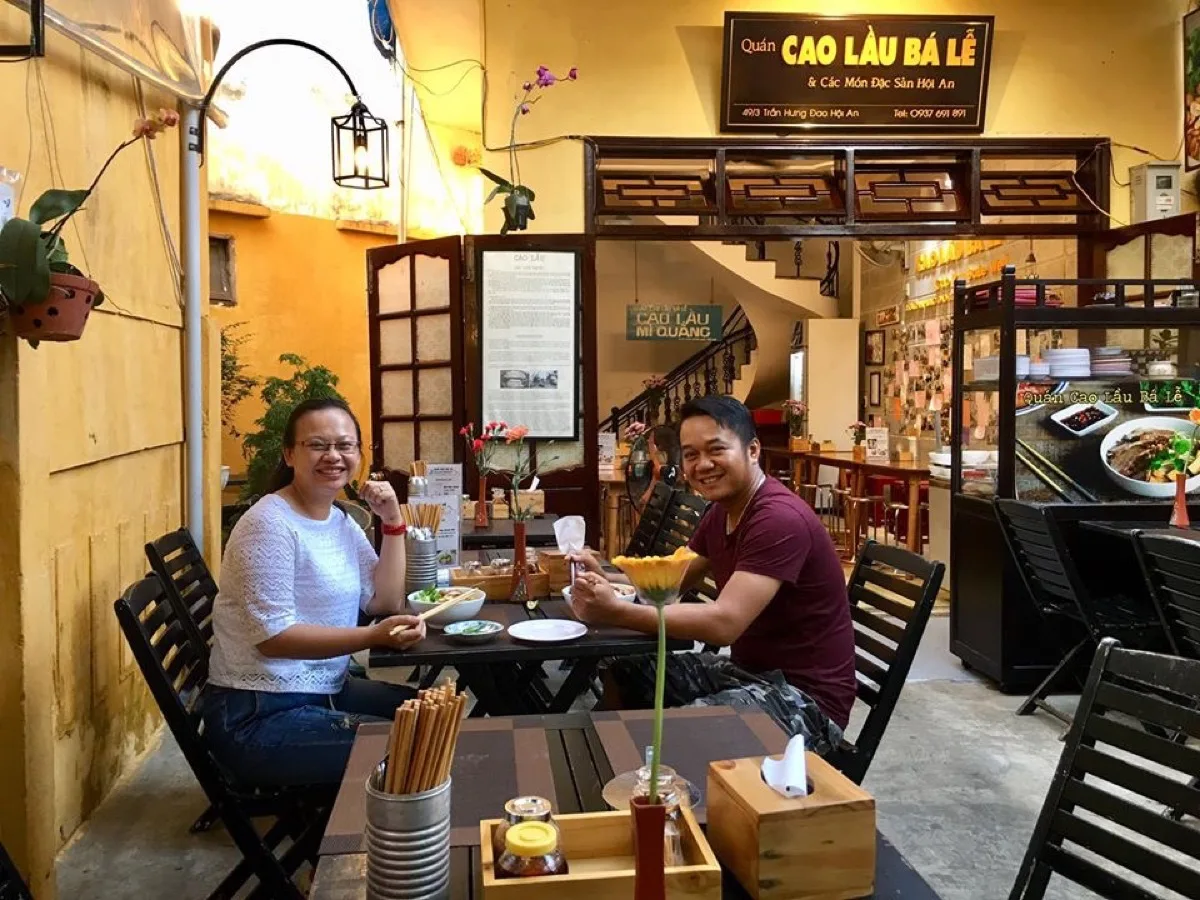
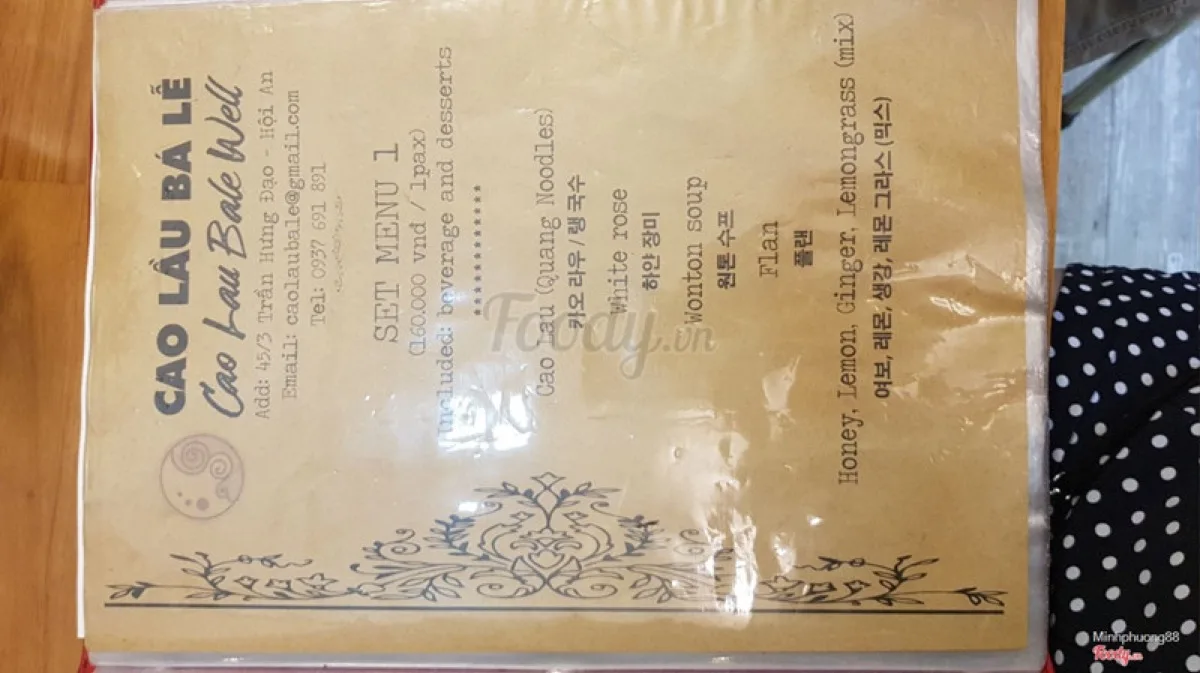
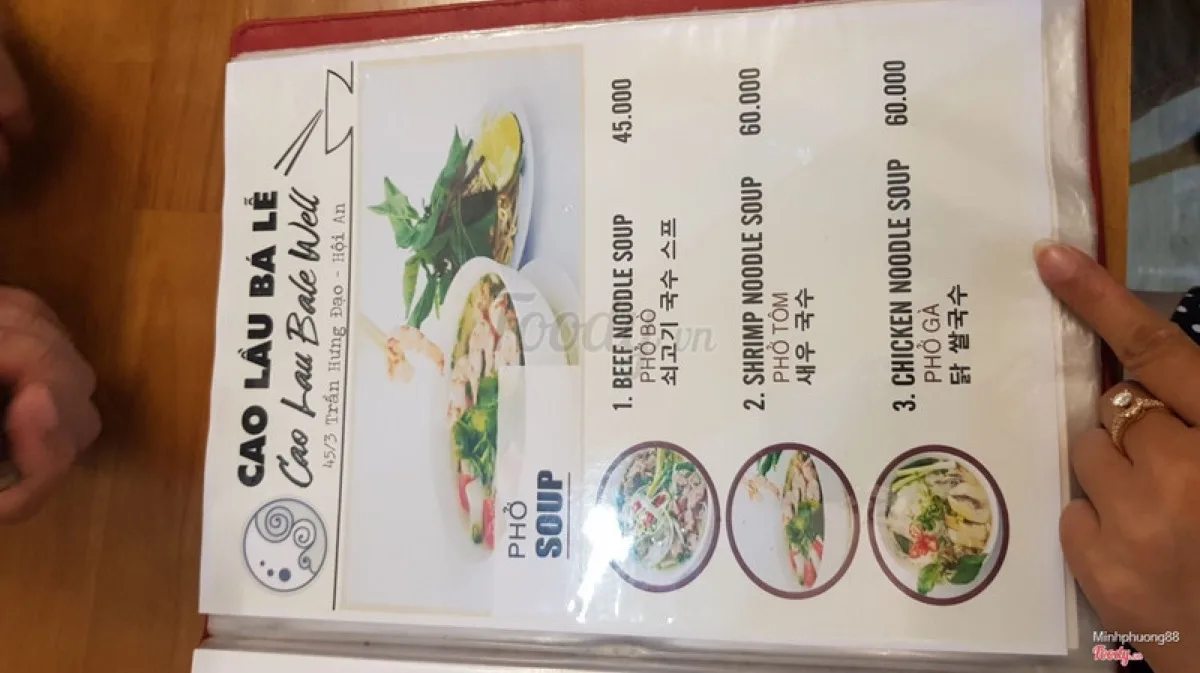
| Cao Lầu Bá Lễ, near the well | 40,000–55,000 VND | Yes | Named for the well itself. Small, plain, busy at lunch. |
| Old Town tourist restaurants | 80,000–120,000 VND | Usually not | Bulk noodles, thin braise. You are paying for the terrace. |
Skip anything with: a large English menu, a tourist photo wall, a "recommended on Tripadvisor" sticker on the door, or a bowl priced over 80,000 VND. Those kitchens use bulk-bought noodles and thin broth — you are paying for the location, not the dish.
Vegetarian cao lau: rare but exists. Karma Waters on Phan Chu Trinh serves a respectable version with mushroom braise instead of pork. Confirm in advance if you are gluten-sensitive — the rice noodles and crackers are gluten-free, but check the soy-based braising sauce.
The Hoi An private walking tour also includes a cao lau tasting stop — it is one of the three food pauses built into the 3- to 4-hour Old Town route. Either way, the dish is hard to skip on a first trip to Hoi An.
Why nobody outside Hoi An gets it right
Restaurants in Đà Nẵng, Saigon and abroad serve something called cao lầu, and it is usually a thick wheat or rice noodle with pork and croutons. It can be good. It is not the dish, and the reason is the noodle itself: the Bá Lễ well water and the Cù Lao Chàm ash change the dough in ways nothing else reproduces, and the noodles are made by a small number of families in town who supply the kitchens here.
This is the one Hoi An dish worth being strict about. Mì Quảng travels well across the province; bánh mì is good everywhere in Vietnam. Cao lầu is only really cao lầu within a few kilometres of the well, so if you are in Hoi An for one meal, this is the meal.
Cao lầu for vegetarians and coeliacs
The standard bowl is pork, and the braising liquid is soy-based, so neither vegetarians nor anyone avoiding gluten should assume a bowl is safe. A few kitchens do a mushroom version on request — Karma Waters on Phan Chu Trinh is the reliable one. The noodles and crackers themselves are rice; the risk is the sauce. If it matters, ask for the braise on the side and check before you eat.
Related planning notes: what to eat in Hoi An, Hoi An street food timing guide, Hoi An Old Town guide, and things to do in Hoi An.
FAQ
A few practical follow-up questions
Only the questions that sit naturally inside this article are shown here, so the page stays focused.
Article FAQ
Technically yes — you'll see cao lau on menus in Da Nang, Hanoi and even Vietnamese restaurants overseas. But the noodles cannot be made authentically anywhere else because the recipe requires water from the Ba Le well in Hoi An and ash from Cham island trees. Versions made elsewhere use approximations and taste noticeably different from a bowl eaten 200 metres from where the dough was rolled.
The noodles themselves are rice-based and gluten-free, as are the puffed rice crackers on top. However many family kitchens use a soy-based braising sauce that may contain wheat. If you are coeliac, confirm at the kitchen — Karma Waters on Phan Chau Trinh serves a gluten-free version.
35,000 to 55,000 VND at a family kitchen ($1.50 to $2.50). Tourist restaurants in the Old Town will charge 90,000 to 120,000 VND for the same dish, usually with worse noodles. If you see a bowl priced over 80,000 VND on the menu, you are paying tourist markup.
Both are Central Vietnamese noodle dishes but they're different. Cao lau is Hoi An-only, dense chewy noodles, minimal broth, braised pork. Mi quang is the regional dish of the broader Quang Nam province, with turmeric-yellow rice noodles, more broth, often chicken or shrimp instead of pork, and toasted peanuts on top. You can try both on the food tour.
The well sits in a small courtyard at the end of the alley at 45/51 Tran Hung Dao, a few minutes on foot from the Old Town core, and is still in daily use — the cao lau kitchens carry the water out by hand. There is nothing to pay and nothing staged about it; it is a working well in a residential lane.
Same topic
More in this topic
If this topic is close to your trip, these notes stay within the same planning lane without sending you off into a wider archive.
Related tours
If you want to turn the note into a real plan
These tours sit closest to the topic you just read, so the next step stays grounded in the actual route options.
Food Tour
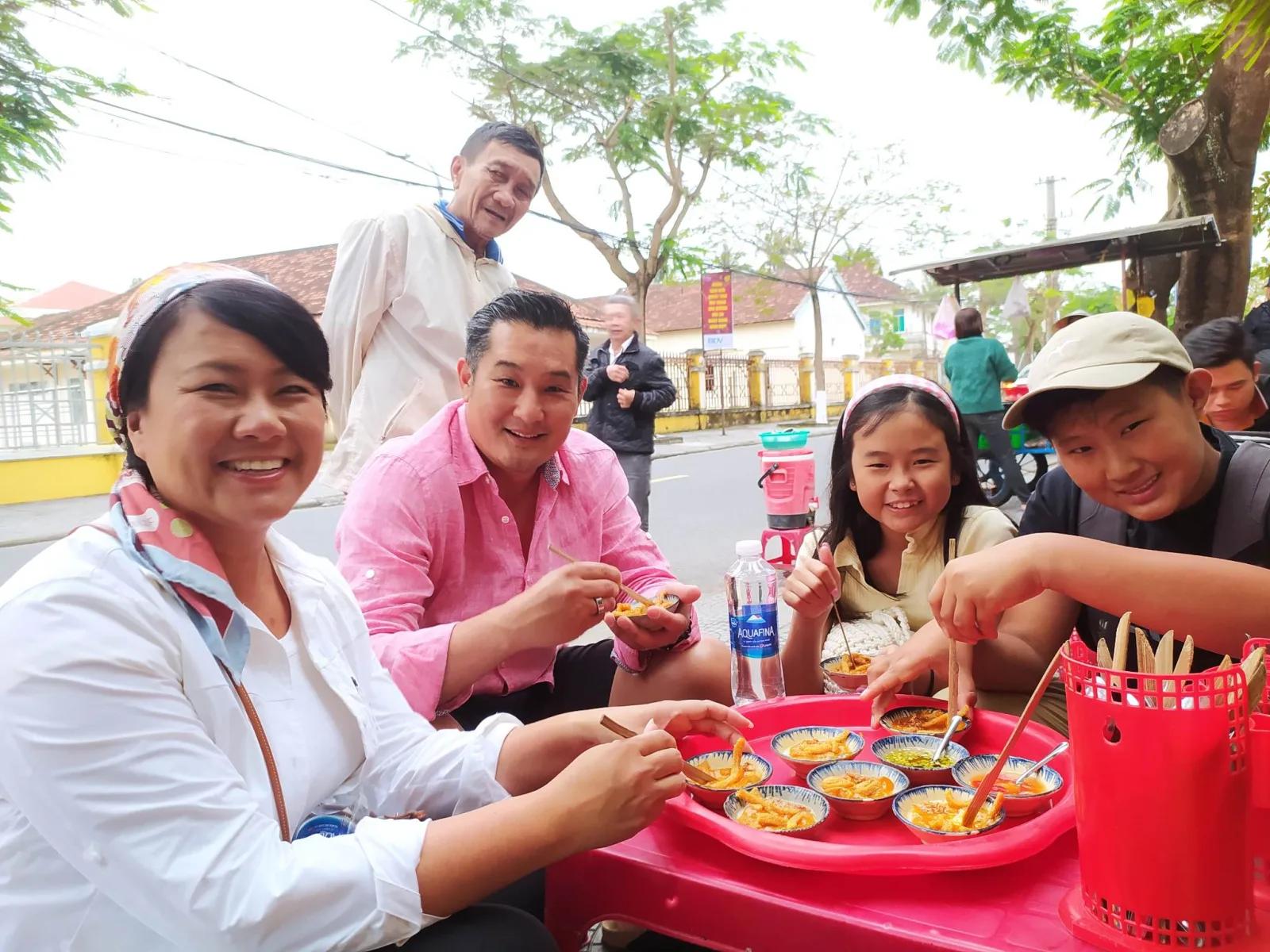
Hoi An Street Food Tour with Local Expert
A private evening route for flavour, conversation, and a softer look at Hoi An after dark.
3 hours
Explore the Hoi An Street Food Tour with Local Expert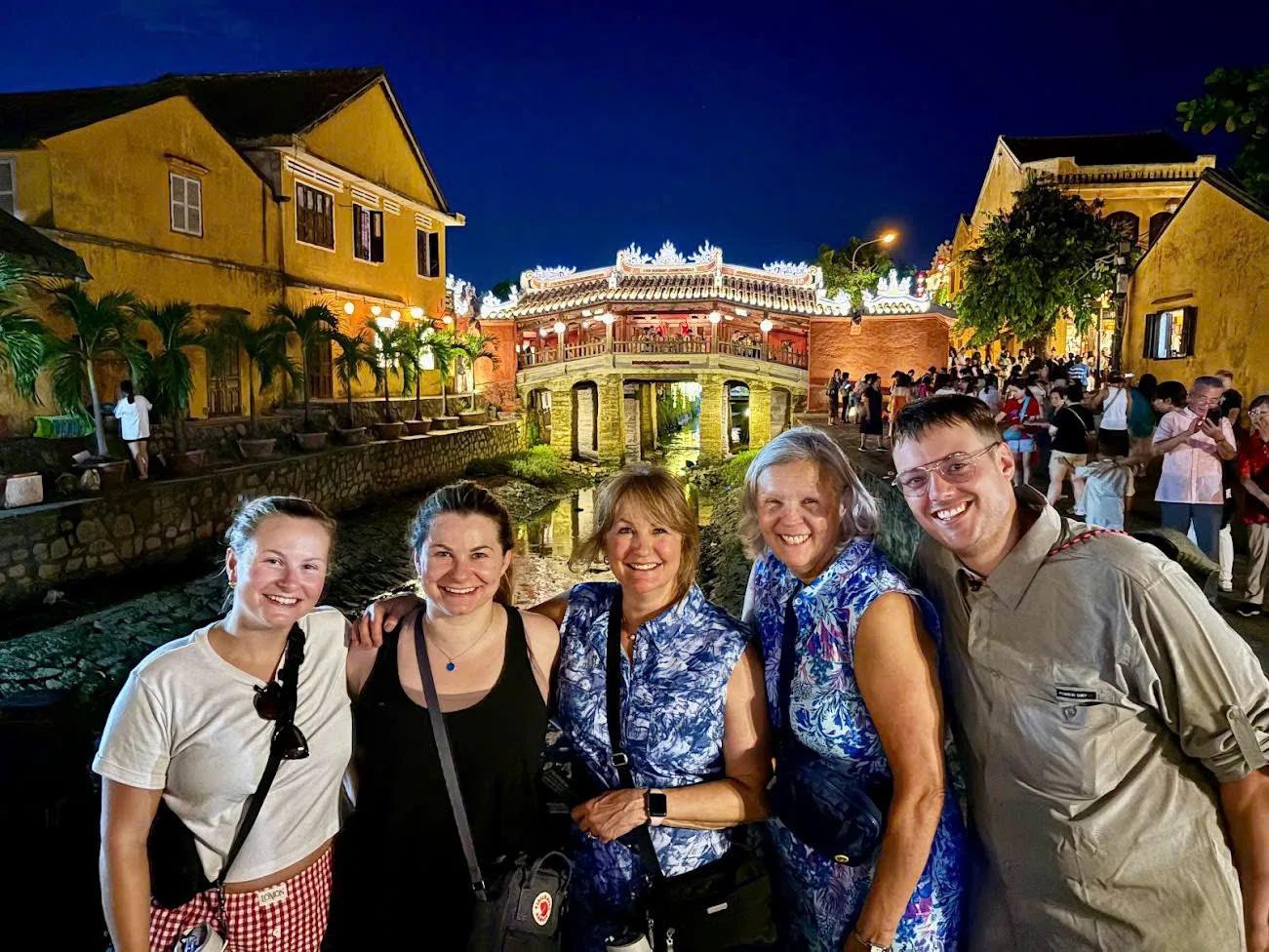
Walking & Street Food Tour
Hoi An Ancient Town Walking & Street Food Tour
Join our half-day tour to explore the best of Hội An. Walk through lantern-lit streets, visit iconic landmarks, and enjoy delicious local food.
3 to 4 hours
Explore the Hoi An Ancient Town Walking & Street Food TourNext step
If you want to turn this into a real route, start with the tours
Use the article for context, then move into the private tour pages when you want to compare the actual route styles more directly.