Food planning
What to Eat in Hoi An: A Local Food Guide for First-Time Visitors
A practical Hoi An food guide for first-time visitors, covering must-eat dishes, street food tips, a simple self-guided route, family advice, and when a private food tour helps.
May 7, 2026 · 10 min read
Last updated: 23 July 2026 — written by Fin, a local guide in Hoi An.
Quick answer: what should you eat in Hoi An first?
If you are wondering what to eat in Hoi An, start with the local classics: cao lau, white rose dumplings, Hoi An-style wontons, mi Quang, com ga, banh mi, and simple market or street-food snacks such as grilled pork skewers, rice paper rolls, sweet soups, and herbal drinks. For a first visit, the best plan is not to chase every famous place. Try 4–6 dishes over two evenings, mix one sit-down meal with casual stalls, and leave room for the small foods you notice while walking.
Key takeaways
- Must eat in Hoi An: cao lau, white rose dumplings, wontons, mi Quang, com ga, banh mi, and a few street snacks.
- Best first food evening: choose 2–3 dishes, then walk the river or Old Town lanes instead of overeating too quickly.
- Best area to start: Hoi An Old Town and the market lanes are easiest for first-timers, but quieter neighbourhoods can feel more local.
- Best with kids: keep the route short, choose mild dishes first, avoid peak crowds, and plan a backup stop if children get tired.
- Best guided option: a private Hoi An food tour helps if you want local context, flexible pacing, and help choosing dishes without guessing.
Hoi An food at a glance
| Food | What it is | Best for | First-timer tip |
|---|---|---|---|
| Cao lau | Thick noodles with pork, herbs, greens, and a small amount of broth | Hoi An signature dish | Eat it early in your trip so you can compare versions later |
| White rose dumplings | Delicate steamed dumplings often linked with Hoi An | Light tasting stop | Good as a shared dish, not always a full meal |
| Hoi An wontons | Fried or sauced wontons with savoury toppings | Crunchy snack or starter | Easy for cautious eaters and many kids |
| Mi Quang | Turmeric-tinted noodles with herbs, protein, peanuts, and a little broth | Central Vietnam flavour | Mix the herbs and noodles before judging it |
| Com ga | Hoi An chicken rice with herbs and shredded chicken | Simple lunch or dinner | Good when you want something filling but familiar |
| Banh mi | Vietnamese baguette sandwich | Quick bite | Ask for less chilli if you are sensitive to heat |
| Street snacks | Skewers, rice paper, sweet soups, drinks, small bites | Evening wandering | Try fewer things slowly rather than rushing a checklist |
Why Hoi An is such a good food town
Hoi An is compact, walkable, and shaped by layers of trade, river life, farming villages, and Central Vietnamese cooking. UNESCO describes Hoi An Ancient Town as a well-preserved South-East Asian trading port dating from the 15th to 19th century, with indigenous and foreign influences visible in its townscape. Vietnam Tourism also highlights Hoi An’s Old Town, riverside setting, rice fields, coast, and food culture as part of the town’s appeal.
For travellers, this means you do not need a complicated plan to eat well. A short walk can move you from a noodle shop to a market lane, a family-run stall, a coffee stop, and a lantern-lit riverside snack. The important thing is to slow down: Hoi An food is about texture, herbs, sauces, local rhythm, and context, not only finding one “best” bowl.
The must-eat dishes in Hoi An
Cao lau: the signature Hoi An noodle dish
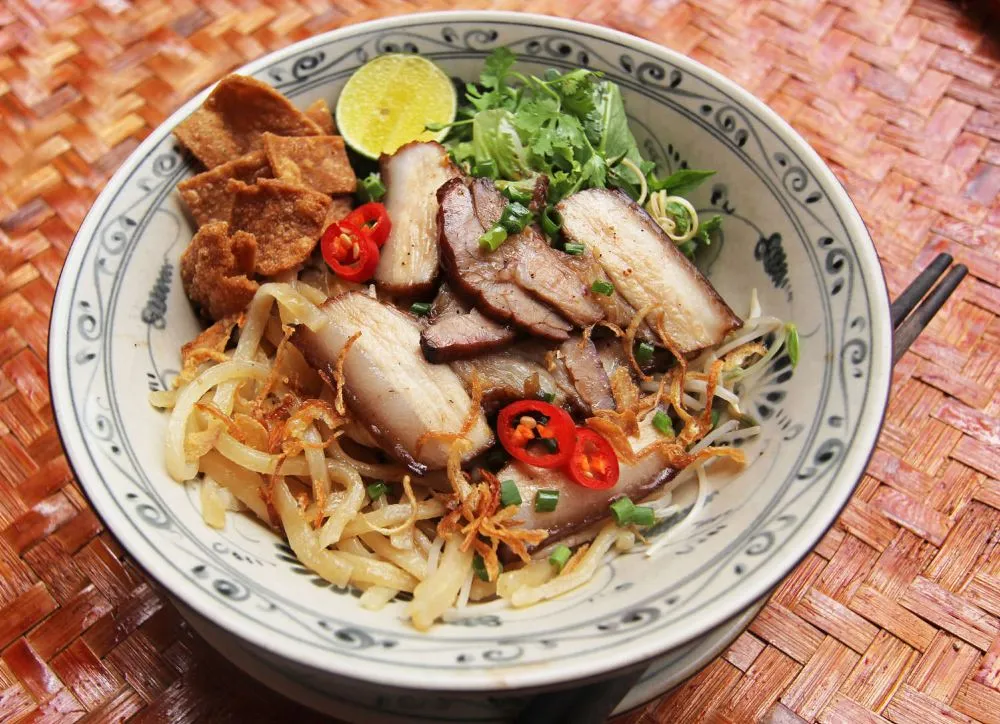
Cao lau is the dish most people should try first in Hoi An. It usually comes with thick, chewy noodles, slices of pork, herbs, greens, crispy pieces, and a small amount of savoury broth or sauce rather than a full soup.
For first-timers, cao lau is a good lunch or early dinner. Mix the herbs and noodles before eating. If you prefer mild food, taste the bowl before adding chilli or extra sauce.
White rose dumplings: delicate and very Hoi An
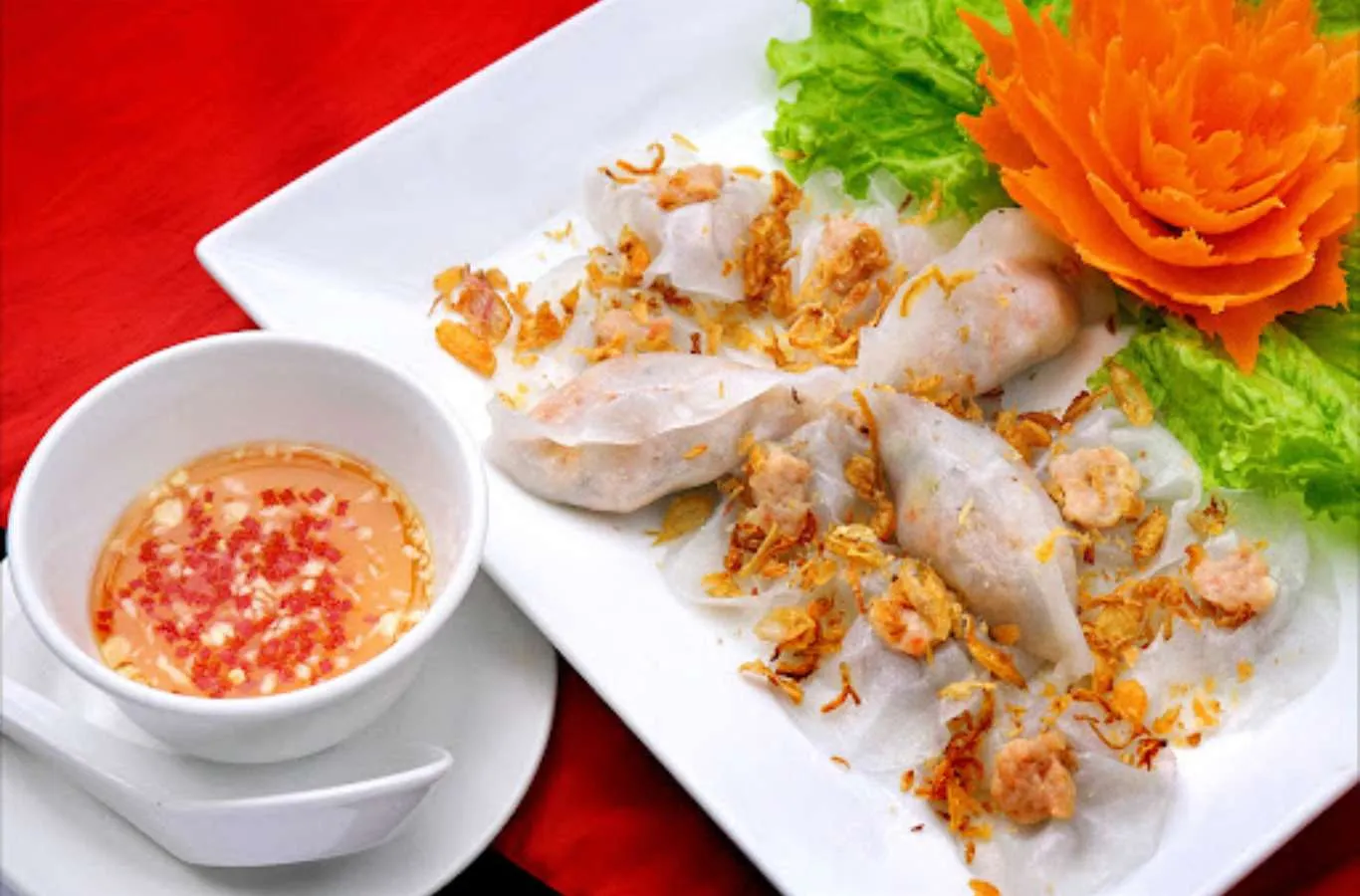
White rose dumplings are small, pale steamed dumplings often associated with Hoi An. They are usually served as a light dish with savoury filling, fried shallots, and dipping sauce.
White rose is better as part of a tasting route than as your only dinner. If you are building a Hoi An self guided food tour, pair it with cao lau, wontons, or a later banh mi so the evening has variety.
Hoi An-style wontons: crispy, saucy, and easy to like
Hoi An wontons often appear as a crisp, fried base with savoury toppings or sauce. They are approachable, fun to share, and a good bridge dish if someone in your group is nervous about unfamiliar flavours.
Families may also find them useful because the texture is familiar: crispy, warm, and snack-like. As with many local dishes, versions vary, so avoid thinking of one style as the only “correct” one.
Mi Quang: Central Vietnam in one bowl
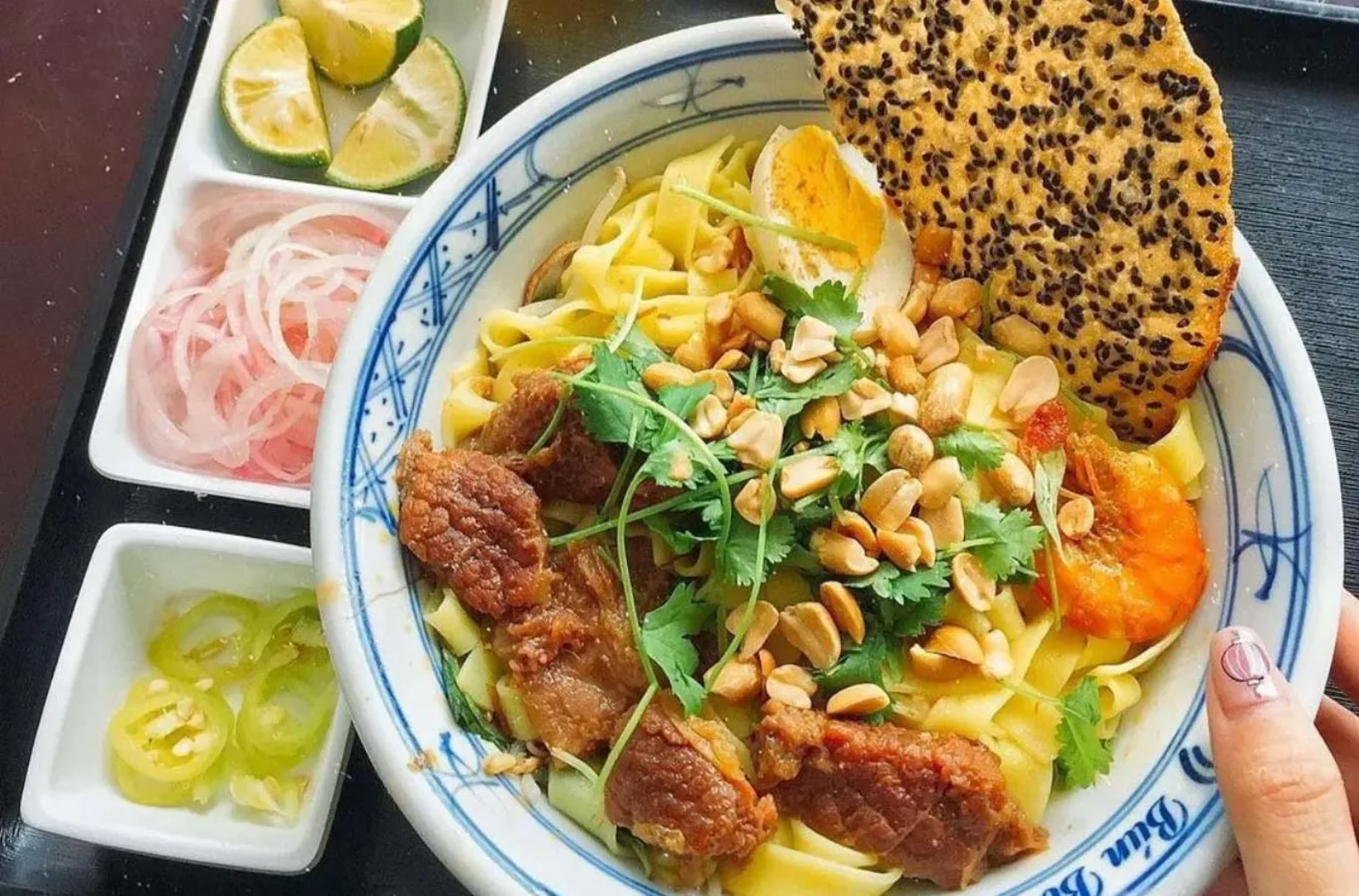
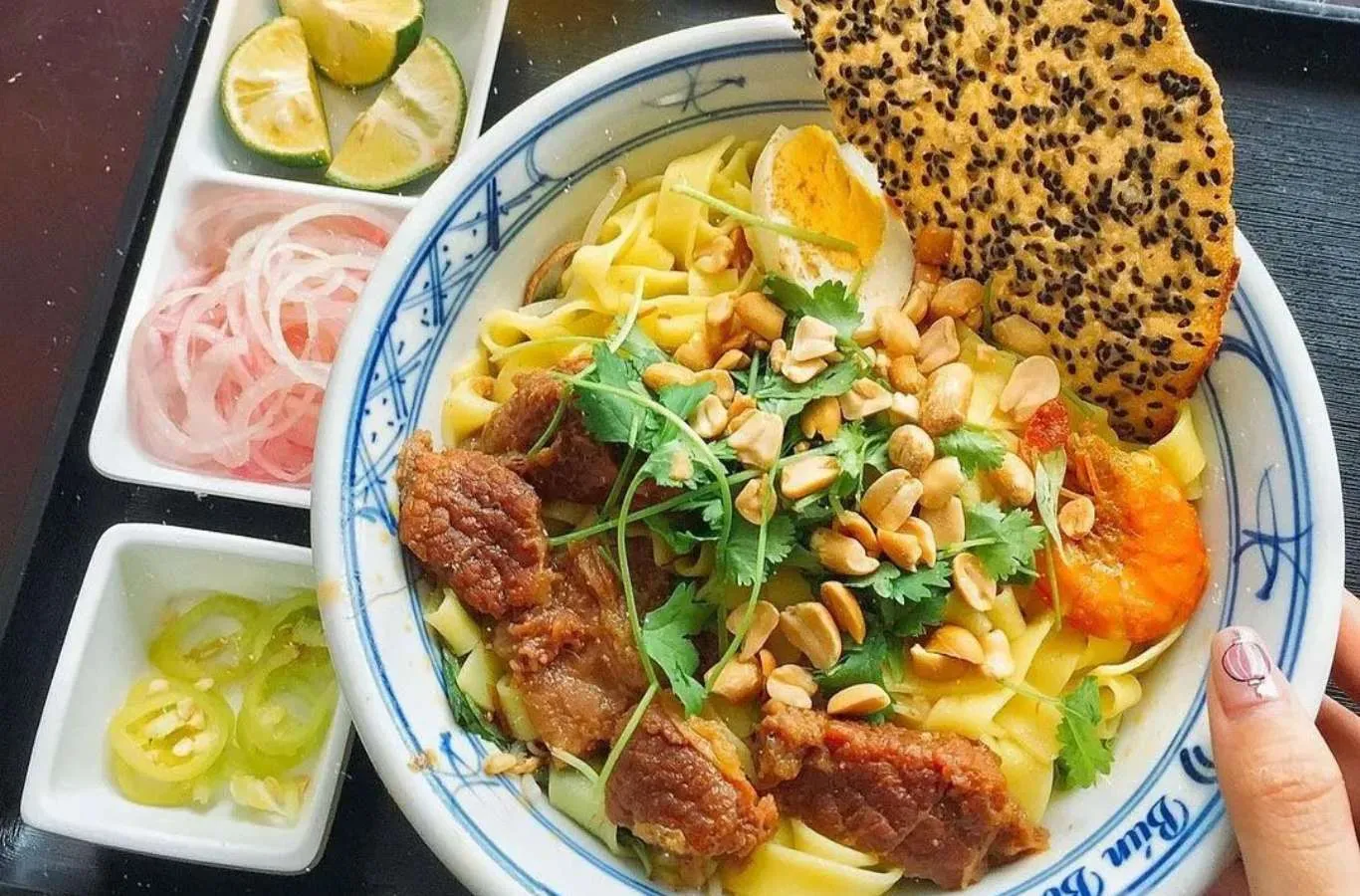
Mi Quang belongs strongly to the wider Quang Nam and Central Vietnam food story. It usually includes noodles, herbs, protein, peanuts, rice cracker, and a small amount of broth or sauce.
It is not meant to be a deep soup like pho. Mix it before eating so the noodles, herbs, crunch, richness, and broth come together. It also helps you understand Hoi An as part of Central Vietnam, not just as a lantern town.
Com ga: Hoi An chicken rice
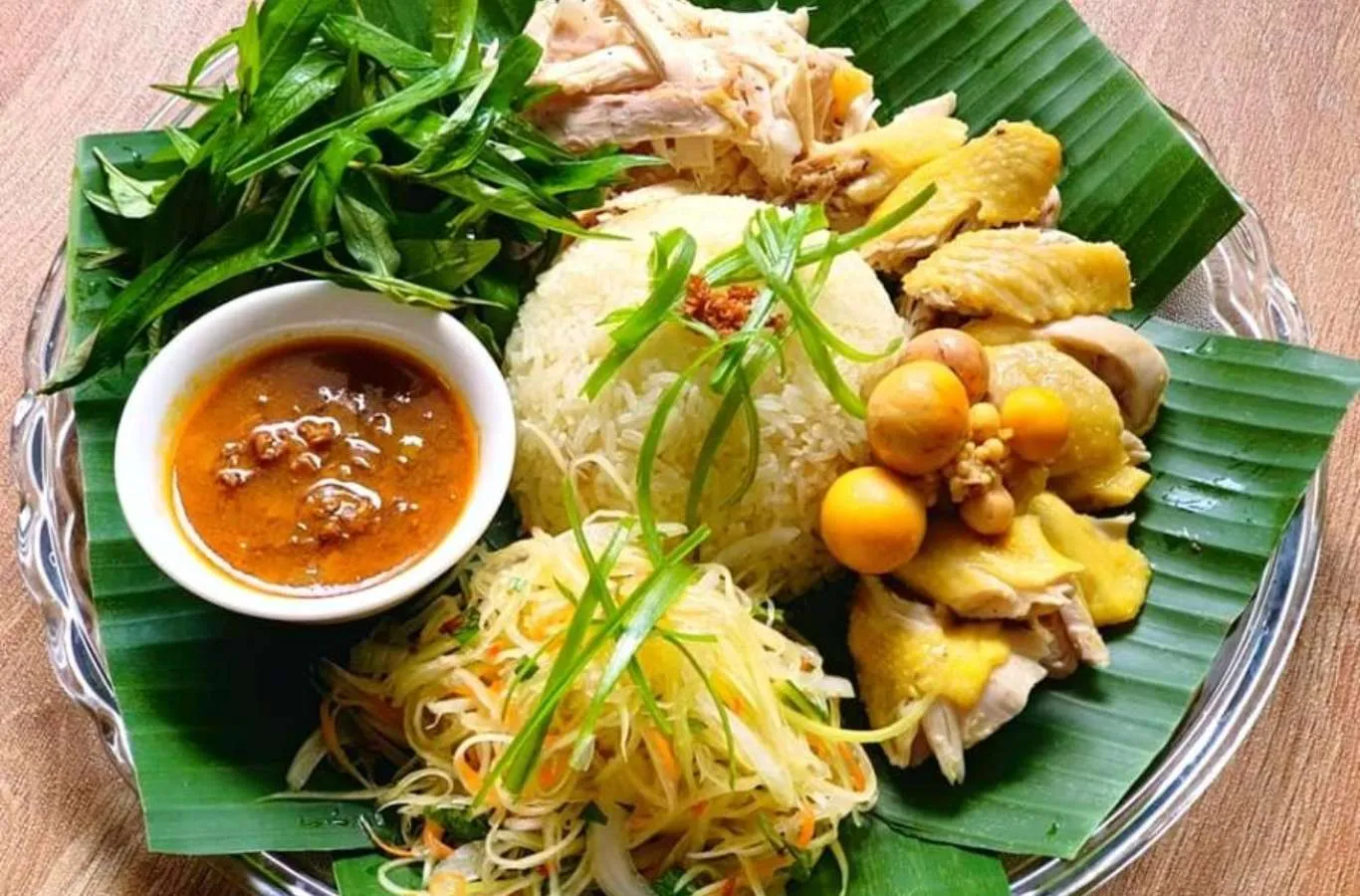
Com ga, or chicken rice, is one of the easiest local meals for first-time visitors. Expect rice, shredded or chopped chicken, herbs, onion, and dipping sauce or broth depending on the place.
It works well when you want local food without a strong seafood, spice, or offal flavour. For children or cautious eaters, ask about chilli or sauce on the side if needed.
Banh mi: the quick bite everyone talks about
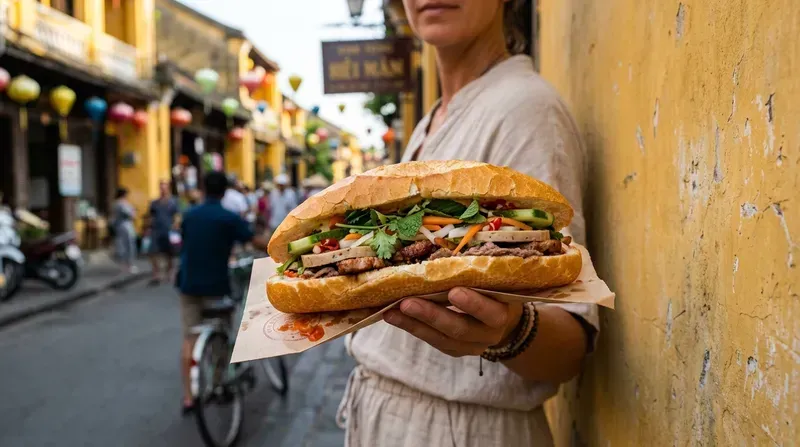
Banh mi is popular across Vietnam, but Hoi An has a particularly strong reputation among travellers for excellent versions. A good banh mi gives you crisp bread, savoury filling, herbs, pickles, sauce, and chilli if you want it.
Treat banh mi as a quick meal, not a full food strategy. If you are sensitive to spice, say “no chilli” or ask for less chilli. Fresh bread, busy local turnover, and a filling you actually want matter more than checking off a famous name.
Market snacks, grilled bites, and sweet soups
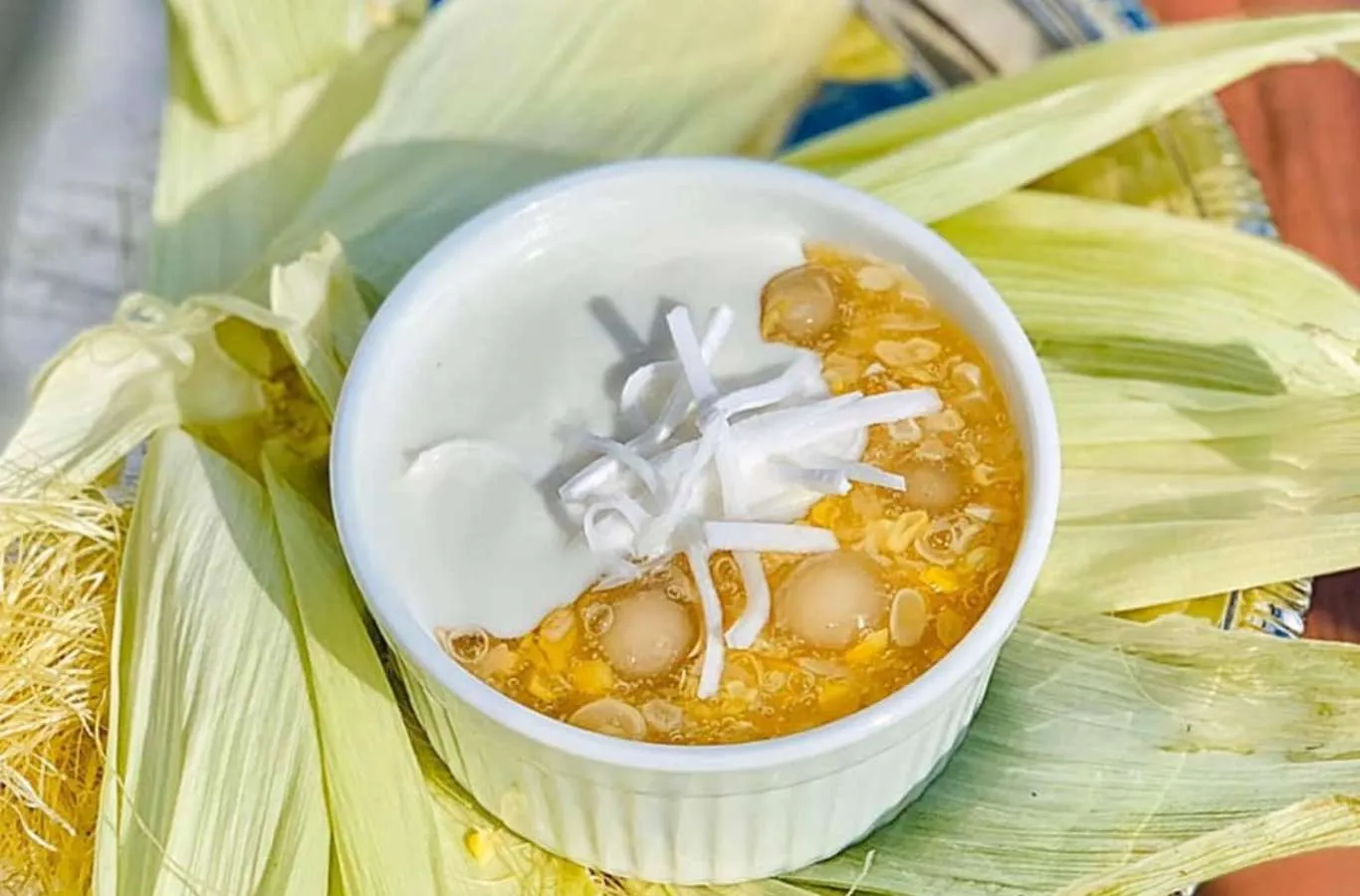
A good Hoi An street food guide should leave space for small things: grilled pork skewers, rice paper rolls, savoury pancakes, sweet soups, sesame snacks, coconut or herbal drinks, and seasonal fruit. These may not all be unique to Hoi An, but they make an evening feel alive.
Choose one or two, watch how locals eat them, and do not feel pressured to try everything in one night. No guide can guarantee food safety at every stall or restaurant, so use common-sense judgement, especially with allergies, pregnancy, sensitive stomachs, or very young children.
What to eat in Hoi An Old Town
If you are staying near the Ancient Town, start with a simple food route rather than a long restaurant list. Hoi An Old Town and nearby market lanes are easy for first-timers because you can combine food with walking, photos, shopping, and river atmosphere.
A relaxed first evening could look like this:
- 1. Start before peak dinner time with cao lau or mi Quang.
- 2. Share a lighter dish such as white rose dumplings or wontons.
- 3. Walk through market or riverside lanes and choose one small snack.
- 4. End with a drink or dessert instead of forcing another full meal.
This keeps the evening enjoyable. Many travellers rush through five foods because a list told them to. Hoi An is better when you taste, pause, walk, and taste again.
For a deeper orientation before eating, use Fingo’s Hoi An blog hub, or consider a private walking tour if you want cultural context before the food evening.
A simple self-guided Hoi An food tour
You can absolutely create a Hoi An self guided food tour. Keep it short, flexible, and realistic. The goal is not to cover every dish. The goal is to understand the main flavours without getting overwhelmed.
Self-guided route for a first food evening
- 1. One signature noodle dish: cao lau or mi Quang.
- 2. One shared Hoi An speciality: white rose dumplings or wontons.
- 3. One market-style snack: a skewer, roll, pancake, sweet soup, or drink.
- 4. One gentle finish: tea, coffee, juice, dessert, or a riverside walk.
Not every food tour needs a fourth plate. The route should feel relaxed, not like a challenge.
How much should you eat in one evening?
For most adults, 3–4 tasting stops is enough for one relaxed Hoi An food evening. If portions are large, share. If it is hot or humid, drink water and slow down. If you are travelling with kids, two stops plus dessert may be more successful than a long tasting route.
When a guided food tour makes more sense
A guided route is useful when you want more than a checklist. Choose a Hoi An food tour if you want help understanding dishes, choosing a comfortable pace, adapting for children, or avoiding the feeling that you are guessing through dinner.
For current availability, route style, and any dietary questions, message Fingo directly on WhatsApp before assuming details.
Hoi An food tour with kids: what families should know
A Hoi An food tour with kids can work very well, but only if the plan is paced for children. Hoi An evenings can be lively, warm, and crowded, so use a shorter family-friendly approach:
- Start earlier than the busiest dinner window when possible.
- Choose familiar textures first, such as banh mi, wontons, rice, noodles, or mild chicken rice.
- Keep spicy sauces separate until children decide what they like.
- Plan short walking distances between stops.
- Add one fun finish, such as a drink, dessert, lantern walk, or riverside pause.
- Do not force every dish. A child who enjoys two foods calmly has had a better evening than one pushed through seven tastings.
Private pacing helps families adjust quickly. If a child is tired, full, or overwhelmed, the route can become shorter and still feel successful.
How to choose good places to eat without chasing rankings
Instead of following the longest “best food in Hoi An” list, use these practical signs:
- Fresh cooking: food is prepared or refreshed often, not left sitting too long.
- Steady turnover: a place does not need to be famous, but some movement is reassuring.
- Clear setup: ingredients, utensils, and serving area look organised.
- Simple menu: many strong local places specialise in a few things.
- Comfort fit: choose places that match your stomach, allergies, children, and travel energy.
- Local context: if you are unsure, ask a local guide or host rather than relying only on ranking posts.
Not every good meal is viral, and not every viral meal is right for your group.
Common mistakes to avoid when eating in Hoi An
- Trying too many heavy dishes in one night: spread cao lau, mi Quang, com ga, and banh mi across two days if you can.
- Adding chilli before tasting: Central Vietnamese sauces can be strong, so taste first and adjust slowly.
- Only eating inside the busiest tourist lanes: Old Town is convenient, but quieter lanes and markets can feel more local.
- Treating food safety as guaranteed: choose fresh, busy, clean-looking places and be careful with raw items or seafood if you are sensitive.
- Booking without explaining your needs: if you are vegetarian, gluten-sensitive, pregnant, travelling with young kids, or avoiding ingredients, ask before booking.
When should you eat street food in Hoi An?
This is the question no travel blog answers properly, because the answer is timing. Hoi An street food runs on a vendor clock.
1pm — the first vendors arrive. Shoulder poles and small stools appear on Lê Lợi street, between the Trần Phú intersection and the river. This is the start of "ăn xế" — the afternoon snack tradition. It is not a meal. It is a pause in the day, a ritual that locals have observed for generations.
2:30pm — the bún seller appears. The most famous was Bà Hiền, known for her bún lòng bò (beef offal noodles). Her secret was never washing the pot with soap — only boiling water — letting the beef flavor build up over years of use. Her rule was equally firm: "First come first served, last come served last, too late come tomorrow, no exceptions." She has passed, but vendors who trained in her tradition still work the same stretch.
3pm — peak hour. The corner of Nguyễn Thái Học and Lê Lợi fills up. The bánh tiêu (fried dough) and bánh bò (steamed rice cake) seller with the bell arrives. The kẹo kéo (pulled candy) man cycles through, and children — and adults who refuse to grow up — gather around. By 4pm, the stools are full and the vendors are working at full speed.
5–7pm — the sit-down shift. Restaurants open for dinner. This is when you find bánh xèo (crispy turmeric pancakes), cơm gà (chicken rice), and the fuller versions of cao lầu and mì Quảng. The night market along Bạch Đằng also starts setting up.
After 8pm — the late-night eats. A few stalls remain for chè (sweet dessert soups), grilled skewers, and the occasional phở cart. The Old Town quiets down, and the food shifts from snacks to comfort.
For a complete hour-by-hour vendor map, see our Hoi An street food timing guide.
What should you drink in Hoi An?
The drink culture is quieter than the food, but equally specific to this place.
Cà phê sữa đá — Vietnamese iced coffee with condensed milk — is the default morning and afternoon drink. Hoi An's version tends to be slightly sweeter than Saigon's, reflecting the central Vietnamese palate. The coffee is robusta, dark-roasted, and brewed through a small metal phin filter that sits on top of your glass. The drip takes four to five minutes. Watch it fall. A glass costs 15,000–30,000 VND ($0.60–$1.20 USD).
Nước mía (sugarcane juice) — pressed fresh from stalks, sometimes with a squeeze of kumquat. The carts appear on the main streets in the afternoon. Cold, sweet, and the cheapest refreshment in town at 10,000–15,000 VND ($0.40–$0.60 USD).
Fresh fruit juice — mango, passion fruit, dragon fruit, avocado — blended to order at stalls around the market and the riverfront. The avocado smoothie (sinh tố bơ) is the one locals order most: thick, almost pudding-like, with a layer of condensed milk at the bottom.
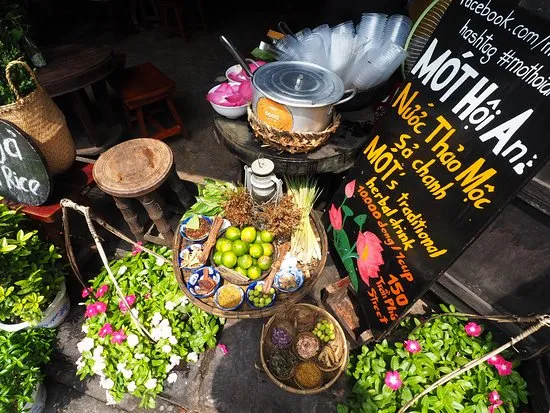
Herbal teas — artichoke tea, lotus seed tea, and roasted rice tea are served in many restaurants as a complimentary welcome drink. The artichoke version, grown in the highlands and dried, has a mild sweetness and is the traditional digestive after a heavy meal.
Bia hơi (draft beer) — the working-class evening drink. A glass costs 5,000–10,000 VND ($0.20–$0.40 USD) at local bia hơi joints outside the Old Town. The tourist-facing bars along Bạch Đằng charge five to ten times more for the same product. If you want the real experience, find the plastic stools on the side streets where locals gather after 5pm, order a glass, and watch the river.
For a structured eating and drinking route through all of these, join our Hoi An food tour — we time every stop to hit the vendors at their best.
How do you eat street food like a local in Hoi An?
A few unwritten rules that make the experience smoother and more respectful.
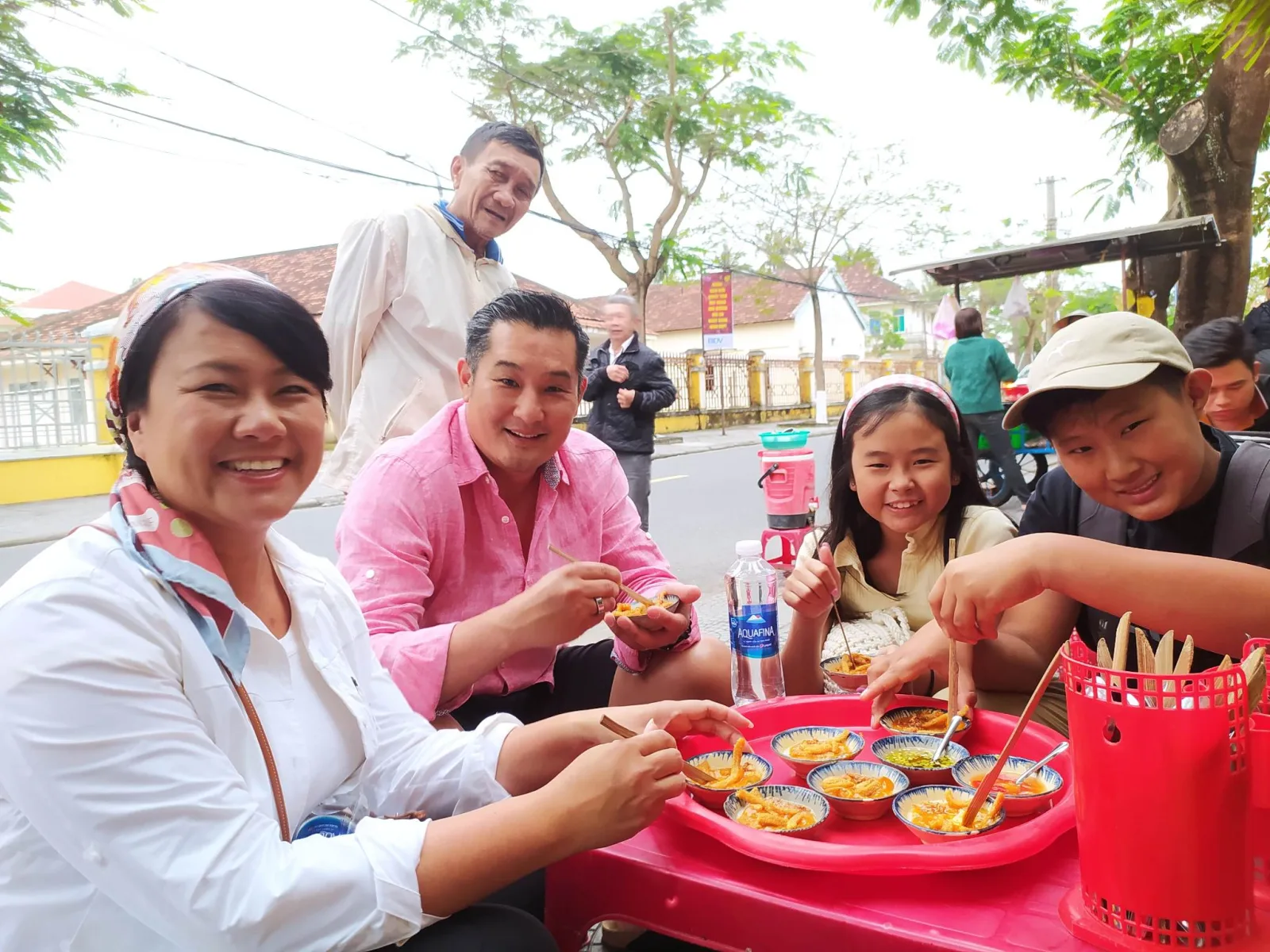
Sit on the small plastic stools, not the taller chairs reserved for tourists. The low stools put you at the same level as the vendor's workspace, and you will be served faster because you are visibly participating in the local rhythm. Point at what the person next to you is eating if you cannot read the menu — most vendors appreciate the gesture and will confirm with a nod.
Eat quickly. Street food is designed to be consumed within ten minutes. The noodles soften, the crackers lose their crunch, and the herbs wilt. This is not a lingering meal — it is fuel, eaten hot, between other activities. The locals around you will finish and leave within minutes. Follow their pace.
Pay when you finish, not when you order. Most vendors track your order mentally or on a scrap of paper. When you stand up to leave, catch the vendor's eye, hold up the number of fingers matching your dishes, and pay. Small bills make this instant. A 500,000 VND note for a 30,000 VND bowl creates a problem for everyone.
Do not photograph the vendor's face without asking. The food, yes — the hands, the pot, the steam. But the face is personal. A quick nod and a phone raised in question is enough. Most vendors will smile and wave you ahead. Some will wave you away. Both answers are fine.
What food stories do the vendors carry?
Every long-running vendor in Hoi An has a story that the food itself does not tell.
Bà Hiền's bún lòng bò was defined by a pot that was never washed with soap. Only boiling water. The beef flavor built up over years, layer by layer, creating a depth that no fresh pot could replicate. When she passed, the recipe did not die — it dispersed into the hands of the vendors she trained, each one carrying a fragment of her technique.
Bà Mẹo's bánh bèo tôm chấy was the opposite: a recipe that died with her. The tiny rice cakes, no bigger than a bottle cap, topped with dried shrimp so finely ground it became a powder — no one has replicated the exact texture. Vendors who claim to make "Bà Mẹo style" are approximating from memory.
Bà Dương's White Rose dumplings survived because the family formalized the operation. The White Rose restaurant on Hai Bà Trưng is now a multi-generational business, but the hand-folding technique — each wrapper stretched to translucency, each filling portioned by feel, not measurement — has not changed.
The kẹo kéo man on his bicycle is a disappearing figure. Pulled candy — sugar stretched and folded until it turns white, then wrapped around crushed peanuts — was the after-school treat of every child who grew up in Hoi An. The bicycle bell is the signal. When you hear it, the children appear.
These are not marketing stories. They are the reason the food tastes the way it does. For more of them, read what a local guide shows you in Hoi An.
How much does food cost in Hoi An?
Hoi An is one of the cheapest places in Vietnam to eat well.
| Item | Price (VND) | Price (USD) |
|---|---|---|
| Cao lầu (street stall) | 25,000–40,000 | $1–$1.60 |
| White Rose dumplings (plate) | 30,000–50,000 | $1.20–$2 |
| Mì Quảng (bowl) | 25,000–40,000 | $1–$1.60 |
| Bánh mì | 25,000–35,000 | $1–$1.40 |
| Bánh bèo (set of 10) | 15,000–25,000 | $0.60–$1 |
| Cơm gà (plate) | 30,000–50,000 | $1.20–$2 |
| Bánh xèo (per pancake) | 15,000–25,000 | $0.60–$1 |
| Chè (bowl) | 10,000–20,000 | $0.40–$0.80 |
| Coffee (cà phê sữa đá) | 15,000–30,000 | $0.60–$1.20 |
| Fresh juice | 20,000–35,000 | $0.80–$1.40 |
A full day of eating — breakfast bánh mì, lunch cao lầu, afternoon street food, dinner cơm gà, evening chè — costs under 200,000 VND ($8 USD). Restaurant meals with air conditioning and English menus run 2–3 times more.
Most street vendors accept cash only. Carry small bills (10,000–50,000 VND) to make transactions smooth.
Related planning notes: Hoi An itinerary for first-timers and the Hoi An Old Town guide.
Final advice: eat slowly, ask questions, and leave room
The best answer to what to eat in Hoi An is not one dish or one restaurant. Start with cao lau, white rose, wontons, mi Quang, com ga, banh mi, and a few street snacks, then let your own taste guide the rest of the trip.
If you want to explore independently, use this guide as a simple route and keep your expectations flexible. If you would rather have a local host shape the evening around your pace, comfort level, and questions, Fingo’s private Hoi An food tour is the natural next step. You can also contact Fingo on WhatsApp to ask what kind of food evening would fit your group.
FAQ
A few practical follow-up questions
Only the questions that sit naturally inside this article are shown here, so the page stays focused.
Article FAQ
Hoi An is especially known for cao lau, white rose dumplings, Hoi An-style wontons, com ga, banh mi, and mi Quang. Each dish is tied to local ingredients and generations of family vendors.
If you only have one night, choose one signature noodle dish such as cao lau or mi Quang, one shared plate like white rose dumplings or banh xeo, and finish with che or fresh fruit.
Hoi An street food can be a highlight, but no guide can guarantee safety at every stall. Choose places with high turnover, watch the food being cooked, and follow where locals eat.
Yes. A simple self-guided food tour can work well if you keep it to 3–4 stops: one noodle dish, one shared plate, one drink stop, and one dessert. Timing matters more than the number of stops.
Many children start well with banh mi, wontons, chicken rice, mild noodles, rice paper snacks, fruit smoothies, and sweet che. Avoid overly spicy or unfamiliar offal dishes on the first try.
A Hoi An food tour is worth it if you want local explanation, a smoother route, help choosing dishes, and introductions to vendors you might not find alone. It is especially useful on your first evening.
Same topic
More in this topic
If this topic is close to your trip, these notes stay within the same planning lane without sending you off into a wider archive.
Related tours
If you want to turn the note into a real plan
These tours sit closest to the topic you just read, so the next step stays grounded in the actual route options.
Food Tour
Hoi An Street Food Tour with Local Expert
A private evening route for flavour, conversation, and a softer look at Hoi An after dark.
3 hours
Explore the Hoi An Street Food Tour with Local Expert
Walking & Street Food Tour
Hoi An Ancient Town Walking & Street Food Tour
Join our half-day tour to explore the best of Hội An. Walk through lantern-lit streets, visit iconic landmarks, and enjoy delicious local food.
3 to 4 hours
Explore the Hoi An Ancient Town Walking & Street Food TourNeed a local answer?
If this note raises a question, a direct message is the cleanest next step
Share your dates, pace, or route idea and I can point you toward what fits, without turning the planning into a long back-and-forth.