
Landmark guide
An Bang Beach: Why It's Hoi An's Nicest Swimming Beach (and Cua Dai Is Not)
An Bang is Hoi An's best swimming beach — soft sand, calm water March to September, beach bars along the shoreline. Here's when to go, where to eat, and how it compares to Cua Dai four kilometres south.
May 29, 2026 · 7 min read
Last updated: 9 September 2026 — written by Fin, a local guide in Hoi An.
Quick answer: is An Bang the best beach in Hoi An?
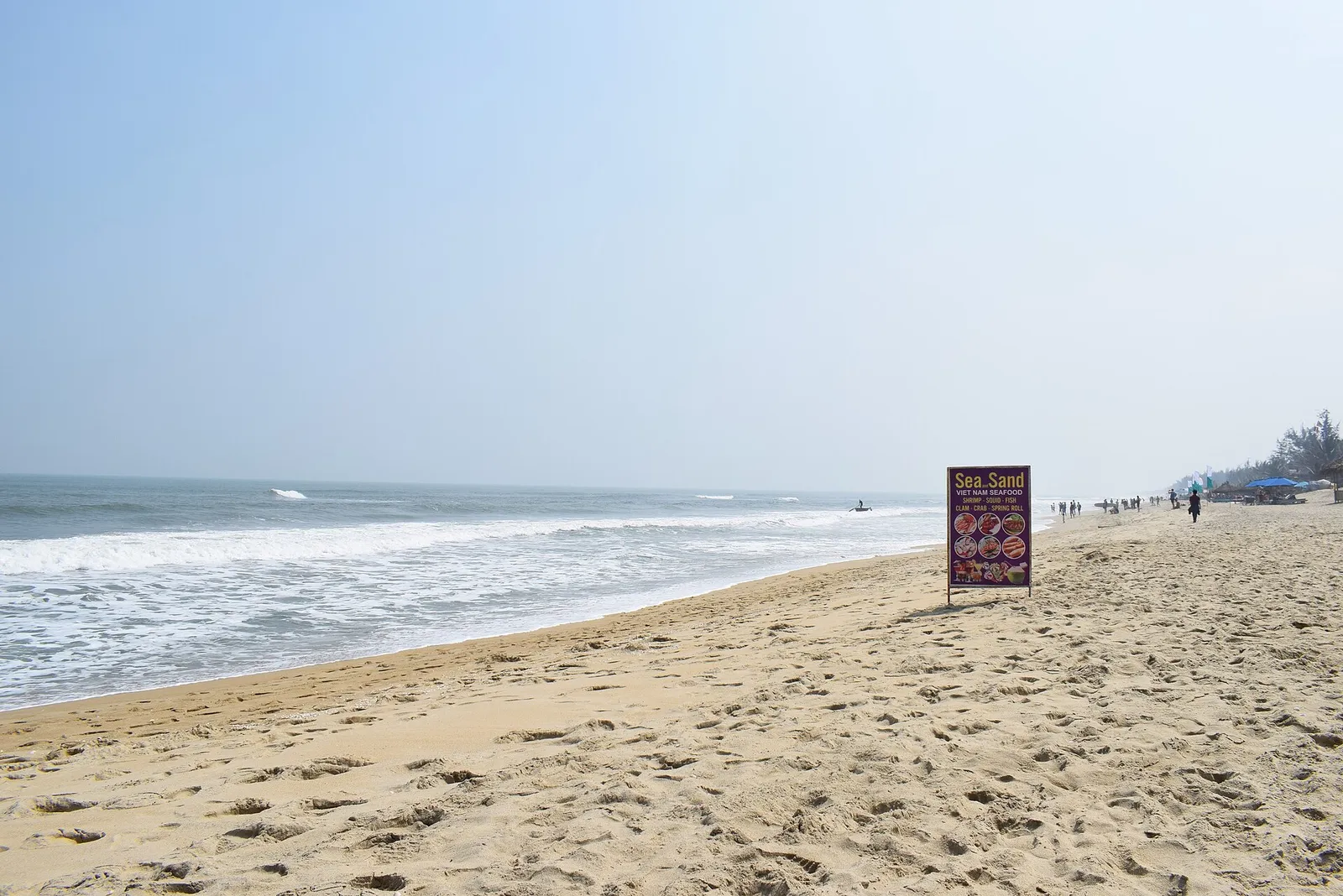
Yes — An Bang is a 3-kilometre stretch of soft, pale sand 4 kilometres east of Hoi An's Old Town. The water shelves gently, and a row of beach bars and restaurants spans most of the shoreline. The beach is fully public and free — you only pay if you use a beach bar's sunbeds (50,000–100,000 VND for the day, with a drinks minimum). The best swimming season is March to September, when the water sits at 24–28°C and the sea is flat. October to February brings the northeast monsoon — still swimmable on calm days, but choppier and colder. Cửa Đại beach, 4km south, was the original Hoi An beach and lost most of its sand to coastal erosion between 2012 and 2018; An Bang inherited the entire local beach scene.
Key takeaways
- Free, public, and open at any hour. The sunbed fee is optional and easy to avoid.
- March to September for swimming. October to February for a walk and a coffee, not a swim.
- Go early morning or late afternoon. The middle of the day has almost no natural shade.
- 20 minutes by bicycle from the Old Town on flat country lanes — the nicest way to arrive.
- Cửa Đại is not the alternative people think it is. Hà My, further north, is.
When to go
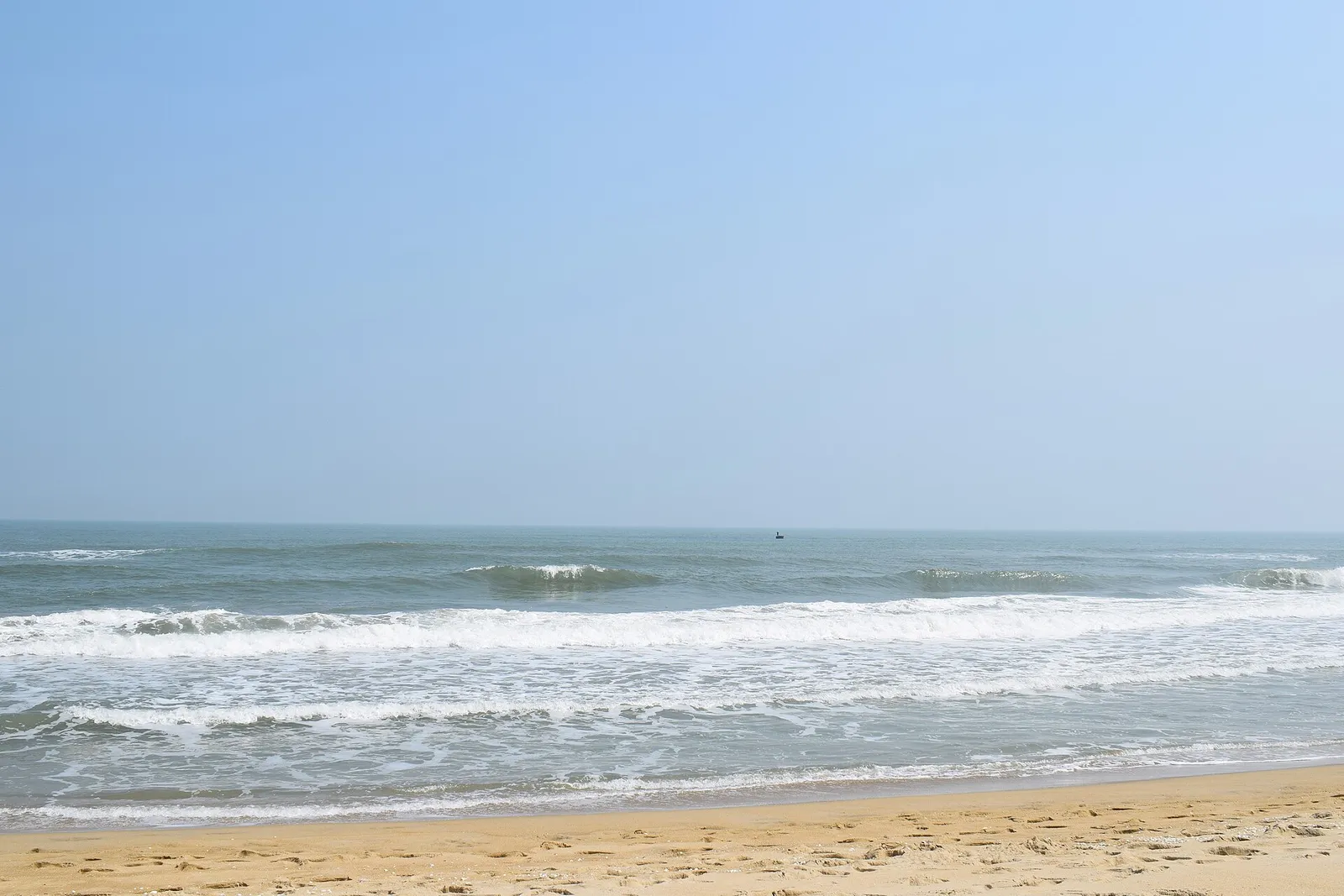
Best season: March to September — calm water, 28–35°C air, a flat sea most mornings. Rougher season: October to February — monsoon winds, choppy water, and after heavy rain a lot of debris washed down the river onto the sand. It gets cleared, but not within the hour.
Best time of day: 6am–9am for sunrise — the beach faces east, and this is when the local swimming clubs are out, which is a better sight than the sunrise. Or 3:30pm–6pm for the golden hour, when the sand cools and the bars fill up. Avoid 11am–2pm: strongest sun, least shade, and every sunbed already taken.
If your trip falls in the mid-September to mid-November flood window, treat the beach as a bonus rather than a plan — see the month-by-month weather notes before you build a day around it.
An Bang vs Cua Dai vs Ha My
Three beaches sit within fifteen minutes of Hoi An and travellers regularly pick the wrong one because the maps make them look interchangeable.
| Beach | From Old Town | Sand | Food and drink | Best for |
|---|---|---|---|---|
| An Bang | 4km east, 12 min by car | Wide, soft, pale. Gentle shelf. | A dozen bars and restaurants along the strip. | Swimming, a long lunch, sunset. The default choice. |
| Cửa Đại | 5km east, 15 min by car | Narrow and partly rebuilt; sandbags and breakwaters still visible. | A handful of large seafood restaurants. | Little. Go only if An Bang is crowded and you want space. |
| Hà My | 8km north, 20 min by car | Wide and near-empty; almost no development. | Almost nothing. Bring water. | A quiet swim with nobody around. No shade, no rescue cover. |
The short version: An Bang for a day, Hà My for solitude, Cửa Đại for neither.
Where to eat and drink
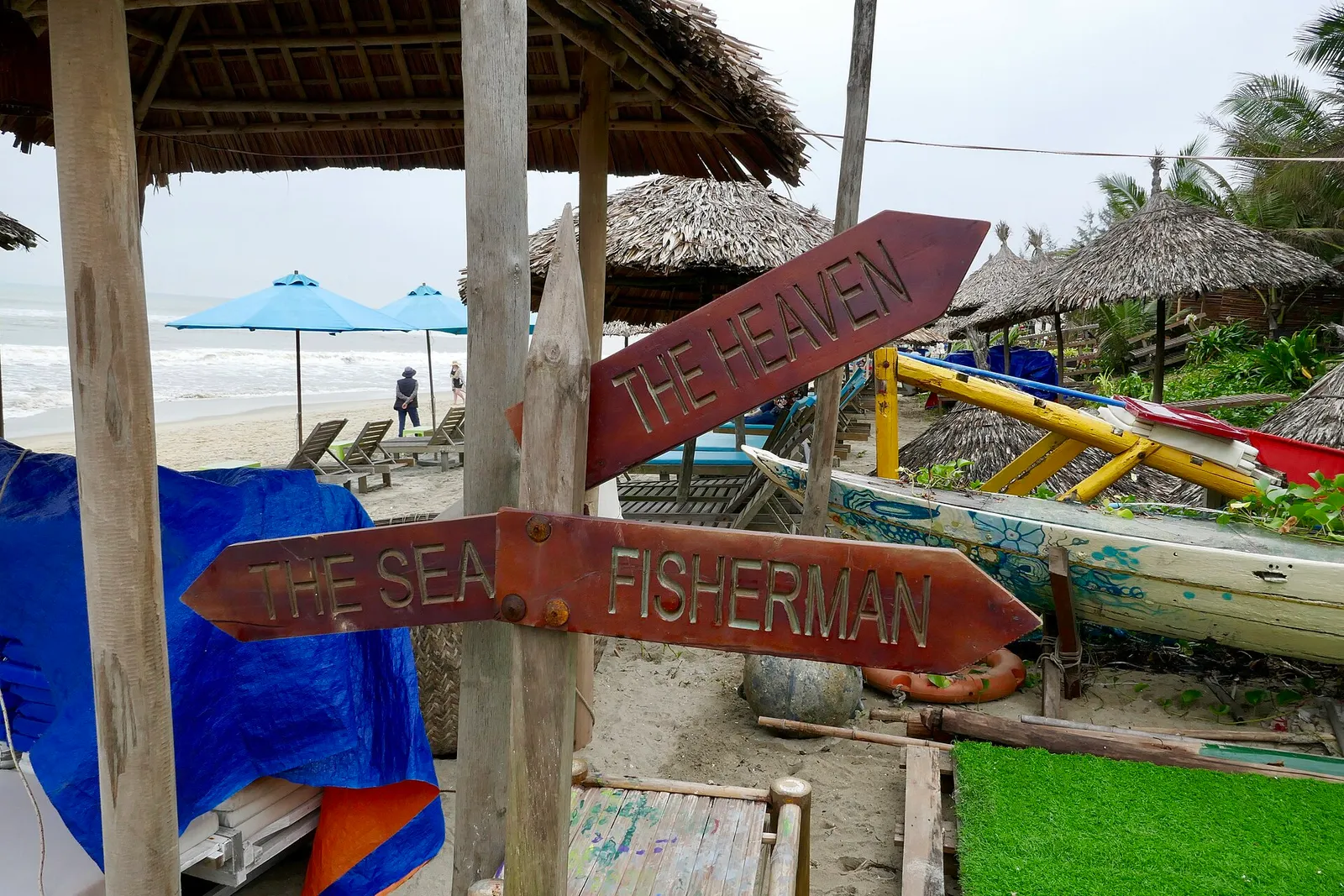
- Deckchair Cafe (north end) — the original Western-friendly spot. Sandwiches, salads, smoothies, Vietnamese coffee. Sunbeds 70,000 VND with a 150,000 VND drinks minimum. Open 8am–10pm.
- Soul Kitchen (one strip south) — slightly more polished, live music several nights a week, brunch menu through 2pm. Same sunbed pricing.
- La Plage (far southern end) — French-Vietnamese menu, the best food on the beach for a sit-down lunch (90,000–180,000 VND a main). Where local families eat on a Sunday.
Vietnamese coffee at any of the three: 35,000–50,000 VND. Beer: 30,000–50,000 VND. Avoid the dolphin-statue-fronted seafood restaurants at the south end — they charge Old Town prices for worse fish than you would get in town. If you want seafood, eat it in Hoi An and swim here.
You do not have to buy a sunbed at all. Local families lay a mat on the sand between the bars, and nobody will move you on.
How to get there

From Hoi An Old Town: 12 minutes by taxi (60,000–80,000 VND, about $3) or 20 minutes by bicycle along flat country lanes. Most hotels rent bicycles for around 50,000 VND a day, and several lend them free. From Đà Nẵng it is about 35 minutes by car — the Da Nang to Hoi An transfer notes cover the options if you are coming for the day.
Parking attendants charge 10,000 VND for a motorbike and 20,000 VND for a car. Most beach bars waive it if you spend at their venue — ask before you pay.
The bicycle is the best version of this trip. The lane out runs past rice fields and the Tra Que herb beds, so you can stop for twenty minutes on the way and arrive having seen something.
What to know before you go
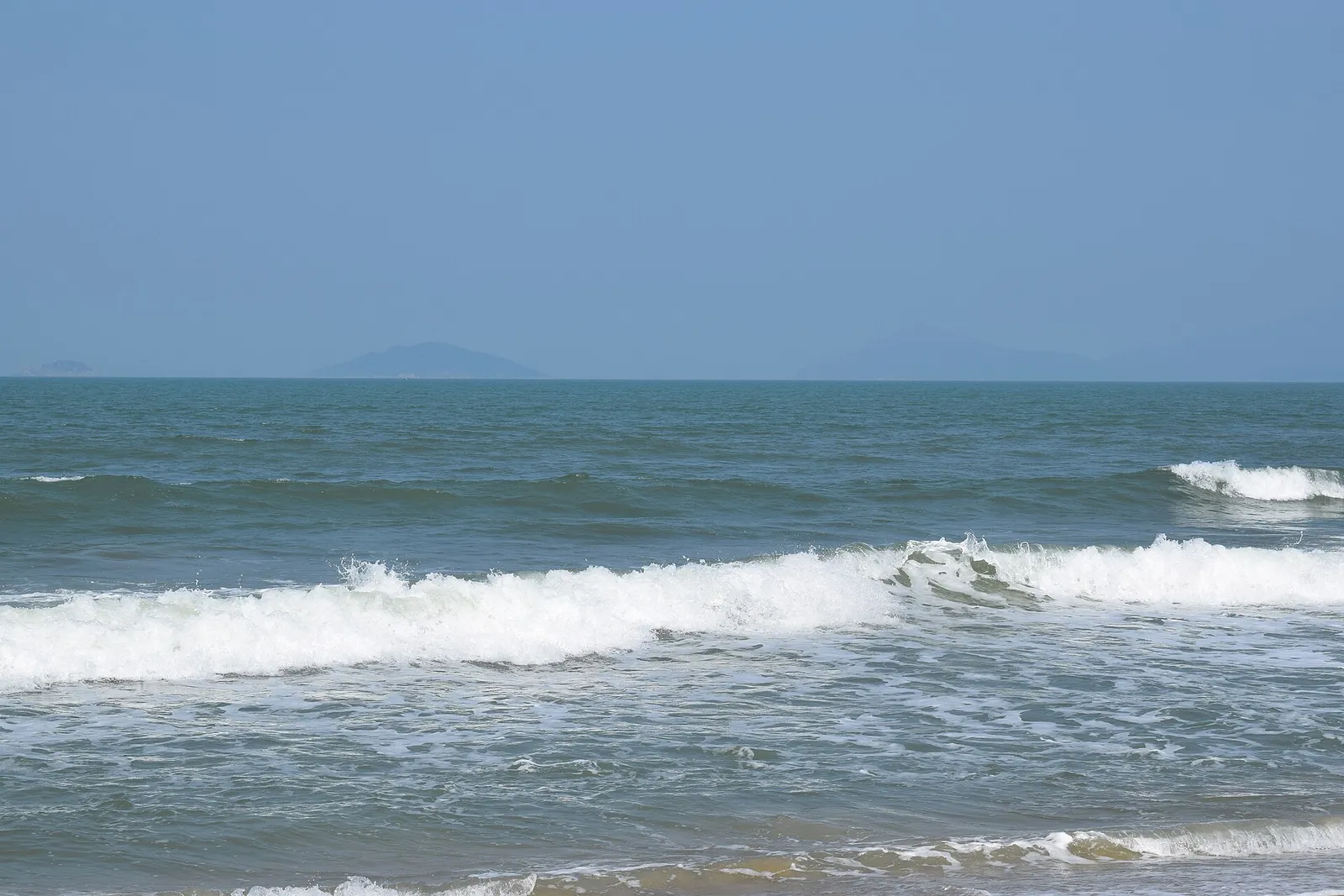
Rip currents are real here. Between October and February the surf can pull hard, and lifeguard cover on this coast is seasonal and inconsistent. Swim between the flags where they are up, and if there are no flags and no other swimmers on a rough day, that is the information.
Shade runs out early. The natural shade on An Bang is a thin line of casuarina trees at the back of the sand. From about 10am it is gone. Either take a bar's umbrella or plan the beach around the two ends of the day.
Jellyfish appear after storms, usually for a day or two, mostly at the northern end. Local swimmers simply move down the beach.
Pairing with the rest of the day
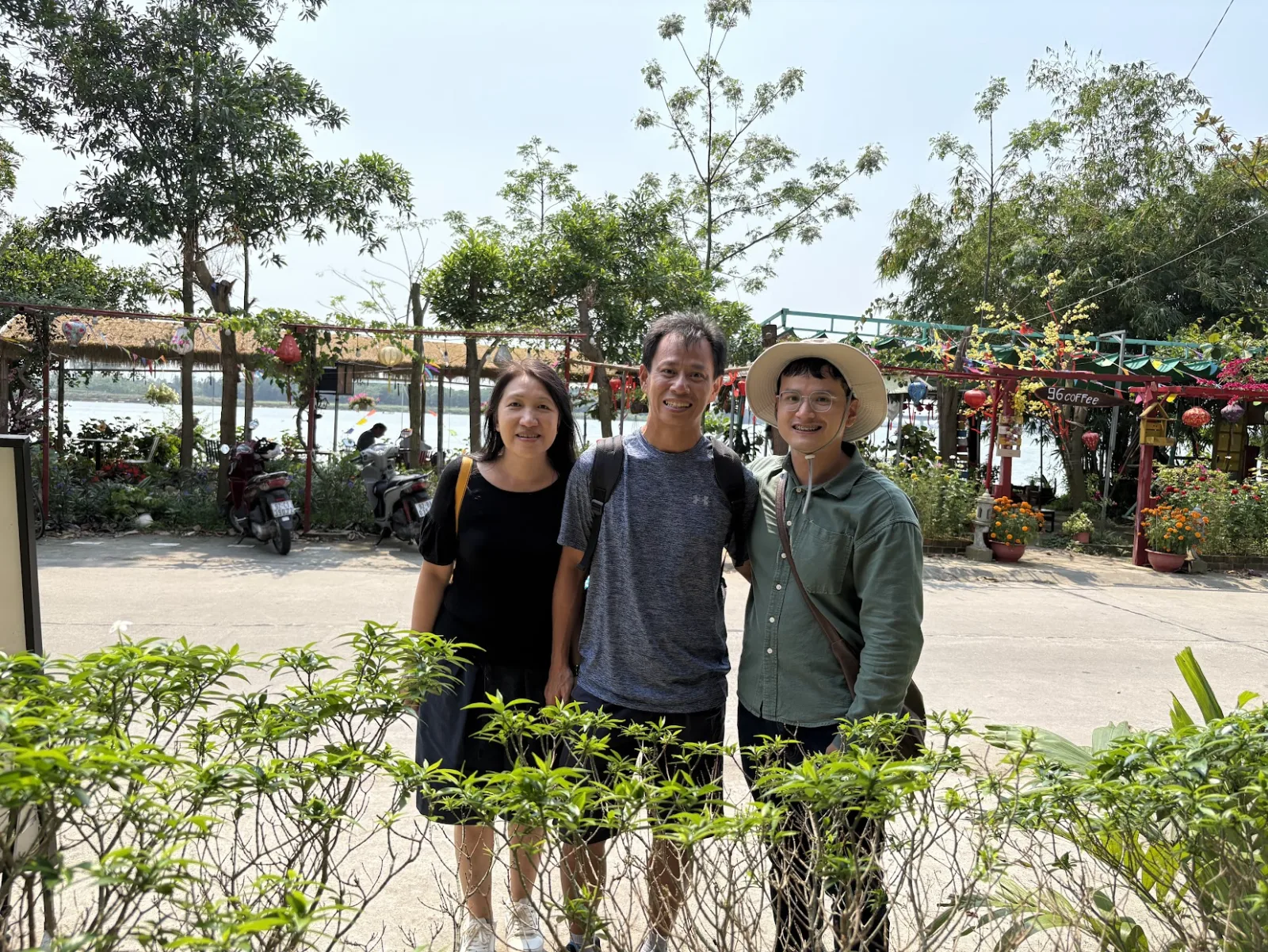
The natural shape of a Hoi An day: Old Town walk in the morning (8am–12pm), lunch in town, An Bang from 2pm to 5:30pm, then back into the Old Town for the lantern evening from 6:30pm. That order works because it puts you indoors and shaded during the worst heat and on the sand when the light is good.
For families: Tra Que herb-planting in the morning, lunch at Soul Kitchen, and children in the water until sunset. See things to do in Hoi An and the 3-day itinerary for more ways to build the day.
An Bang is still a fishing village
Behind the beach bars, An Bang is a fishing village, and at the north end of the beach it still looks like one. Round basket boats are pulled up on the sand, nets are laid out to dry, and in the early morning the boats come in and the catch is sold on the beach before most visitors are awake.
If you are up for sunrise, walk north from the bar strip at about 5:30am. You will see the local swimmers — mostly older residents, in the water before the heat — the boats landing, and a small informal fish market that is over by 7. It is the best hour An Bang has, and it is free.
Two courtesies go a long way: ask before photographing people at work, and stay out of the way of anyone hauling a boat. The fishermen are generally fine with visitors and not at all fine with being blocked.
What An Bang is not
- Not a party beach. The bars close by 10–11pm and the beach is dark and quiet at night. Most locals like it that way.
- Not a resort strip. There are guesthouses and a few small hotels behind the sand, but none of the big-resort frontage you find between Đà Nẵng and Hoi An.
- Not a surf beach in summer. From March to September the sea is usually flat. The swell comes with the winter monsoon, and so do the rip currents.
- Not somewhere to leave things. Theft is rare, but bags left alone on the sand while everyone swims are the one way it happens. The bars will hold a bag if you are buying.
Staying at An Bang instead of the Old Town
Some visitors base themselves at An Bang and cycle into town. It works well for a longer, slower trip — quieter nights, a swim before breakfast, and the Old Town fifteen minutes away. It works badly for a short first visit, because the best of Hoi An is the evening and you will spend every evening negotiating a ride back. The where to stay guide covers the trade-off, and the Cam Thanh basket boats are the other half of this side of town.
An Bang in the rain season
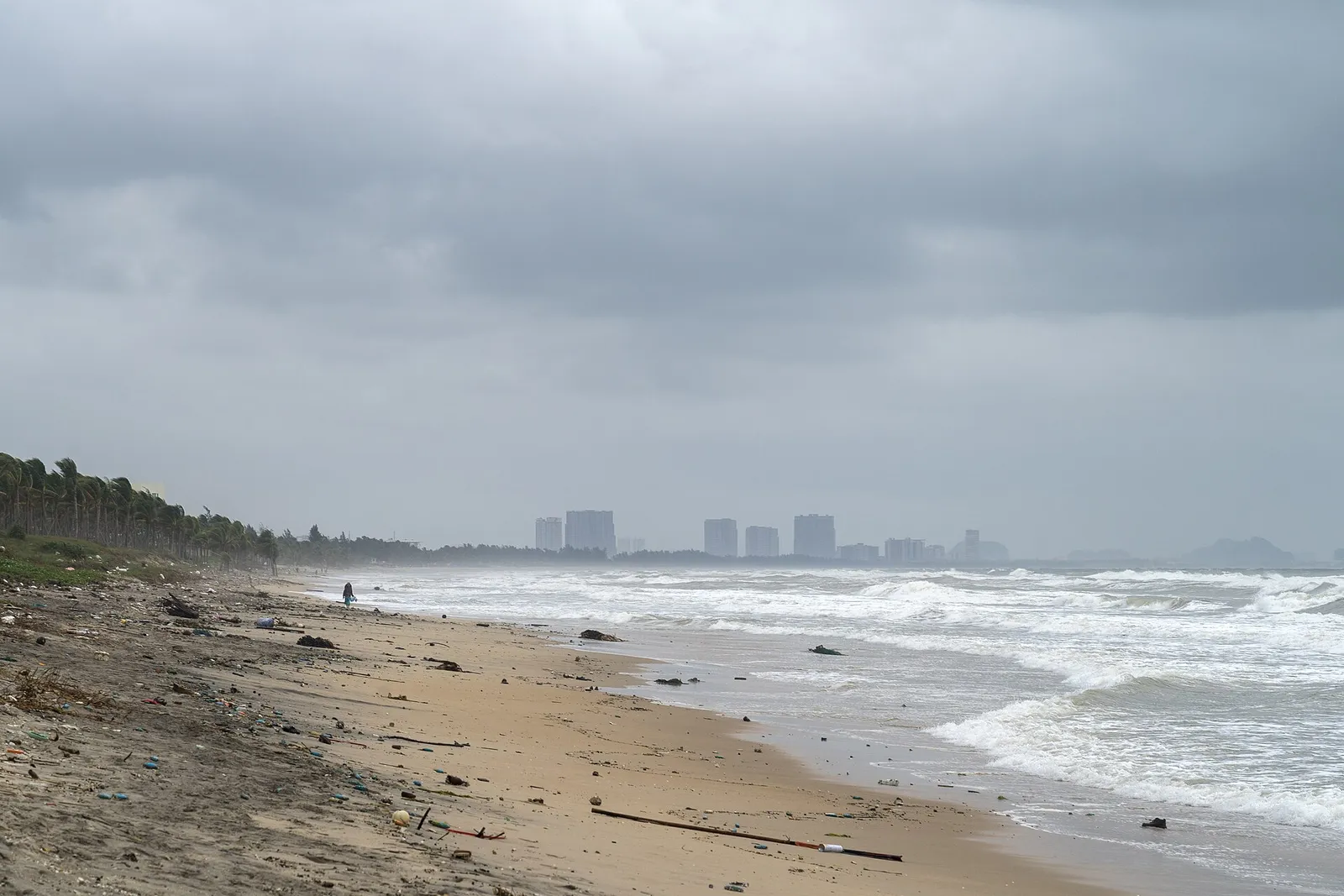
From October to February An Bang is a different beach. The sea turns grey and heavy, the red flags go up more often than not, and the bars pull their sunbeds in. It is still a good place for a walk, a long lunch and a coffee watching the surf — some visitors prefer it this way. Just do not plan a swim, and do not plan a whole day around it. Check the flag at the lifeguard hut on arrival; it is the only forecast that matters.
Beach photographs: Mig Gilbert (CC BY-SA 2.0), Isabell Schulz (CC BY-SA 2.0) and Alexkom000 (CC BY 4.0), via Wikimedia Commons. Countryside photographs: Fingo Private Tours.
Related planning notes: Hoi An itinerary, things to do in Hoi An, and best time to visit Hoi An.
FAQ
A few practical follow-up questions
Only the questions that sit naturally inside this article are shown here, so the page stays focused.
Article FAQ
Yes — the beach itself is fully public. You only pay if you use a beach bar's sunbeds and umbrellas (50,000 to 100,000 VND for the day, usually with a drinks minimum). Walking, swimming, and laying a towel directly on the sand are free.
March to September for calm water and safe swimming. October to February the sea is choppier with northeast monsoon currents — still swimmable but rougher. Best time of day is 15:30 to 18:00 for the golden-hour late afternoon, avoiding the harsh midday sun.
Yes, currently — Cua Dai lost most of its sand to coastal erosion between 2012 and 2018. A sand-replenishment project restored part of the beach, but it remains narrower and rougher than An Bang. Most travellers and locals now go to An Bang for swimming.
12 minutes by taxi (60,000 to 80,000 VND, about $3) or 20 minutes by bicycle along the country roads. Most Hoi An hotels rent bicycles for 50,000 VND a day. From Da Nang it is 35 minutes by car.
From March to September, yes — the shelf is gentle and the water is usually flat in the morning. From October to February the surf can be strong and lifeguard cover is inconsistent, so keep children in the shallows and swim between the flags where they are up.
Same topic
More in this topic
If this topic is close to your trip, these notes stay within the same planning lane without sending you off into a wider archive.


.jpg)
.jpg)
.jpg)

Related tours
If you want to turn the note into a real plan
These tours sit closest to the topic you just read, so the next step stays grounded in the actual route options.

Local Life
Hoi An Countryside Cycling Tour
Hoi An Countryside Cycling Tour
About 5 hours
Explore the Hoi An Countryside Cycling Tour
Walking & Street Food Tour
Hoi An Ancient Town Walking & Street Food Tour
Join our half-day tour to explore the best of Hội An. Walk through lantern-lit streets, visit iconic landmarks, and enjoy delicious local food.
3 to 4 hours
Explore the Hoi An Ancient Town Walking & Street Food TourHelpful next step
Use the article for context, then move into the part that fits your trip best
Some travellers want to compare tours next, while others just want to send a quick message with dates and questions. Both paths stay open here.