
Trip planning
Things to Do in Hoi An: 18 Real Picks from a Local Guide Born in the Old Town
Most 'things to do in Hoi An' lists rank the same five attractions in the same order. This one is from a guide born in the Old Town — what locals actually do, what travellers usually miss, and what's overrated.
May 28, 2026 · 14 min read
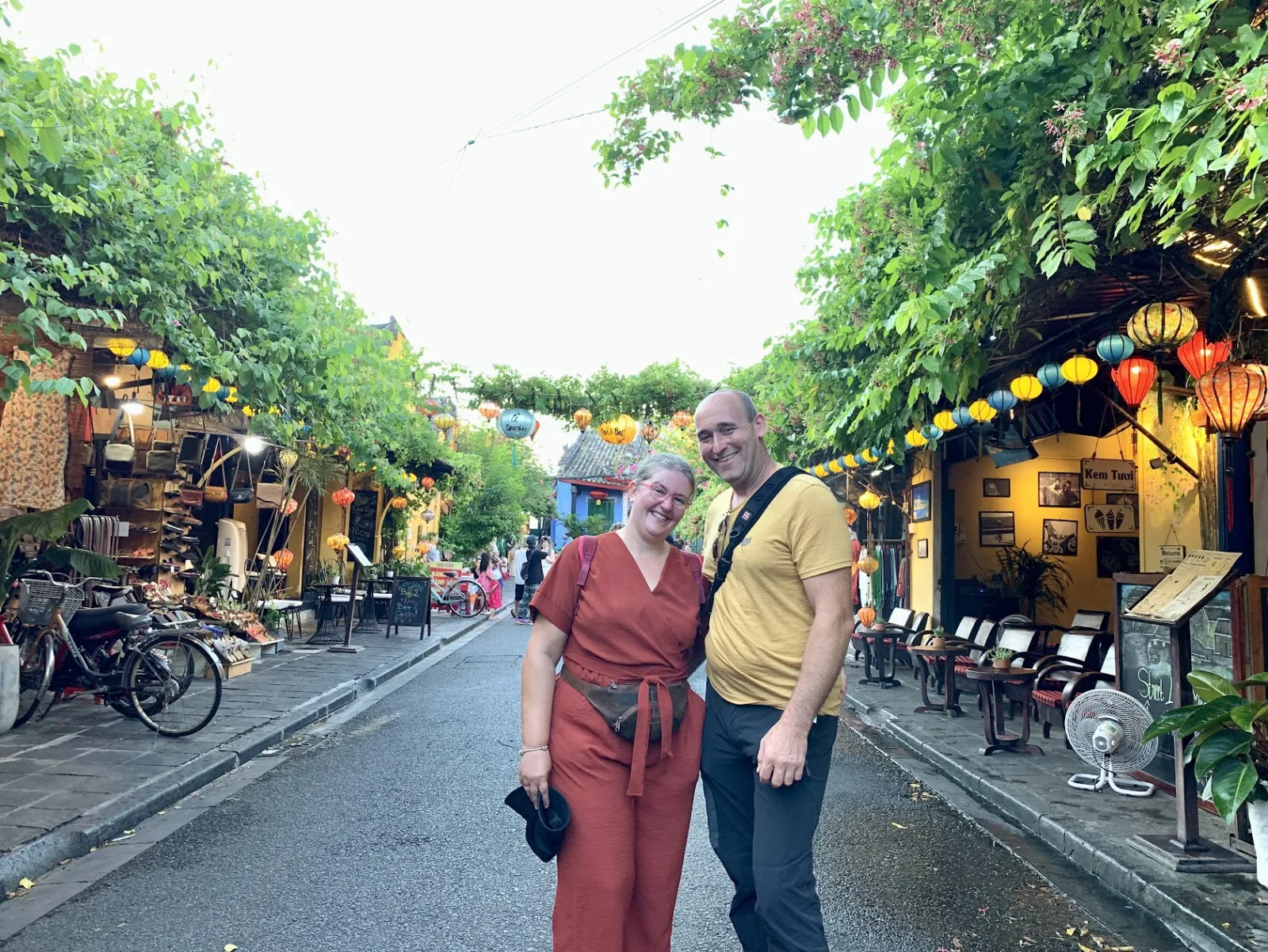
Last updated: 9 September 2026 — written by Fin, a local guide born 200 metres from the Japanese Bridge.
Quick answer: what are the best things to do in Hoi An?
The best things to do in Hoi An are walking the Old Town's historic streets in the morning, eating street food at the right time (1pm–4pm on Lê Lợi street), visiting the Japanese Covered Bridge (20.4m long, built ~1593), taking a countryside ride through Tra Que vegetable village and Cam Thanh coconut forest, and returning to the riverside after dark when lanterns light the water. Most travellers spend 2–3 days here, splitting their time between Old Town heritage, food, a day trip, and at least one slow evening by the river. Skip the midday rush — Hoi An works best in the morning and late afternoon, with a long lunch in between.
Key takeaways
- Best overall plan: one morning in Old Town, one afternoon for food, one day trip, and at least one lantern evening by the river.
- Best time of day: early morning (6am–9am) for calm streets and good light; late afternoon (3pm–5pm) for street food; after dark for lanterns.
- Best with kids: shorter blocks, morning visits, countryside over crowded streets, and plenty of snack stops.
- What to skip: the midday Old Town crush (11am–2pm), overpriced riverfront restaurants, and the "Old Town ticket" panic — you only need it if you enter specific heritage houses.
- How a local guide changes the day: a guide born in the Old Town knows food timing, vendor schedules, building stories, and which lanes are quiet when — details no guidebook covers.
1. Walk the Old Town before the crowds arrive
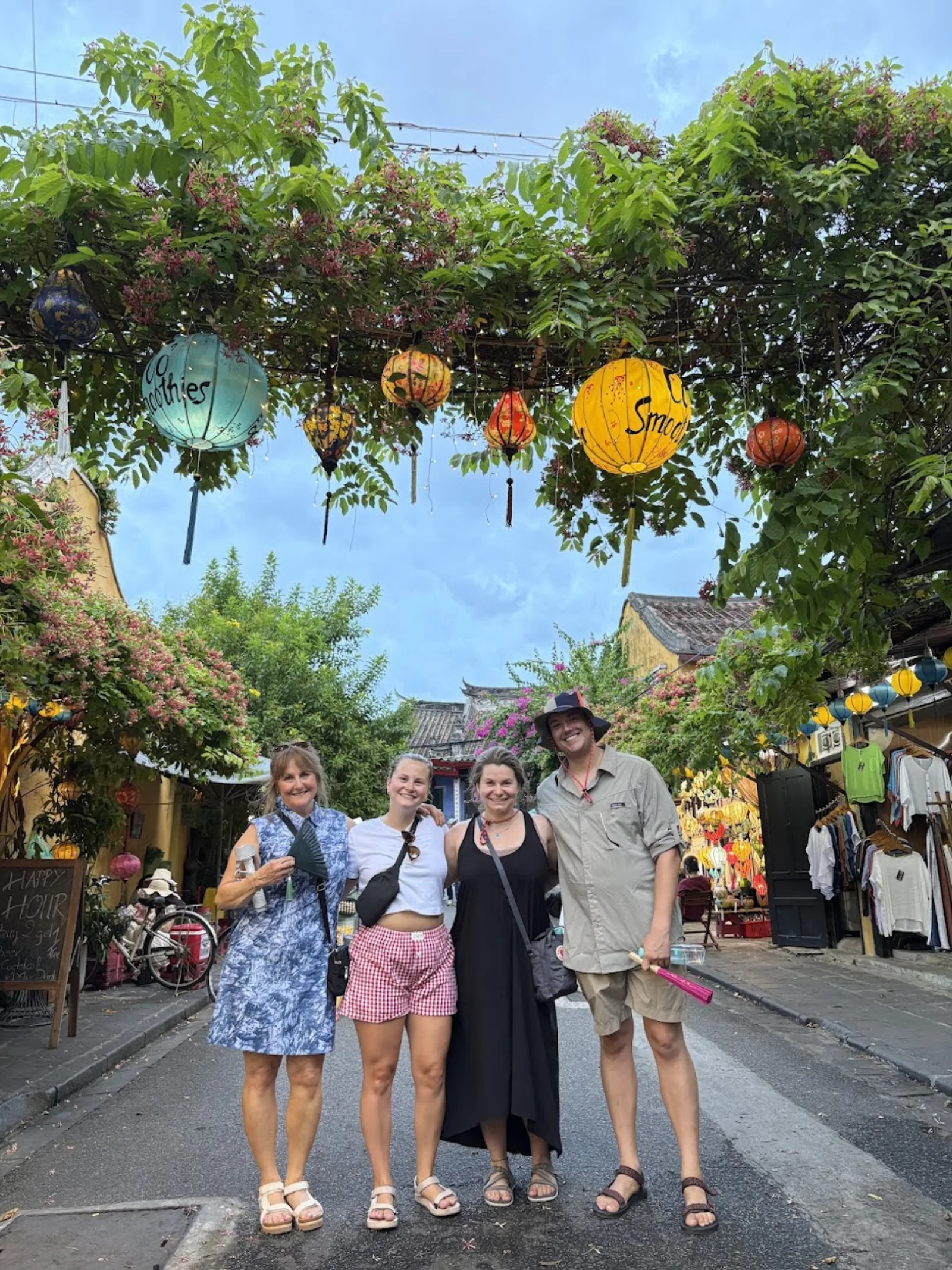
The Old Town is the reason most people come to Hoi An, and it is at its best between 6am and 9am. The yellow-walled merchant houses, yin-yang tile roofs, and wooden shutters look softest in morning light, and the streets are empty enough that you can hear the river and the birds. Walk Trần Phú, Nguyễn Thái Học, and Bạch Đằng — the three main streets — then duck into the smaller lanes between them. You will see faded shop signs, family altars, old doorways, and small temples that most visitors walk past.
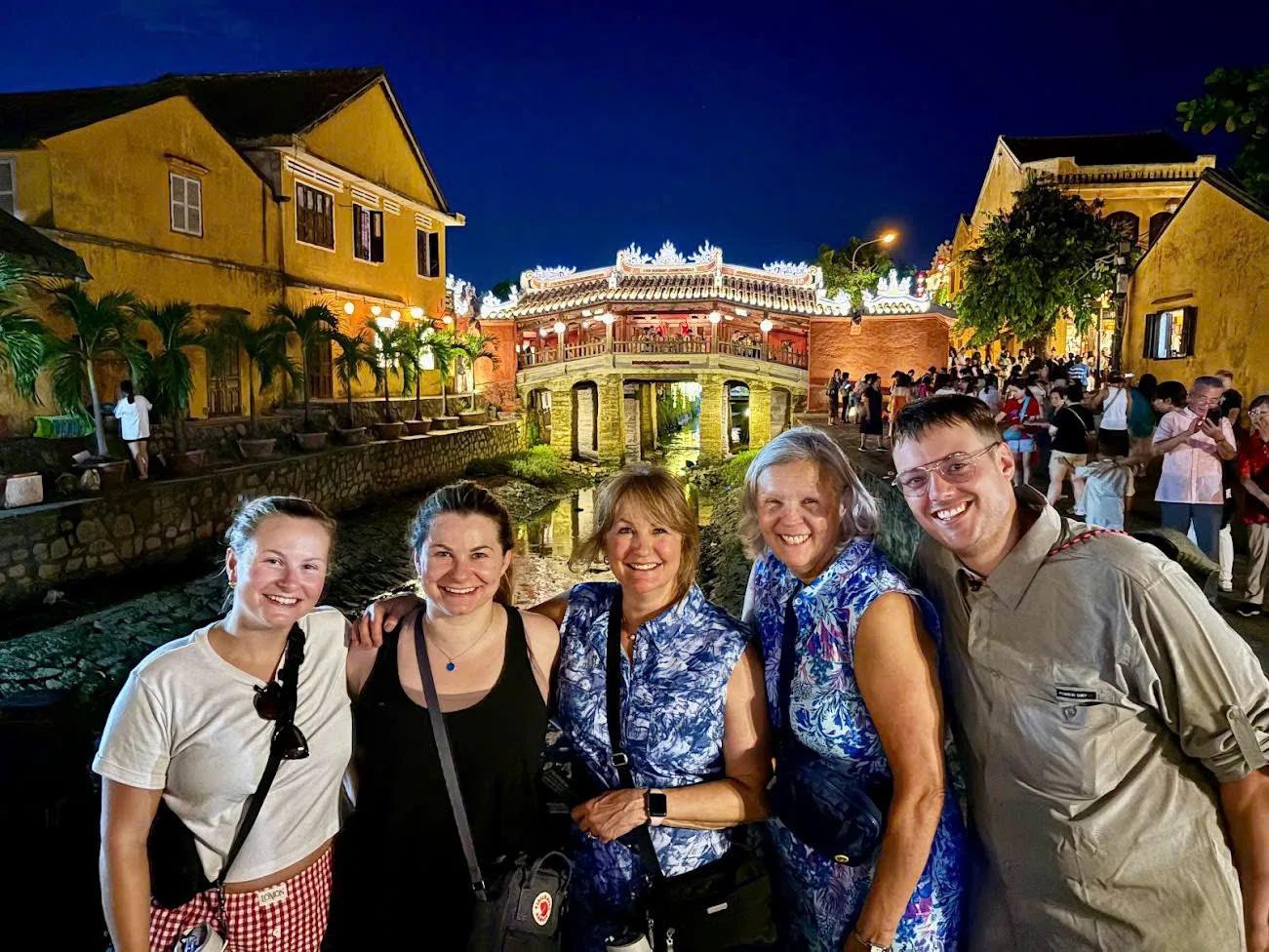
The Japanese Covered Bridge (Chùa Cầu) is 20.4m long, built around 1593 by Japanese merchants, and was named Lai Viễn Kiều by Lord Nguyễn Phúc Chu in 1719. It has been a national heritage site since 17 February 1990 and underwent a 20.2-billion-VND restoration completed on 3 August 2024. The bridge is a natural starting point for any Old Town walk, but do not make it the only thing you see — the streets around it hold more history than the bridge itself.
If you want to understand what you are looking at — the flood marks on old walls, the Chinese characters above doorways, the family stories behind the shopfronts — consider a Hoi An private walking tour with a guide who grew up here. The buildings tell stories, but only if someone is there to translate them.
2. Eat street food at the right time — not whenever you are hungry
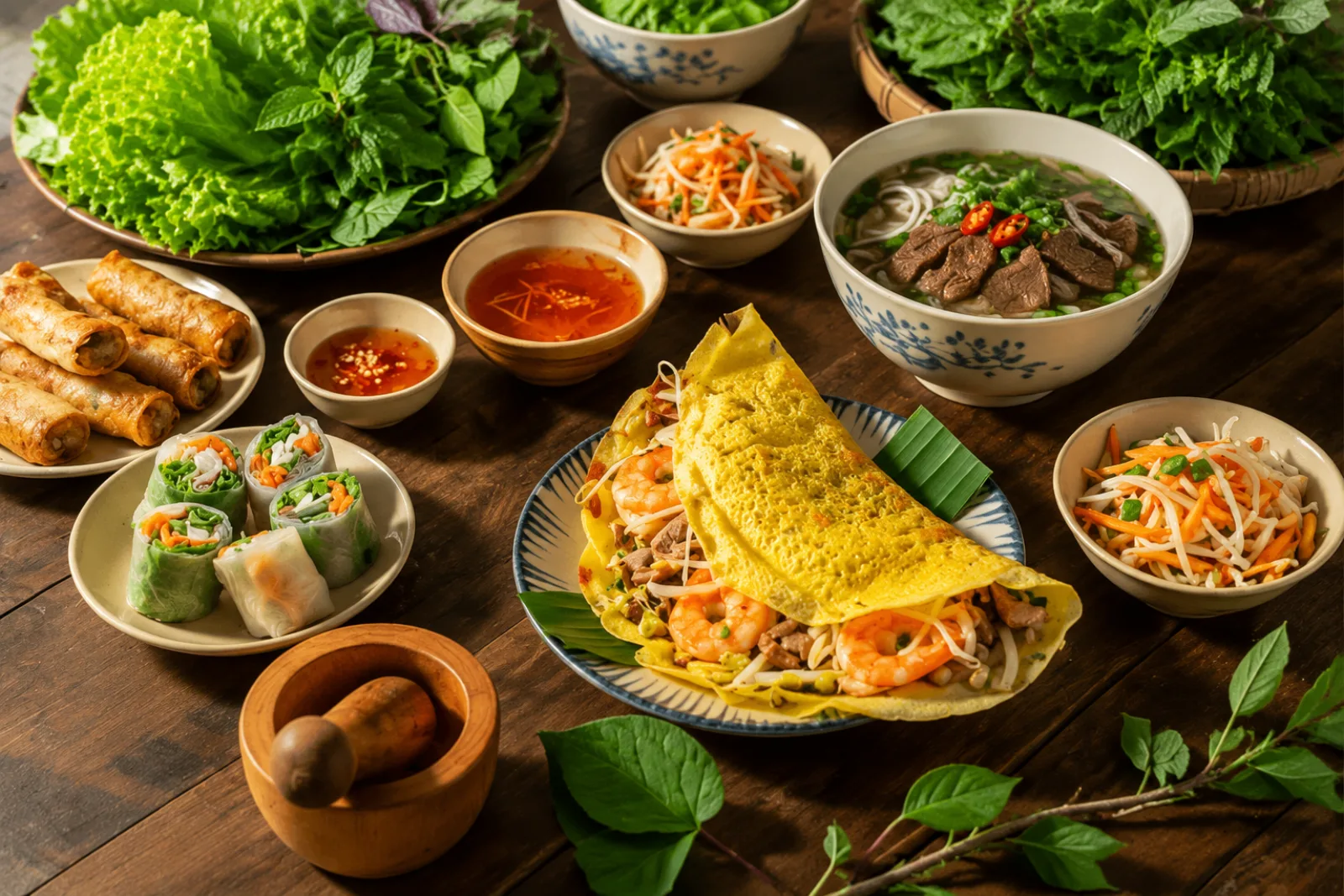
Hoi An street food runs on a clock. The afternoon snack tradition called ăn xế brings vendors to Lê Lợi street from the Trần Phú intersection down to the river, starting around 1pm. The peak hour is 3pm onwards, when the bún seller appears at 2:30pm and the full spread of bánh bèo, bánh ướt, bánh xèo, and sweet soups is available. If you eat lunch at noon and dinner at 7pm, you miss the best food window in Hoi An entirely.
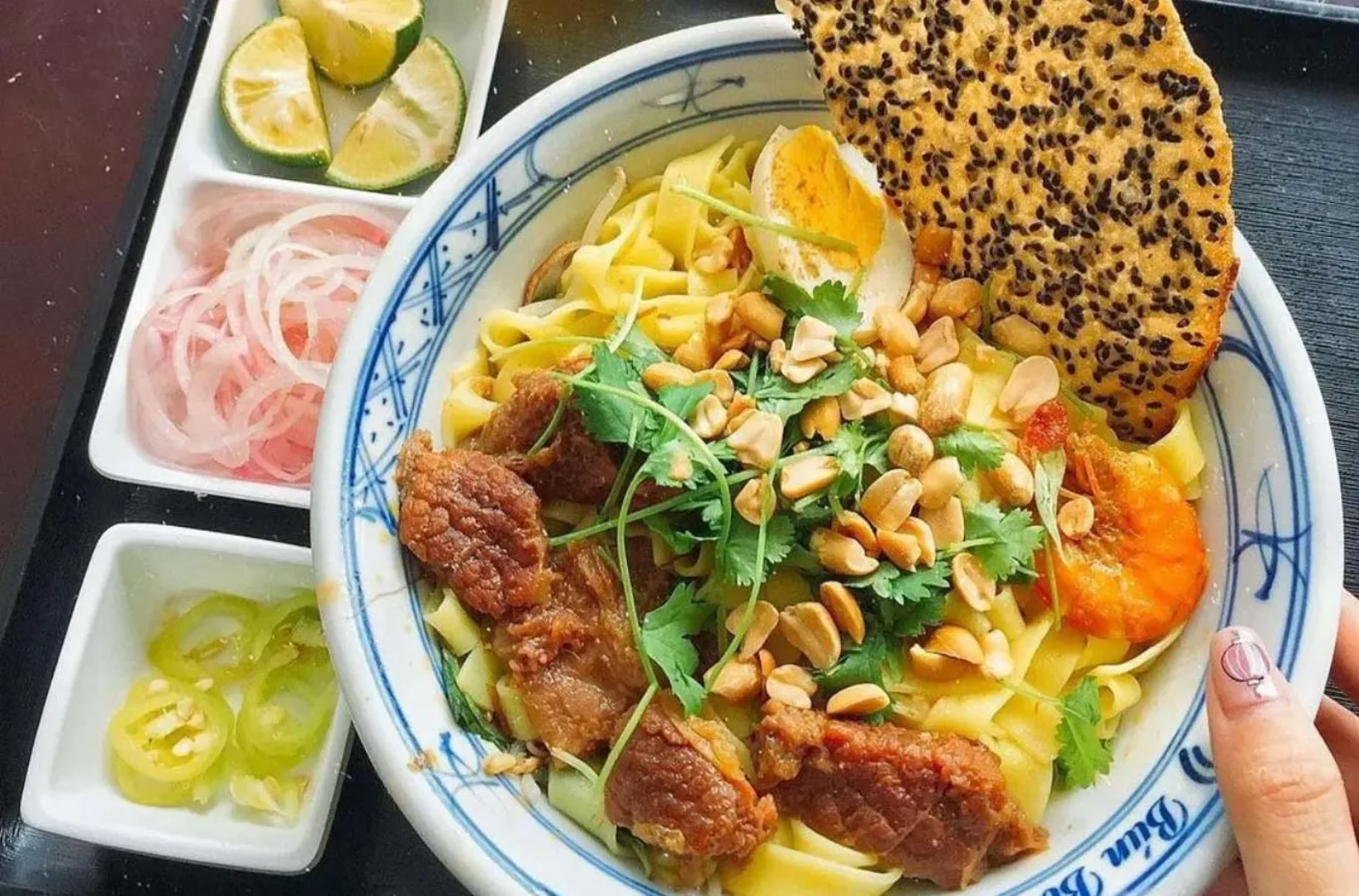
Five dishes every visitor should try, in order: cao lầu (thick noodles with pork, herbs, and crunchy croutons — the water must come from a specific local well), white rose dumplings (bánh bao bánh vạc — translucent shrimp dumplings folded by two families for over 100 years), mì Quảng (yellow turmeric noodles with shrimp, pork, quail eggs, and peanut — authentically made without garlic in the fish sauce, because the broth's subtle shrimp-meat aroma would be destroyed by garlic's heavy scent), bánh mì Phượng (the sandwich Anthony Bourdain praised), and chè bắp (sweet corn pudding — the best one is at the market).
For a guided route through the right stalls at the right time, see the Hoi An food tour.
3. Visit the assembly halls — not just for photos
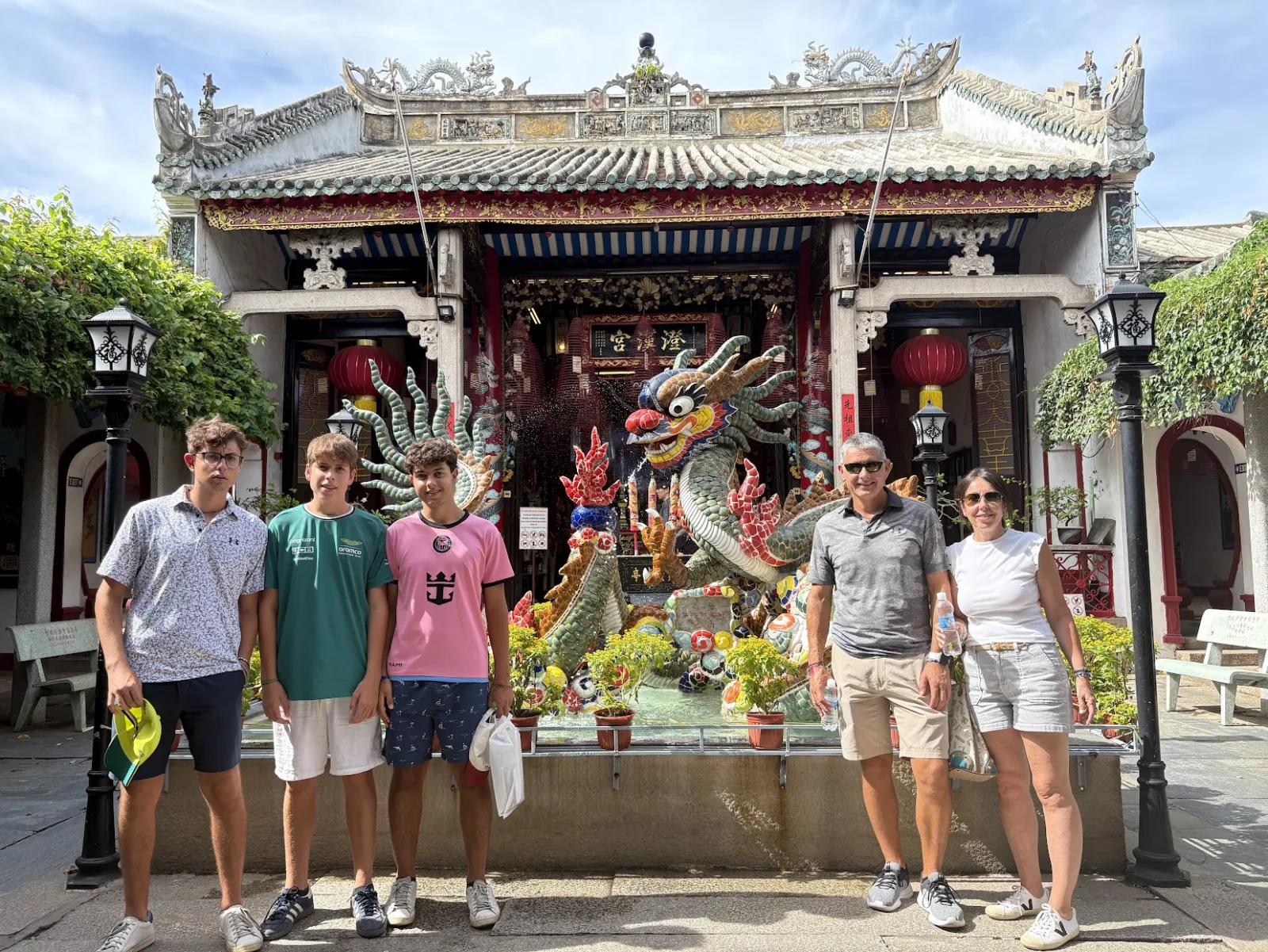
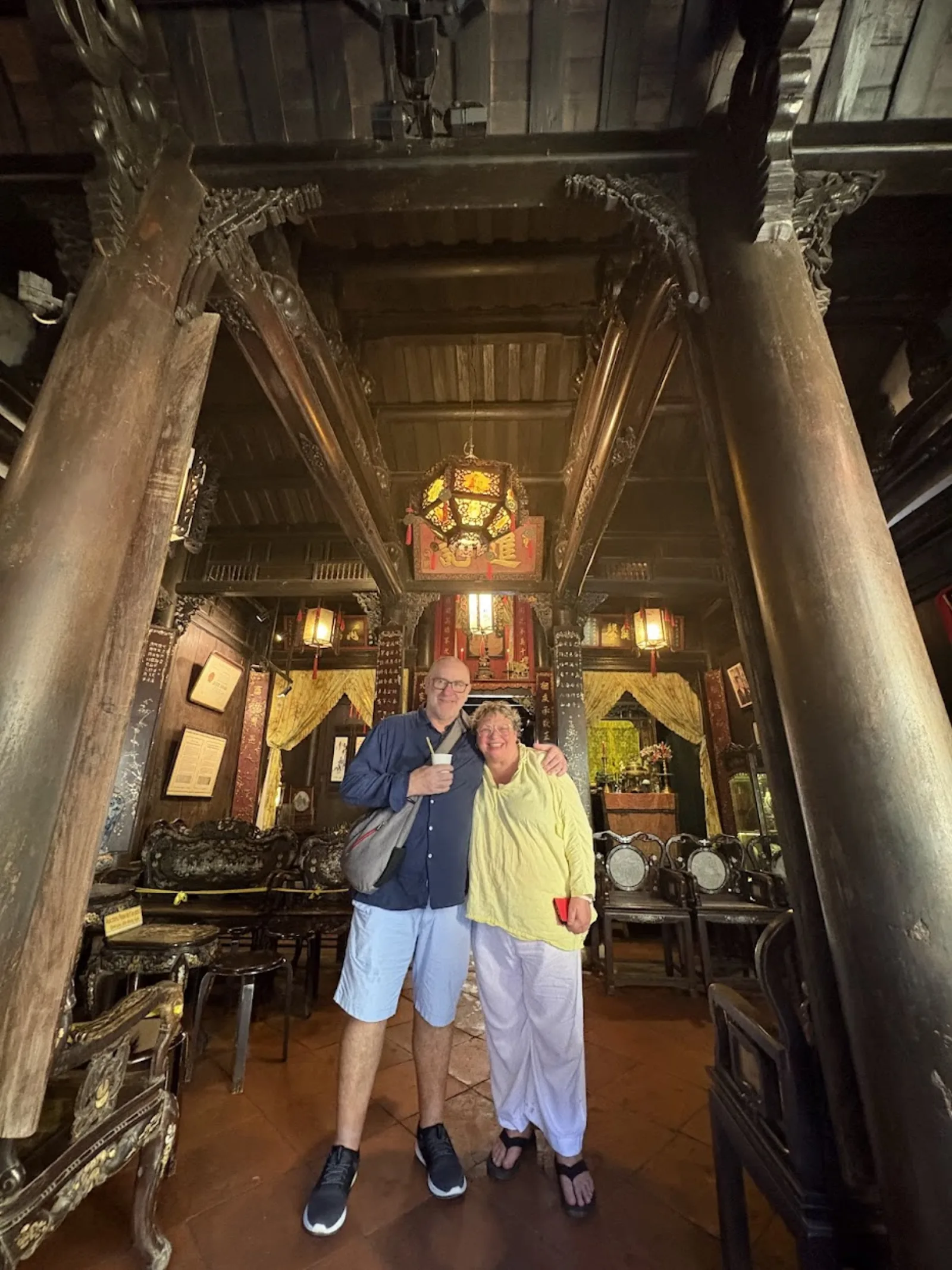
The Trung Hoa Assembly Hall (Chùa Bà) at 64 Trần Phú is the oldest Chinese assembly hall in Hoi An, possibly built during the Ming Dynasty (1465–1487). It was originally called Giang Triết Assembly Hall and served as a wholesale market and warehouse for over 350 years, hosting trade between Cham people and foreign merchants from Europe, Asia, the Middle East, and India. Eight renovations are recorded: 1855, 1891, 1928, 1958, 1970, 1993, 1994, and 1995. Inside you will find Thiên Hậu Thánh Mẫu at the centre, Thần Tài on the left, 13 anti-Japanese martyrs on the right, and behind the temple, Sun Yat-sen's cement-carved will.
Phuc Kien Assembly Hall is busier and more photographed, but Trung Hoa tells a deeper story. Move quietly, avoid treating worship spaces as photo backdrops, and spend at least 20 minutes here — the details are in the carvings, the incense coils, and the courtyard.
4. Ride through the countryside — Tra Que and Cam Thanh
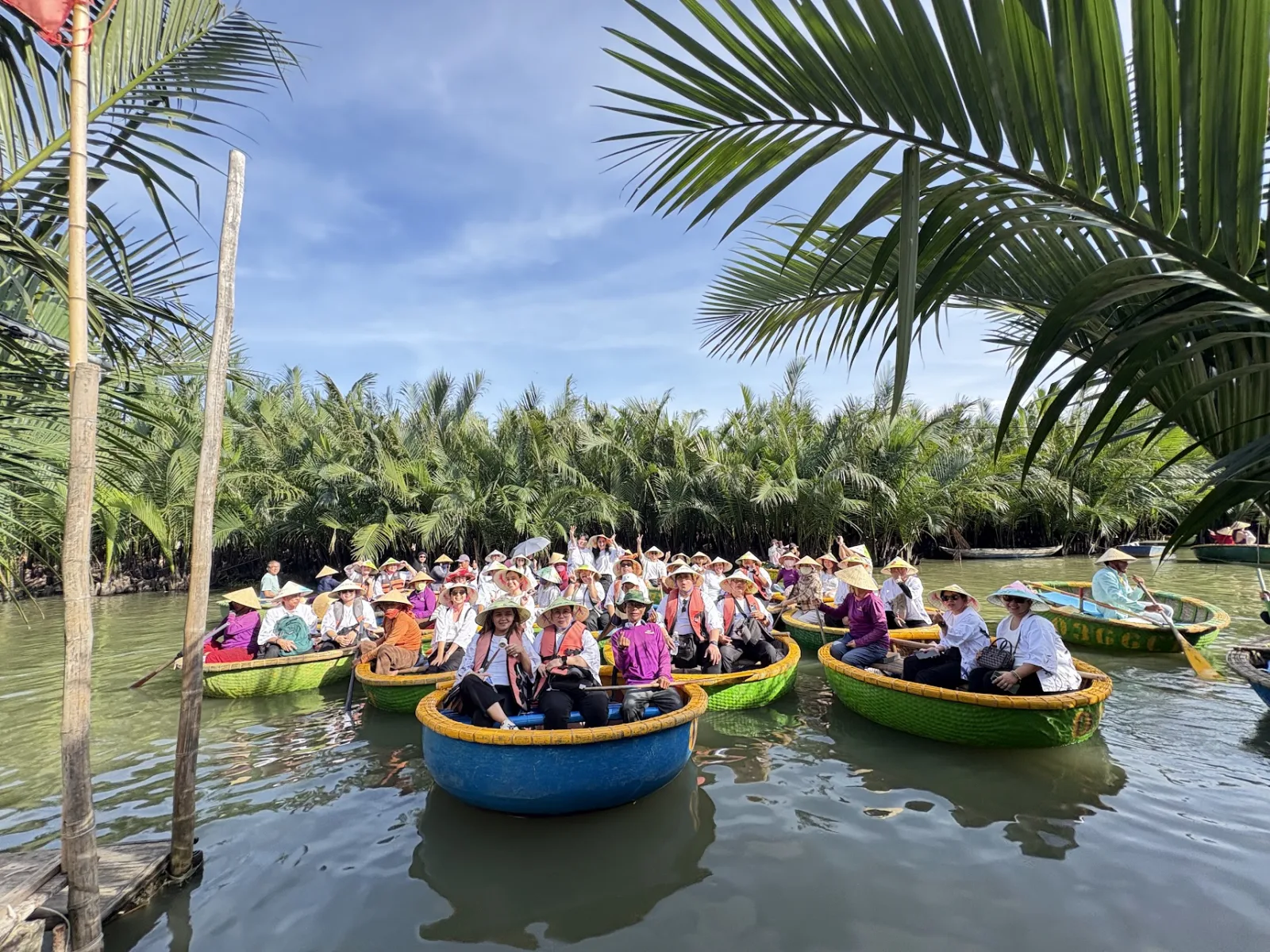
A 20-minute bicycle ride from the Old Town takes you into countryside that most visitors never see. Tra Que Vegetable Village is where Hoi An's herbs and greens grow — rows of mint, basil, cilantro, and lettuce in raised beds, fertilised with river seaweed, not chemicals. You can walk between the plots, watch farmers at work, and taste herbs straight from the soil.
Cam Thanh Coconut Forest sits along the Thu Bồn River, a dense palm grove where local fishermen still cast nets from round basket boats. The basket boat ride is touristy — accept that — but the forest itself is genuinely beautiful, especially in the early morning when the light cuts through the palm fronds. The Thu Bồn River connects mountain products (cinnamon, pepper, resin, corn) to sea products (fish, shrimp) through villages named Thạch Bích, Dùi, Chiêng, Tí, and Sé — this is the working river that built Hoi An.
A Hoi An countryside tour covers both villages in half a day with a guide who knows the farmers and can translate the rhythm of rural life.
5. Learn the lantern story — then see them at night
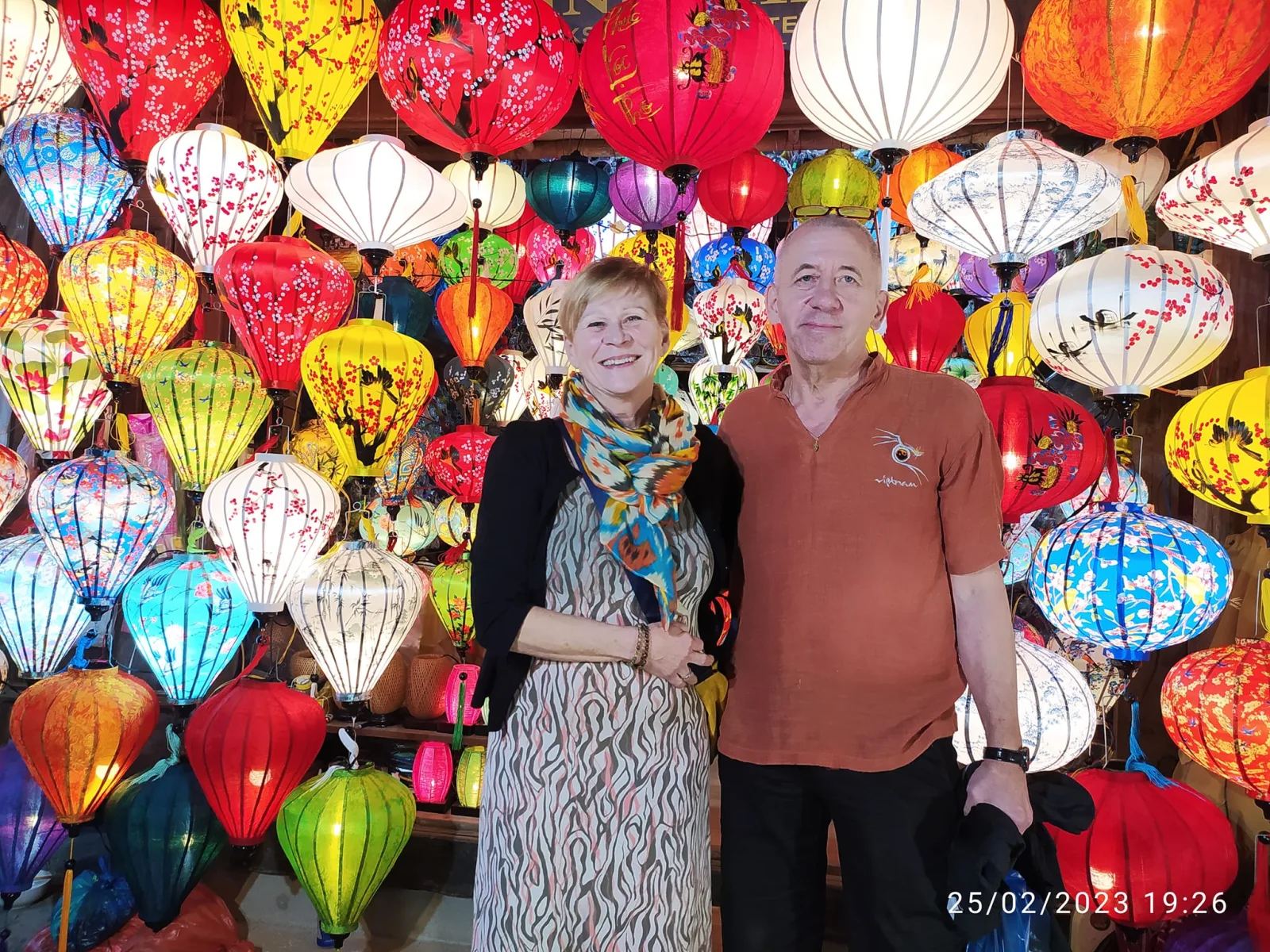
Hoi An lanterns are not just decoration. They descend from the paper-lantern tradition brought by Chinese merchants in the 16th and 17th centuries, adapted by Vietnamese craftsmen into the silk-and-bamboo shapes you see today. The best lantern shops are on Trần Phú and along the riverside, where you can watch a lantern being made — bamboo frame first, then silk stretched over it, then painted by hand.
The monthly lantern festival happens on the 14th day of the lunar calendar, when the Old Town turns off its electric lights and the streets glow with candlelit lanterns. Small paper lanterns are floated on the river, and the atmosphere is quieter and more genuine than a typical tourist night. If your dates do not line up with the 14th, the riverside is still lantern-lit every evening — just busier and less ceremonial.
6. Spend a morning at An Bang Beach
An Bang is Hoi An's best swimming beach — a long, clean stretch of sand 4km from the Old Town. It is calmer than Cửa Đại (which has suffered severe erosion and is not reliably swimmable), and the beachfront restaurants rent chairs and umbrellas for the price of a drink. Go between 7am and 10am for the softest light and fewest people. The water is warmest from April to September, and the surf is gentle enough for children. After 11am, the sun gets strong — that is the time to move under an umbrella or head back to town for lunch.
7. Take a day trip to Mỹ Sơn Sanctuary

Mỹ Sơn is a UNESCO World Heritage site 45km from Hoi An — a valley of Cham Hindu temples built between the 4th and 14th centuries. The site was rediscovered by French archaeologists in the late 19th century, and the Polish architect Kazimierz Kwiatkowski (Kazik, 1944–1997) dedicated 16 years of his life to preserving both Mỹ Sơn and Hoi An, leading to their UNESCO recognition. Kazik first contacted Hoi An in 1981 and his preservation principles are the reason the Old Town still stands today. When you walk through Mỹ Sơn, you are walking through Kazik's legacy.
The best time to visit Mỹ Sơn is early morning — the 6am departure gets you there before the heat and the tour buses. The Mỹ Sơn private tour includes transport, entry, a guided walk through the temples, and a local breakfast after.
8. Visit the pottery village at Thanh Hà
Thanh Hà Pottery Village sits across the Thu Bồn River, a 10-minute ride from the Old Town. Families here have been making pottery for over 400 years, using clay from the riverbank and wood-fired kilns. You can watch potters spin clay into bowls, pots, and figurines, and try the wheel yourself — the artisans are patient with beginners and the results are genuinely fun, not just a photo opportunity. Thanh Hà is quieter than the coconut forest and feels less packaged, especially on weekday mornings.
9. Watch a traditional performance — bài chòi or hát bội
Bài chòi is a folk game and musical performance unique to Central Vietnam, recognised by UNESCO as Intangible Cultural Heritage in 2017. It is part bingo, part poetry, part singing — players sit in bamboo huts, draw cards, and respond to sung verses. Performances happen in the Old Town on weekend evenings, and the atmosphere is casual — you do not need to understand Vietnamese to enjoy the rhythm and the crowd's reactions.
Hát bội (Vietnamese classical opera) is rarer to catch, but if you see a performance advertised at the Hoi An Traditional Performance House on Nguyễn Thái Học, go. The costumes, makeup, and stylised movements are unlike anything in Western theatre.
10. Eat bánh xèo with liver sauce — not fish sauce
Hoi An bánh xèo is different from the southern version. The pancake is smaller, crispier, and filled with shrimp, pork, and bean sprouts. But the real difference is the dipping sauce: in Hoi An, bánh xèo is served with a rich liver-based sauce (tương gan), not the diluted fish sauce (nước chấm) you get elsewhere. The liver sauce is dark, slightly sweet, and coats the pancake instead of letting it swim. The best bánh xèo stalls are near the central market — look for the ones where locals are queuing, not the ones with English menus out front.
11. Cross the river to Cẩm Kim Island
Cẩm Kim is a small island across the Thu Bồn River, reachable by a 5-minute ferry from the Old Town docks. It is where Hoi An keeps its working life: carpentry workshops, mat-weaving families, and vegetable gardens without a single tourist stall. The island is best explored by bicycle — the roads are flat, shaded by coconut palms, and quiet enough that you can hear every rooster and rice mill. This is not a "sight" in the conventional sense, which is exactly why it is worth the ferry ride. Go in the morning, bring water, and expect to spend 2–3 hours.
12. Photograph the Old Town at blue hour
Blue hour — the 20 minutes after sunset when the sky turns deep blue but before it goes fully dark — is the best time to photograph the Old Town. The yellow walls glow against the blue sky, the lanterns are lit but not yet competing with full darkness, and the river reflects both. The best spots: the Japanese Bridge from the west side, the Bạch Đằng riverside looking toward the bridge, and any small lane with a lantern shop. Bring a camera that handles low light, or use a phone with night mode — the difference between a 5pm photo and a 5:40pm photo is the difference between a postcard and a snapshot.
13. Try a cooking class that starts at the market
A Hoi An cooking class that skips the market is only half the experience. The central market is where you learn to identify fresh turmeric, pick the right rice paper, and smell the difference between Vietnamese mint and regular mint. The best classes start at 7:30am at the market, then move to a kitchen for 3–4 dishes. Look for classes that include cao lầu or mì Quảng — many classes only teach the tourist-friendly dishes (spring rolls, phở), but the local noodles are what you will remember. If you prefer a guided food walk instead of cooking, the Hoi An food tour covers more ground in less time.
14. Walk through the night market — but eat elsewhere
The Hoi An Night Market on Nguyễn Hoàng Street is a sensory overload: lantern stalls, souvenir vendors, grilled seafood, and crowds. It is worth a walk for the atmosphere, but the food at the market is inconsistent and overpriced. Buy a lantern if you want one — the prices are fair and the sellers are local craftspeople — but save your appetite for the street food stalls on Lê Lợi or the small family-run restaurants in the lanes behind the market.
15. Take a day trip to Bà Nà Hills and the Golden Bridge
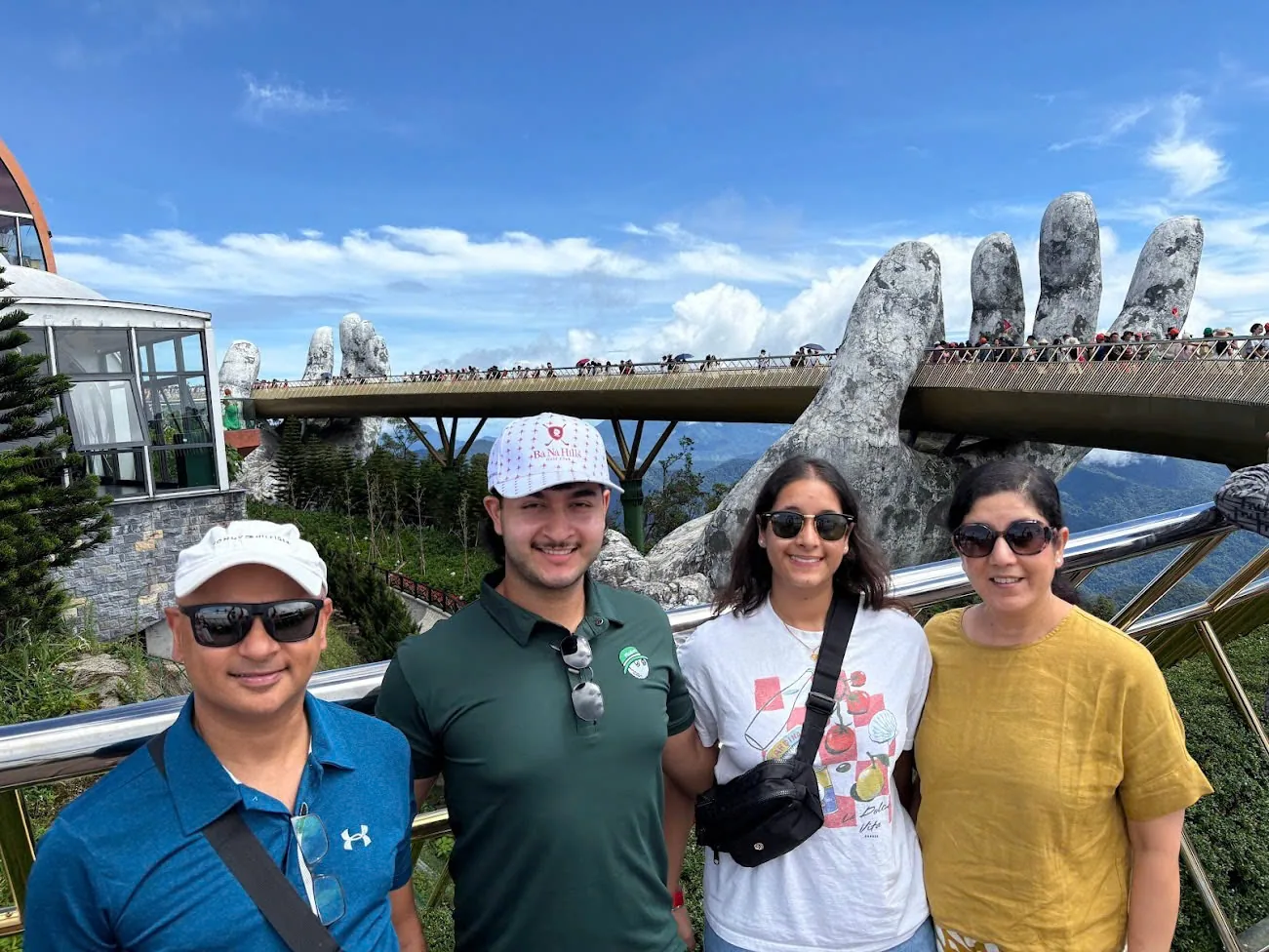
The Golden Bridge at Bà Nà Hills is the most Instagrammed spot in Central Vietnam — two giant stone hands holding a golden walkway above the clouds. It is a 90-minute drive from Hoi An, and the cable car ride up is one of the longest in the world. The site is a theme park, not a cultural experience — accept that before you go. The bridge itself is genuinely impressive, and the mountain air is a relief on a hot day. The Bà Nà Hills private day trip includes door-to-door transport and a guide who knows the best photo spots and the quietest times to ride the cable car.
16. Drive the Hải Vân Pass to Huế or Đà Nẵng
The Hải Vân Pass is a 21km mountain road that runs along the spine of the Hai Van mountain range between Đà Nẵng and Huế. Jeremy Clarkson called it "a deserted ribbon of perfection — one of the best coast roads in the world" on Top Gear. The pass peaks at 496m above sea level, with views of the East Sea on one side and jungle-covered mountains on the other. The old French bunkers at the summit are worth a 15-minute stop. You can drive it in 45 minutes, but plan for 90 minutes with stops. The pass is best in the morning before the clouds roll in.
17. Visit the tailors — but know what you want
Hoi An has over 400 tailor shops, and the quality ranges from "wear it once" to "wear it for a decade." The best tailors are not on the main streets — they are in the smaller lanes, often run by one family with 30 years of experience. Know what you want before you walk in: a photo, a fabric preference, and a clear budget. Most shops can turn around a suit, dress, or shirt in 24 hours with one fitting, but two fittings are safer. Avoid the shops that promise "same day, any design" — good tailoring takes time, and Hoi An's humidity affects fabric, so give yourself at least 48 hours if you can.
18. End every day by the river

The Thu Bồn River is Hoi An's spine. It was the trading highway that made the town rich, and it is still the town's best place to sit, watch, and do nothing. In the morning, fishermen cast nets from wooden boats. In the afternoon, the light turns golden on the water. In the evening, lanterns reflect off the surface and the river becomes the town's living room. The best seats are at the quieter end of Bạch Đằng — the stretch between the market and the Japanese Bridge is busier, but the stretch further east toward the night market is calmer. Bring a drink, leave your phone in your pocket, and let the river do the work.
What to skip in Hoi An
Not everything makes the list. Here is what a local guide honestly tells travellers to skip:
- Cửa Đại Beach: severe erosion has stripped the sand. Go to An Bang instead.
- Midday Old Town (11am–2pm): the heat, the crowds, and the tour buses make it the worst window of the day. Eat lunch, nap, or sit in a café.
- Riverfront restaurants with picture menus: the food is average, the prices are high, and the view is the only thing you are paying for. Walk two streets back for better food at half the price.
- The "Old Town ticket" panic: you do not need a ticket to walk the Old Town streets. You only need one to enter specific heritage houses and assembly halls. If you only want to walk, eat, and photograph, you do not need a ticket at all.
- Overplanning: the best Hoi An experiences — a quiet lane, a sudden food stall, a conversation with a shopkeeper — are unplanned. Leave gaps in your itinerary.
How many days do you need in Hoi An?
| You have | Do this | Leave out |
|---|---|---|
| One day | Old Town before 9am, street food mid-afternoon, the river after dark. | Everything outside town. Accept that you will come back. |
| Two days | Day one as above. Day two: countryside — Tra Que and the basket boats — or the beach. | Mỹ Sơn and Bà Nà. Both eat a whole day. |
| Three days | Add one real day trip (Mỹ Sơn at sunrise is the one), plus a slow morning at An Bang. | Nothing important. |
| Four days or more | Add Cẩm Kim island, a cooking class, and an evening with no plan at all. | Nothing. This is the comfortable version, especially with children. |
Two full days is the minimum for a meaningful visit: one day for Old Town and food, one day for a countryside ride or day trip. Three days is better — it gives you a morning at the beach, a slower evening, and room for the unplanned discoveries that make Hoi An special. Four days is comfortable, especially if you are travelling with children or older family members who need shorter blocks and more breaks. If you have only one day, focus on the Old Town in the morning, street food in the afternoon, and the river at night — and accept that you will need to come back.
How much does a private guide cost in Hoi An?
A local private guide in Hoi An costs $25–50 USD per person for a half-day walking tour, depending on group size, route, and whether food or transport is included. Full-day tours with a private car, countryside stops, and lunch range from $45–80 USD per person. A guide born in the Old Town shows you food timing, building stories, vendor schedules, and quiet lanes that no guidebook or self-guided walk can replicate. For transparent pricing across all tour types, see how much a private tour in Hoi An costs.
Related planning notes: Hoi An itinerary for first-timers, Hoi An Old Town guide, what to eat in Hoi An, best time to visit Hoi An, and things to do in Hoi An with kids.
FAQ
A few practical follow-up questions
Only the questions that sit naturally inside this article are shown here, so the page stays focused.
Article FAQ
Yes — Hoi An is consistently rated one of the most enjoyable destinations in Vietnam and the UNESCO Ancient Town is the only intact 16th-century trading port in Southeast Asia. Add the countryside, the An Bang beach, the food, and proximity to My Son Sanctuary and the Hai Van Pass, and the area justifies 2 to 5 days. Most travellers wish they had stayed longer.
3 days is the sweet spot: one day for the Old Town and lantern evening, one day for the countryside (Tra Que + Cam Thanh + cooking class), and one day for either My Son or the An Bang beach. 2 days is doable if you focus on Old Town + countryside. 5 to 7 days lets you add day trips to Hai Van Pass, Cu Lao Cham, Marble Mountains, and Hue. See the dedicated itinerary article for hour-by-hour plans.
February to May for the most balanced weather — warm, dry, manageable humidity. June to August is hot but still good for beach days. September to November is the rainy season, with flooding possible in October/November (the Thu Bon river can rise into the Old Town streets). December to January is cool and damp; comfortable for walking but the beach is choppier.
The Old Town is fully pedestrian and small enough to walk across in 15 minutes. The wider Hoi An town (with hotels, beaches, countryside) is best navigated by bicycle (50,000 VND per day rental) for An Bang beach or Cam Thanh, and by car or scooter taxi for anything 5+ kilometres. Most travellers walk in the Old Town and take a taxi at night.
Yes — Hoi An is one of the safest destinations in Vietnam. Petty theft is rare, the food is genuinely safe to eat at the right spots, traffic is slower than in big cities, and English is widely spoken in the Old Town. Solo female travellers and families with children report Hoi An as an easy entry point to Vietnam.
Stayed longer in the evening. Most day-trippers leave by 17:30 to catch the bus back to Da Nang and miss the entire lantern evening — which is when Hoi An is at its most distinctive. If you can stay until 20:00 or 21:00, the Old Town becomes a completely different place than the one you walked through at midday.
Same topic
More in this topic
If this topic is close to your trip, these notes stay within the same planning lane without sending you off into a wider archive.
Related tours
If you want to turn the note into a real plan
These tours sit closest to the topic you just read, so the next step stays grounded in the actual route options.
Walking & Street Food Tour
Hoi An Ancient Town Walking & Street Food Tour
Join our half-day tour to explore the best of Hội An. Walk through lantern-lit streets, visit iconic landmarks, and enjoy delicious local food.
3 to 4 hours
Explore the Hoi An Ancient Town Walking & Street Food Tour
Food Tour
Hoi An Street Food Tour with Local Expert
A private evening route for flavour, conversation, and a softer look at Hoi An after dark.
3 hours
Explore the Hoi An Street Food Tour with Local ExpertHelpful next step
Use the article for context, then move into the part that fits your trip best
Some travellers want to compare tours next, while others just want to send a quick message with dates and questions. Both paths stay open here.