
Landmark guide
Cam Thanh Coconut Forest and the Hoi An Basket Boat Ride: What It Actually Is
Cam Thanh is the coconut palm forest 4km east of Hoi An, navigated by traditional round bamboo basket boats. Here's what the visit really involves, how to avoid the party boats, and when to go.
May 29, 2026 · 7 min read
Last updated: 9 September 2026 — written by Fin, a local guide in Hoi An.
Quick answer: what is Cam Thanh coconut forest?
Cam Thanh is a tidal river-mouth district 4 kilometres east of Hoi An's Old Town, where nipa palm — usually called "coconut palm" in English, though it is a different plant — grows on small islands separated by salt-water canals. The area covers about 110 hectares, and during the war the dense canopy made it a hiding base, because it could not be seen through from the air. Today around 60 families run basket boats here. The palm is Nipa fruticans, a brackish-water species whose leaves were historically the main roofing material for Hoi An's wooden houses — the same leaves you will see stacked and drying along the lanes.
Key takeaways
- A basic two-to-four-person basket boat is 100,000–150,000 VND per person for about 30 minutes.
- The spinning, the net-throwing and the music are optional extras, not the ride.
- The large party boats are a different product at more than double the price. They are easy to avoid once you know what they look like.
- Best at 9am–11am, or 3:30pm–5pm. It is a tidal creek: at low tide the paddling is poor.
- Works best as one stop of three in a half-day, not as a destination on its own.
The basket boat ride — what it actually involves
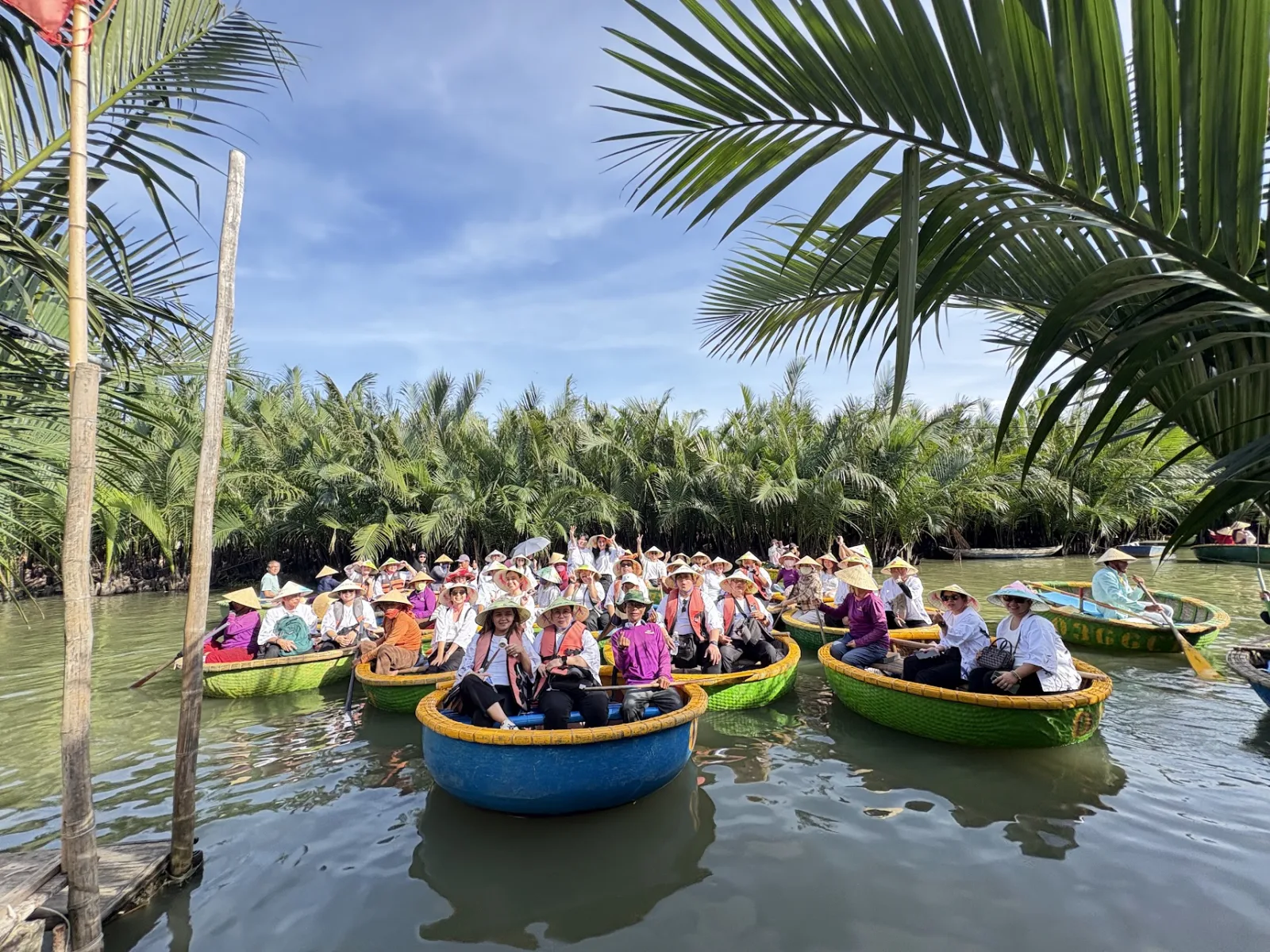
The boat is a thúng chai — a circular bamboo basket about 2 metres across, waterproofed with tar, used by fishermen along this coast for over 200 years. It carries 2–4 passengers plus a paddler. A basic 30-minute ride costs 100,000–150,000 VND per person: you are paddled through the canals while the boatman points out fish, crabs and the plants along the bank, and usually demonstrates the sculling stroke, which is far harder than he makes it look.
The show element — spinning the boat to music, throwing a fishing net, catching a crab on a baited string — costs an extra 50,000–100,000 VND as a tip. This is what most travellers remember afterwards, and it is also what some people find uncomfortable. Both reactions are reasonable. You can simply say you would rather just paddle, and the boatman will.
What surprises most people is how quiet it is once you are two turns into the canal. The palms close overhead, the noise from the road disappears, and for ten minutes it is only water and paddle.
Which version to book — and what to avoid
| Version | Price per person | What you get | Verdict |
|---|---|---|---|
| Basic paddle | 100,000–150,000 VND | 30 minutes, 2–4 people, one boatman, no show. | The one to take. |
| Paddle + show | +50,000–100,000 VND tip | Spinning, net-casting, crab-catching demonstration. | Fine if you want it. Decide before you get in, not after. |
| Large party boat | 250,000+ VND | 20+ passengers, loudspeakers, beer, a spinning display in convoy. | Avoid. It is the version most complaints are about. |
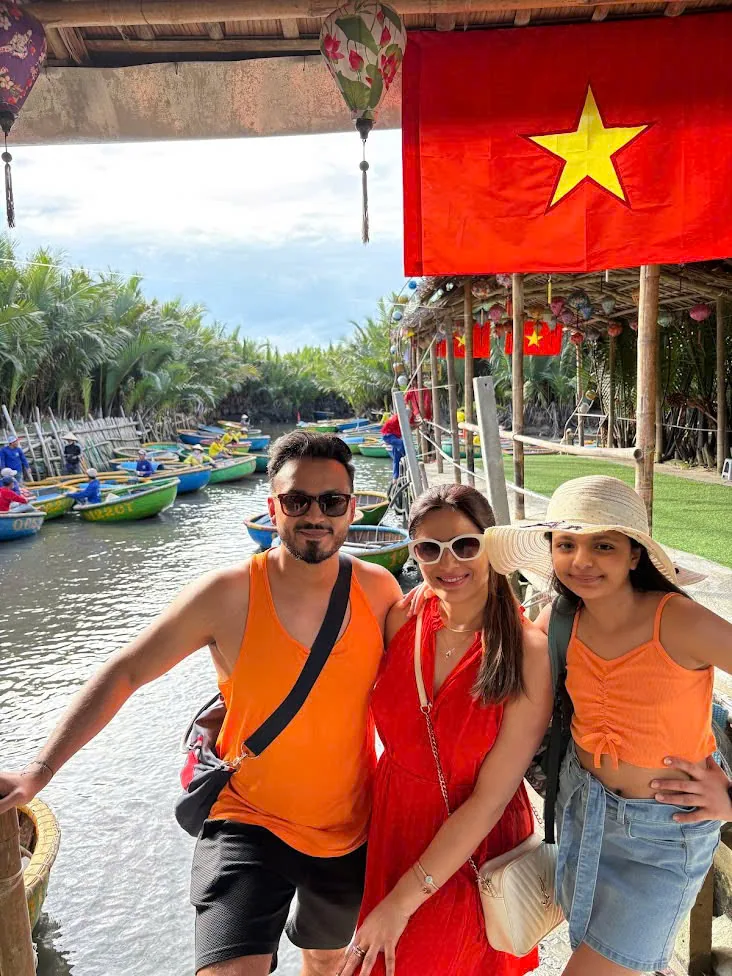
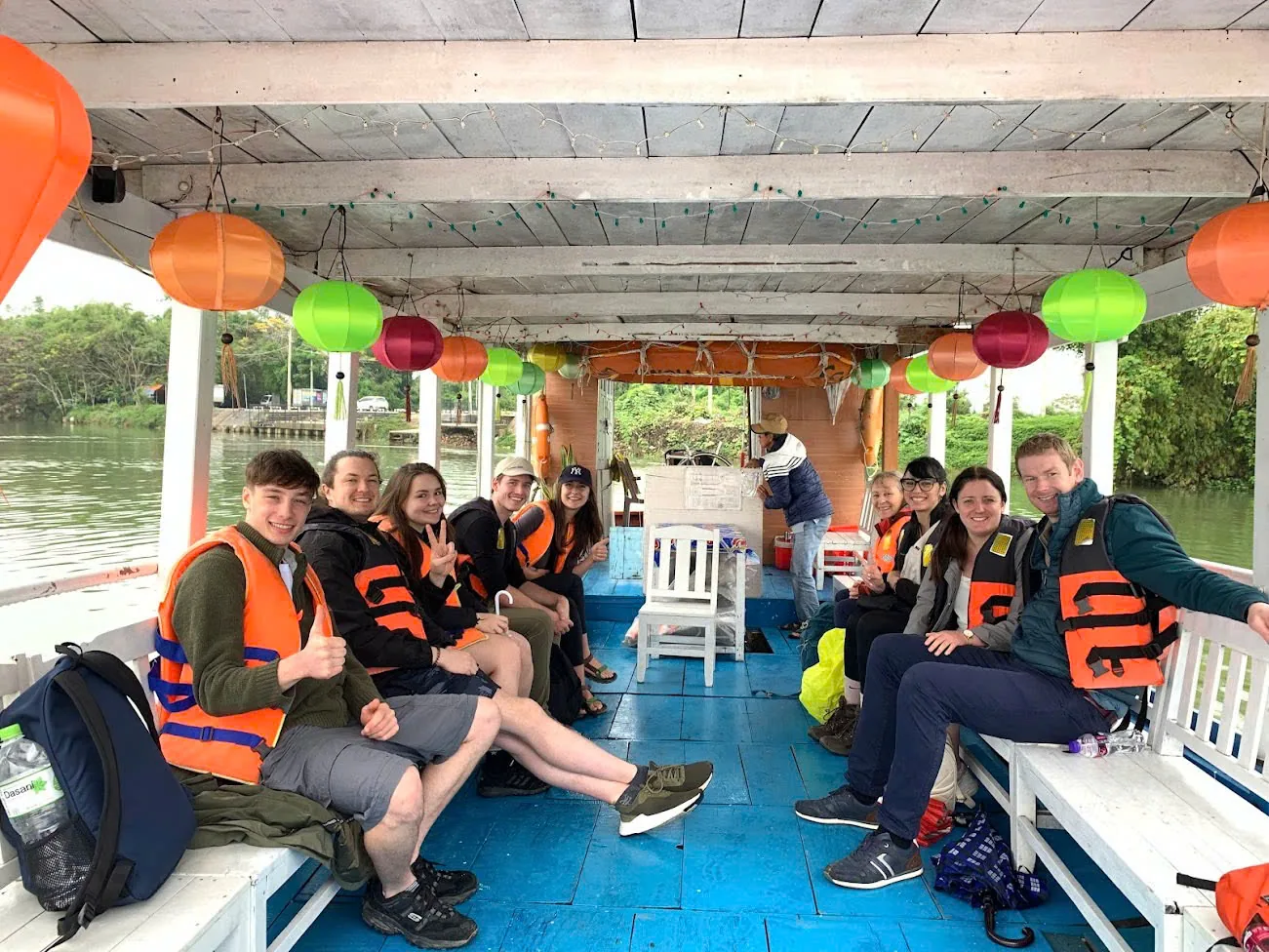
You can tell them apart from the landing: the party boats are the long wooden ones with speakers and a canopy, moored in a row and filling up with a coach group. The basket boats sit low and are stacked on the bank in dozens. If a driver takes you to a landing where only the big boats are running, ask to be taken to another one — there are several within a kilometre.
Fisherman traditions you can actually see
Visit early — 6am to 7:30am — and the canal is still a working place rather than a ride. Fishermen set crab traps along the banks, cast nets from larger wooden boats, and cut palm leaves for thatching. The net-casting is genuinely worth watching: a four-metre circular net is folded into one hand, swung in a single motion, and lands open and flat on the water. Local fishermen learn it from about the age of eight or nine, and it takes years to get the net to open every time.
Crab-catching on a baited string is the other skill still in daily use here, and it is over a century old. The version done for visitors during the day is the same technique, just slower and with commentary.
Best time to visit
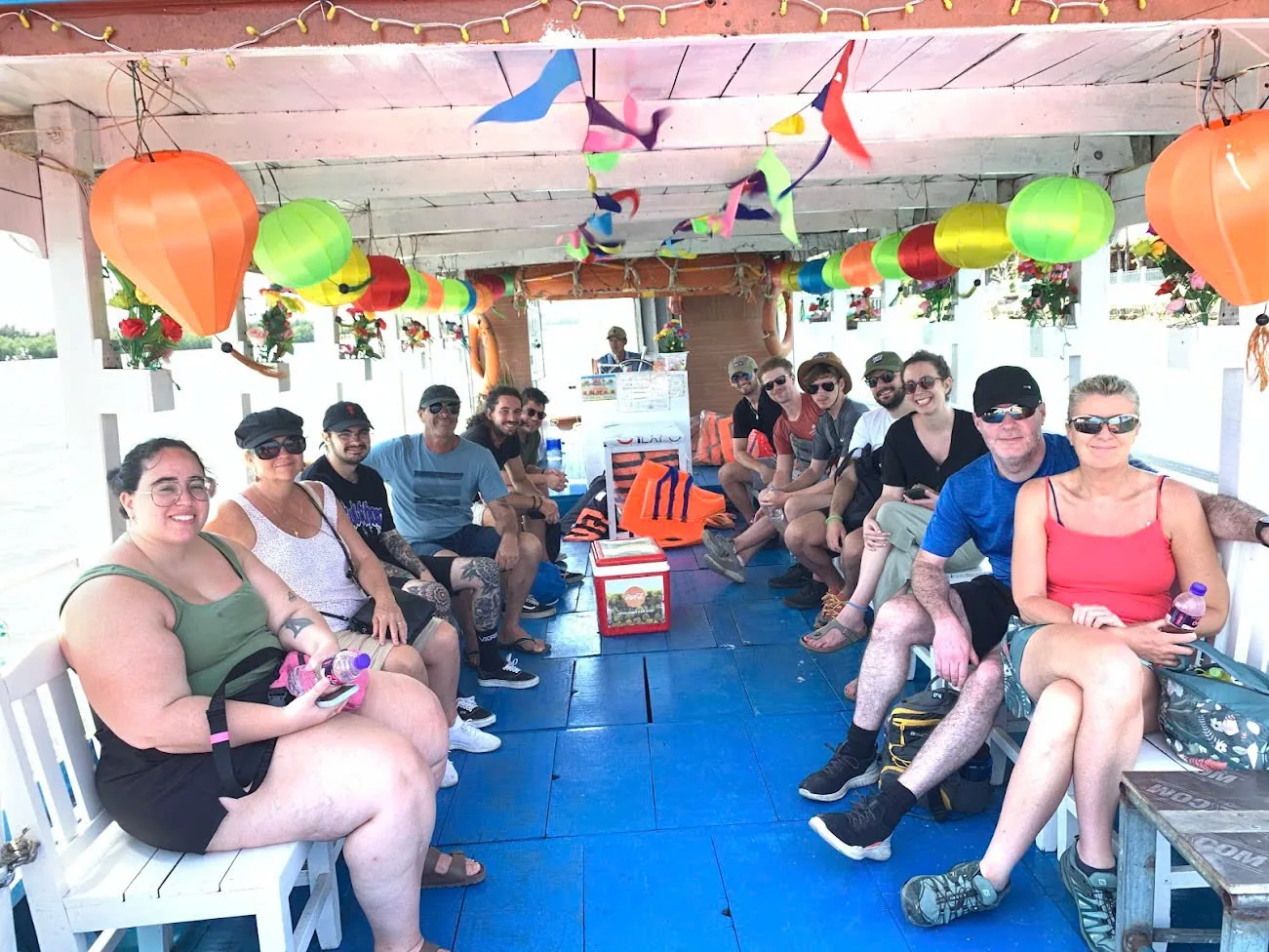
Best window: 9am–11am — the tide is usually high enough for easy paddling, the heat is still manageable, and the coach groups have not arrived. Second-best: 3:30pm–5pm, for warm light and thinner crowds.
Avoid 12pm–2:30pm: hottest, busiest, and the loudest hour for the party boats. Avoid low tide in any season — the canals get shallow and the ride becomes a shove through mud.
In the October–November flood window the water runs high and brown and the landings can close for days. If your trip falls then, check the seasonal notes and keep the morning flexible.
Pairing with the countryside tour
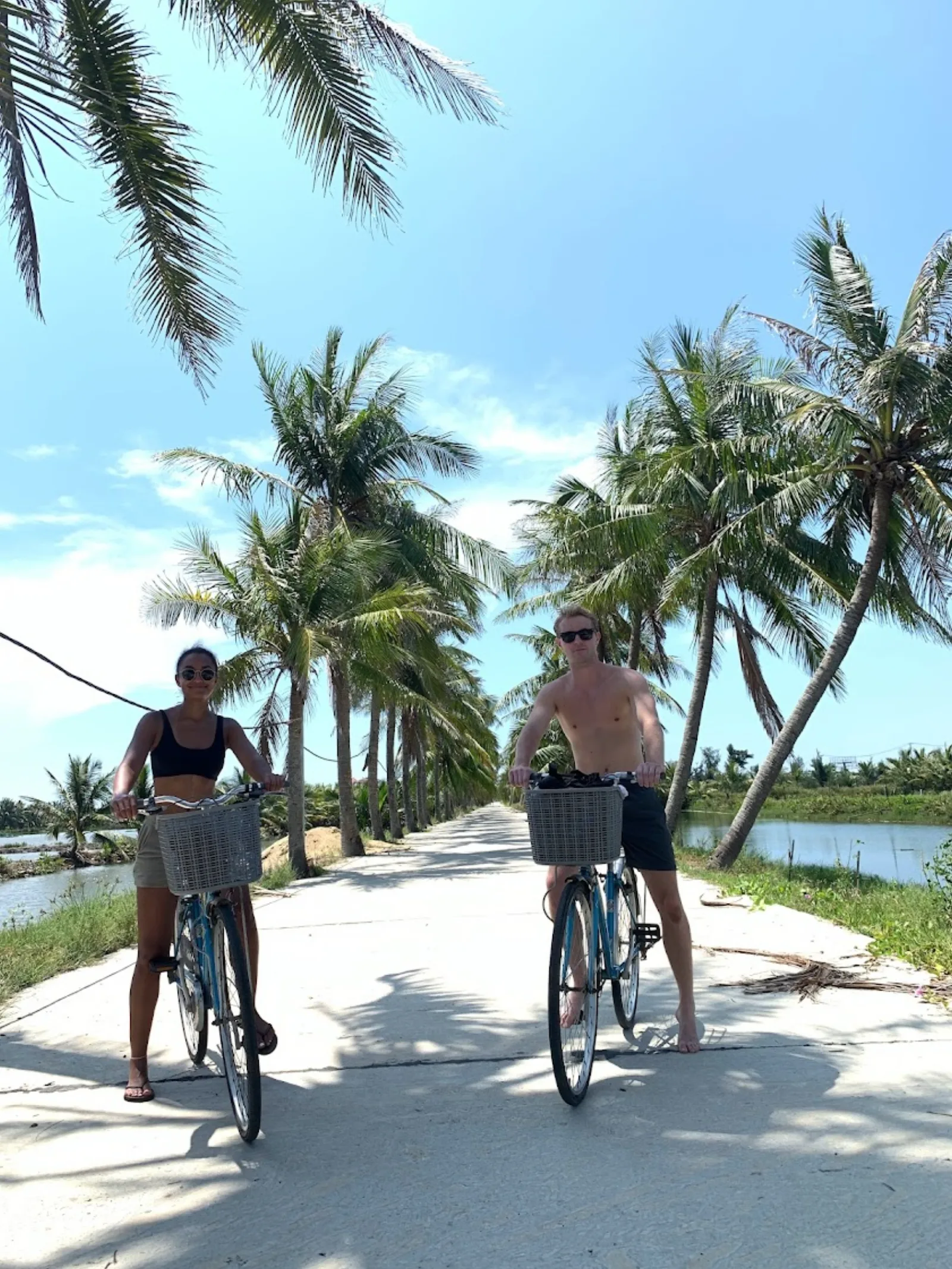
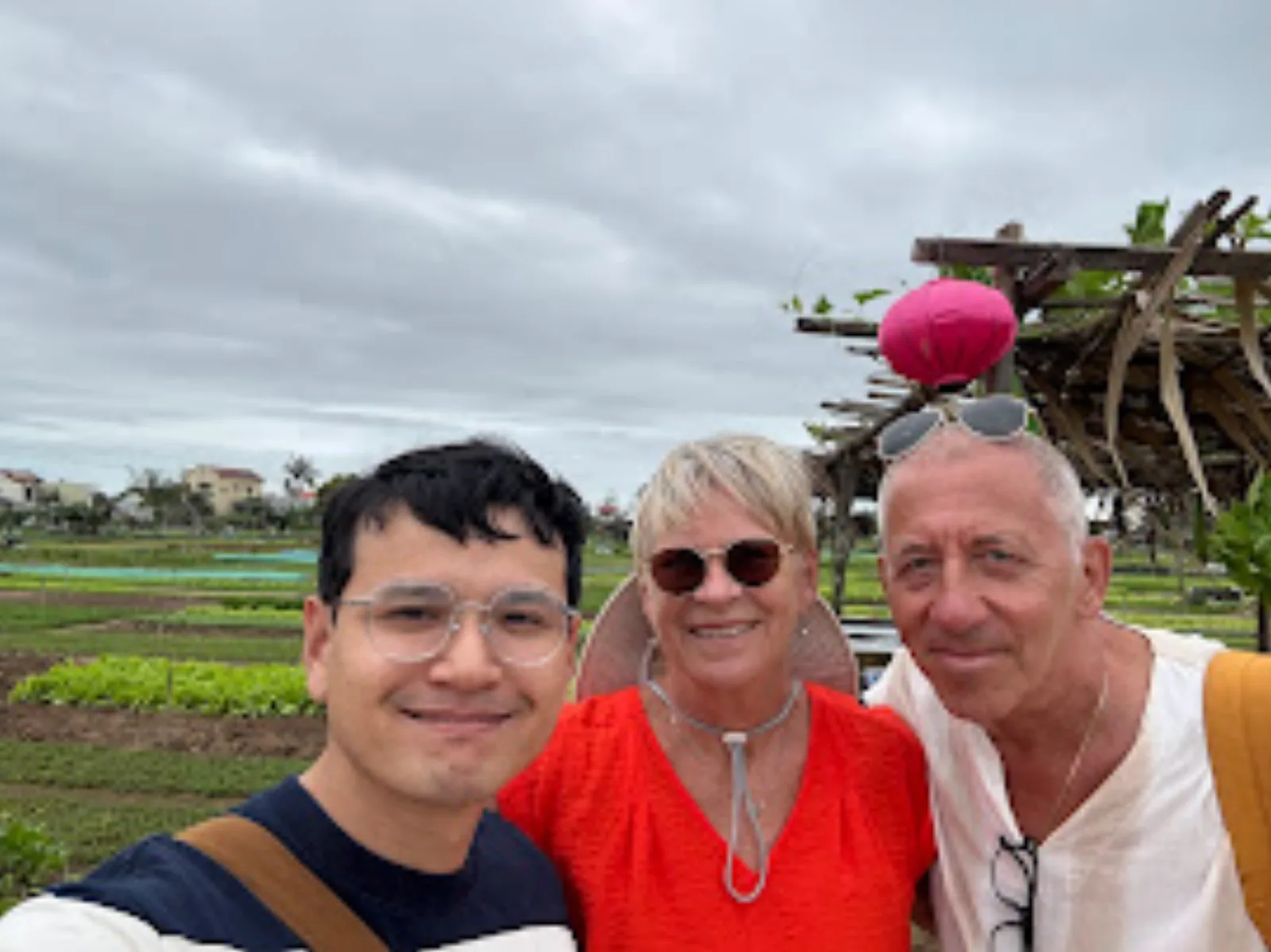
Cam Thanh is a 45-minute stop, not a half-day. On its own it can feel thin; as the middle stop of three it is the part everyone remembers. The Hoi An countryside tour runs Tra Que vegetable village (30–60 min), the Cam Thanh basket boat (45 min), and rice fields or Thanh Hà pottery (45 min) across 4–5 hours, starting at $35 per person for two guests.
If you are building the day yourself: bicycle out through Tra Que in the morning, boat at Cam Thanh before 11am, lunch back in town, and keep the afternoon for An Bang beach or the Old Town. The things to do in Hoi An notes have the rest of the options.
What the palms were before the boats
It is easy to take Cam Thanh as scenery. For most of its history it was infrastructure. The nipa leaves were the town's roofing — cut, dried, folded over a bamboo rib and laid in overlapping rows on the wooden houses of Hoi An and the villages around it. You will still see stacks of them drying along the lanes, because some houses still use them and every thatched café wants them.
The palms also hold the riverbank together. Their roots trap silt where the Thu Bồn meets the tide, and the islands you paddle between keep their shape partly because the palms are there. That is why the forest is protected rather than cleared, and why the boatmen are touchy about anyone snapping fronds as a souvenir.
And during the war the canopy was cover. A boat under the palms cannot be seen from above, which made the waterways a hiding place and a supply route. The boatmen of the older generation remember it, and some will tell you about it if you ask quietly and are not in a hurry. It is not part of the show, and it should not be.
What to bring, and what it really costs
- Small notes in cash. 10,000 and 20,000 VND notes for the boat fee, the tip and a coconut on the landing. Nobody at the canal takes cards, and change for a 500,000 note is a problem.
- A hat with a brim, not a cap. The basket boat has no shade and the water throws light up under a cap.
- A dry bag or a zip bag for your phone. The spinning is optional; the splash from the next boat is not.
- Shoes you can get wet. Stepping in and out of a basket boat is the one moment people lose their balance.
- Check the life jacket fits, especially on children. The boats carry them; the sizes are approximate.
All in, two people doing the basic paddle, a modest tip and a coconut each should spend about 350,000–450,000 VND. If you are being asked for more than that before you have got into a boat, you are at a party-boat landing.
Cam Thanh with children
This is one of the few stops in Hoi An that children rate higher than adults. The boat is round, it spins, somebody catches a crab on a string, and the whole thing is over before anyone gets bored. Three practical things make it go well: go at 9am rather than noon, sit a small child in the middle of the basket rather than at the edge, and decide about the spinning before you set off, because a boatman will take a delighted shriek as a request for more.
For a longer family day, the gentler Hoi An ideas guide builds Cam Thanh into a day with rest stops, and things to do with kids covers the rest of the town.
If it rains
A light shower does not stop the boats — the boatmen hand out plastic ponchos and carry on, and the canal is actually at its most atmospheric under a grey sky. Heavy rain is different: the landings close, and in the October–November flood window they can stay closed for several days while the water runs high and brown. If the forecast is bad, keep Cam Thanh as the flexible part of your plan and swap it with an indoor morning in the Old Town.
Related planning notes: Tra Que vegetable village, Hoi An itinerary, and things to do in Hoi An.
FAQ
A few practical follow-up questions
Only the questions that sit naturally inside this article are shown here, so the page stays focused.
Article FAQ
Yes for most travellers — the boat technique is genuinely old, the palm-island scenery is distinctive, and the visit is short enough not to feel overcommitted. Skip it if you specifically dislike performative tourism: the spinning-boat show element is enjoyable but can feel forced for some travellers. The simple paddle without the show is the version most locals would recommend.
100,000 to 150,000 VND per person for a basic 30-minute paddle ($4 to $6). The optional show (boat spinning, net throwing, crab catching) adds 50,000 to 100,000 VND as a tip. Large party boats with music cost 250,000+ VND per person and are best avoided.
Yes — children typically love the basket boats (especially the spinning element), and the half-day countryside tour combining Cam Thanh with Tra Que and rice fields is one of the most family-friendly options in the Hoi An area. The boats are stable and the canals are calm.
Allow 90 minutes for the visit including the 30-minute boat ride, photography time, and walking around the palm islands. Add 25 to 30 minutes round-trip transit from the Old Town. As part of the countryside tour, Cam Thanh fits naturally between Tra Que (60 to 90 minutes) and the rice-field stop (45 minutes) for a 4 to 5 hour route.
Look at the landing before you commit. Party boats are long wooden boats with loudspeakers and a canopy, loading a coach group. Basket boats are stacked in dozens along the bank. If your driver stops at a party-boat landing, ask for a different one — there are several within a kilometre.
Same topic
More in this topic
If this topic is close to your trip, these notes stay within the same planning lane without sending you off into a wider archive.
Related tours
If you want to turn the note into a real plan
These tours sit closest to the topic you just read, so the next step stays grounded in the actual route options.
Local Life
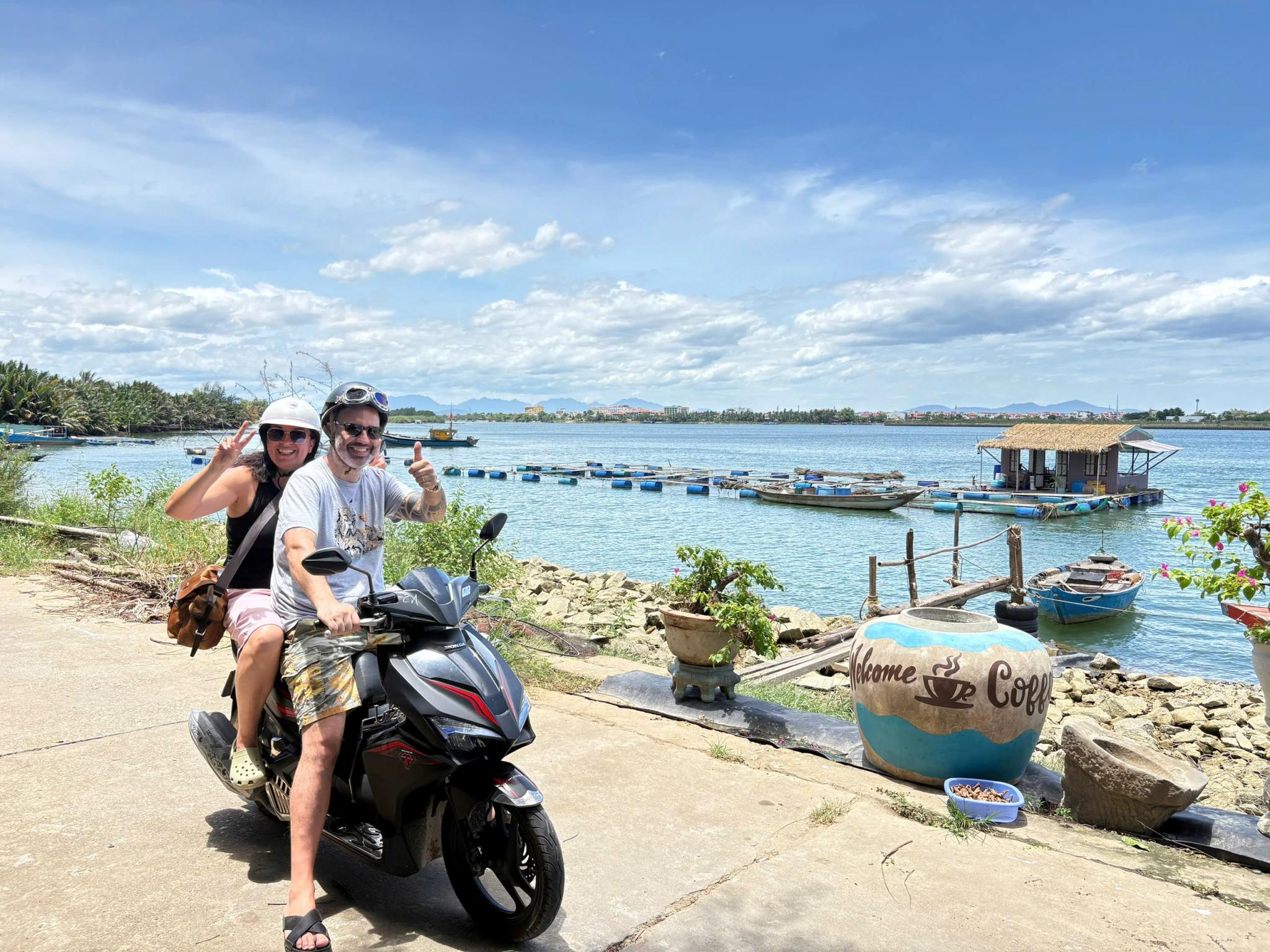
Special Hoi An Countryside by Motorbike Tour
Ride through scenic village backroads, visit ancestral artisan workshops, and enjoy a basket boat glide followed by a home-cooked lunch.
4 hours
Explore the Special Hoi An Countryside by Motorbike Tour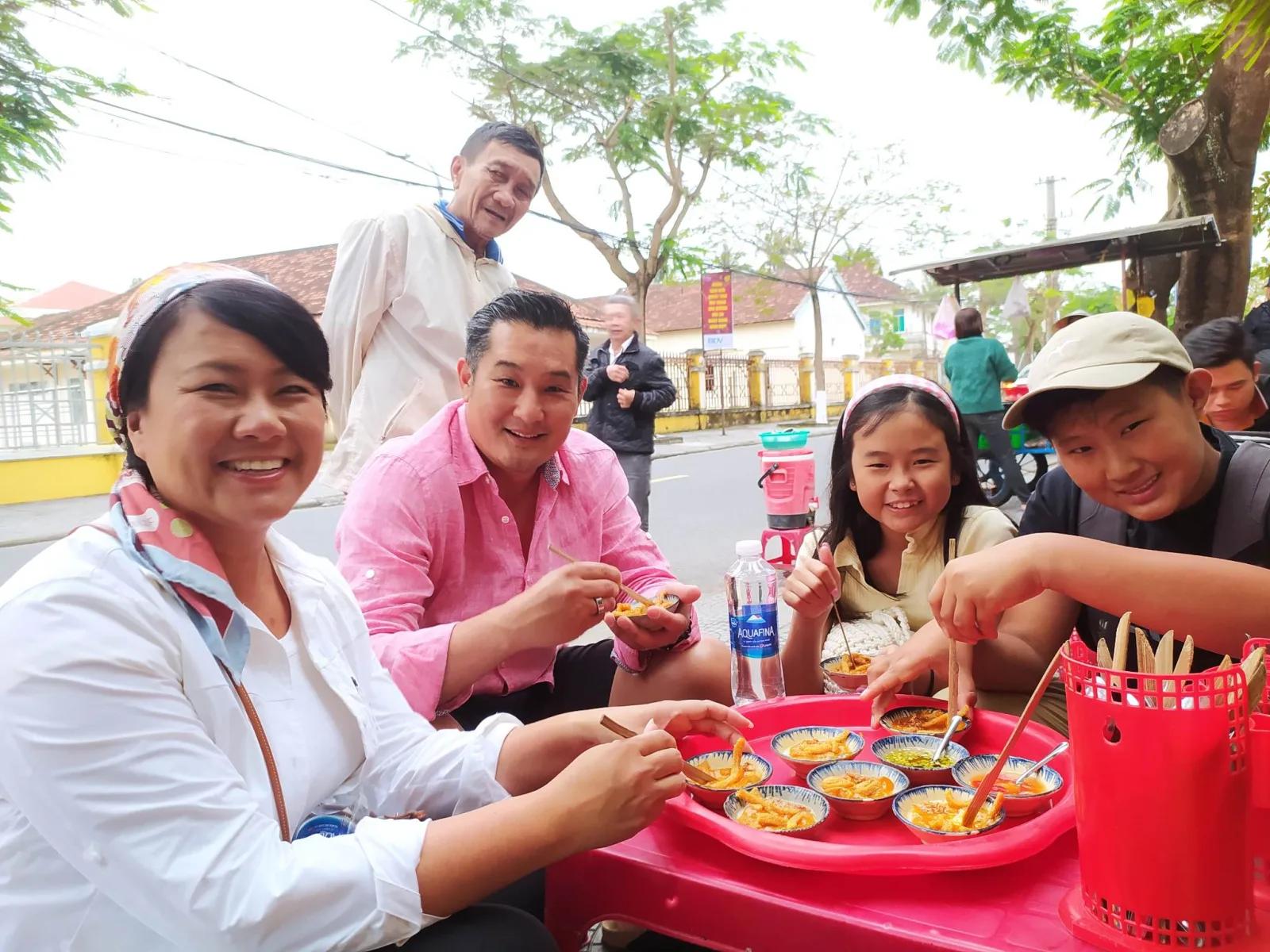
Food Tour
Hoi An Street Food Tour with Local Expert
A private evening route for flavour, conversation, and a softer look at Hoi An after dark.
3 hours
Explore the Hoi An Street Food Tour with Local ExpertNext step
If you want to turn this into a real route, start with the tours
Use the article for context, then move into the private tour pages when you want to compare the actual route styles more directly.