
Landmark guide
Tra Que Vegetable Village: What It Is, How to Visit, and What You Actually Do There
Tra Que vegetable village is Hoi An's 400-year-old herb-growing community. Here's what's actually grown there, how to get to it, and what a visit (or cooking class) really involves from a local guide.
May 26, 2026 · 8 min read
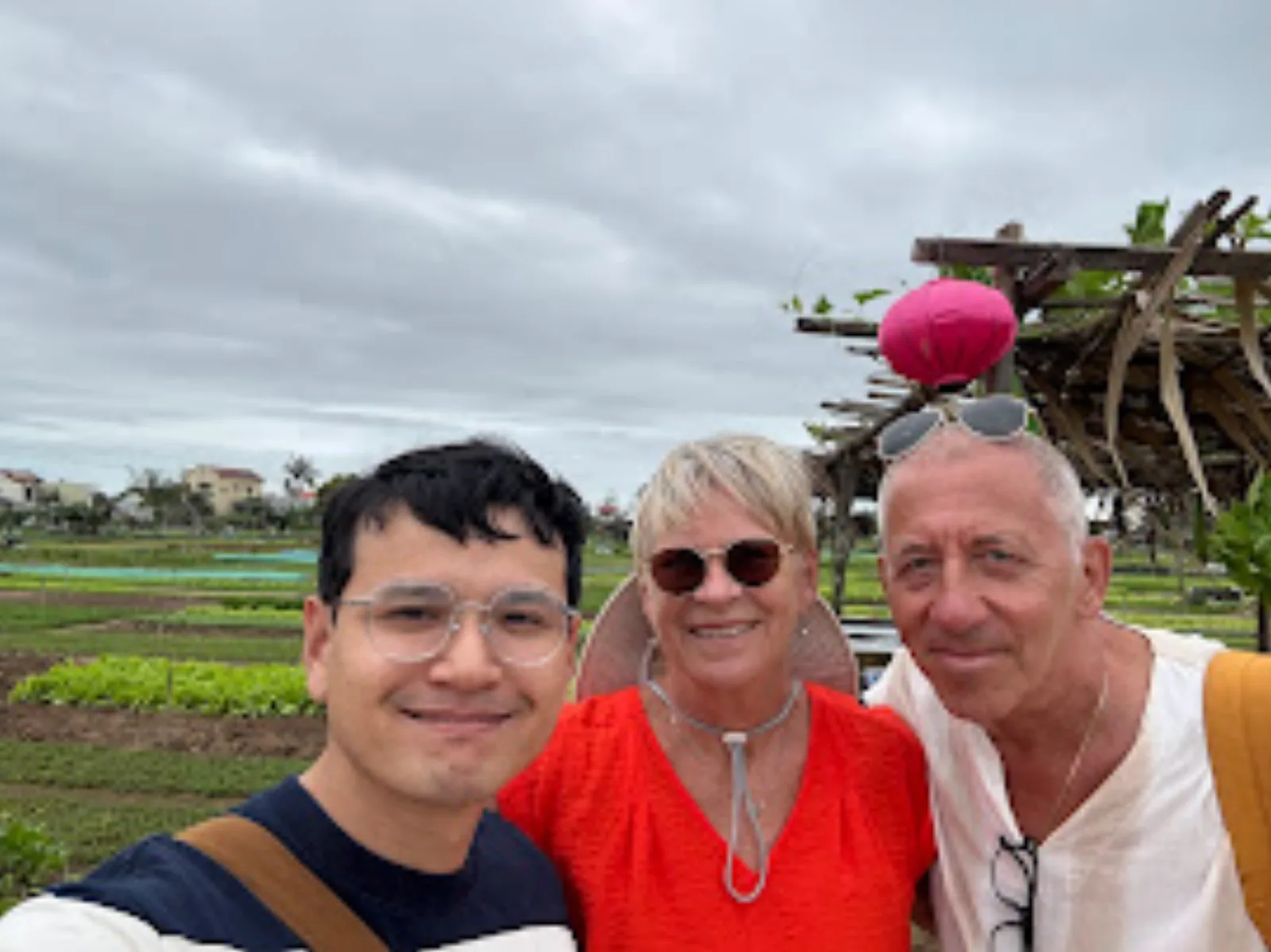
Last updated: 9 September 2026 — written by Fin, a local guide in Hoi An.
Quick answer: what is Tra Que vegetable village?
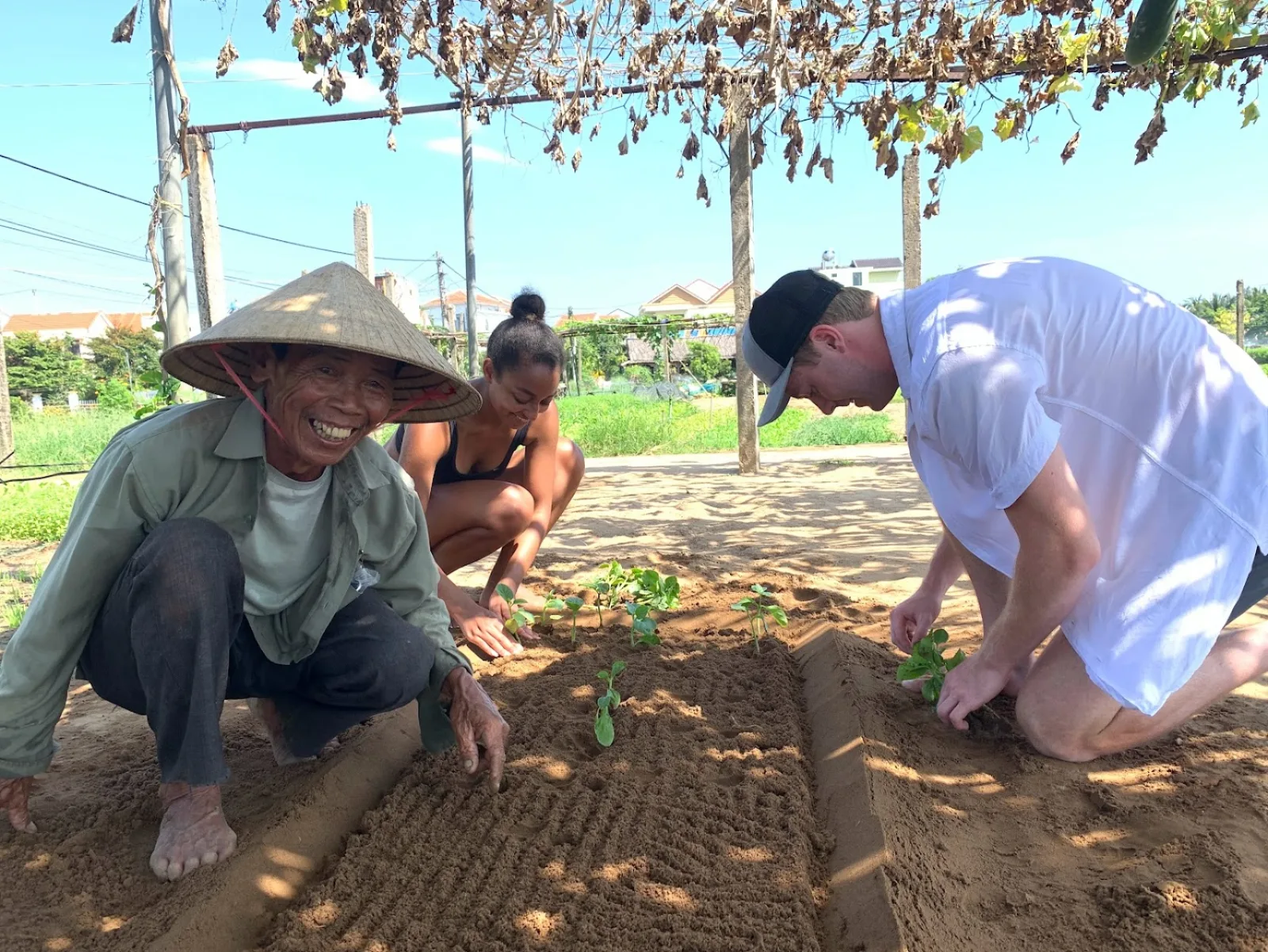
Tra Que is a 400-year-old organic herb-growing community on a small peninsula between the Thu Bồn River and the De Vong canal, about 3 kilometres northeast of Hoi An Old Town. Around 200 families farm just under 40 hectares, growing about 20 different herbs and vegetables — perilla, mint, basil, lemongrass, coriander, water spinach, and the bitter herbs that go into Hoi An's signature noodle bowls. The village uses no chemical fertiliser: the herbs are fed with seaweed raked out of the De Vong canal and compost made from rice straw. That is one reason Hoi An food tastes brighter than the same dishes made elsewhere.
- Entry is free. You only pay if you join an activity.
- Best window: before 9:30am, or 3:30pm–5pm.
- Time needed: 30 minutes to walk it, 3–4 hours if you do a cooking class.
- Honest verdict: skip it on a one-day trip. On a three-day trip it is the best countryside half-day in Hoi An.
Key takeaways
- Tra Que is a working farm, not an attraction — there is no gate, no ticket office and no show.
- The herbs on your plate in the Old Town were almost certainly grown here that morning.
- Three ways to visit, from a 30-minute walk to a 4-hour cooking class. The table below compares them.
- It pairs naturally with Cam Thanh coconut forest in one half-day loop.
- Avoid midday. The families are on lunch break and there is very little shade in the beds.
What you actually do on a Tra Que visit
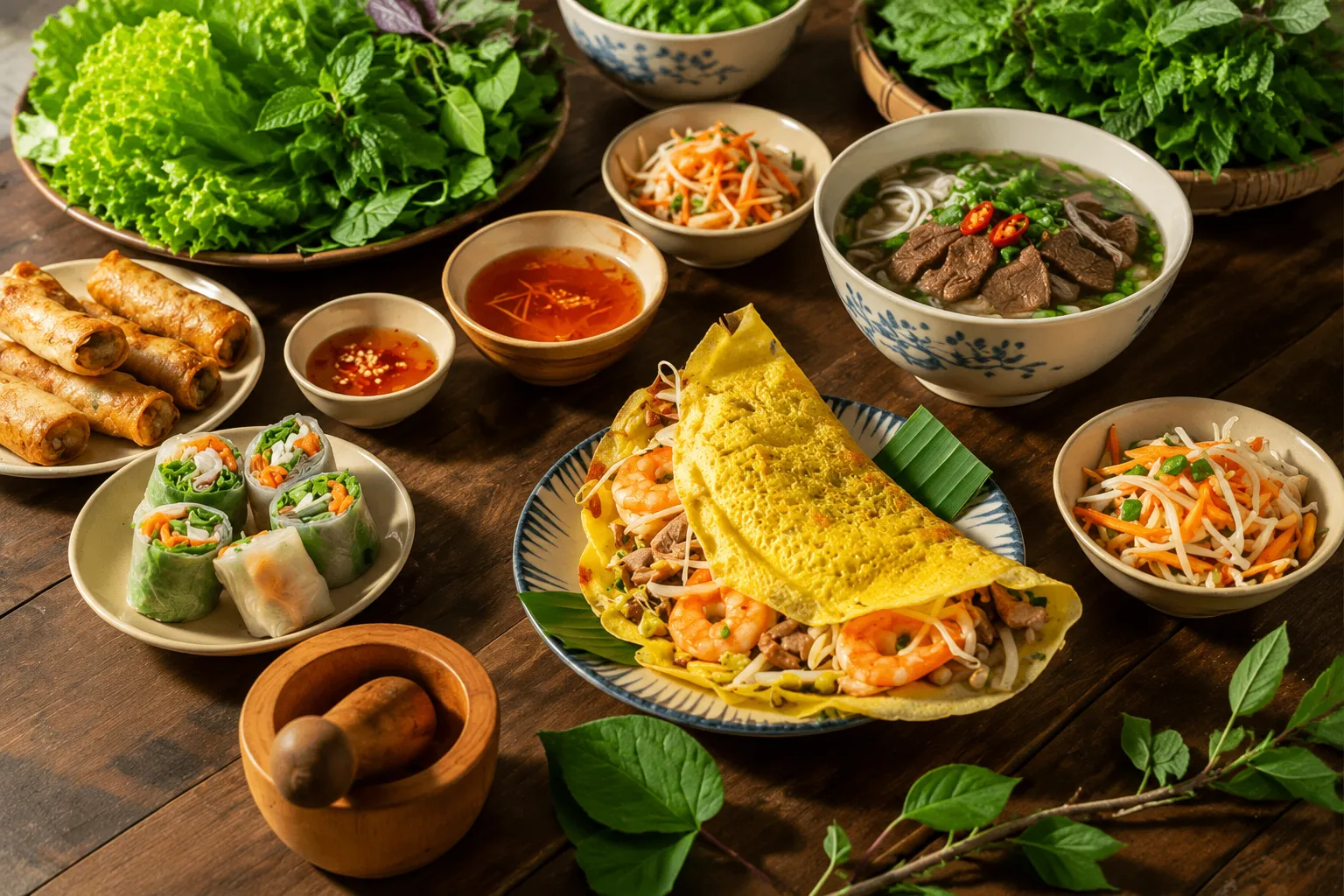
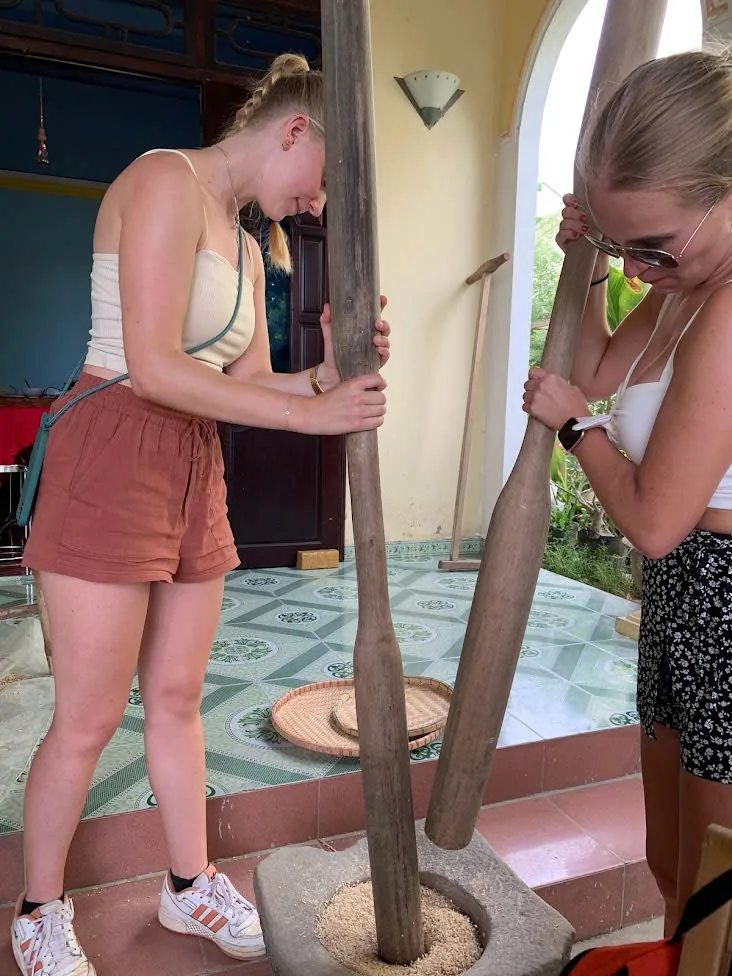
There is no fixed "Tra Que experience". What you do depends on how much time you give it, and the three versions are genuinely different days out — not the same visit at three prices.
| Visit type | Time | Cost | What actually happens | Who it suits |
|---|---|---|---|---|
| Walk-through | 30–45 min | Free | Walk the beds, learn to tell the herbs apart, watch the seaweed being raked and spread. | Anyone passing on a bicycle; a stop inside a longer countryside route. |
| Herb-planting | 60–90 min | $8–$15 per person | A family shows you how a bed is raked and fed, you plant a row and water it with the twin bamboo cans the village still uses. | Families with children; anyone who would rather do something than look at it. |
| Cooking class | 3–4 hours | $25–$40 per person | Harvest your own herbs, cook 3–4 Hoi An dishes, eat at a long shared table. | A half-day you want to build the whole afternoon around. |
The walk-through is the version most travellers actually want and almost nobody books, because it is free and no platform sells it. If you have a bicycle and one spare hour, that is the visit.
The cooking class — what it is really like
Tra Que's cooking classes are the reason most people come, and they are good, but the marketing photos oversell one part and undersell another.
What is oversold: the "harvest your own ingredients" moment. You will pick a handful of herbs; the pork, the rice flour and the shrimp came from the market like everyone else's. What is undersold: the cooking itself. A Tra Que class typically covers bánh xèo, fresh spring rolls and a noodle dish, and you cook each one yourself rather than watching a demonstration. Two hours in, you will have burnt at least one bánh xèo, which is how everyone learns it.
Tra Que Water Wheel and Baby Mustard are the two long-established places. Both run morning and afternoon sessions, both include the meal, and both are cheaper booked directly than through a platform. If you want the class as part of a longer day rather than the whole day, say so when you book — several families will run a shortened version.
How to get there

From Hoi An Old Town it is 8 minutes by taxi (about 40,000 VND), 15 minutes by bicycle, or 25 minutes on foot along the riverside path. From Đà Nẵng, about 40 minutes by car — see the Da Nang to Hoi An transfer options if you are coming for the day.
The bicycle is the right answer if the weather allows. The lane out runs past water-coconut palms and rice fields, it is flat the whole way, and most Hoi An hotels lend bicycles free. The road is shared with scooters but slow.
Entry to walk the village is free — you only pay for herb-planting or a cooking class. On the Hoi An countryside tour, Tra Que is the first stop, paired with Cam Thanh coconut forest and the rice fields in a 4–5 hour route.
Best time to visit
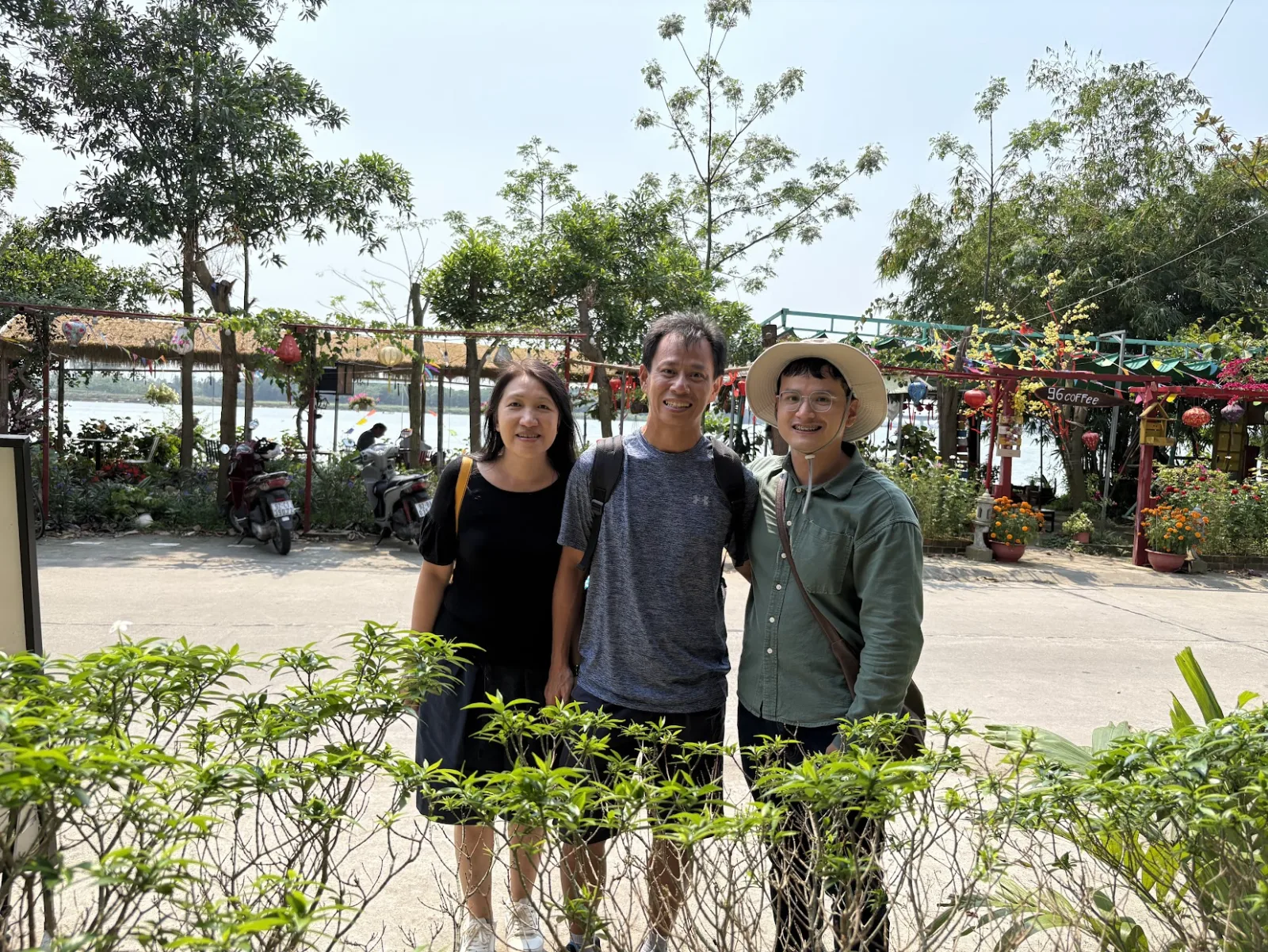
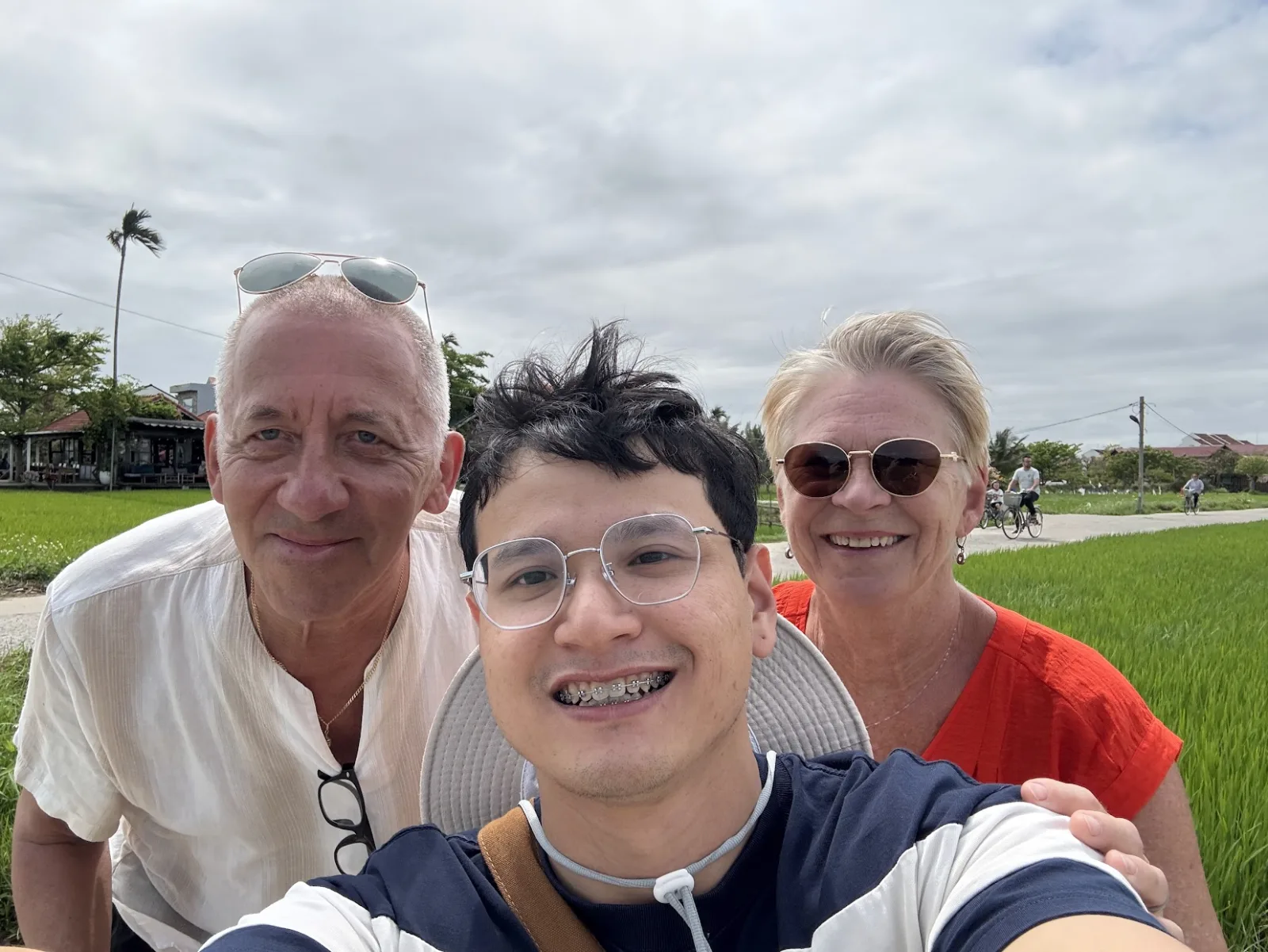
Morning before 9:30am is the best hour of the day. Families are harvesting, the watering is being done with bamboo cans, and the smell of crushed mint and perilla across the beds is the whole point of coming. Late afternoon, 3:30pm–5pm, is the second window — lower light across the fields, and the evening watering starts.
Avoid midday, 12pm–3pm. The families are on lunch break, the beds are empty, and there is almost no shade between the rows.
By season: February to April is ideal, dry and cool. May to August works but go early — by 10am it is hot in the open. Mid-September to mid-November is flood season, and Tra Que sits low: after heavy rain the beds can be under water and the village genuinely closes for a few days at a time. If you are travelling then, keep it as a maybe rather than a fixed plan, and read the best time to visit Hoi An notes first.
Is Tra Que worth it? An honest answer
If you have one day in Hoi An, skip it. One day belongs to the Old Town and a lantern evening, and Tra Que will feel like a field you drove to.
If you have two or three days, it is the single most useful countryside stop in Hoi An — and the reason is not the herbs. It is that Tra Que is the first place most visitors see people working rather than selling. The Old Town is beautiful and it is entirely turned towards visitors. Tra Que is not: the families are there at 6am whether anyone comes or not, and the herbs go to the same restaurants you ate at last night. Half an hour there changes how the rest of the town reads.
What it is not: a photogenic set-piece. There is no gate, no viewpoint, no dramatic scenery. If you are choosing between Tra Que and a day at An Bang beach, and you want a photograph, take the beach.
The herbs you will actually meet
Half the value of a Tra Que walk is being able to name what is on your plate for the rest of the trip. These are the ones the families will point out first, and where you will eat them next.
- Húng quế (Thai basil) — purple stems, aniseed smell. Goes into the herb plate with mì Quảng and phở.
- Tía tô (perilla) — green on top, purple underneath. The leaf you wrap bánh xèo in.
- Rau răm (Vietnamese coriander) — narrow, peppery, slightly soapy to some people. Eaten with duck, eggs and chicken rice.
- Kinh giới (Vietnamese balm) — lemony and soft. Almost always on the table with grilled pork.
- Ngò gai (sawtooth coriander) — long serrated leaves, a stronger coriander. Soups and broths.
- Húng lủi (spearmint) and xà lách (lettuce) — the base of every herb basket in town, including the one beside your cao lầu.
Ask the family to crush a leaf of each for you. The difference between Tra Que basil and supermarket basil is obvious in about two seconds.
How to visit without being in the way
Tra Que is a farm that tolerates visitors, and it stays welcoming because most people behave well. Stay on the paths between the beds — the soil is raised and shaped, and a footprint undoes an hour's work. Ask before photographing someone close up; a smile and a gesture at the camera is enough. If a family has spent twenty minutes showing you around, buy a bundle of herbs or a drink at their stall. It is the fair exchange, and it costs less than a coffee in town.
Taking herbs home
A lot of visitors want to buy seeds or a bundle to take away. Fresh herbs will not survive a flight and most countries will not let them in; seeds are a better souvenir, and several families sell small packets of basil, perilla and Vietnamese coriander. Check your own country's import rules before you buy — Australia and New Zealand in particular are strict about seeds. What travels best of all is the knowledge: once you can tell rau răm from perilla, every Vietnamese restaurant at home reads differently. You will also start noticing when a restaurant in town has swapped Tra Que herbs for cheaper ones from elsewhere — it is usually the first sign the rest of the kitchen has cut corners too. It is a small thing, and once you notice it you cannot stop.
Related planning notes: Hoi An itinerary, what to eat in Hoi An, and Cam Thanh coconut forest.
FAQ
A few practical follow-up questions
Only the questions that sit naturally inside this article are shown here, so the page stays focused.
Article FAQ
No — walking through the village and herb fields is free. You only pay if you join a herb-planting activity (often included with the seaweed-harvest demo) or a cooking class, which run $25 to $40 per person depending on the host family.
About 3 kilometres northeast. By taxi it is 8 minutes (40,000 VND), by bicycle 15 minutes, on foot 25 minutes along the riverside path. From Da Nang or An Bang Beach it is around 40 minutes by car.
It depends what kind of traveller you are. If you are spending one day in Hoi An focused on the Old Town and lantern light, you can skip it. If you have two or more days and the slow rural pace and food-source thinking interests you, Tra Que is the single most useful countryside stop and fits naturally into a half-day route with the Cam Thanh coconut forest.
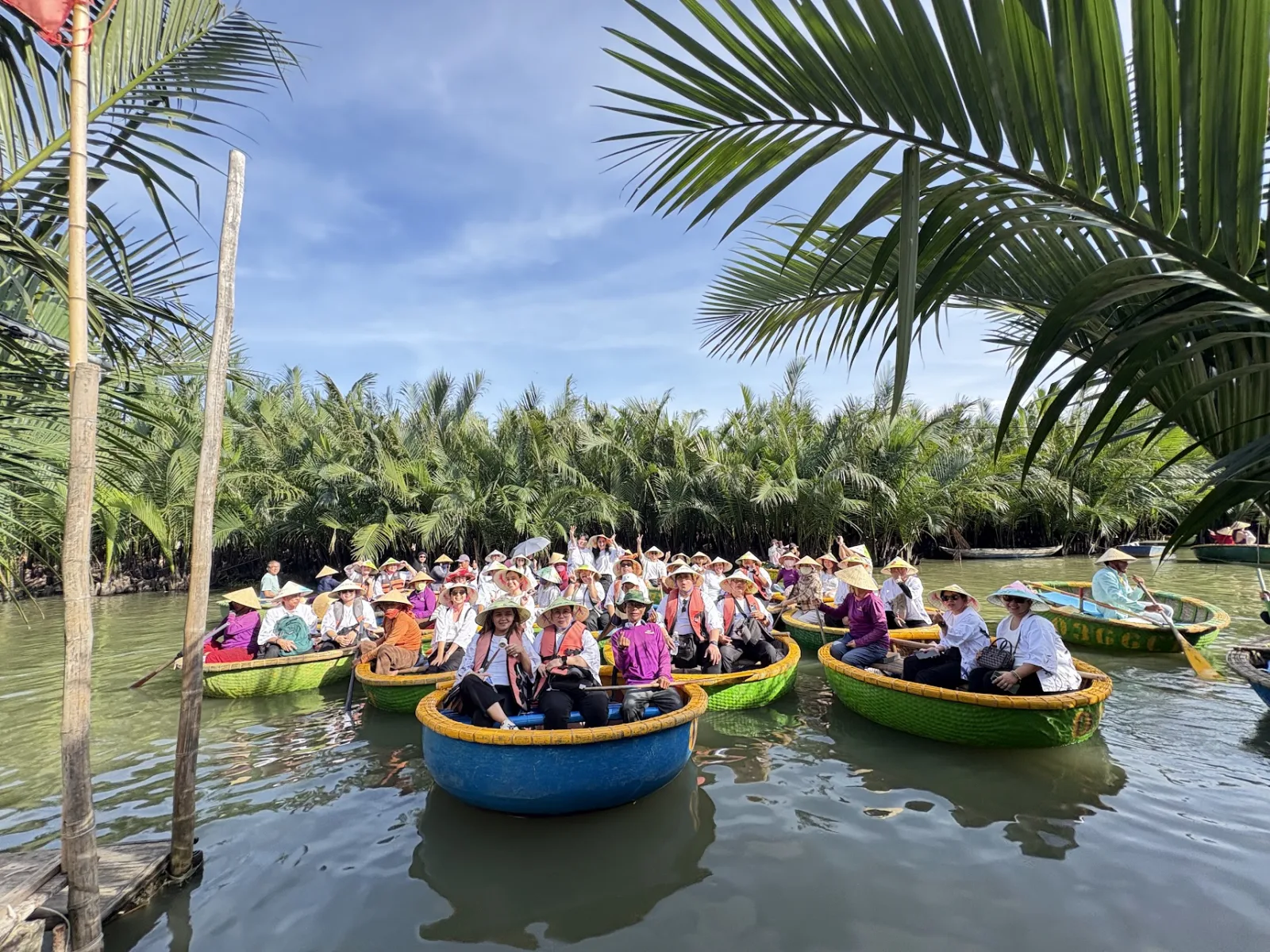
Yes — children typically love the herb-planting demonstration (they get to dig and water with the bamboo can), the basket boats at the next stop in Cam Thanh, and the buffalo at Thanh Ha. The whole countryside tour is one of the most family-friendly half-days in the Hoi An area.
In the dry season, yes — a day or two ahead for the morning sessions, which fill first. Booking directly with the restaurant is cheaper than any platform. In flood season book only a day ahead: the fields can be under water and classes are cancelled at short notice.
Same topic
More in this topic
If this topic is close to your trip, these notes stay within the same planning lane without sending you off into a wider archive.
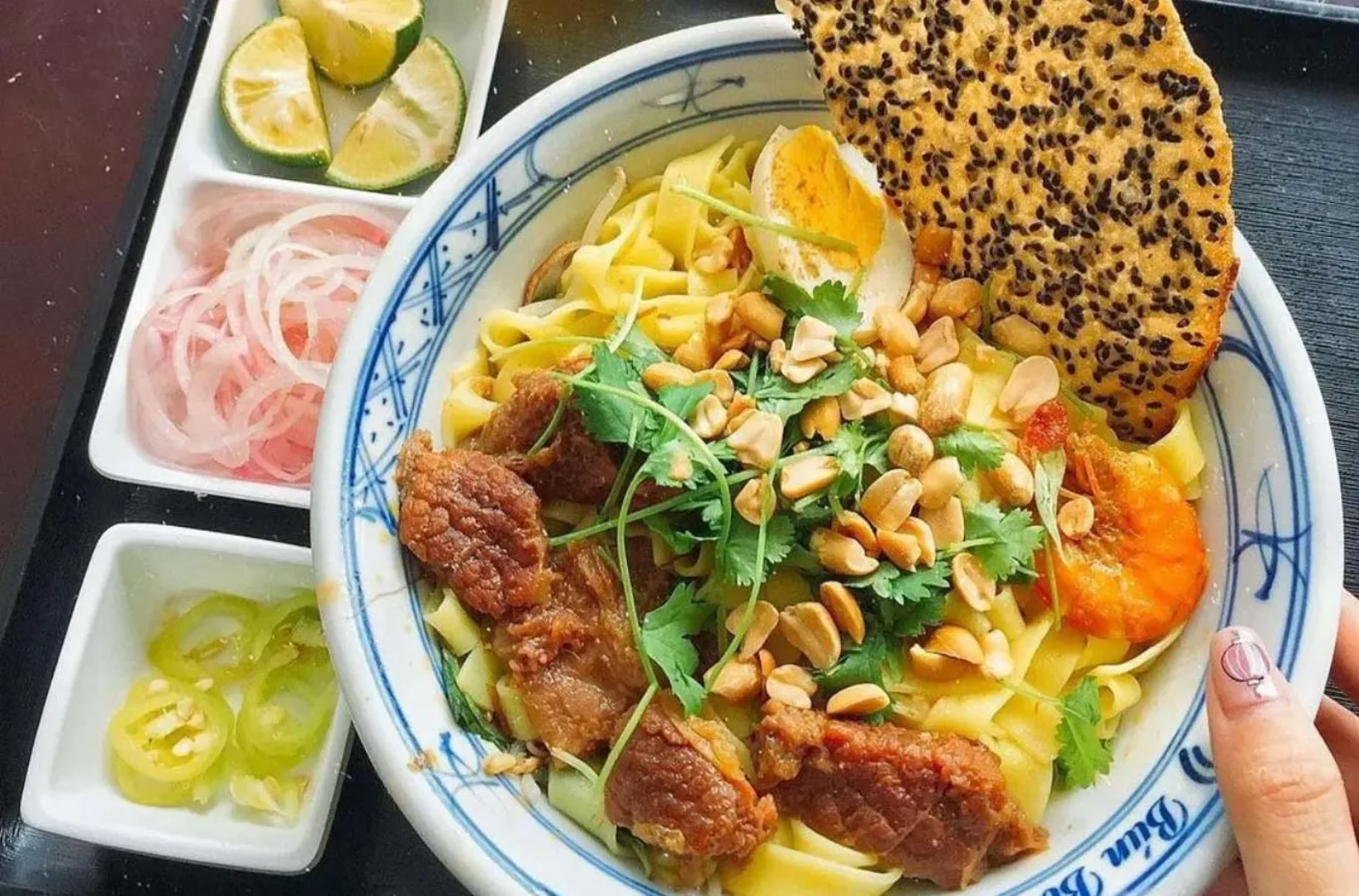
Related tours
If you want to turn the note into a real plan
These tours sit closest to the topic you just read, so the next step stays grounded in the actual route options.
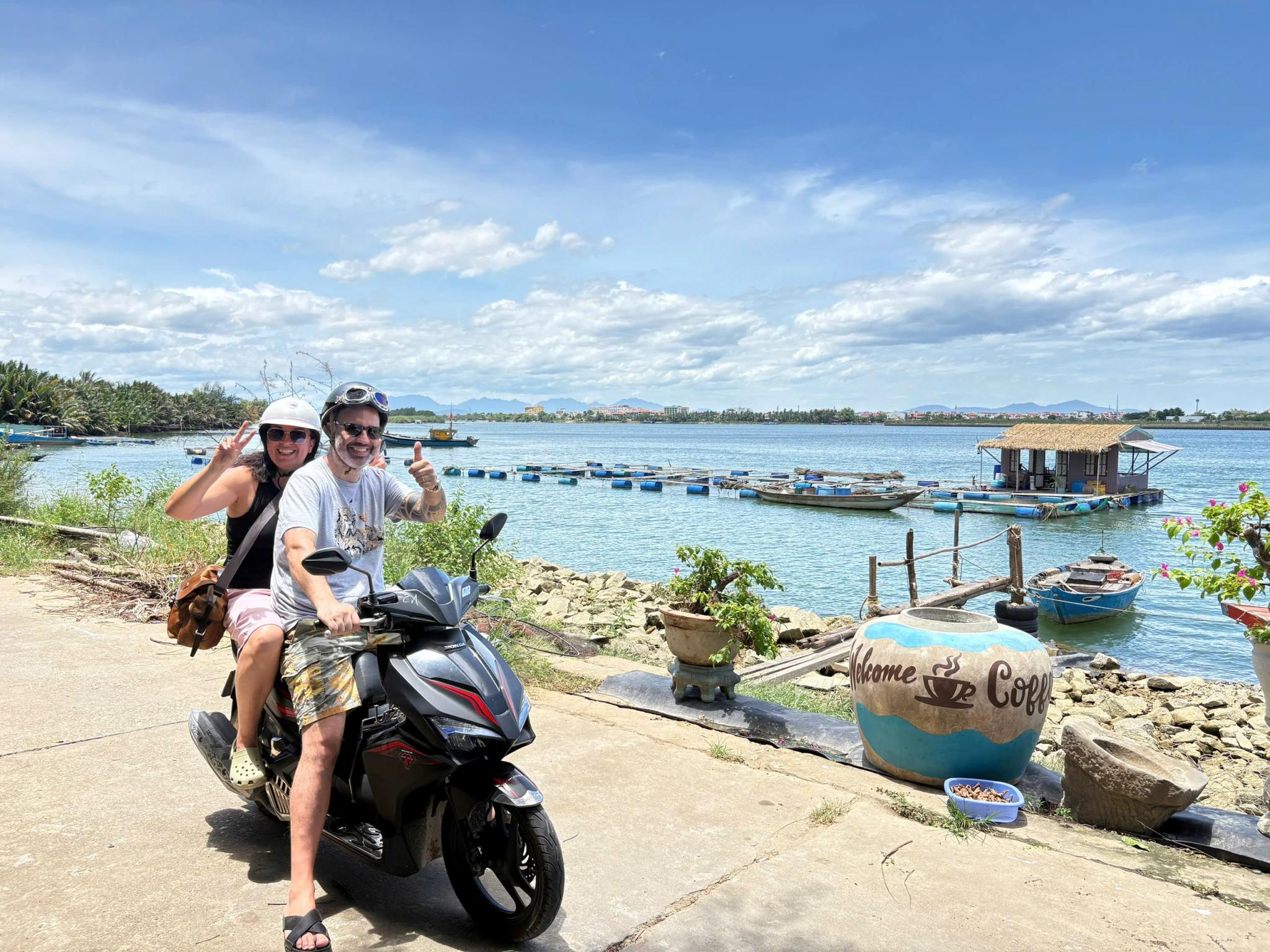
Local Life
Special Hoi An Countryside by Motorbike Tour
Ride through scenic village backroads, visit ancestral artisan workshops, and enjoy a basket boat glide followed by a home-cooked lunch.
4 hours
Explore the Special Hoi An Countryside by Motorbike Tour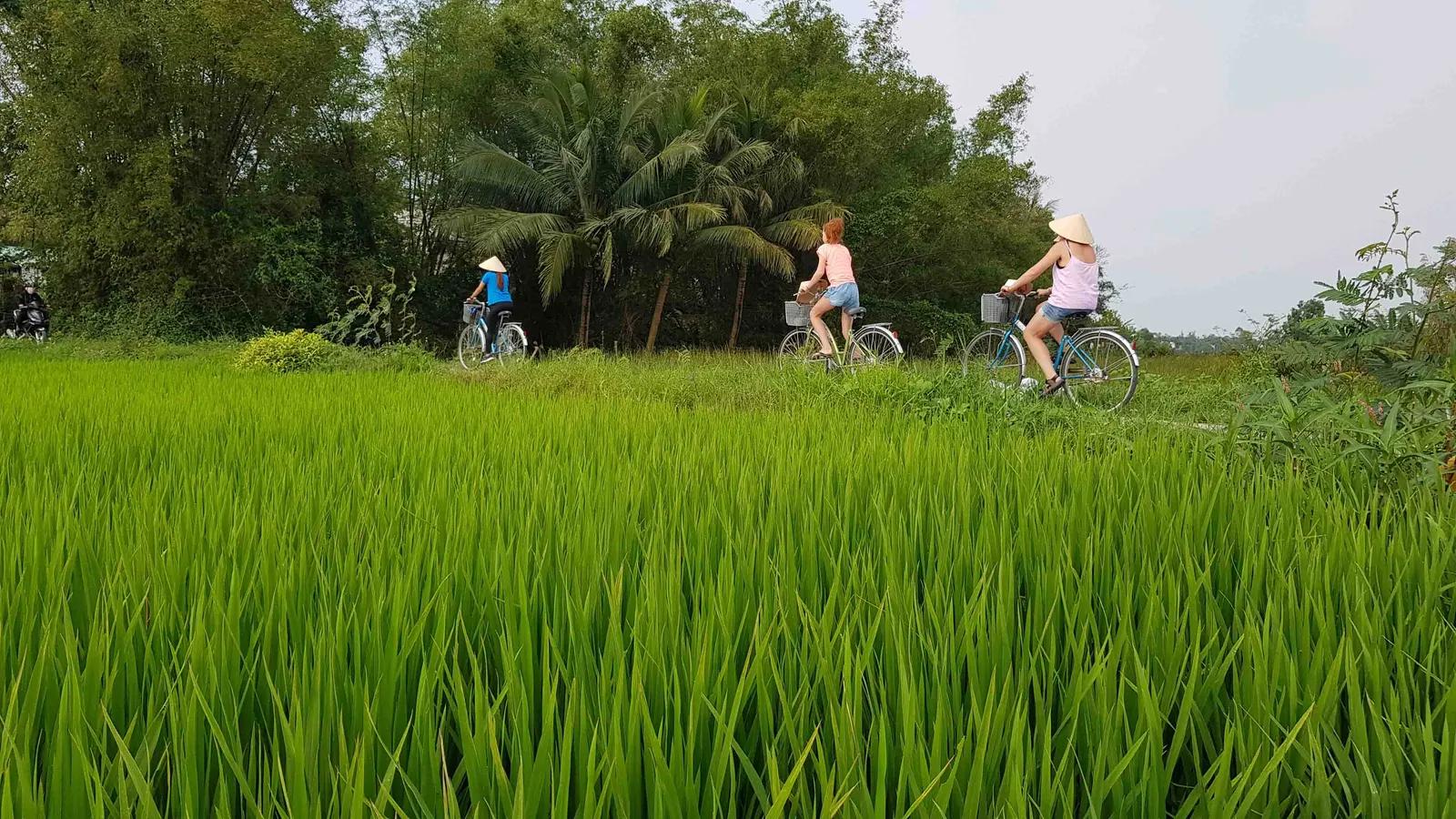
Local Life
Hoi An Countryside Cycling Tour
Hoi An Countryside Cycling Tour
About 5 hours
Explore the Hoi An Countryside Cycling TourNext step
If you want to turn this into a real route, start with the tours
Use the article for context, then move into the private tour pages when you want to compare the actual route styles more directly.