
Dish guide
Mi Quang: The Yellow-Noodle Bowl That Defines Central Vietnam (Not Just Hoi An)
Mi quang is the regional dish of central Vietnam — yellow turmeric rice noodles, almost no broth, topped with peanuts. Here's why it's different from cao lau, where to eat it in Hoi An, and what makes a good bowl.
May 29, 2026 · 6 min read
Last updated: 9 September 2026 — written by Fin, a local guide in Hoi An.
Quick answer: what is mì Quảng?
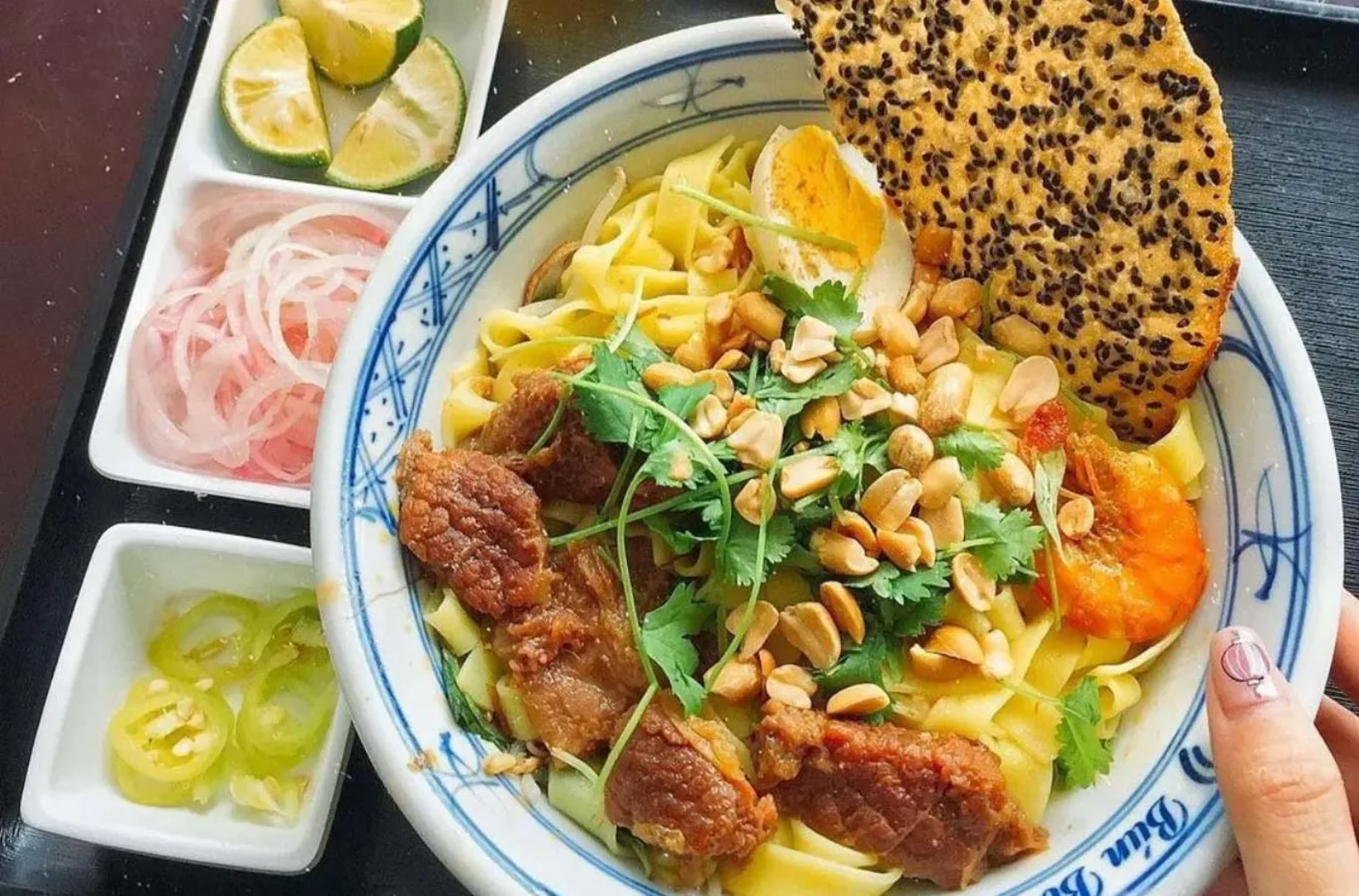
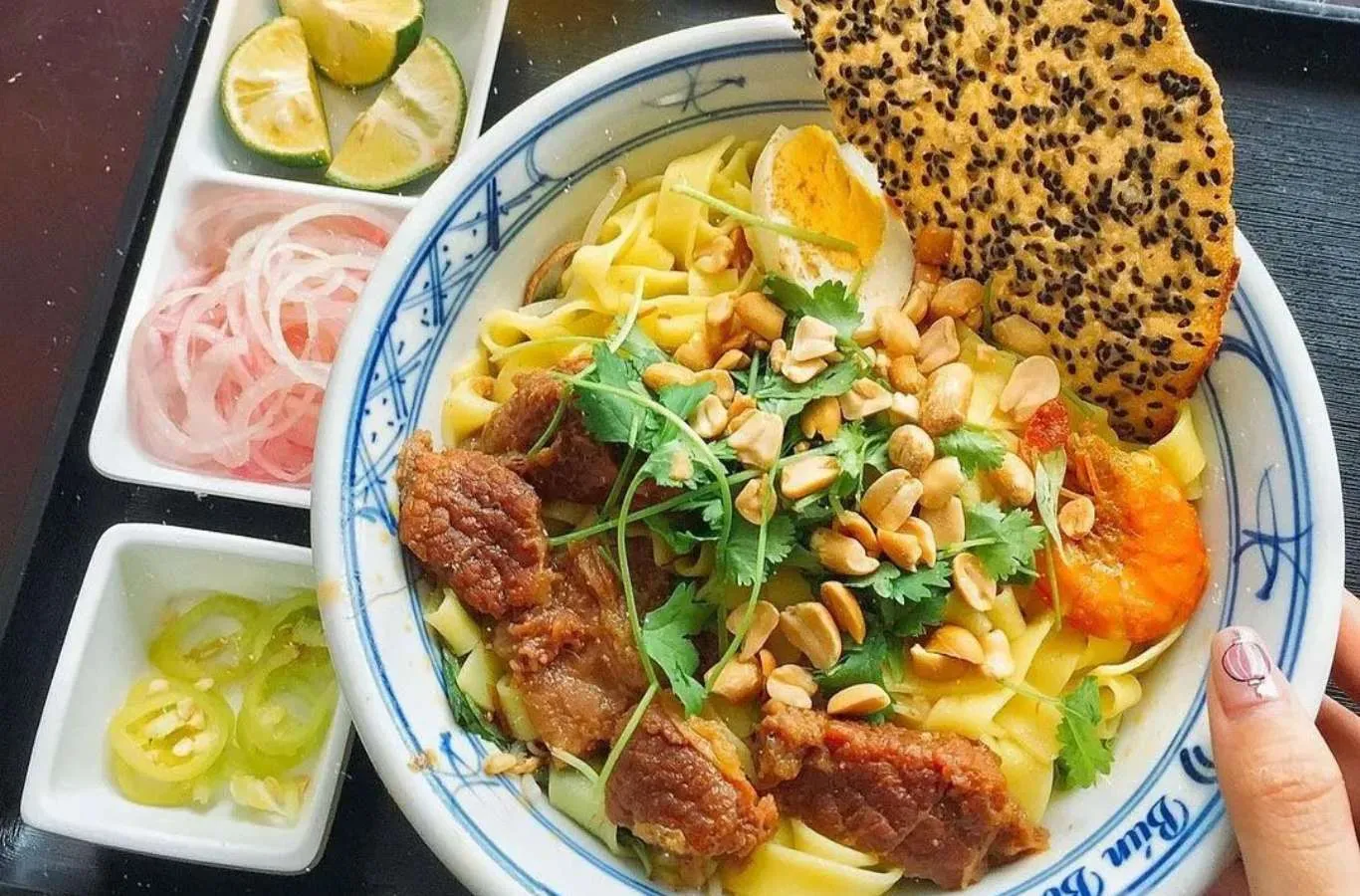
Mì Quảng is the signature noodle dish of Quảng Nam province — the central Vietnamese province that includes Hoi An, Đà Nẵng, and Mỹ Sơn Sanctuary. It is a bowl of thick, flat, turmeric-yellow rice noodles topped with a small amount of intensely flavoured pork-and-shrimp broth, a few shrimp, half a hard-boiled quail egg, chopped roasted peanuts, fresh herbs, and a sheet of crispy puffed-rice cracker on the side. A bowl costs 25,000–45,000 VND ($1–$1.90) at a family kitchen — the cheapest of Hoi An's famous noodle dishes and arguably the one with the highest flavour-to-price ratio. Authentic mì Quảng is made without garlic in the fish sauce — the broth's subtle shrimp-meat aroma would be destroyed by garlic's heavy scent.
Key takeaways
- 25,000–45,000 VND at a family kitchen. Anything over 80,000 VND in the Old Town is a tourist price.
- It is not a soup. The broth is a shallow pool at the bottom, not a bath — that is the dish, not a mistake.
- Eaten at breakfast and lunch. By mid-afternoon the good kitchens have sold out.
- Order gà (chicken) on a first try, tôm thịt (shrimp and pork) on a second.
- The rice cracker is a utensil, not a garnish.
What is actually in the bowl
A bowl of mì Quảng is assembled in a fixed order, and every element is doing a job.
- The noodles — wide flat rice sheets cut by hand, coloured with turmeric. They are steamed, not boiled to order, which is why they arrive at room temperature rather than hot. That also is not a mistake.
- The broth — nước nhưn, a small amount of intensely reduced pork-and-shrimp stock, spooned over rather than poured. There should be roughly enough to coat, not to drink.
- The protein — chicken, or shrimp and pork together, sometimes fish or frog in the villages. Half a hard-boiled quail egg sits on top.
- Roasted peanuts, crushed coarsely. This is the texture the dish is built around.
- The herb plate — banana blossom, lettuce, mint, coriander, usually from Tra Que, three kilometres away.
- Bánh tráng mè, the sesame rice cracker, served whole on the side.
One local rule that has survived every restaurant version: authentic mì Quảng is made without garlic in the fish sauce. The broth's shrimp aroma is subtle, and garlic flattens it.
Mì Quảng vs cao lầu — the local comparison
| Mì Quảng | Cao Lầu | |
|---|---|---|
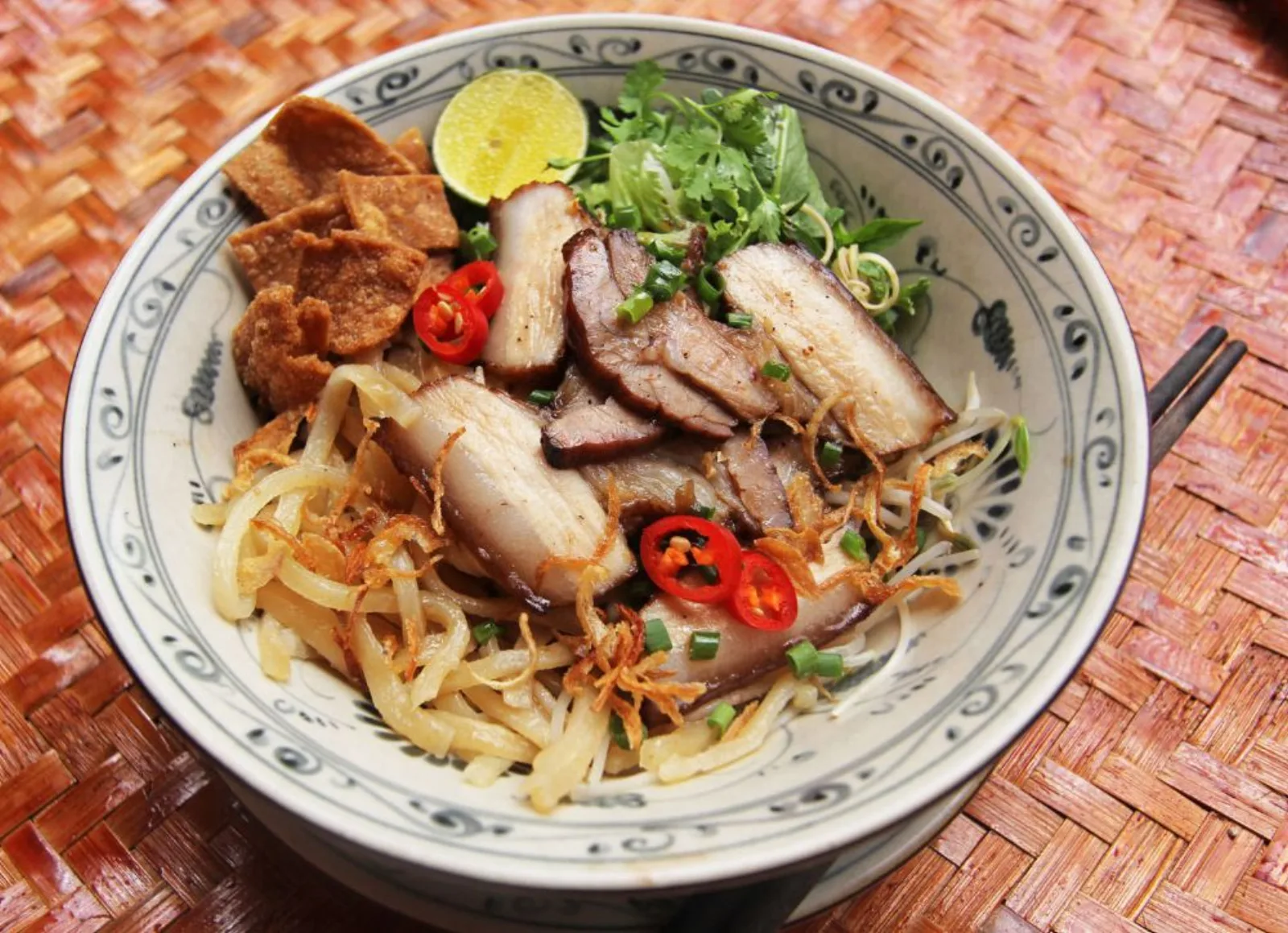
| Noodles | Flat, wide, turmeric-yellow | Round, thick, greyish-brown |
| Protein | Shrimp + chicken or pork | Braised pork only |
| Broth | Small but pronounced pool | Minimal — just coats noodles |
| Garnish | Roasted peanuts + rice cracker | Crispy crackers, no peanuts |
| Origin | Regional (Quảng Nam province) | Hoi An-only (Bá Lễ well water) |
| Price | 25,000–45,000 VND | 35,000–55,000 VND |
Most first-time visitors taste cao lầu first and assume mì Quảng is a variation of it. Locally the order is the other way round: mì Quảng is the everyday dish, cooked at home, eaten at weddings and funerals and on ordinary Tuesdays. Cao lầu is what you take a guest to eat.
If you only have one noodle meal in Hoi An, have cao lầu — it exists nowhere else. If you have two, the second is mì Quảng, and it is the one you will end up missing.
Where to eat mì Quảng in Hoi An
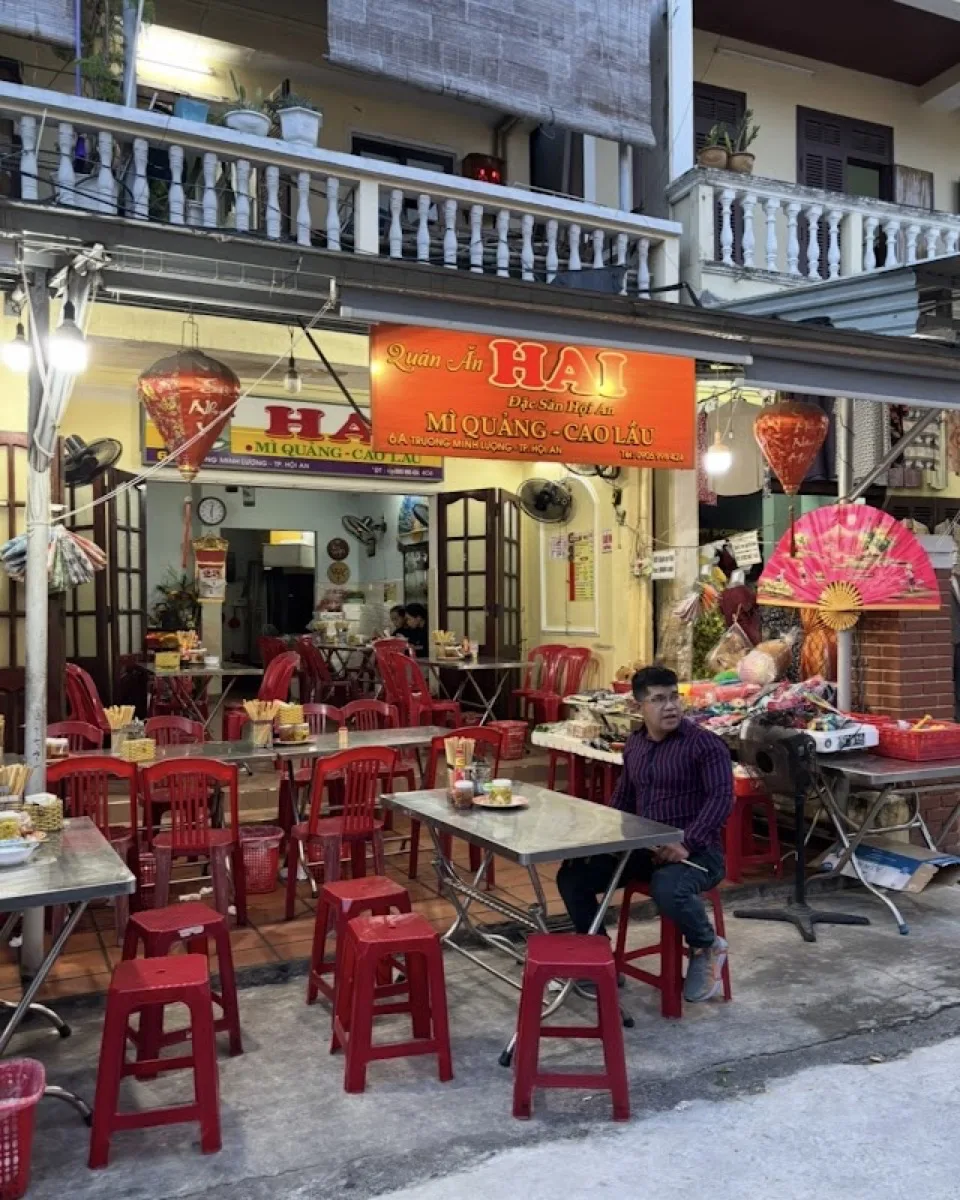
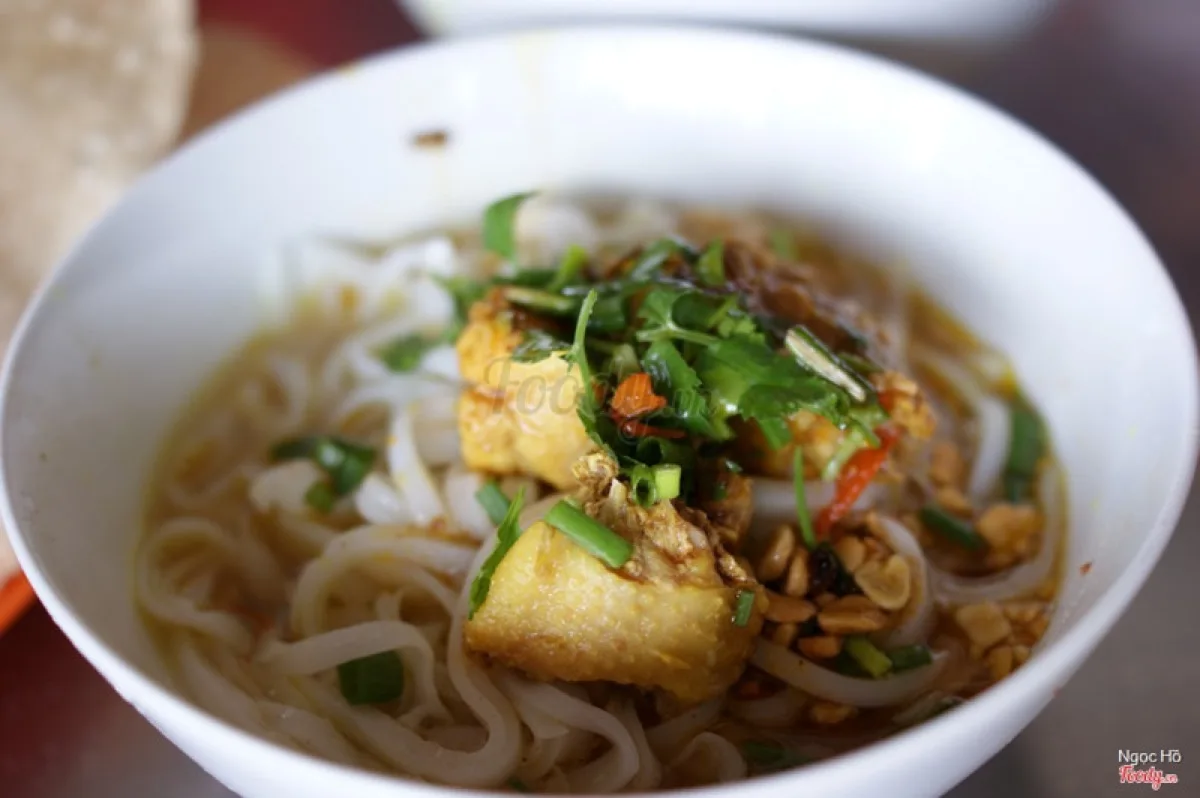
- Quán Mì Quảng Cây Trầu on Phan Chu Trinh — generational family kitchen, three sittings of locals before noon, no English menu, 30,000 VND a bowl. The owner adds a tiny piece of crisp pork crackling on top.
- Mì Quảng Bích on Hai Bà Trưng — more accessible for first-timers, English menu, 35,000 VND a bowl. Same noodle supplier as Cây Trầu (both buy from the same family in Cẩm Kim village).
- Avoid Trần Phú restaurants pricing mì Quảng over 80,000 VND — tourist markup. Morning Glory's version at 95,000 VND is identical noodles in a nicer dining room.
Which version to order
Family kitchens usually run two or three versions, listed on the wall rather than on a menu.
- Mì Quảng gà (chicken) — the mildest and the one to start with. The broth is cleaner and the chicken is on the bone, which locals consider the point.
- Mì Quảng tôm thịt (shrimp and pork) — the classic Hoi An version, richer, and the one on most food tours. Order this second.
- Mì Quảng ếch (frog) — a village version you will mostly find outside town. Genuinely good, and not a dare.
- Mì Quảng chay (vegetarian) — mushroom stock and tofu, only at a few kitchens; Karma Waters on Phan Chu Trinh is reliable.
How to eat mì Quảng properly
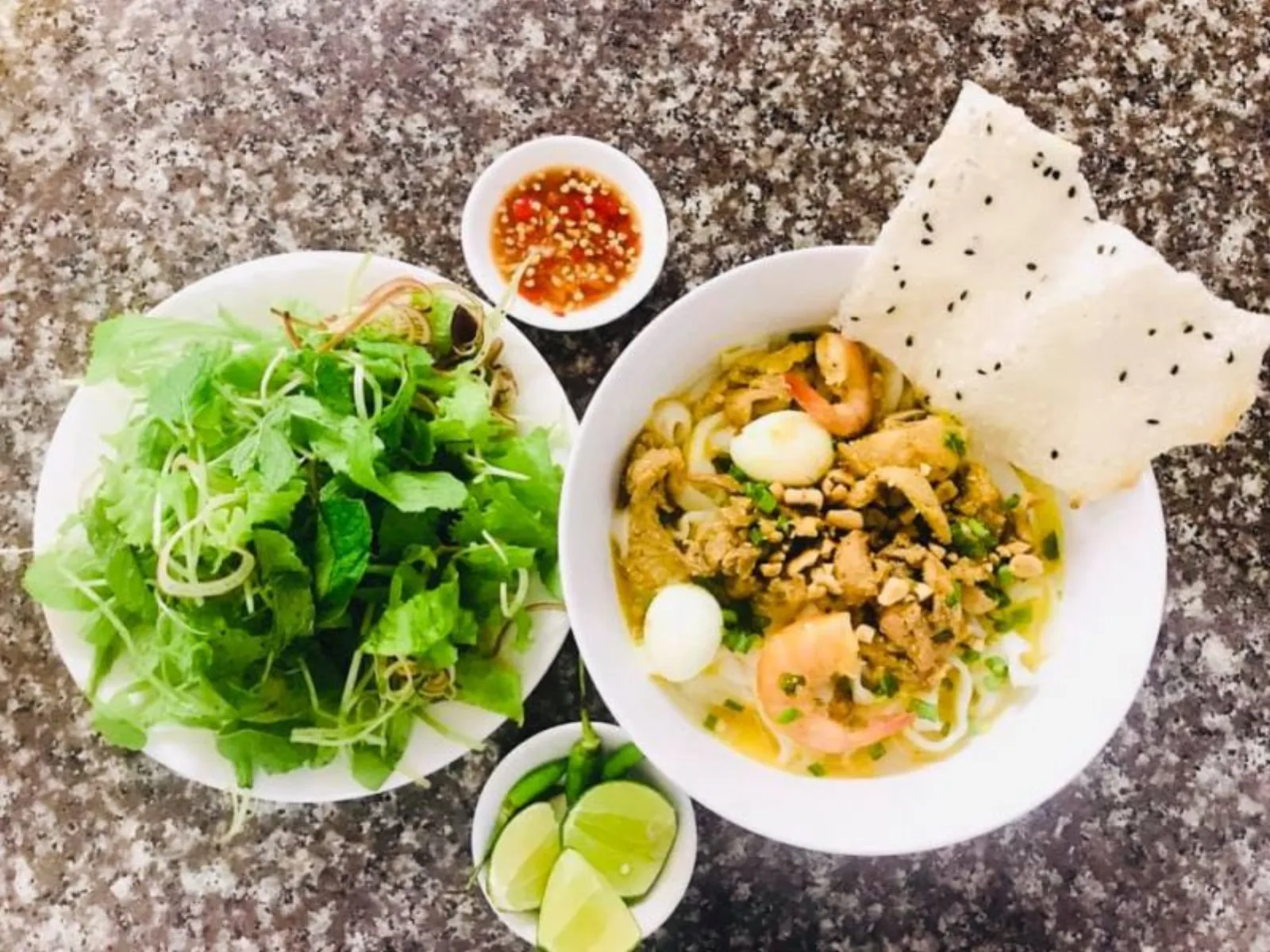
- Use the cracker: break a piece off, scoop it into the bowl between bites — it absorbs broth and adds crispness.
- Mix the noodles: lift and turn with chopsticks for the first 20 seconds to coat them evenly in the small broth pool.
- Season gradually: add a teaspoon of fish sauce or chilli paste, taste, adjust. Most kitchens leave seasoning on the table.
- Eat the herbs raw: the plate of herbs alongside is not garnish — tear them into the noodles a few at a time.
Mì Quảng on the Mỹ Sơn tour
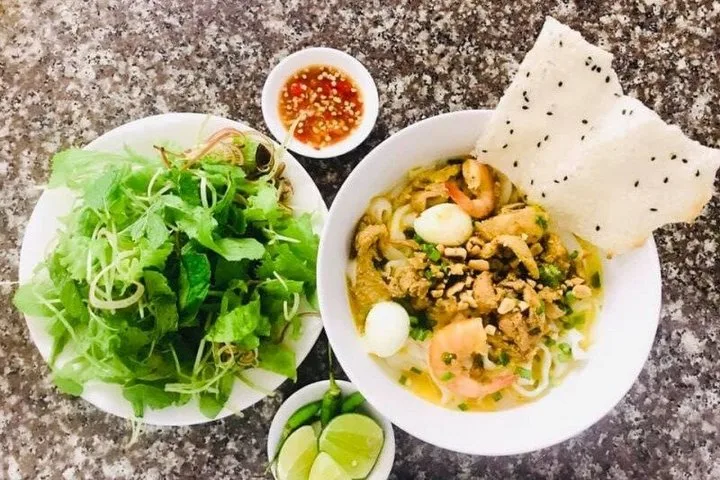
On the Mỹ Sơn private tour, the Quảng noodle stop is the lunch after the temple visit — at a family restaurant in Duy Xuyên district that has been serving mì Quảng to villagers for three generations. Both meat and vegetarian options available.
When to eat it
Mì Quảng is a breakfast and lunch dish here. The good kitchens start at 6am, hit their stride around 7:30am, and are usually sold out between 11am and 1pm. A shop still serving mì Quảng at 8pm is serving it to visitors.
This is the single most useful thing to know about eating in Hoi An generally — most of the famous dishes have an hour, and the difference between the same bowl at 7am and at 7pm is large. The street food timing guide maps out the whole day, and the Hoi An food guide covers the other dishes worth planning around.
Where mì Quảng comes from
Mì Quảng is not a restaurant dish that became home food. It went the other way. It is what families in Quảng Nam cook for a death anniversary, a wedding, a new baby, or an ordinary Sunday, and it was being made in village kitchens long before anyone put it on a menu with an English translation.
The noodles themselves still come from villages. Rice is soaked, ground wet, steamed into sheets, and cut by hand — a few villages around Điện Bàn, north of Hoi An, are known across the province for it, and the families who supply the Hoi An kitchens buy from the same handful of makers every morning. That is why the noodle is the same in a 30,000 VND bowl and an 80,000 VND one: the difference is the broth, the toppings and the rent.
If you visit Mỹ Sơn, you are driving through the heart of mì Quảng country. The lunch stop on the Mỹ Sơn tour is in Duy Xuyên, where it is simply what people eat.
Mistakes visitors make with mì Quảng
- Asking for more broth. Kitchens will do it, and it turns the dish into a weaker soup. The small pool is correct.
- Eating the cracker on its own. Break it into the bowl a piece at a time — it softens at the edges and stays crisp in the middle, which is the texture the dish is built around.
- Squeezing lime and chilli in before tasting. The broth is seasoned already. Taste first, adjust second.
- Leaving the herbs on the plate. Banana blossom and lettuce are not garnish. Tear them in as you go.
- Ordering it for dinner. A 7pm bowl in the Old Town is a restaurant version made for visitors. Have it at breakfast, where it belongs.
Mì Quảng on a food evening
Because it is a morning dish, mì Quảng rarely appears on evening food tours — including ours. If you want it and cao lầu on the same trip, the cleanest plan is mì Quảng for breakfast at a family kitchen, cao lầu for lunch, and the food tour for the evening dishes that only come out after dark. The white rose dumplings fit either end of the day.
Ordering in Vietnamese
None of the family kitchens need you to speak Vietnamese — you can point at the next table and hold up fingers. But three phrases make the order exactly right: "một tô mì Quảng gà" (one chicken mì Quảng), "không cay" (not spicy), and "thêm bánh tráng" (another cracker, which you will want). Pay at the end, in cash, at the table or the counter. Leaving a few thousand đồng of change is appreciated and never expected. If a kitchen has run out of one version, it will say so before you sit down — that is a good sign, not a bad one. It means the pot was made that morning and nobody is stretching it. Try the other version, or come back tomorrow earlier. The kitchens that never run out are usually the ones cooking for visitors, not for the street. That is as reliable a signal as any review.
Related planning notes: cao lau guide, what to eat in Hoi An, and things to do in Hoi An.
FAQ
A few practical follow-up questions
Only the questions that sit naturally inside this article are shown here, so the page stays focused.
Article FAQ
Pho is northern Vietnamese — clear beef or chicken broth, soft round white noodles, minimal herbs. Mi quang is central Vietnamese — almost no broth, thick yellow turmeric noodles, shrimp and chicken in the same bowl, roasted peanuts and a puffed-rice cracker. They are completely different dishes despite both being called 'noodles'.
The standard version is not — the broth and toppings include shrimp and pork or chicken. A vegetarian version (mi quang chay) is served at temple restaurants and at Karma Waters on Phan Chau Trinh, using mushroom stock and tofu instead of pork.
25,000 to 45,000 VND ($1 to $1.90) at a family kitchen. This is the cheapest of Hoi An's famous noodle dishes. Tourist restaurants on Tran Phu charge 70,000 to 100,000 VND for nearly identical bowls. Anything over 80,000 VND in the Old Town is tourist markup.
Yes — the My Son private tour includes a Quang noodle lunch at a family restaurant in Duy Xuyen district after the temple visit. Both meat (chicken or shrimp) and vegetarian options are available; confirm preference at booking. The restaurant has been serving mi quang to local villagers for three generations.
Between 6am and 11am. Family kitchens sell out by early afternoon, and an evening bowl is almost always a restaurant version made for visitors. A bowl arrives warm rather than hot — the noodles are steamed ahead, which is correct, not a sign it has been sitting.
Same topic
More in this topic
If this topic is close to your trip, these notes stay within the same planning lane without sending you off into a wider archive.
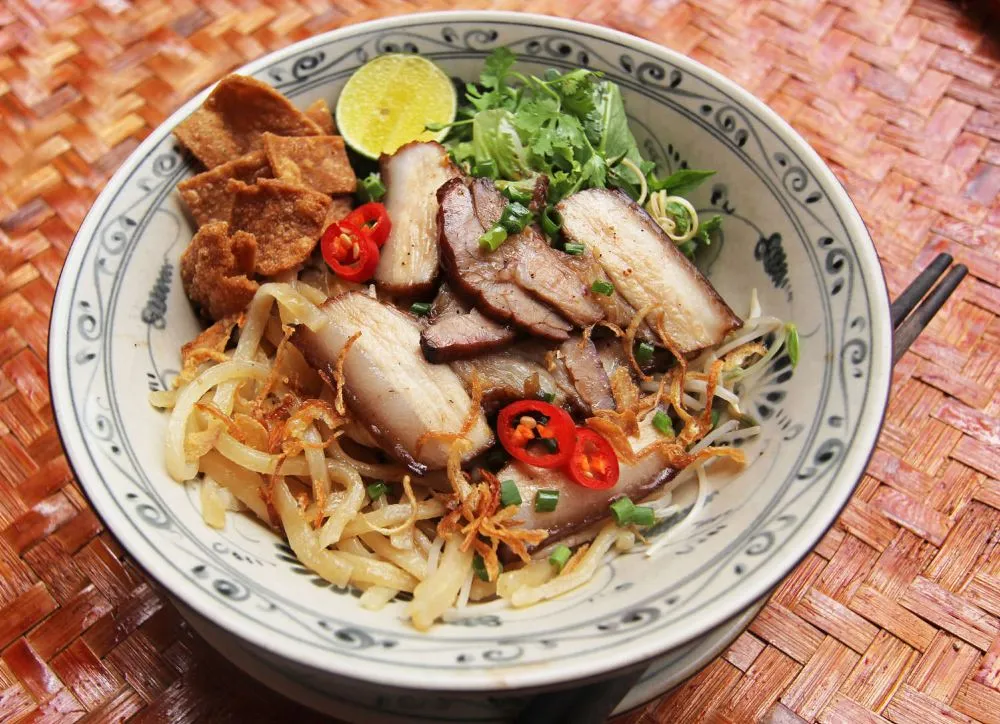
Related tours
If you want to turn the note into a real plan
These tours sit closest to the topic you just read, so the next step stays grounded in the actual route options.
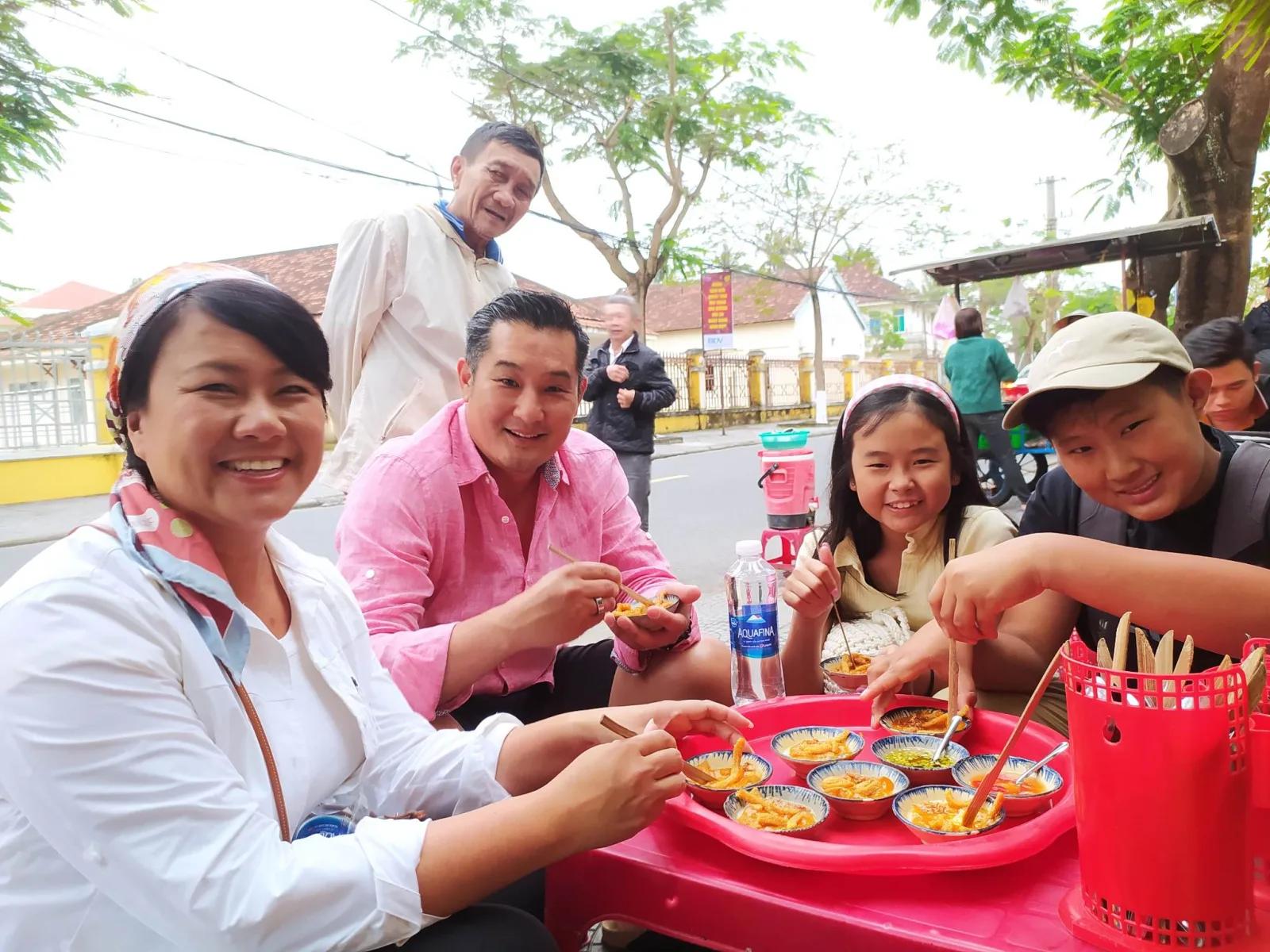
Food Tour
Hoi An Street Food Tour with Local Expert
A private evening route for flavour, conversation, and a softer look at Hoi An after dark.
3 hours
Explore the Hoi An Street Food Tour with Local Expert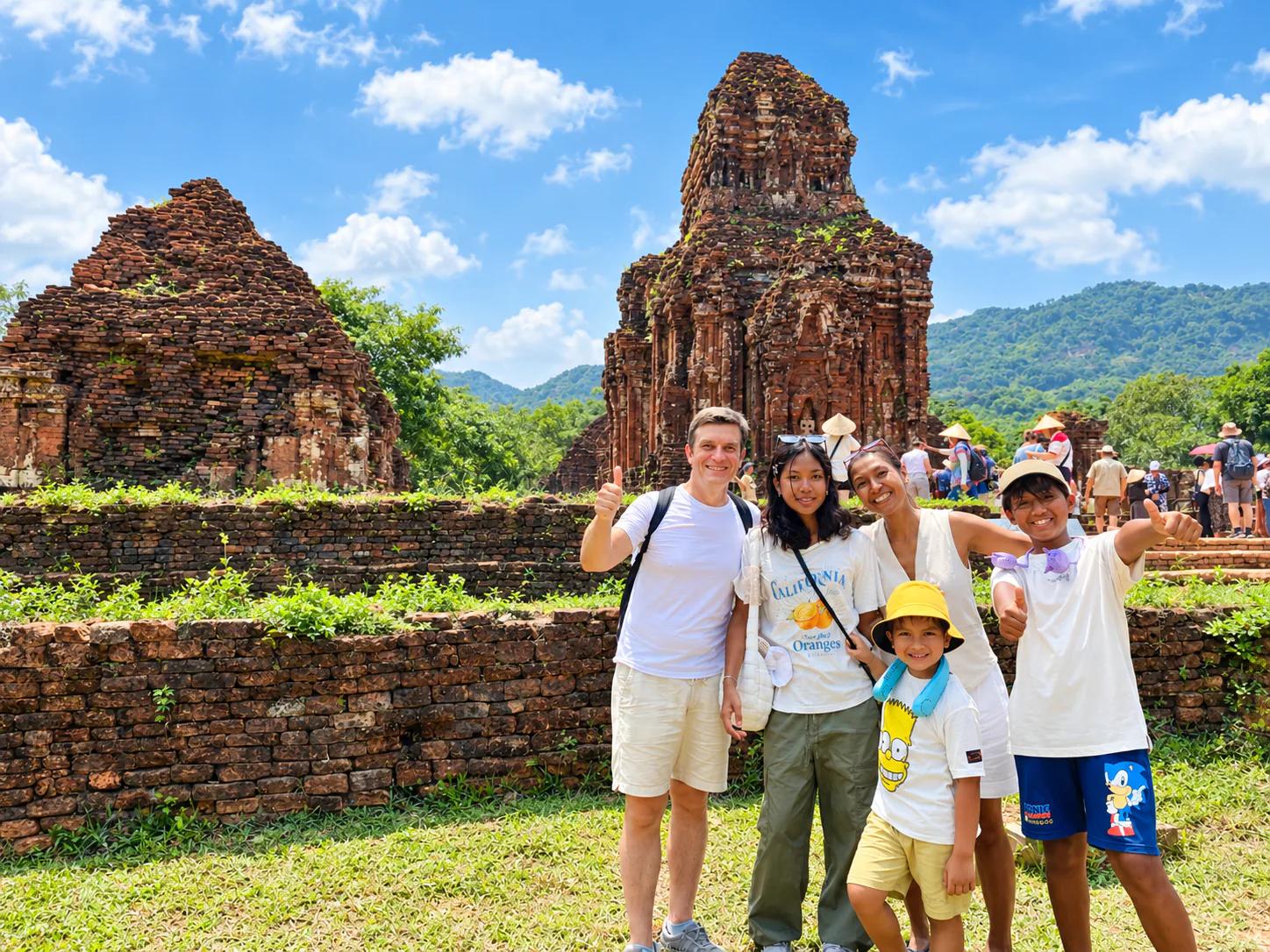
Historical Tour
My Son Sanctuary Private Tour with Meal
Private My Son tour with hotel pickup, electric cart inside the site, and an included Quang noodle meal. Sunrise, day or sunset.
About 5 hours
Explore the My Son Sanctuary Private Tour with MealNext step
If you want to turn this into a real route, start with the tours
Use the article for context, then move into the private tour pages when you want to compare the actual route styles more directly.