
Dish guide
White Rose Dumplings: The Hoi An Snack Two Families Have Been Folding for 100 Years
White rose dumplings are made in Hoi An and only in Hoi An — by two extended families using a recipe they will not write down. Here's the story, where to eat them, and how to visit the family workshop.
May 27, 2026 · 6 min read
Last updated: 9 September 2026 — written by Fin, a local guide in Hoi An.
Quick answer: what are white rose dumplings and why can only two families make them?
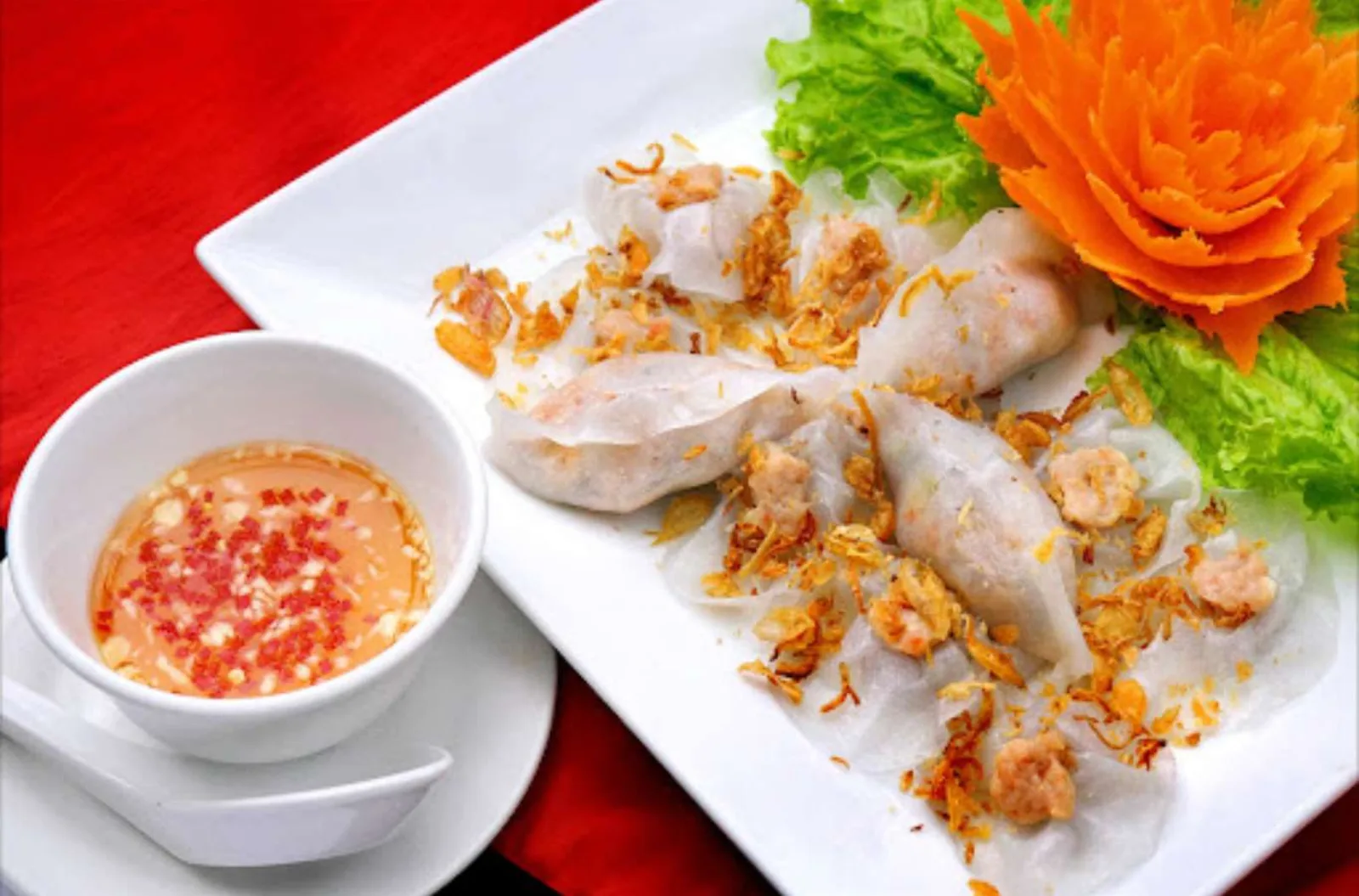
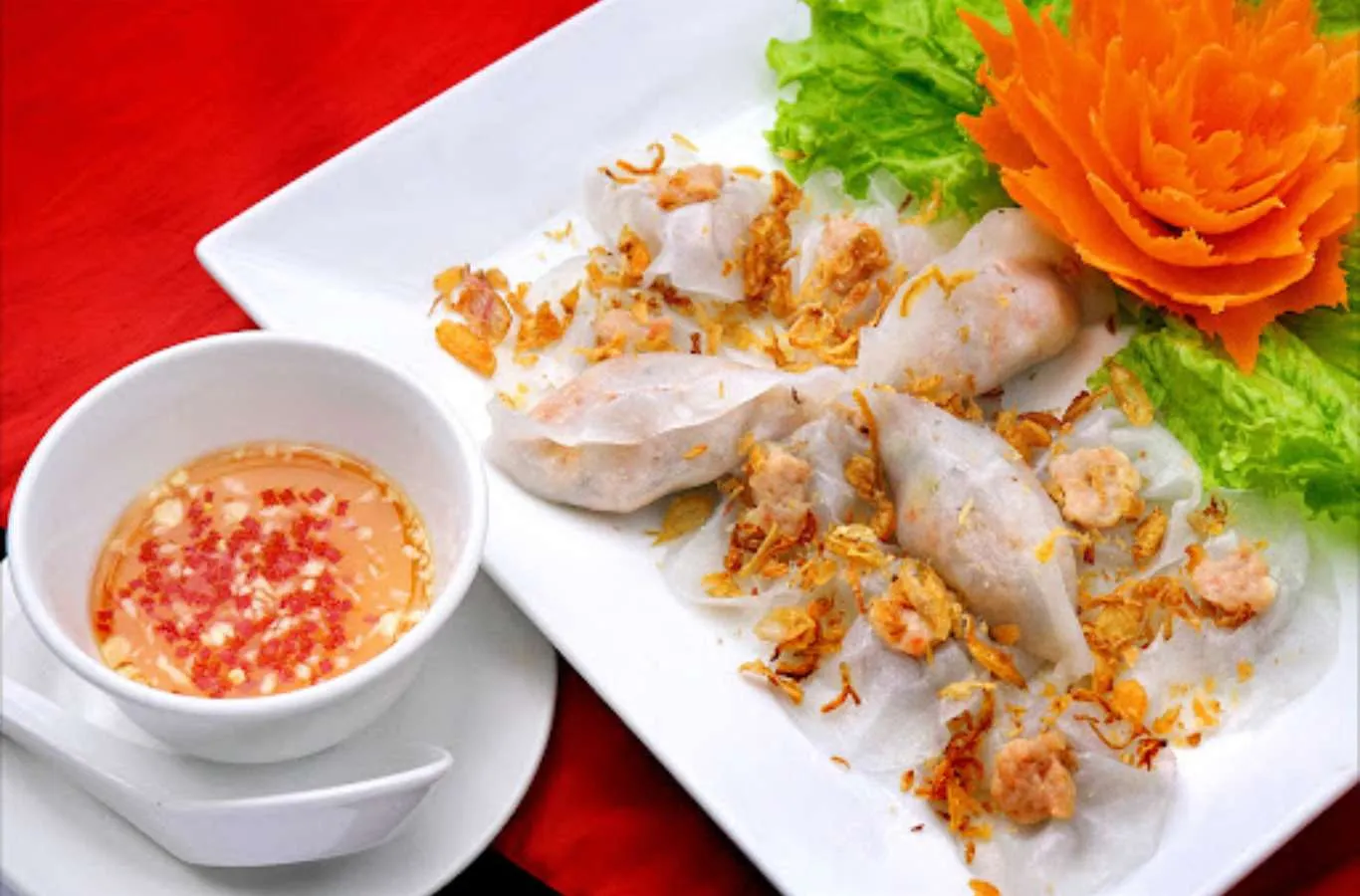
White rose dumplings — bánh bao bánh vạc in Vietnamese — are translucent rice-flour dumplings stuffed with seasoned ground shrimp, pleated by hand into a shape that looks like the petals of a white rose. The recipe — specifically the dough-to-water ratio and the resting time — has been kept inside two extended Hoi An families for roughly four generations. Both families live within 600 metres of each other on Hai Bà Trưng street and supply most restaurants in Hoi An. A plate runs 60,000–90,000 VND ($2.50–$3.80). The texture is the centrepiece — the wrapper is just thick enough to hold the shrimp but thin enough to see the pink filling through it. The dish is named after an old money pouch (bánh bao) and a wok handle (bánh vạc).
Key takeaways
- Every plate in Hoi An comes from the same two family workshops. The restaurant changes; the dumpling does not.
- 60,000–90,000 VND a plate is the fair price. Over 120,000 VND is the dining room, not the food.
- "White rose" is two dumplings, not one — bánh vạc with shrimp, bánh bao with pork and mushroom.
- Eat them first, while hot. They stiffen within ten minutes and there is no saving them.
- The workshop is more interesting than the plate. Mornings, before lunch service.
The two dumplings on the plate
Almost every English menu prints "white rose dumplings" as one item. It is two, and they arrive on the same plate.
Bánh vạc is the small one, pleated into the flower shape everyone photographs, filled with seasoned ground shrimp. The name comes from an old wok handle the shape supposedly resembles.
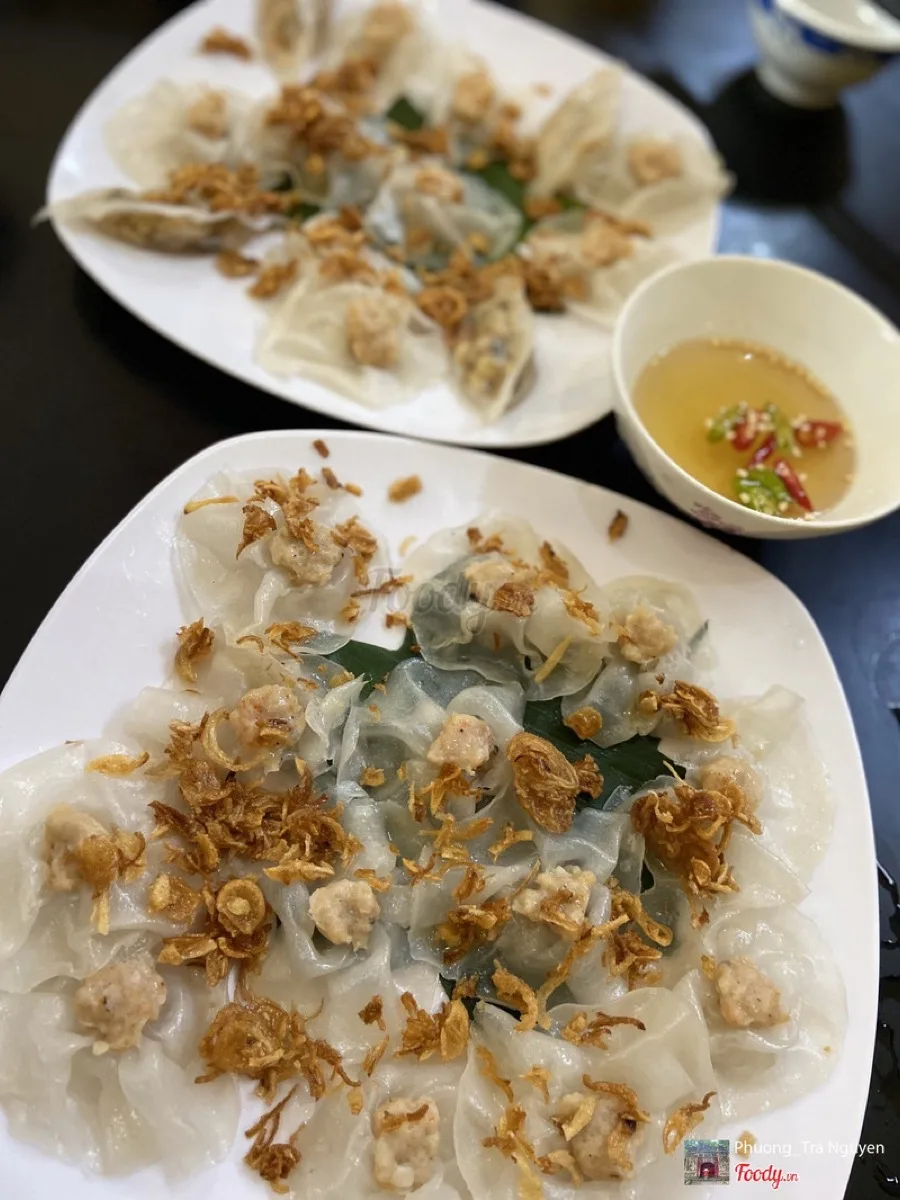
Bánh bao is the larger, rounder one, filled with minced pork, wood-ear mushroom and shallot, and named after a money pouch. It is the less photogenic half and the better mouthful, which is a fair summary of a lot of Hoi An food.
Both are topped with crisp fried shallots and served with a warm, mildly sweet dipping sauce built on shrimp stock rather than plain fish sauce. That sauce is part of the dish, not a condiment — a plate without it is missing a third of the flavour.
Why only two families make them
The families have refused to teach the full recipe outside the household, including to chefs who have offered substantial money. Cookbook versions exist but are reportedly off — the texture never matches a fresh dumpling from the workshop. It is one of the few remaining trade secrets in Vietnamese cuisine. The restaurants are not making dumplings in their own kitchens — they receive deliveries twice a day from the family workshops. This is why white rose dumplings taste similar everywhere in Hoi An: the source is the same.
Where to eat white rose dumplings in Hoi An
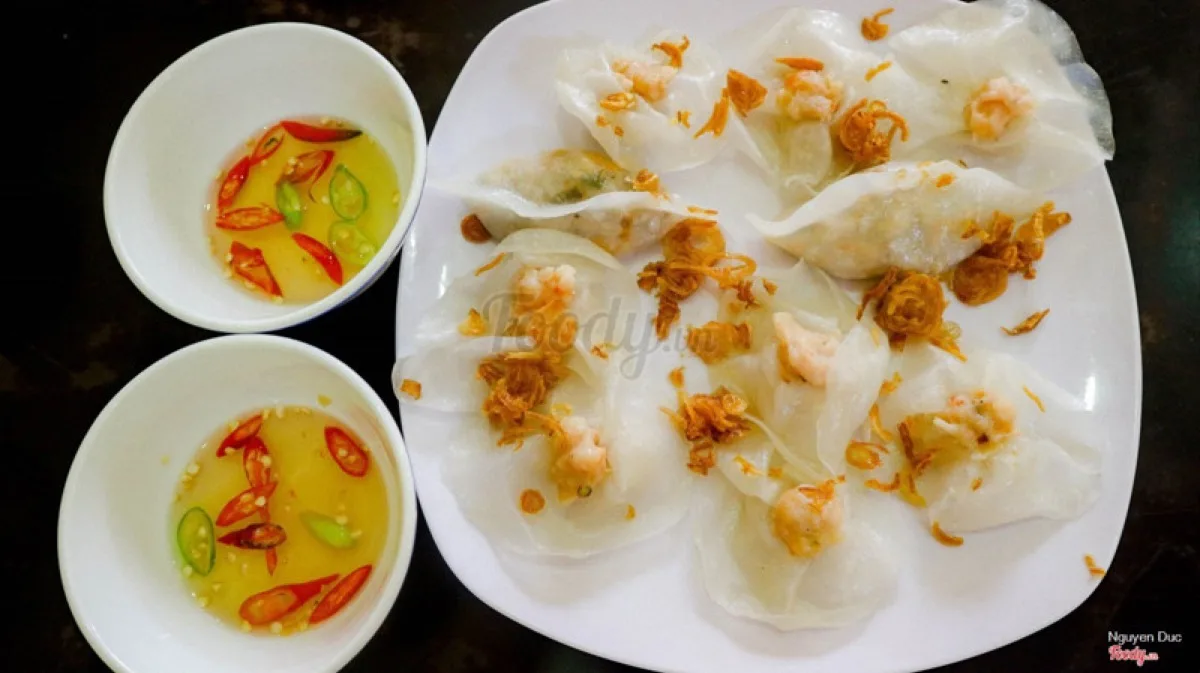
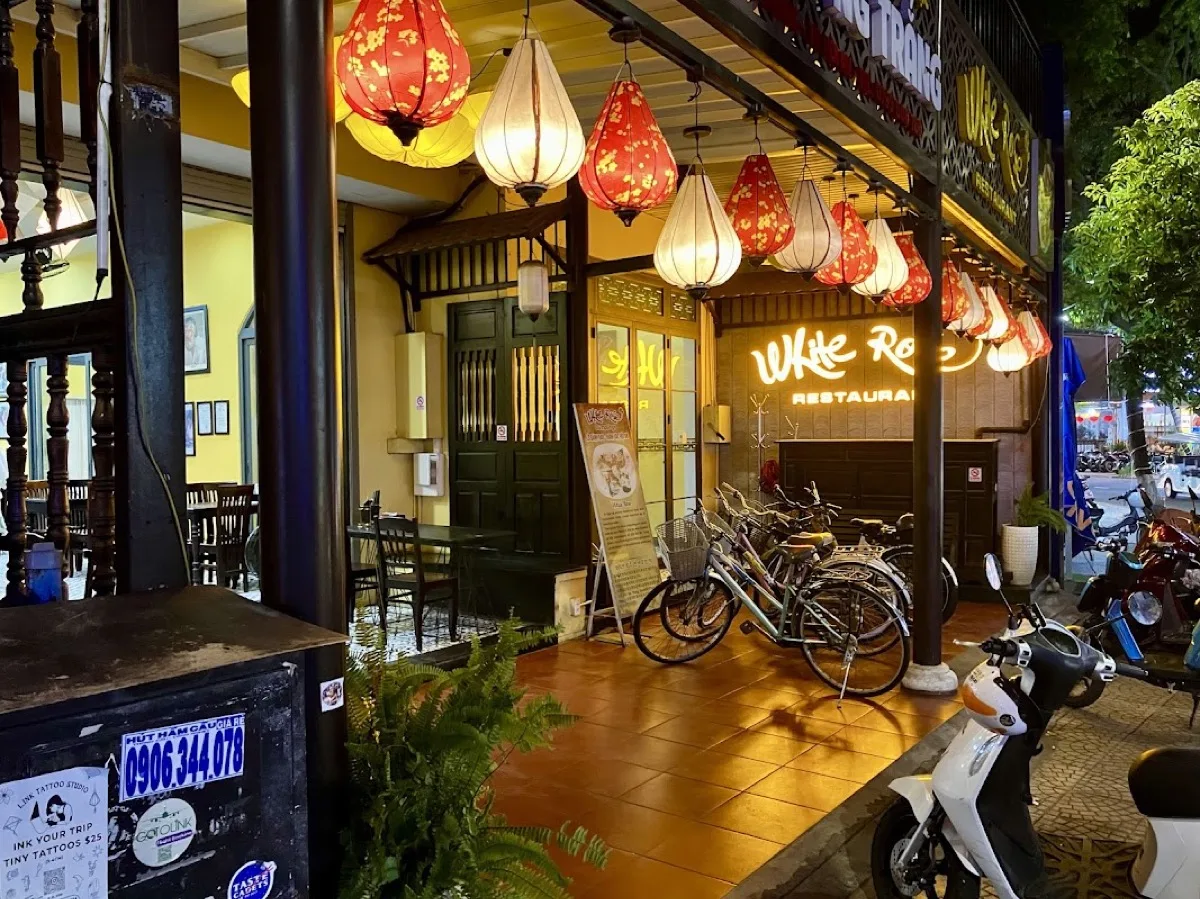
- White Rose Restaurant (533 Hai Bà Trưng) — the original, owned by one of the two families. Workshop visible from the dining room. 80,000 VND a plate. Open 7:30am–8pm. Cash only.
- Morning Glory Restaurant (106 Nguyễn Thái Học) — upscale option, same supply chain, 95,000 VND a plate. Run by Ms Vy. Worth it for a sit-down meal with cao lầu and other dishes.
- Smaller Old Town cafés — 60,000–75,000 VND a plate, supplied by the same two families. The dumplings are nearly identical wherever you order them; pick based on atmosphere.
| Where | Price a plate | Why go |
|---|---|---|
| White Rose Restaurant, 533 Hai Bà Trưng | 80,000 VND | The source. Workshop visible from the dining room. Cash only, 7:30am–8pm. |
| Morning Glory, 106 Nguyễn Thái Học | 95,000 VND | A proper sit-down meal — order these alongside cao lầu and bánh xèo. |
| Small Old Town cafés | 60,000–75,000 VND | Same dumplings, cheaper, quieter. Choose on the room, not the food. |
Skip anything priced over 120,000 VND. That is a markup on rent, not a difference in the dumpling — every plate in this town was folded in one of two workshops that morning.
How to eat them
Three practical things, in the order they matter.
- Eat them straight away. The wrapper is rice flour and nothing else — hot it is silky, ten minutes later it is rubbery. If they arrive with everything else, eat these first and let the cao lầu wait.
- Spoon the sauce over, do not dip. Dipping tears the pleats. The Vietnamese way is to spoon a little sauce and a few fried shallots onto each dumpling on the plate.
- One bite, not two. They are made to be eaten whole. Cutting one in half is how the filling ends up on the table.
If you have a shellfish allergy, order the bánh bao only and say "dị ứng tôm" — they are made in the same workshop, so cross-contact is likely; a serious allergy is a reason to skip the dish entirely.
The workshop visit
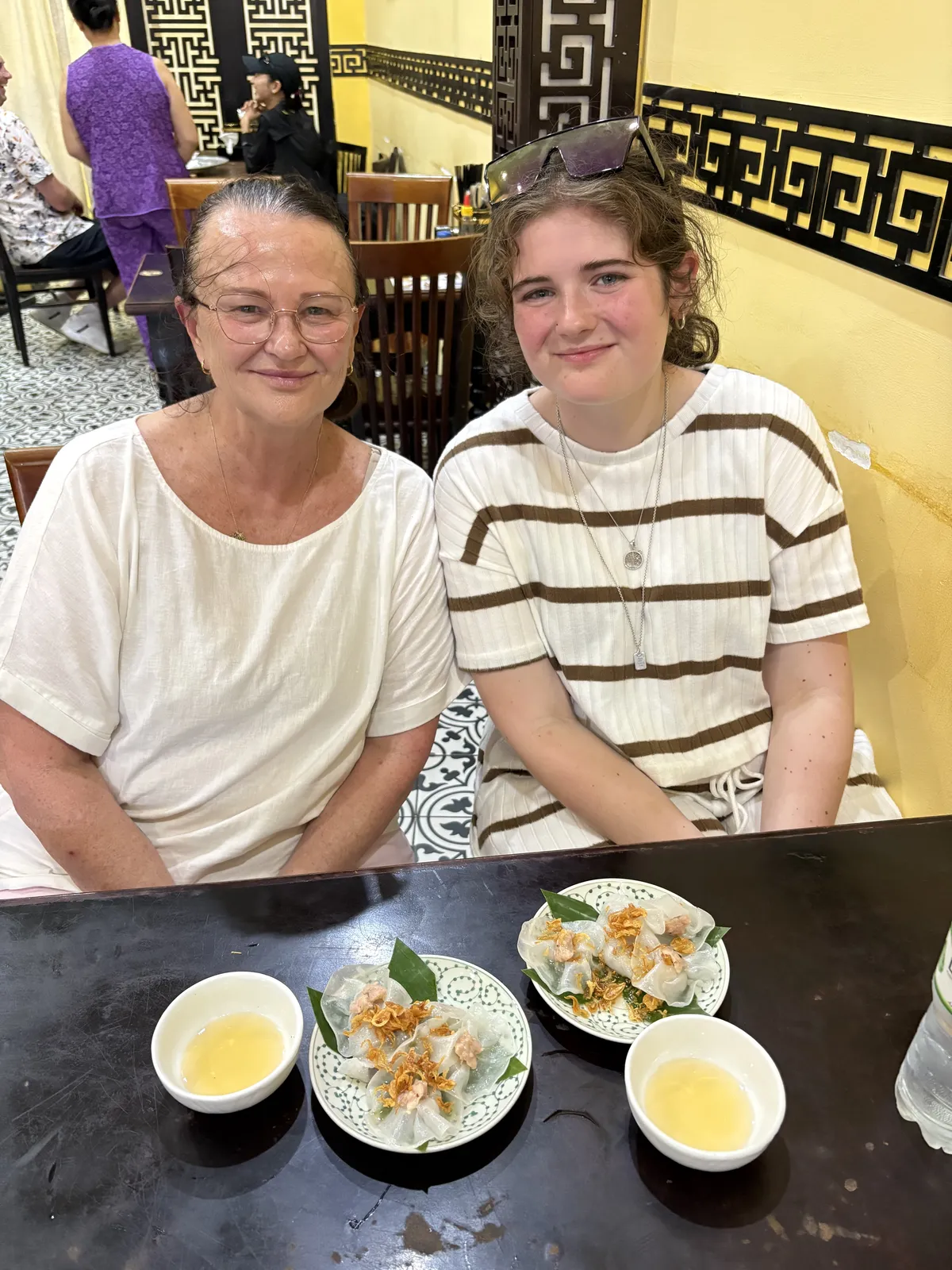
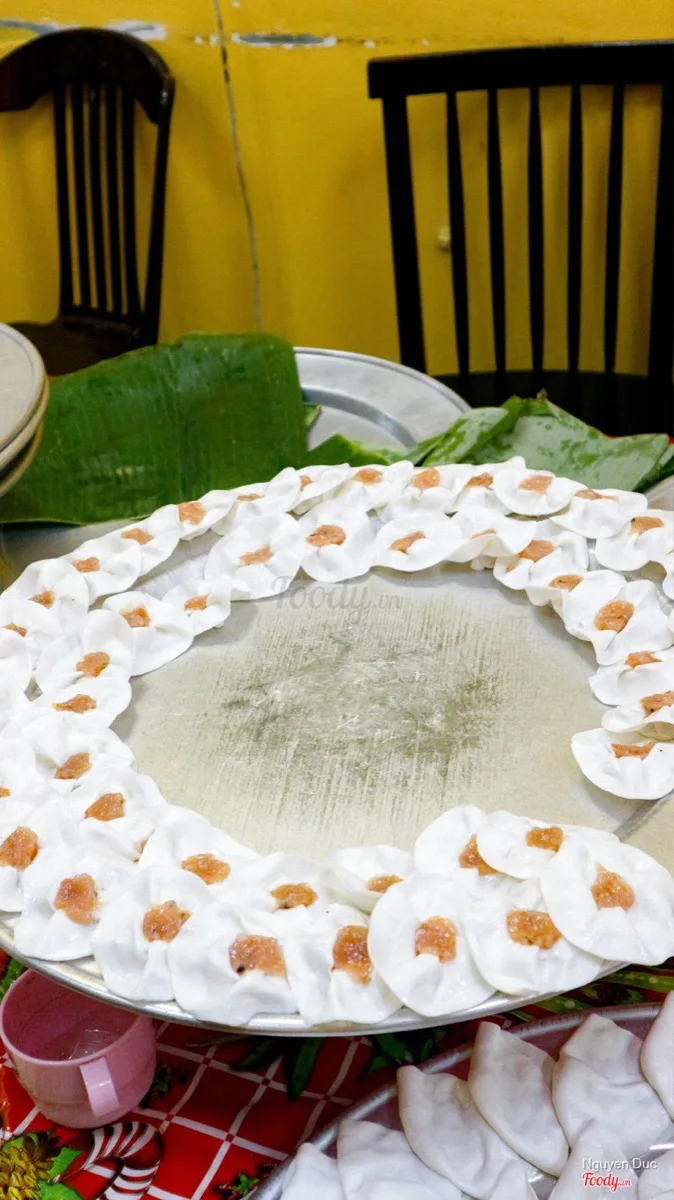
On the Hoi An food tour, I include a 15-minute stop at one of the family workshops. You watch the women — usually three to four of them sitting on low stools — pleat the dumplings by hand. Each dumpling takes about four seconds to fold once your hands know the motion; the women have been doing this since they were ten years old. The kitchen is open to the dining room, which is the family's way of saying: nothing is hidden in this process, only the dough recipe.
If you cannot do the food tour, ask at White Rose Restaurant to see the workshop — they usually say yes for one or two visitors at a time, especially in the morning before lunch service.
Best dishes to order alongside
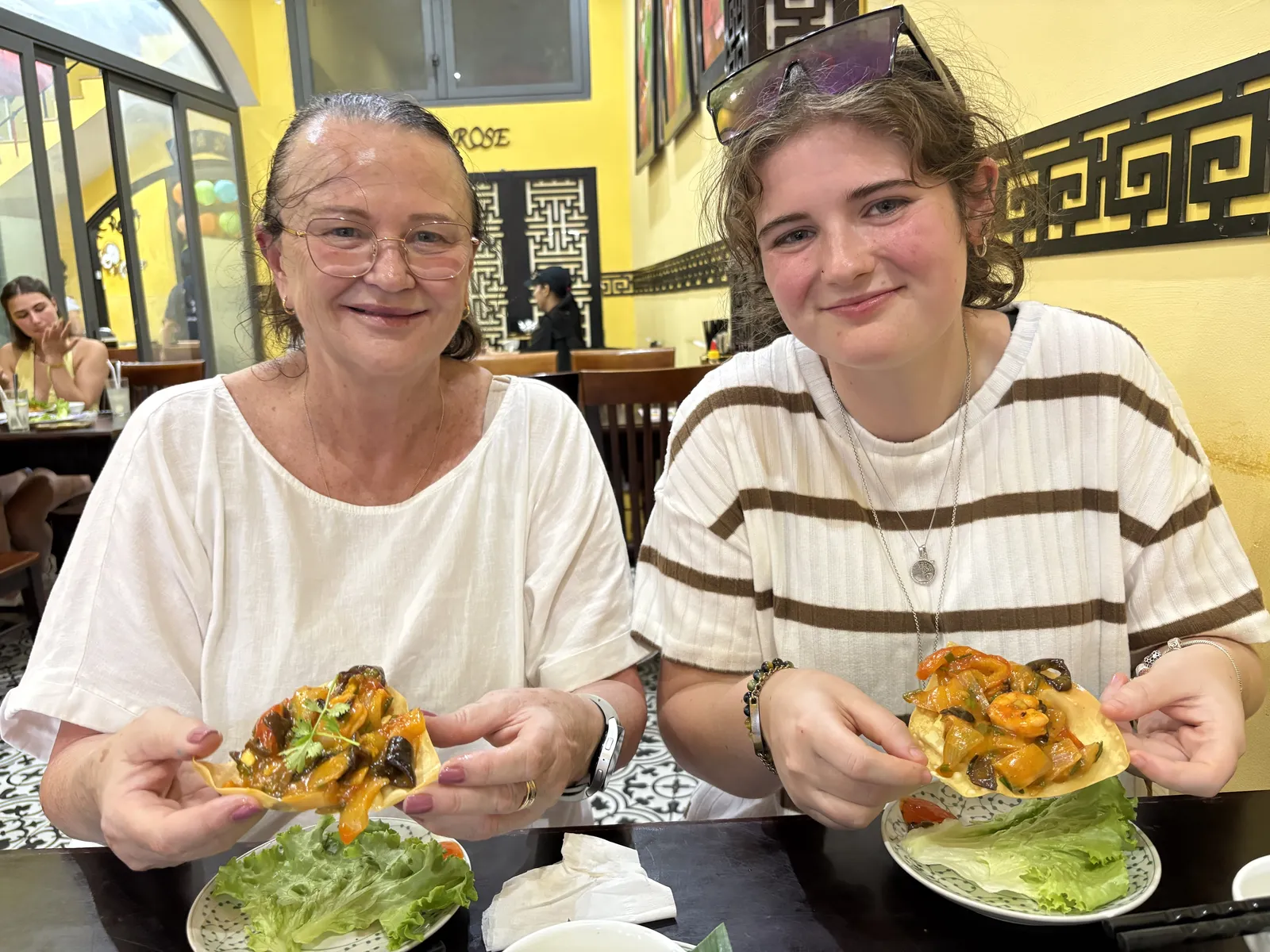
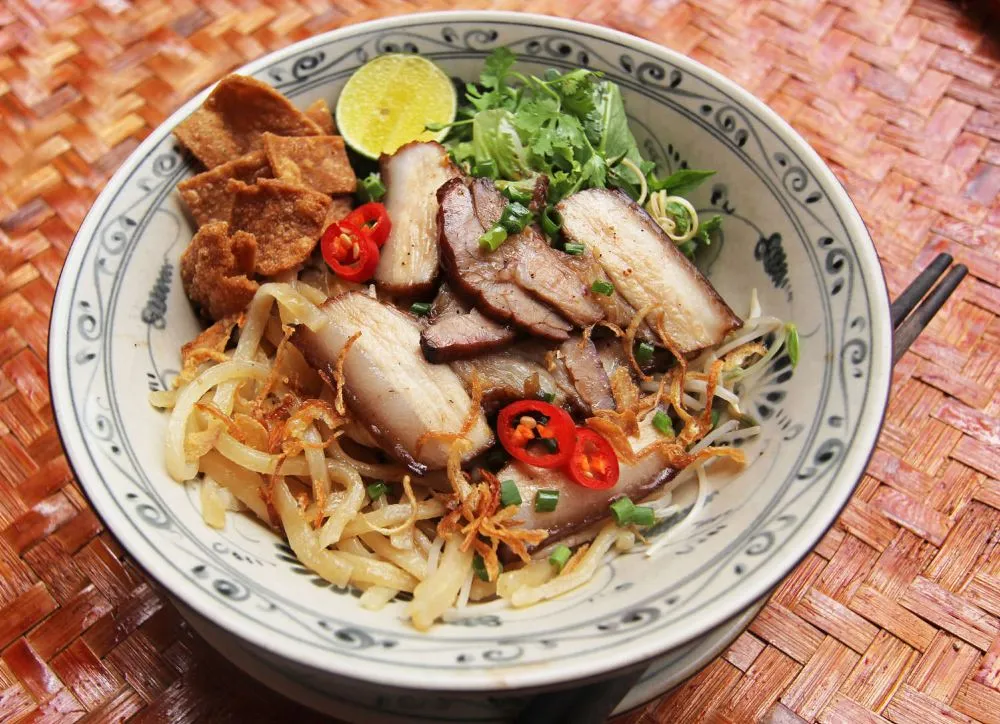
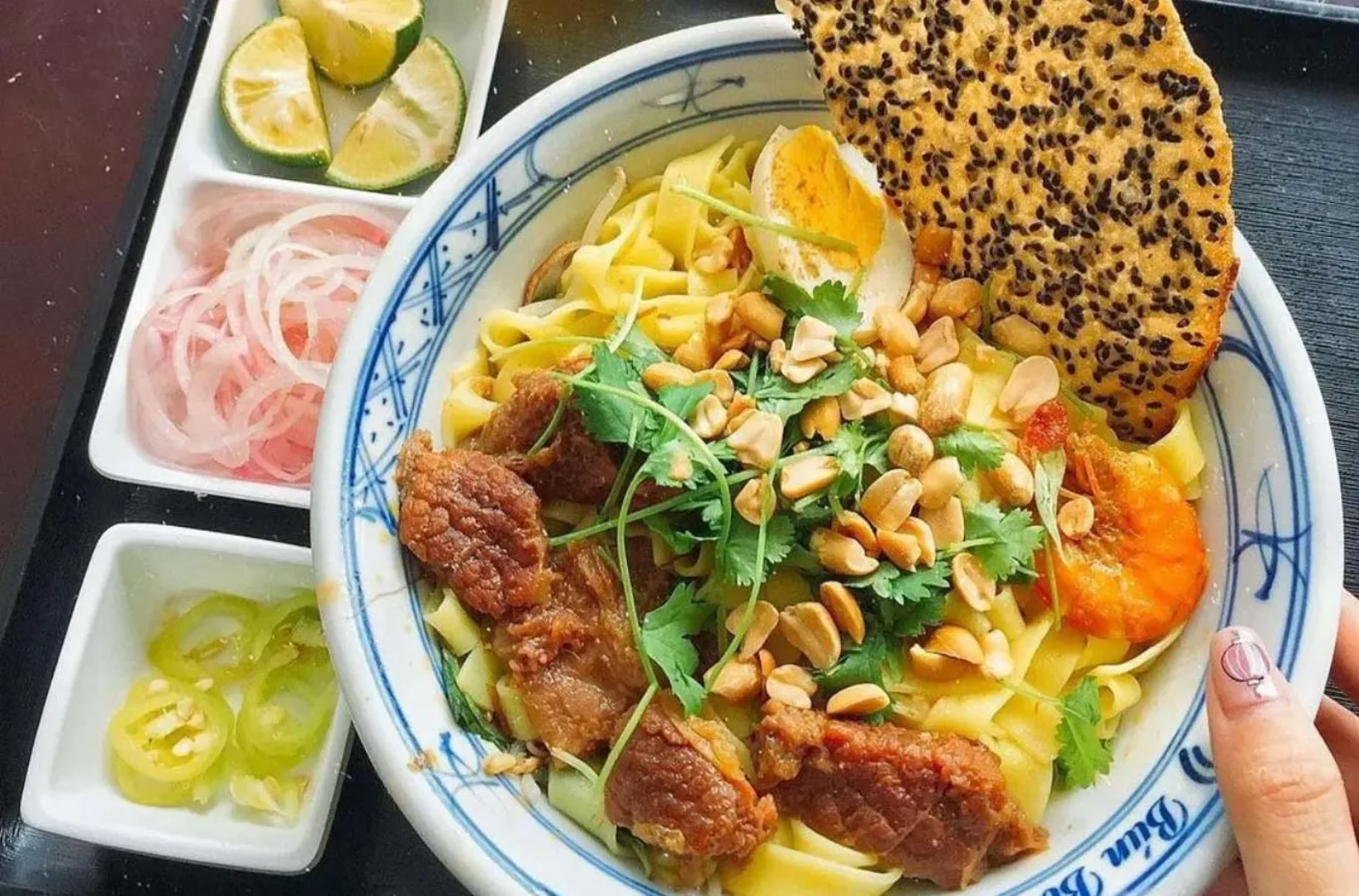
The classic Hoi An trio is white rose dumplings, cao lầu noodles, and crispy fried wontons (hoành thánh chiên) — around 220,000 VND ($9.30) together at a family restaurant, and the right first meal in this town. Morning Glory will add bánh xèo and cơm gà Hội An to make a four-dish tasting.
The fried wontons deserve their own mention: a crisp wonton square topped with a warm tomato, shrimp and pineapple sauce. It sounds wrong and it is the dish most guests ask for again. Order it in the same round as the dumplings — the two are usually made by the same kitchen and arrive together.
To drink: Vietnamese drip coffee if it is early, fresh sugarcane juice if it is hot. The sugarcane is the one that actually cuts the sweet shrimp-stock dip. For the full order of an evening, the Hoi An food guide lays it out dish by dish, and the timing guide covers which hour each one belongs to.
How white rose dumplings are made
You can watch most of this at the workshop, which is part of why the visit is worth it.
- The dough. Rice flour and water, kneaded until smooth and rested. The ratio, the flour and the resting time are the part the families keep to themselves. Everything else happens in plain sight.
- The filling. Shrimp pounded to a paste and seasoned for the small pleated bánh vạc; minced pork, wood-ear mushroom and shallot for the larger bánh bao.
- The pleating. A small disc of dough, a pinch of filling, and a series of fast folds that leave the top open like petals. An experienced folder does one every few seconds, all morning.
- The steaming. Bamboo or metal steamers, a few minutes only. Too long and the wrapper goes cloudy and tough.
- The finish. Fried shallots on top, the warm shrimp-stock sauce on the side, served within minutes.
Why the home versions never work
Recipes for bánh bao bánh vạc are all over the internet, and people who have eaten the real thing tend to be disappointed by them. Three reasons come up again and again. The rice flour sold abroad is usually a different grind, so the dough either cracks or turns gluey. Getting the water ratio right is something the families judge by feel, not by a number. And the dumplings are meant to be eaten within minutes of steaming — made at home and plated with everything else, they have already stiffened by the time anyone sits down.
The honest advice is to eat them here, twice, and not try to recreate them. If you want to cook one Hoi An dish at home, bánh xèo is far more forgiving, and a Tra Que cooking class will teach it properly.
How many to order
A standard plate is enough for one person as a starter or two people sharing as one dish among several. On a first visit, order one plate between two, alongside the fried wontons and a bowl of cao lầu, and see how you feel — ordering a second plate takes a minute, and they come out fast. Ordering three plates at the start is the classic mistake: the last one goes cold and rubbery before anyone reaches it. The kitchen would much rather send out a second round hot than watch the first one go to waste. Just ask.
Related planning notes: what to eat in Hoi An, cao lau guide, and things to do in Hoi An.
FAQ
A few practical follow-up questions
Only the questions that sit naturally inside this article are shown here, so the page stays focused.
Article FAQ
Some restaurants in Da Nang and Ho Chi Minh City list them, but they are made on-site rather than supplied by the two Hoi An families — and the texture is noticeably off. Outside Vietnam, what you see called 'white rose dumplings' on Vietnamese restaurant menus is usually a different dumpling style entirely. The dish is genuinely Hoi An-only.
60,000 to 90,000 VND a plate ($2.50 to $3.80) at a family-run Hoi An restaurant. At Morning Glory or upscale dining rooms the same plate is 95,000 to 110,000 VND. If you see them priced over 120,000 VND, that is a tourist markup, not a quality difference — all the dumplings come from the same two families.
The standard version is not — the filling is shrimp or pork. A small number of restaurants (Karma Waters and a few cooking-class kitchens) make a vegetarian version with mushroom and tofu filling on request. Confirm in advance because it is not on most menus.
The two family workshops are on Hai Ba Trung street. White Rose Restaurant (533 Hai Ba Trung) is the easiest — the kitchen is visible from the dining room. On the Fingo Hoi An food tour we include a 15-minute workshop visit where you can see the pleating up close. If you visit independently, mornings before noon are the most active.
Banh vac is the small pleated dumpling filled with ground shrimp — the one that looks like a rose. Banh bao is the larger round one filled with minced pork and wood-ear mushroom. They are served together on the same plate and sold under the single English name "white rose".
Same topic
More in this topic
If this topic is close to your trip, these notes stay within the same planning lane without sending you off into a wider archive.
Related tours
If you want to turn the note into a real plan
These tours sit closest to the topic you just read, so the next step stays grounded in the actual route options.
Food Tour
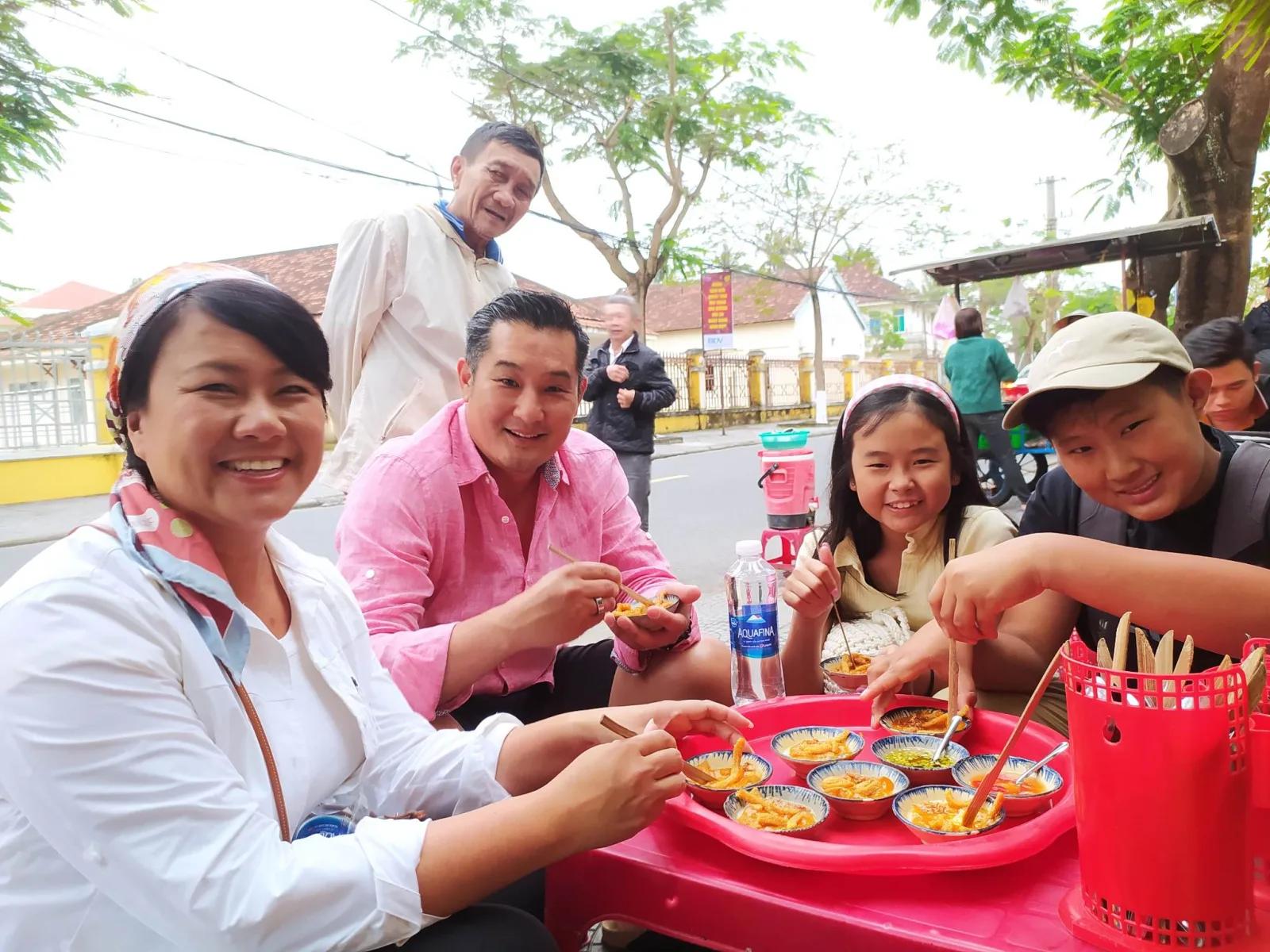
Hoi An Street Food Tour with Local Expert
A private evening route for flavour, conversation, and a softer look at Hoi An after dark.
3 hours
Explore the Hoi An Street Food Tour with Local Expert
Walking & Street Food Tour
Hoi An Ancient Town Walking & Street Food Tour
Join our half-day tour to explore the best of Hội An. Walk through lantern-lit streets, visit iconic landmarks, and enjoy delicious local food.
3 to 4 hours
Explore the Hoi An Ancient Town Walking & Street Food TourNext step
If you want to turn this into a real route, start with the tours
Use the article for context, then move into the private tour pages when you want to compare the actual route styles more directly.