
Tour guidance
Hoi An Old Town Tour: A Local Guide's Walkthrough of the Ancient Town
Planning a Hoi An Old Town tour? Here's how a local guide walks it — the meeting points, the ticket reality, the photo windows, and what most group tours skip.
May 26, 2026 · 9 min read
Last updated: 9 September 2026 — written by Fin, a local guide born 200 metres from the Japanese Bridge.
Quick answer: what does a Hoi An Old Town tour actually cover?
A Hoi An Old Town tour takes 3 to 4 hours and covers roughly 6 by 8 blocks centred on the Japanese Covered Bridge (20.4m long, built ~1593, named Lai Viễn Kiều in 1719). Inside that grid sits everything the UNESCO listing protects: the Cantonese, Fujian, and Hainan assembly halls, the 18th-century Tan Ky merchant house, the Quan Cong temple, the riverside market, and the old town gate on Trần Phú street. The Japanese Bridge has been a national heritage site since 17 February 1990 and underwent a 20.2-billion-VND restoration completed on 3 August 2024.
On a Hoi An private walking tour, the route is shaped around what you most want to understand. First-time visitors usually want context — why is the bridge Japanese? Why are the houses two storeys? Why does the market sell so many herbs? Return visitors usually want food, photography corners, or a quieter route through the back lanes that group buses miss.
Key takeaways
- Duration: 3–4 hours for a proper walk; 2.5 hours for a shorter version; 2 hours is what group buses run and it skips most heritage sites.
- Best times: 8am–11:30am for cool morning light; 3:30pm–7pm for golden hour into lantern light. Avoid midday (11am–3pm).
- Ticket: 120,000 VND at perimeter booths, covers 5 heritage sites. You do NOT need a ticket to walk the streets, photograph buildings, or eat.
- Food stops: cao lầu, white rose dumplings, and bánh mì fit naturally into the walk as 15-minute tasting pauses — not separate food-tour additions.
- Private vs group: a private tour stops when something catches your eye — a wedding photographer at the bridge, a man frying bánh xèo in a corner alley, a tailor's apprentice hand-stitching a collar. Group tours steamroll past those moments.
The ticket reality — what you do and do not need to pay for
The Ancient Town entry ticket costs 120,000 VND per person and grants access to five heritage sites of your choice from a list of about twenty. You buy it at one of four ticket booths around the Old Town perimeter, not at each individual site.
The confusion this causes is the single most common thing travellers get wrong in Hoi An, so here it is plainly:
| Needs a coupon | Free — no ticket at all |
|---|---|
| Entering the temple inside the Japanese Covered Bridge | Walking across the bridge, and every street in the Old Town |
| Tan Ky merchant house, Phung Hung old house | Photographing any building from outside |
| Fujian and the other assembly halls | Every restaurant, café, market stall and tailor shop |
| One performance at the traditional music venue | The Thu Bồn river boats and the riverside at night |
| The folklore and ceramics museums | The lantern festival on the 14th of each lunar month |
You get five coupons and there are about twenty sites. Nobody uses all five well by wandering; the Fujian hall, one merchant house and the bridge temple is the version most guests are glad they chose.
On a private tour, the five sites are sequenced by interest rather than geography, so you visit the ones that match what you find compelling in the first 30 minutes.
Best times of day to walk the Old Town
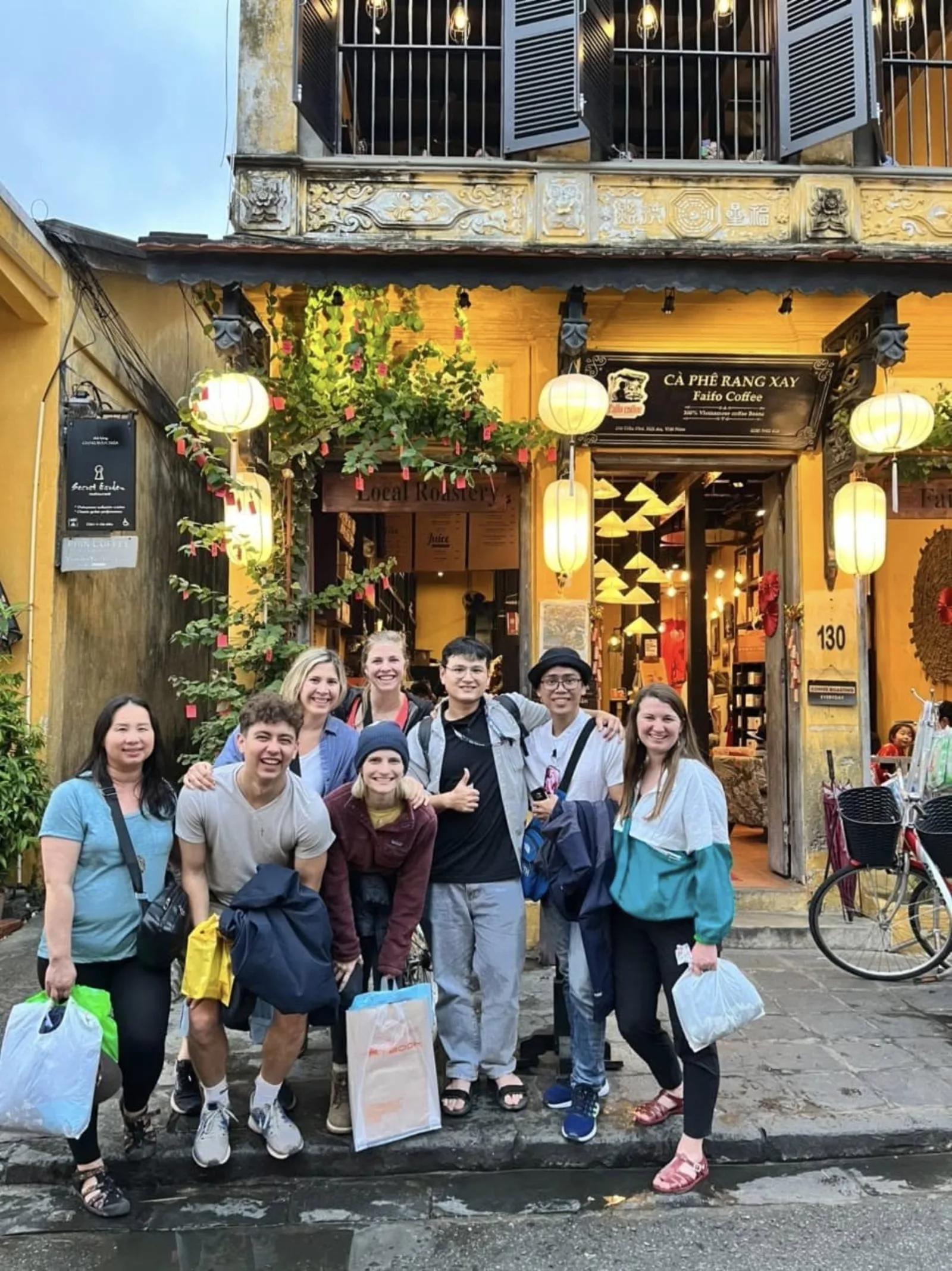
Morning: 6:30am–9am — the photographer's window
Light is soft, the streets are empty, and you can stand in the middle of Trần Phú street to photograph the wooden facades without dodging scooters. The yellow-walled merchant houses and yin-yang tile roofs look best in this light. The catch: many heritage houses do not open until 8am, so a 6:30am start is a walking-and-photographing window, not a fully guided tour.
Late morning: 9am–11:30am — group-tour rush hour
This is when most group tours arrive. The Japanese Bridge gets crowded, the assembly halls fill up, and the noise level climbs. If you must visit then, a good guide routes you through the quieter side streets and times the busy stops for the gaps between bus arrivals.
Late afternoon: 4pm–6:30pm — the golden-hour walk
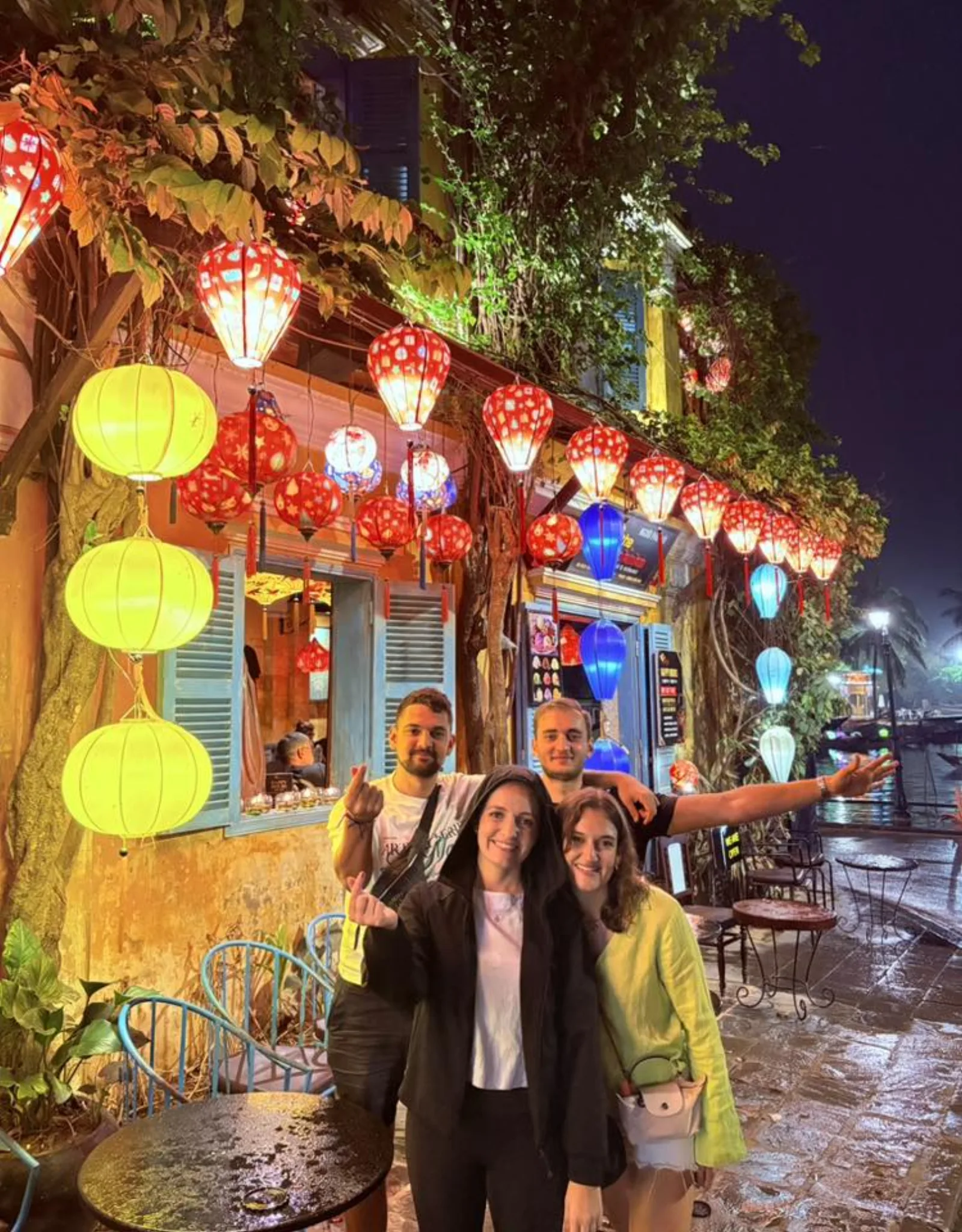
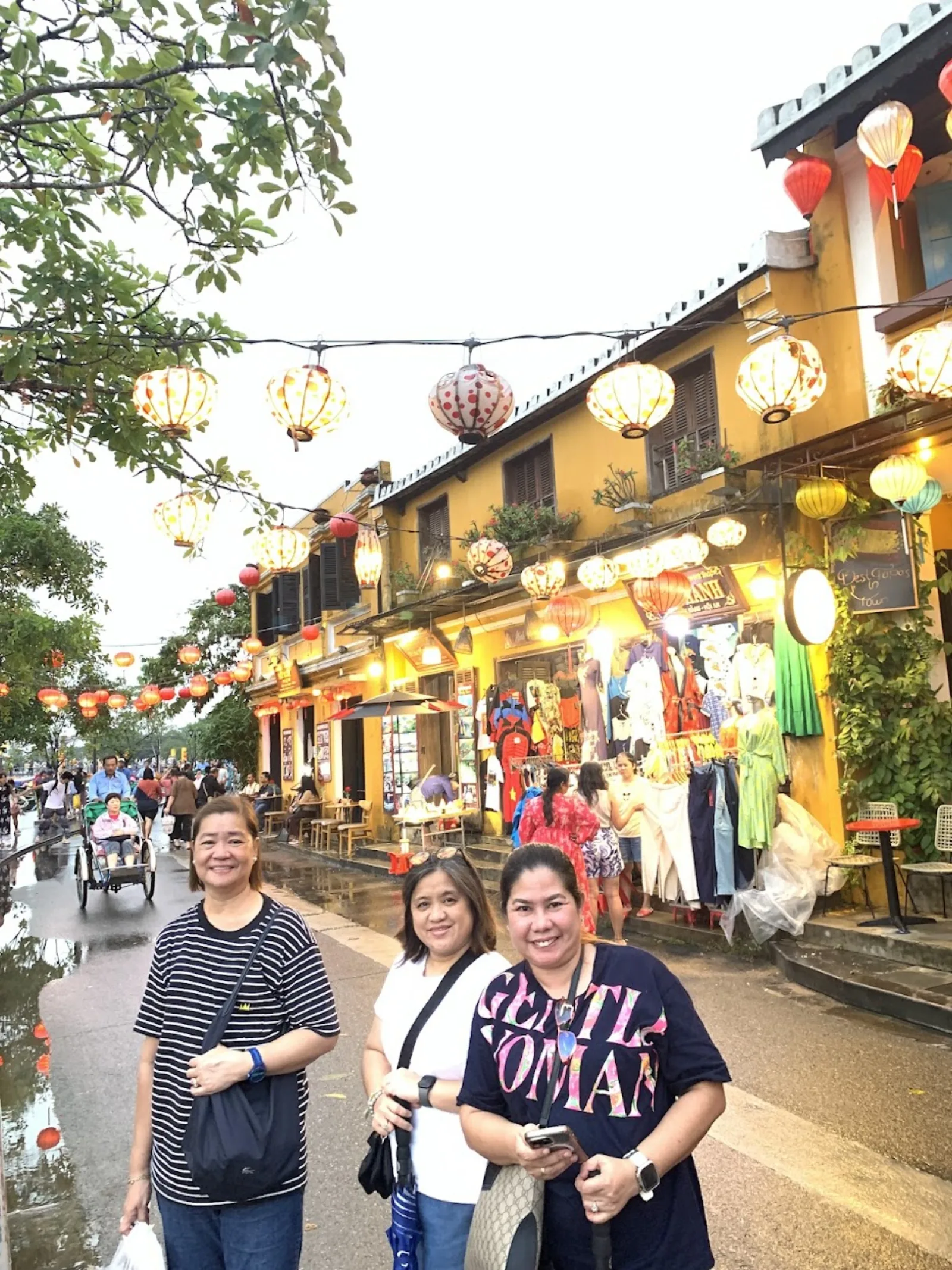
Light is warm, the heat drops, and the lantern shops start switching on. By 6:30pm the Old Town transforms — electric lights dim, paper lanterns glow, and the river fills with small candle boats. This is the postcard Hoi An.
For a private tour, the two best windows are an 8am start ending with lunch, or a 3:30pm start finishing in lantern light. Both avoid the worst of the midday heat and the group-bus crush.
The route — what you actually see, in order
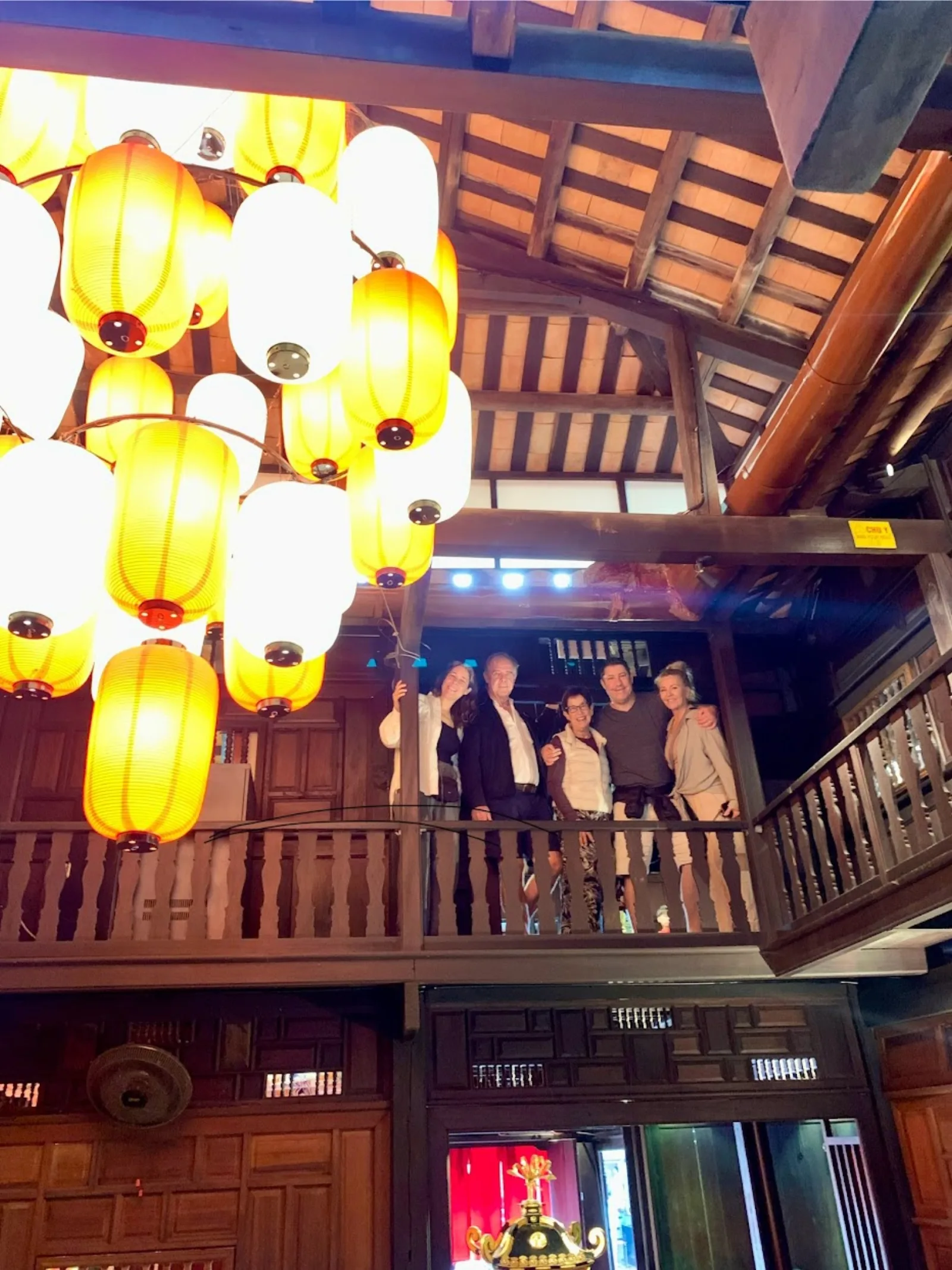
A local guide's Old Town walking route follows a logic, not a checklist. Here is how I walk it:
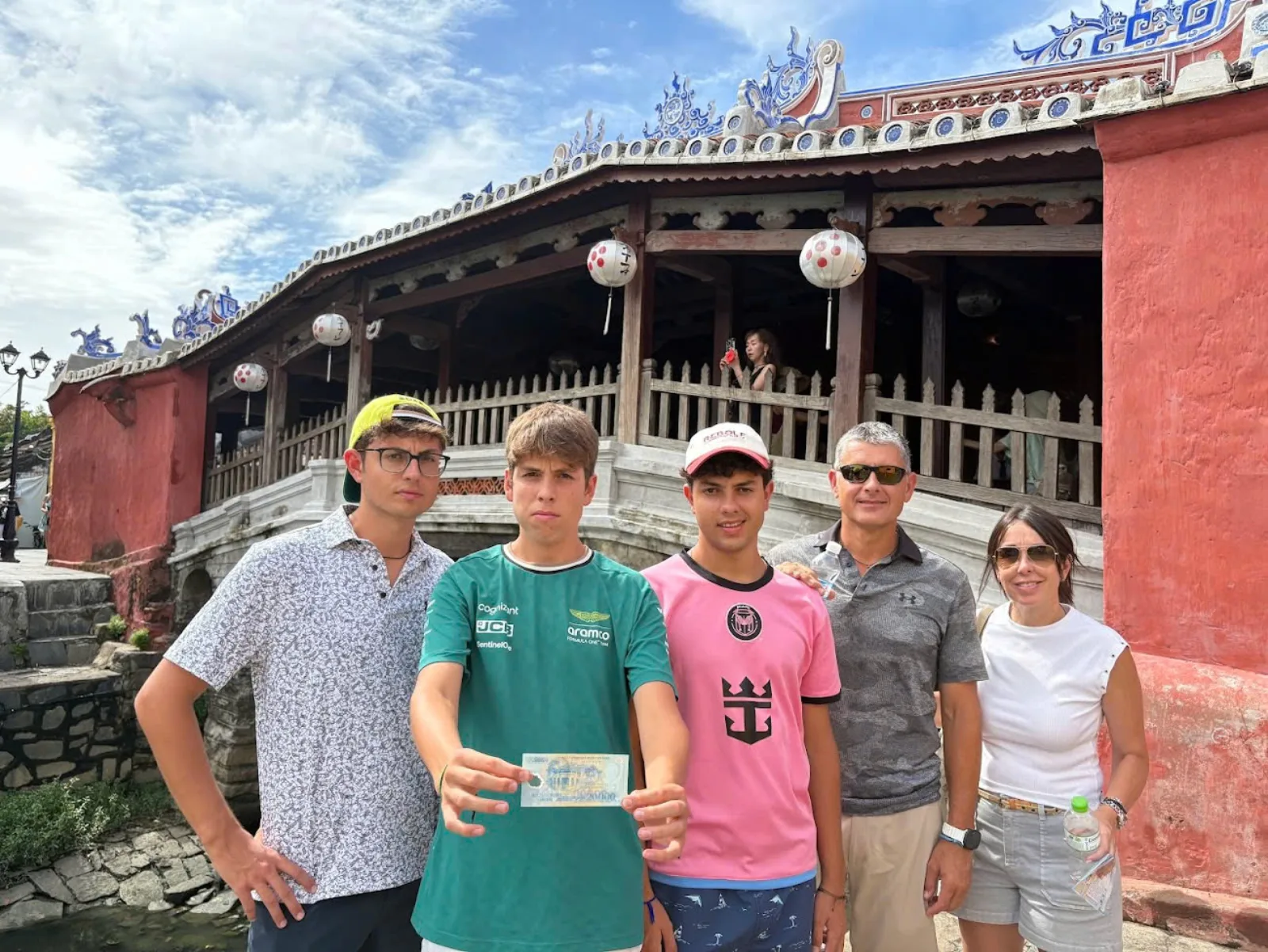
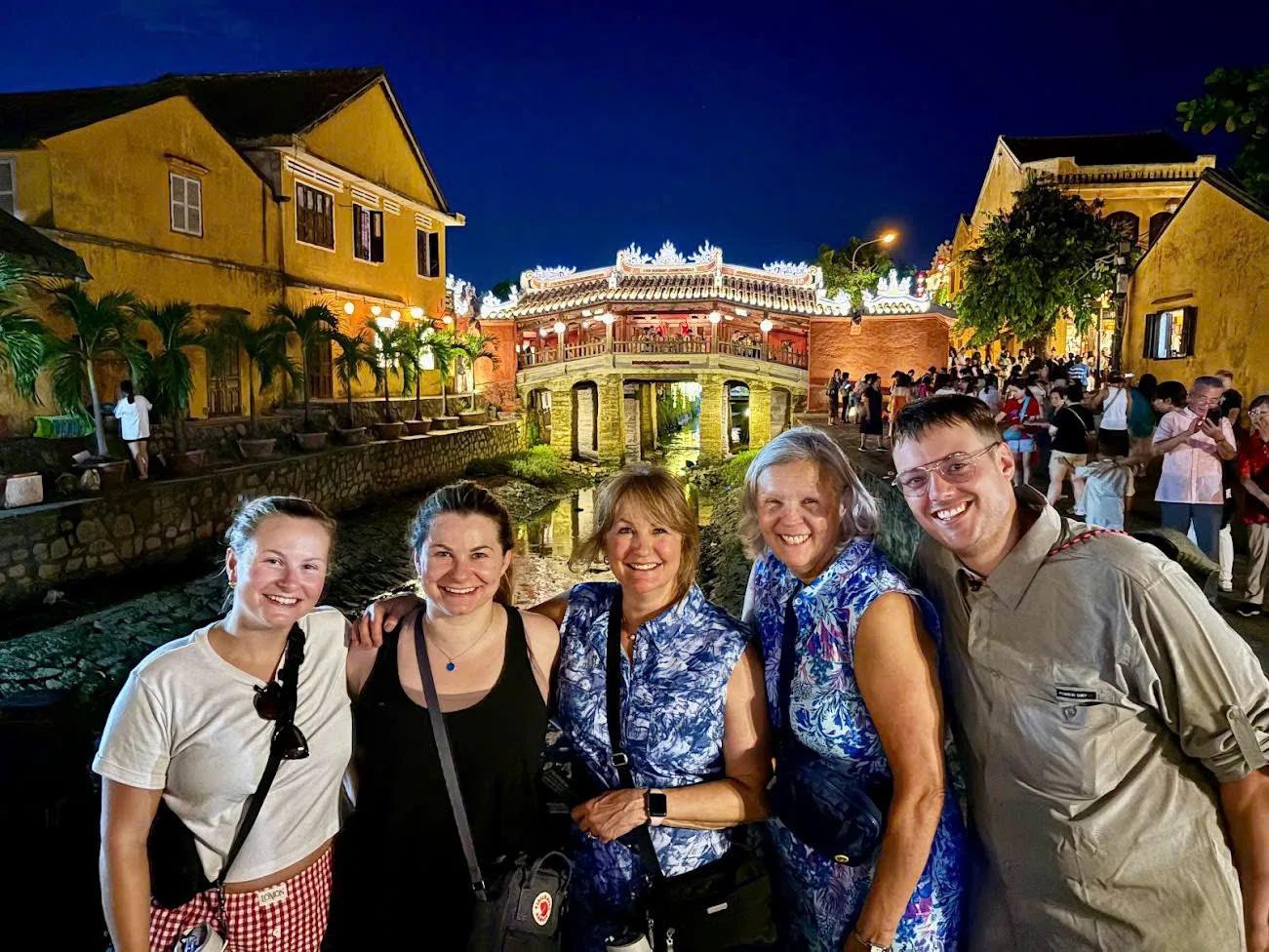
- Start at the Japanese Covered Bridge area. The bridge is 20.4m long, 13m wide at centre, 5.7m high — built around 1593 by Japanese merchants, named Lai Viễn Kiều by Lord Nguyễn Phúc Chu in 1719. We spend 10–15 minutes here for context and photos, then move on before the buses arrive.
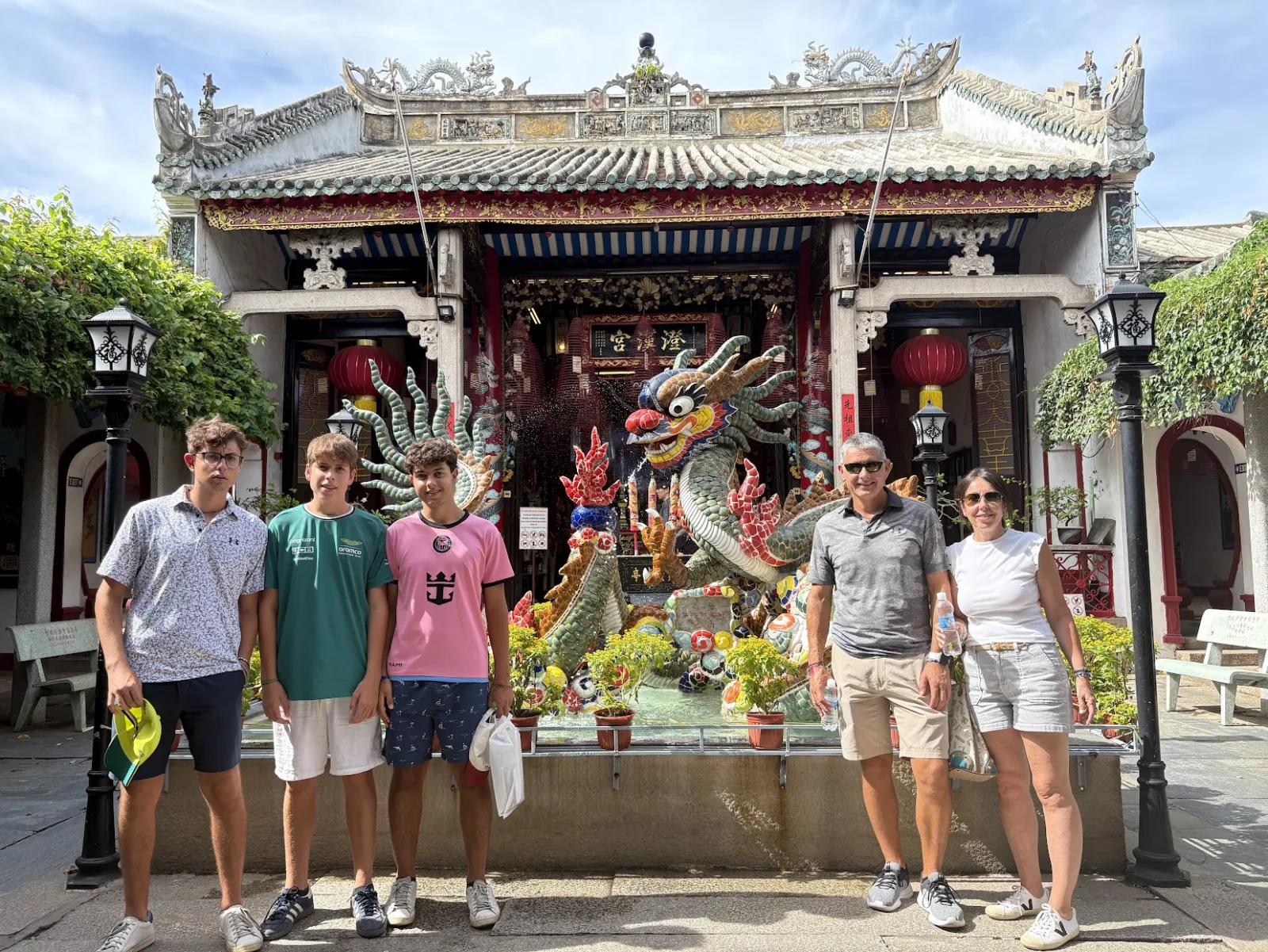
- Walk Trần Phú street toward the assembly halls. Trần Phú is the spine of the Old Town — yellow walls, wooden shutters, old shop signs, and the quiet details between famous stops. The Trung Hoa Assembly Hall (Chùa Bà) at 64 Trần Phú is the oldest Chinese assembly hall in Hoi An, possibly built during the Ming Dynasty (1465–1487). It served as a wholesale market and warehouse for over 350 years. Eight renovations are recorded between 1855 and 1995. Inside: Thiên Hậu Thánh Mẫu at centre, Thần Tài on the left, 13 anti-Japanese martyrs on the right, and Sun Yat-sen's cement-carved will behind the temple.
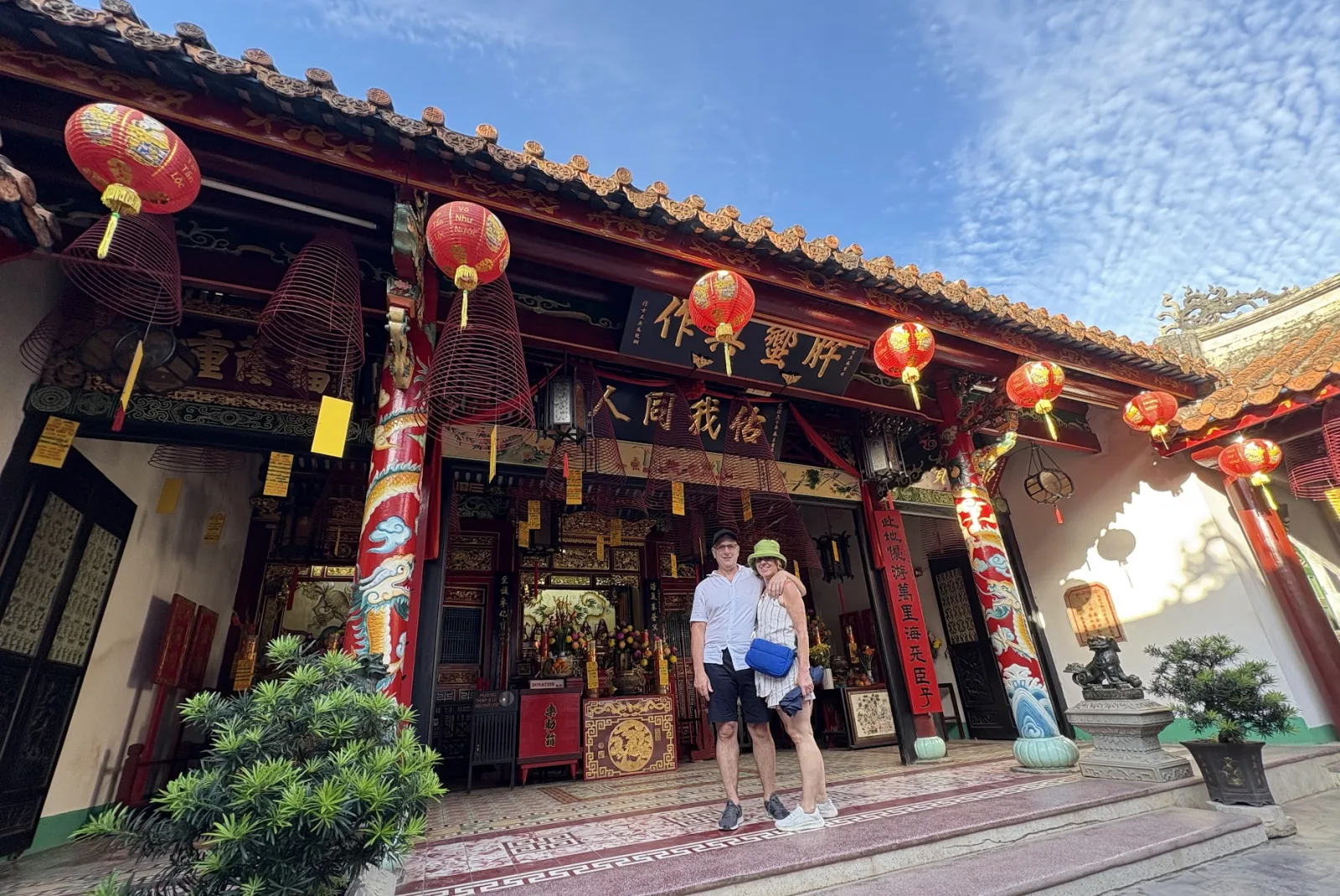
- Visit one heritage house. Tan Ky or Phung Hung — both show how merchant families lived and traded, with timber structure, courtyards, flood marks, and the way commerce and home life once sat together.
- Loop through the market lanes. The central market and nearby lanes show daily life: produce, herbs, local snacks, household goods. This is where you notice foods to try later.
- Food-tasting pauses. Cao lầu noodles (made with water from the historic Bá Lễ well — the only well with the right minerals for the dish's signature chew), white rose dumplings folded by hand by two extended families, and bánh mì at either Madam Khanh or Bánh Mì Phượng (Phượng is famous after Bourdain's visit but queues are 30 minutes; Khanh is just as good with a 5-minute wait).
- Finish at the riverside. Bạch Đằng street along the Thu Bồn River — the trading highway that built Hoi An, still the town's best place to sit, watch, and do nothing. If the timing is right, stay for the lanterns.
Food stops a typical group tour skips
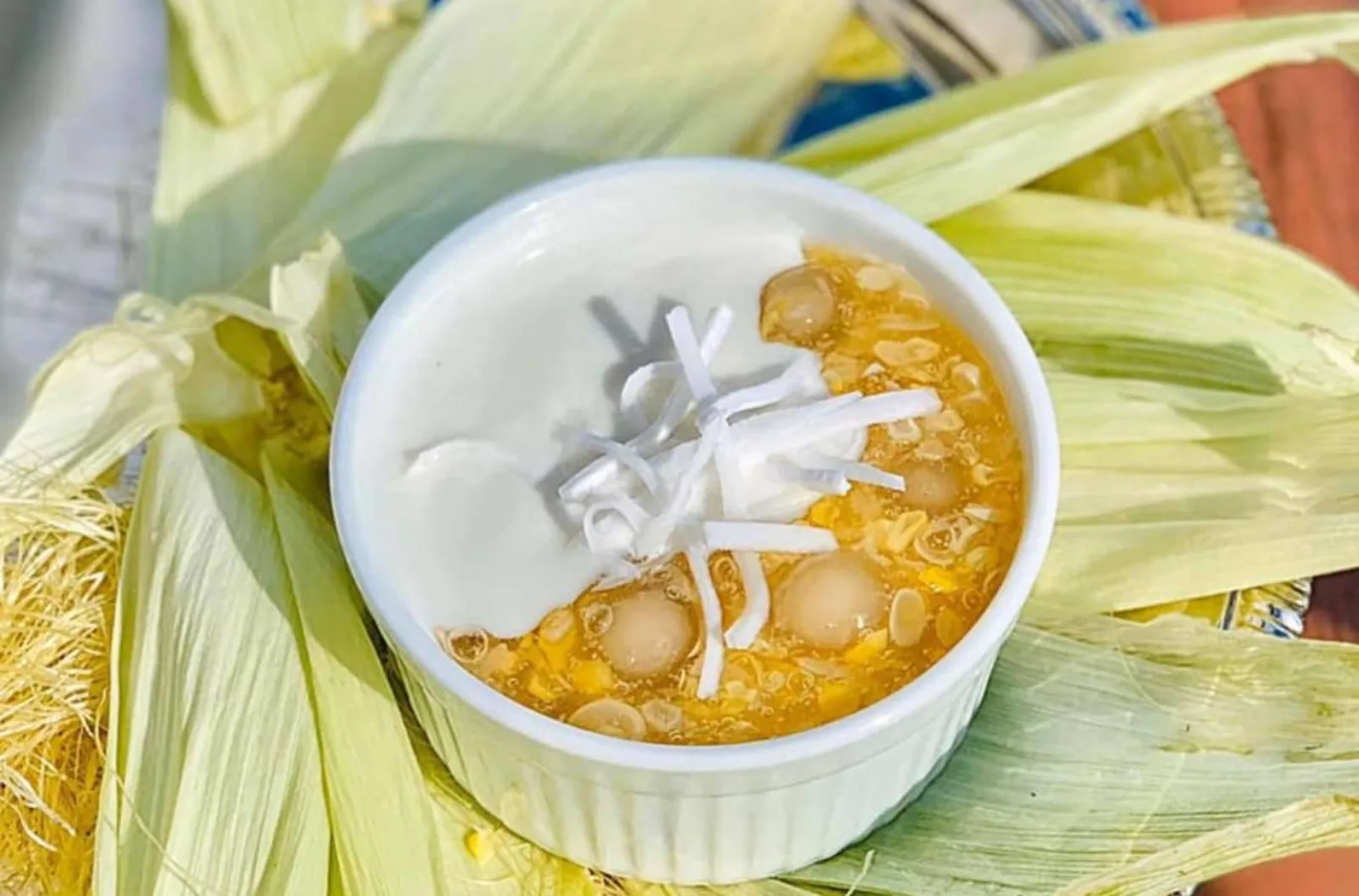
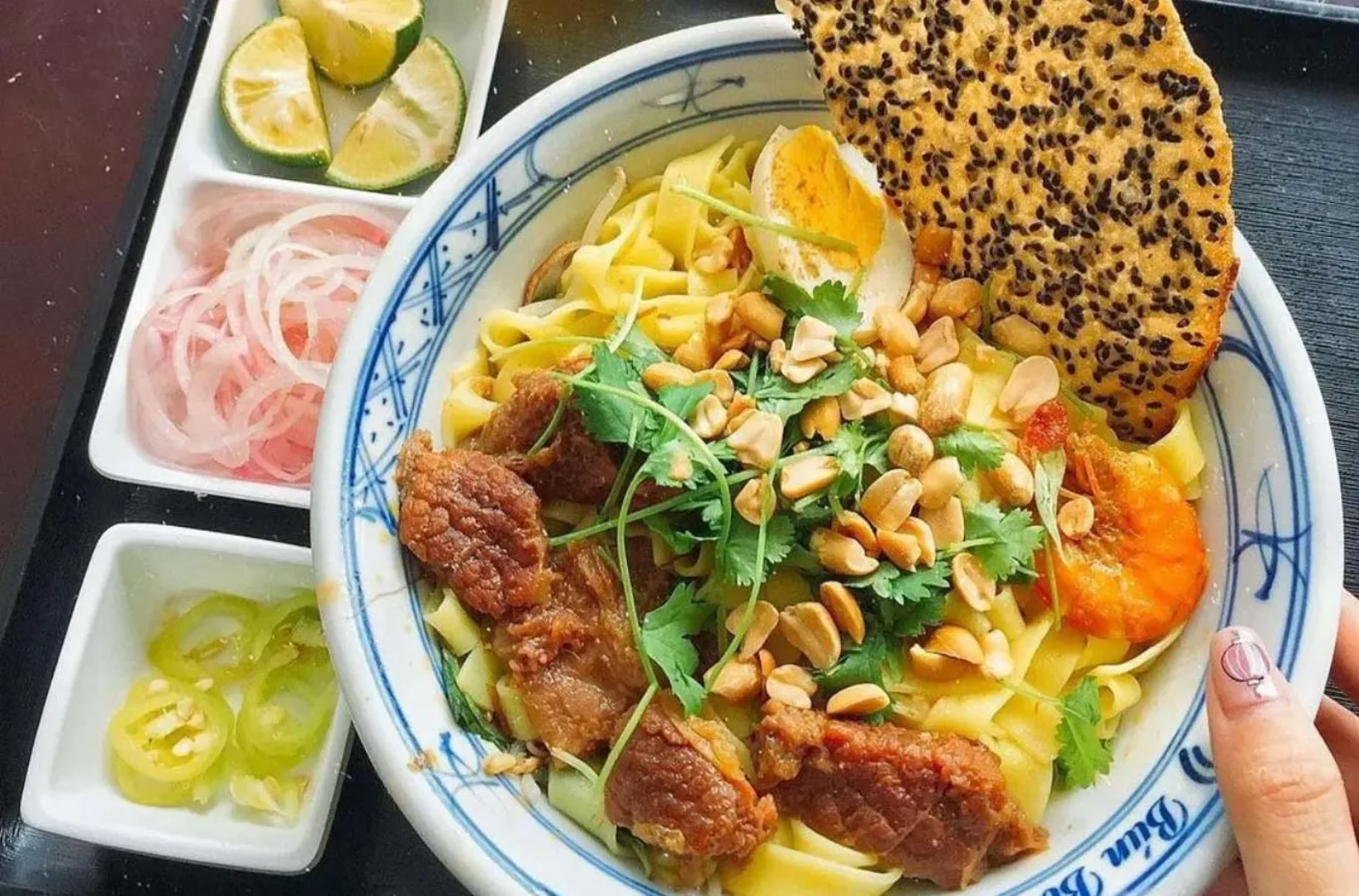
Cao lầu noodles are the dish to try inside the Old Town. The dough is made with water from the historic Bá Lễ well — that is the only well in town with the right minerals for the chew. I take you to one of two family kitchens that still buy this water daily, not the tourist-trap stalls on Trần Phú charging 90,000–120,000 VND for worse versions. Family kitchens charge 35,000–55,000 VND.
White rose dumplings (bánh bao bánh vạc) are folded by hand by just two extended families in Hoi An. On the walking tour we stop at one of the family workshops where you can watch the folding before tasting — the translucent shrimp dumplings are named after an old money pouch (bánh bao) and a wok handle (bánh vạc).
Bánh mì at either Madam Khanh or Bánh Mì Phượng, depending on queue length. Both are excellent — Phượng is famous after Anthony Bourdain's 2009 visit but the queue is now 30 minutes, while Khanh is just as good with a 5-minute wait.
These are not separate food-tour additions — they fit naturally into the 3- to 4-hour walking tour as 15-minute tasting pauses. If food is your main lens, the dedicated Hoi An food tour goes deeper with 5 to 7 tastings instead of three.
How the private walking tour compares to a group bus
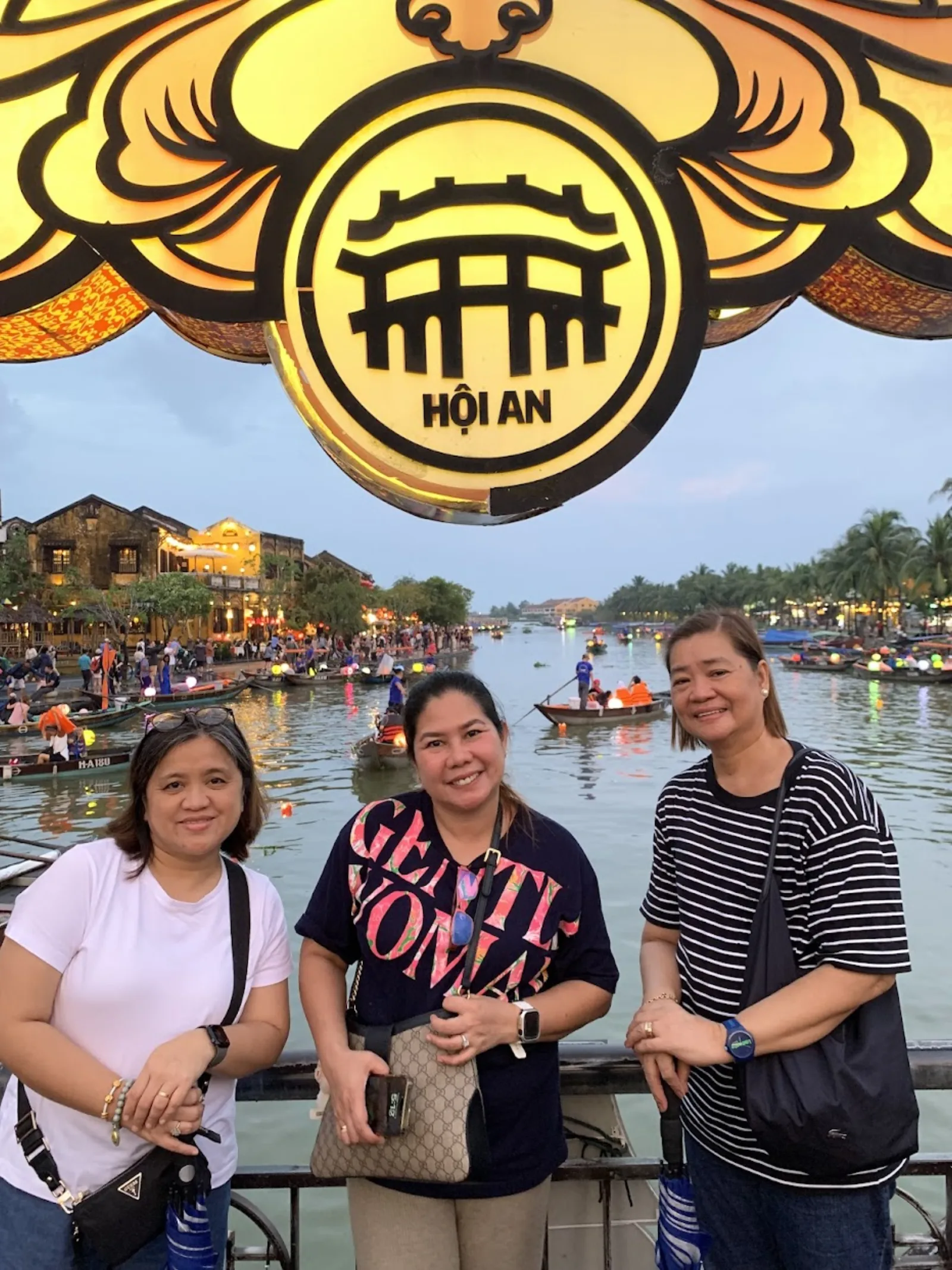
Group bus tours to Hoi An Old Town typically run 2 hours, visit two heritage houses, and finish at a souvenir shop. The bus carries 25 to 40 people. Average price on Tripadvisor or Viator: $30–$45 per person.
A Fingo private walking tour runs 3 to 4 hours, visits three to five heritage sites of your choice, includes 2 to 3 food tastings, has no shop stops, and is just you and your guide. Starting price: $30 per person for two guests, dropping for groups of three or more.
The pace difference is the real point. On a private tour, your guide can stop the moment something catches your eye — a wedding photographer setting up at the bridge, a man frying bánh xèo in the corner alley, a tailor's apprentice hand-stitching a collar. Those are the moments group tours steamroll past. The Polish architect Kazimierz Kwiatkowski (Kazik, 1944–1997) dedicated 16 years to preserving these very streets — the preservation principles that saved the Old Town are the reason those moments still exist.
If you want a focused, well-paced 3 to 4 hours that uses the Ancient Town as it deserves to be used, the Hoi An private walking tour is the version to book. For transparent pricing across all tour types, see how much a private tour in Hoi An costs.
Where to meet and what to bring
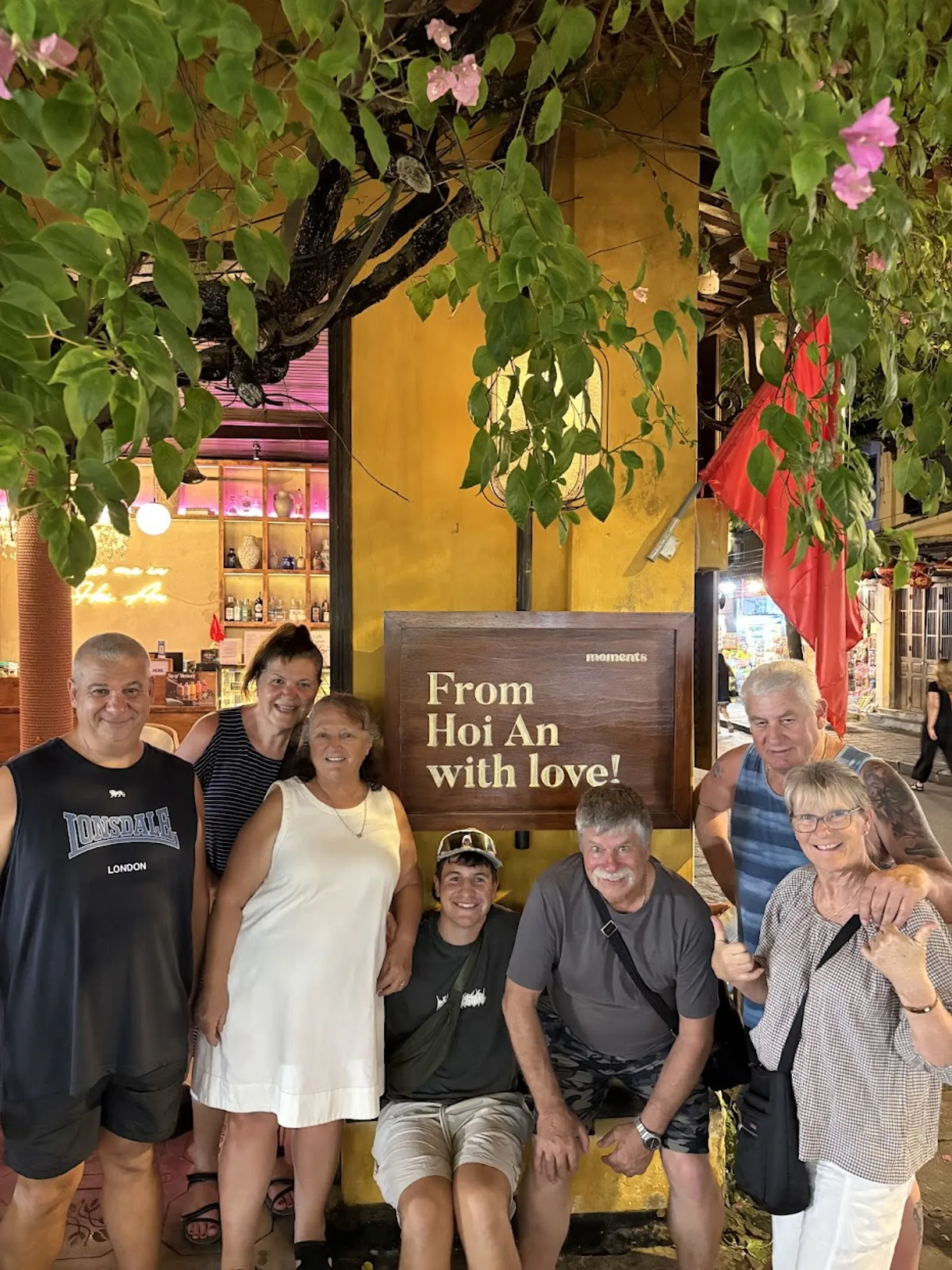
The meeting point is the corner of Bạch Đằng and Hoàng Văn Thụ — about 200 metres from the Japanese Covered Bridge and equidistant from the four ticket booths. Most central Hoi An hotels are a 5- to 10-minute walk away. For hotels at An Bang Beach, a short transfer is arranged. For hotels in Đà Nẵng, the walking tour pairs with a private car transfer — about 45 minutes door to door. See how to get from Đà Nẵng to Hoi An for transport options.
What to wear: comfortable closed-toe shoes for the cobbled lanes (the stones get slippery if it rained the night before), a light layer for shade and indoor heritage houses, and sun protection for morning walks. The tour does not need to be exhausting — we stop for Vietnamese drip coffee or sugarcane juice along the way, and the pace is slow enough to actually look up at the lantern light filtering through the wooden shutters.
Related planning notes: Hoi An Old Town guide, Hoi An itinerary for first-timers, how much a private tour costs, and what to eat in Hoi An.
FAQ
A few practical follow-up questions
Only the questions that sit naturally inside this article are shown here, so the page stays focused.
Article FAQ
A focused walking tour takes 3 to 4 hours. Group bus tours run shorter, around 2 hours, but skip most of the heritage sites and food stops. On a private tour the pace can be shortened to 2.5 hours for travellers who prefer less walking or extended to 5 hours if you want to take more time at the heritage houses and food stops.
Yes, if you plan to enter heritage sites. The ticket is 120,000 VND per person at any of four perimeter booths, and grants access to five sites of your choice. You do NOT need it to walk the streets, photograph buildings, shop, or eat at restaurants in the Old Town — first-time visitors often assume otherwise.
Two windows are best: 08:00 to 11:30 for cooler temperatures and a soft-light morning, or 15:30 to 19:00 for the late-afternoon golden hour leading into the lantern light. Avoid the 12:00 to 15:00 midday stretch when group buses peak and the heat is highest.
Yes — the route is on flat cobbled streets with no climbing. For older travellers I shorten the route to 2.5 hours and add a Vietnamese coffee stop. For families with young children I add a riverside boat ride and shorten the heritage-house stops. The pace is fully customisable on a private booking.
Fujian Assembly Hall, one merchant house (Tan Ky is the usual choice), and the temple inside the Japanese Covered Bridge. That is three well spent. The folklore and ceramics museums are the two most people regret. Nothing on the streets themselves needs a coupon at all.
Same topic
More in this topic
If this topic is close to your trip, these notes stay within the same planning lane without sending you off into a wider archive.
Related tours
If you want to turn the note into a real plan
These tours sit closest to the topic you just read, so the next step stays grounded in the actual route options.
Walking & Street Food Tour
Hoi An Ancient Town Walking & Street Food Tour
Join our half-day tour to explore the best of Hội An. Walk through lantern-lit streets, visit iconic landmarks, and enjoy delicious local food.
3 to 4 hours
Explore the Hoi An Ancient Town Walking & Street Food Tour
Food Tour
Hoi An Street Food Tour with Local Expert
A private evening route for flavour, conversation, and a softer look at Hoi An after dark.
3 hours
Explore the Hoi An Street Food Tour with Local ExpertNext step
If you want to turn this into a real route, start with the tours
Use the article for context, then move into the private tour pages when you want to compare the actual route styles more directly.