
Trip planning
Hoi An vs Hue: Which Should You Visit First?
A local comparison of Hoi An vs Hue covering vibe, food, evenings, day trips, weather, and how to choose if you only have time for one.
May 17, 2026 · 8 min read

Quick answer: Hoi An or Hue?
If this is your first trip to Central Vietnam and you only have time for one, most first-time travellers feel more at home in Hoi An. Hoi An is smaller, easier to walk, more relaxed in the evening, and friendlier to families and couples who want a calm pace. Hue is bigger, more historical, and rewards travellers who already enjoy imperial history, royal cuisine, and a slower city feel.
The honest answer I give travellers on WhatsApp is: start with Hoi An, then add Hue as a day trip or one-night detour if your route allows. If history is your main reason for visiting Vietnam, flip the order.
Key takeaways
- First-time visitors usually prefer Hoi An — walkable Old Town, lantern evenings, easy food, calmer pace.
- History-focused travellers should add Hue — Imperial Citadel, royal tombs, riverside temples.
- You can do both — the drive between Hoi An and Hue takes around 3 to 4 hours over the Hai Van Pass, often the scenic highlight of the trip.
- Hoi An has better evening atmosphere; Hue has better daytime depth.
- Food differs in style: Hoi An is famous for cao lau, white rose, banh mi; Hue is famous for bun bo Hue and royal cuisine.
Hoi An vs Hue at a glance

| Aspect | Hoi An | Hue |
|---|---|---|
| Best for | First-timers, couples, families, food lovers, slow travellers | History lovers, repeat visitors, deeper-culture travellers |
| Old centre size | Small, walkable in 1 to 2 hours | Larger, walking plus cyclo or car between sights |
| Signature feel | Lantern-lit Old Town, river evenings, tailored clothes, beach nearby | Imperial Citadel, royal tombs, Perfume River, traditional garden houses |
| Food highlight | Cao lau, white rose dumplings, banh mi Phuong, Quang noodles | Bun bo Hue, royal cuisine, banh khoai, com hen |
| Typical stay | 2 to 4 nights | 1 to 2 nights |
| Evening atmosphere | Strong — lantern crossings, river boats, night market | Quieter — riverside walks, occasional cultural shows |
| Day trips nearby | My Son, countryside cycling, Marble Mountains, Cham Islands (seasonal) | Royal tombs, Thien Mu Pagoda, DMZ tour, Bach Ma National Park |
| Family fit | Excellent — flat streets, easy food, beach option | Good for older children interested in history; tombs require walking |
What Hoi An does better
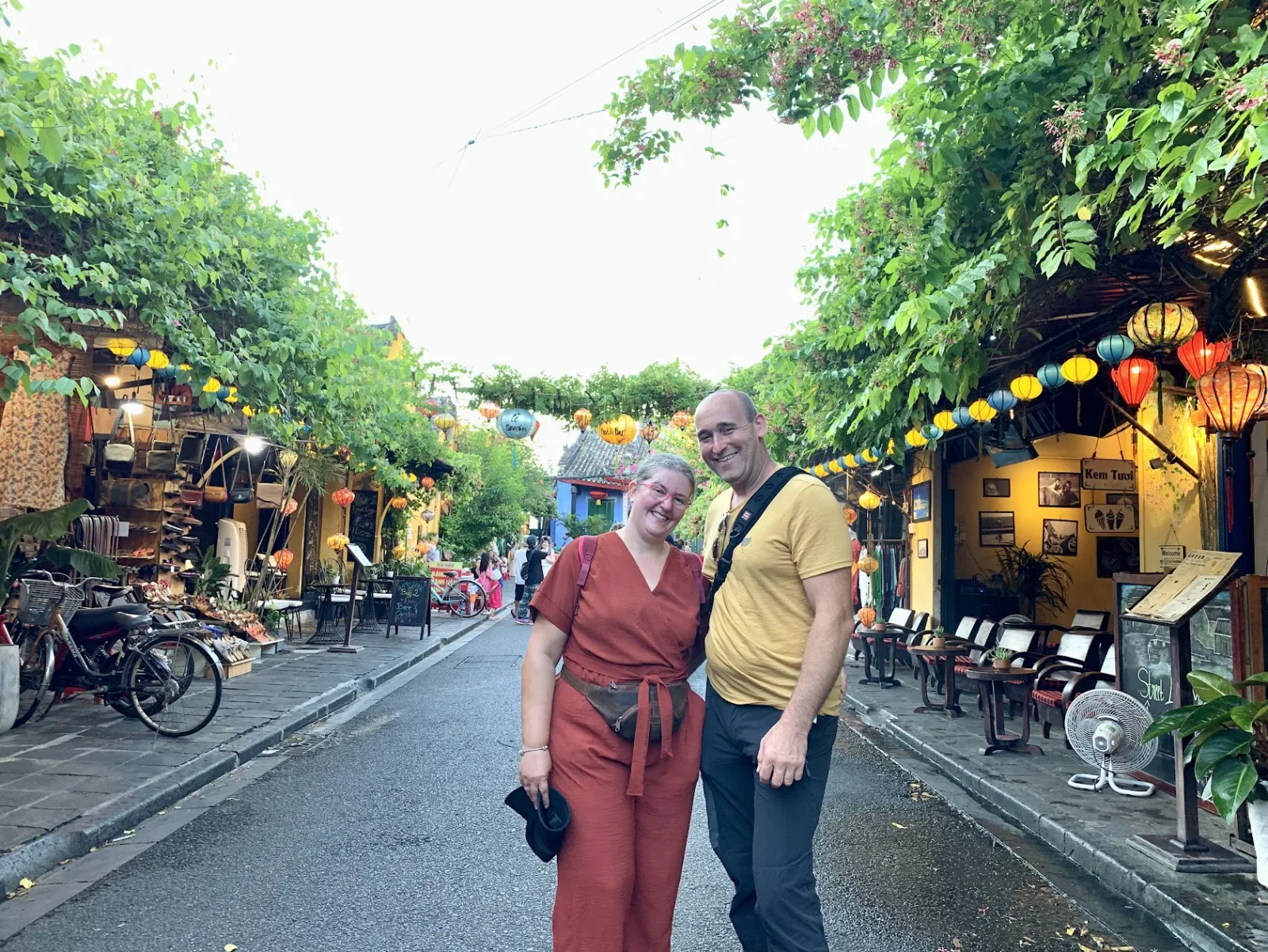
Hoi An is built for travellers who want to understand a place without rushing. The Ancient Town is small, the streets are flat, and you can spend an entire evening crossing the Japanese Covered Bridge, drifting along the Thu Bon River, and tasting your way through a few local stops without ever feeling pushed.
For first-timers, three things tip the scale toward Hoi An:
- Walkability. You can stay inside or close to the Old Town and not need transport most days.
- Evening atmosphere. Lanterns, the night market, and the riverside make Hoi An feel cinematic after dark in a way that Hue does not match.
- Food density. Cao lau, white rose, mi Quang, banh mi, and tasting routes are all within a short walk of each other.
If you want a local to shape this for you, the private walking tour is the gentlest way to read Hoi An on your first afternoon, and the food tour covers the evening side.
What Hue does better
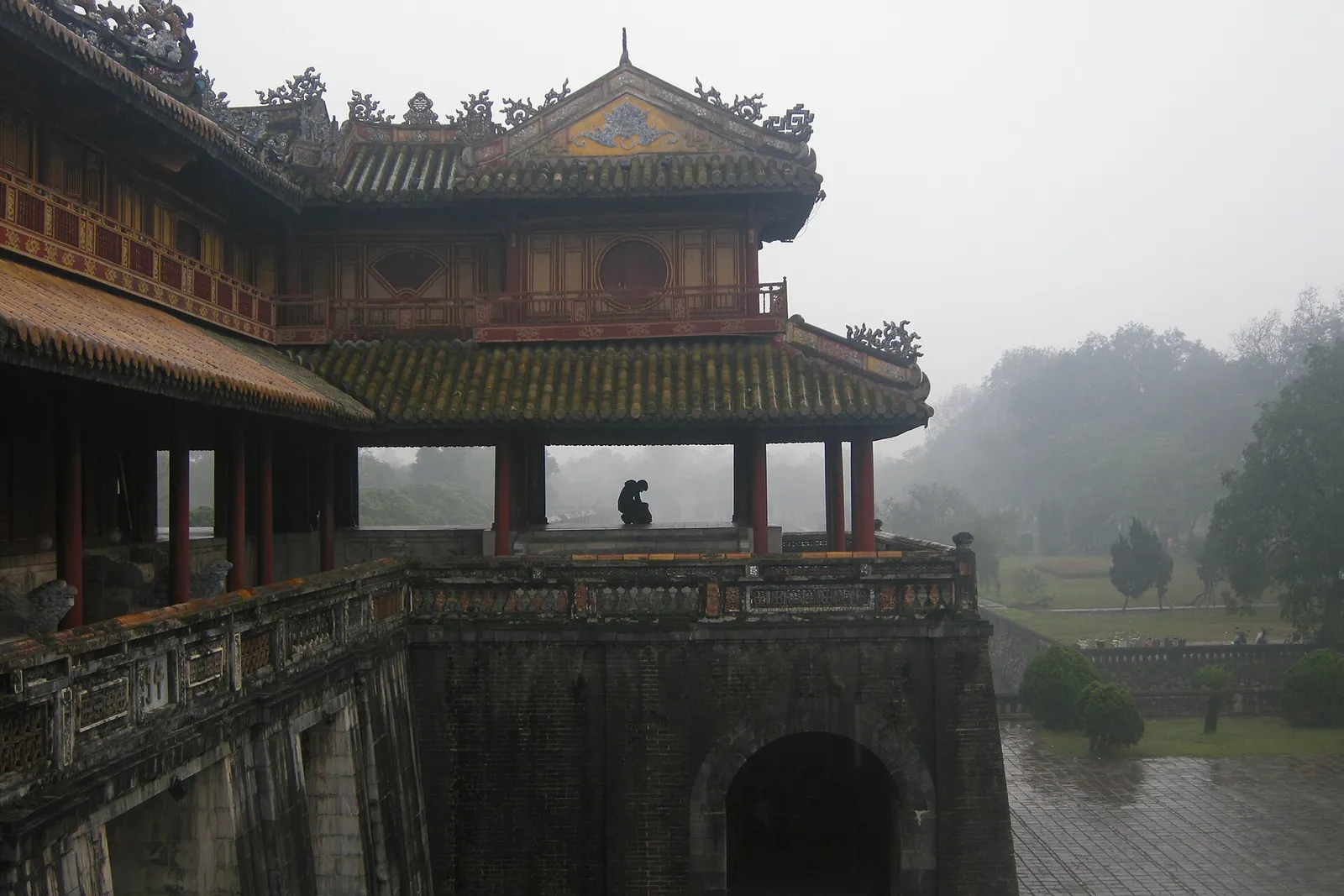
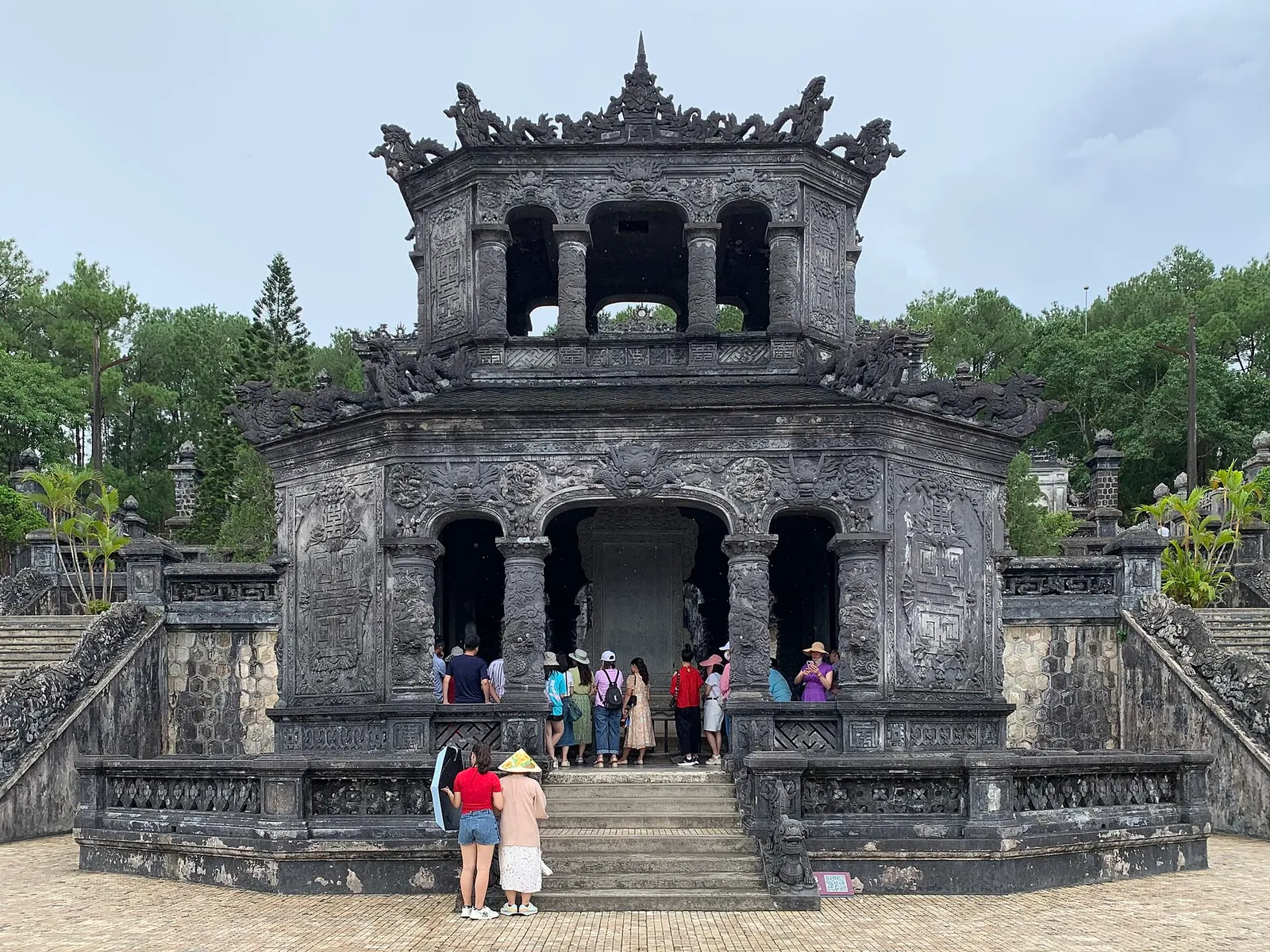
Hue rewards travellers who already enjoy history. The Imperial Citadel is a UNESCO World Heritage site and gives you a real sense of Vietnam's last royal dynasty. The royal tombs scattered along the Perfume River — especially Tu Duc, Minh Mang, and Khai Dinh — are each architecturally different and worth a half day if you have time.
Hue also has a quieter, slower city rhythm. If your trip already includes the buzz of Hanoi or Ho Chi Minh City, Hue can feel like a welcome breath. The food is more refined, more royal-influenced, and noticeably different from Hoi An's lighter Central-Vietnamese style.
Can you do both?

Yes, and many travellers do. The drive between Hoi An and Hue takes around 3 to 4 hours by private car, depending on whether you stop at the Hai Van Pass, Lang Co Beach, or Marble Mountains. Many guests use this drive as a tour in itself, not just transport.
Common ways to combine them:
- Base in Hoi An, day trip to Hue. Long day (around 12 hours total) but doable. Best if you only want a taste of Hue.
- Hoi An for 3 nights, Hue for 1 to 2 nights. Most balanced for first-timers who want both feels.
- One-way transfer with stops. A private car from Hoi An to Hue with Hai Van Pass photo stops turns the move into a half-day scenic experience.
If you want help shaping the route, I cover Hoi An to Hue movement under custom travel support rather than as a fixed package — every group's pace is different.
Weather: does the season change the answer?

Central Vietnam shares a similar weather pattern across Hoi An, Da Nang, and Hue, but micro-conditions matter:
- February to May is generally the most comfortable window for both cities — drier, mild, less humidity.
- June to August is hot and humid, with Hue often feeling a touch hotter than coastal Hoi An.
- September to November is the wet season; flooding can affect Hoi An's Old Town more visibly than Hue.
- December to January is cool and sometimes rainy; Hue can feel noticeably grey, while Hoi An stays slightly milder.
If your only window is the wet season and you want to maximise dry-feet hours, Hue's larger covered sights are more weather-forgiving than Hoi An's open Old Town.
Which fits your trip best?

Choose Hoi An first if you want a calm, walkable first taste of Vietnam, food and lantern evenings, easy family pacing, and a base with beach and countryside within reach.
Choose Hue first if your main reason for visiting Central Vietnam is imperial history and UNESCO depth, you want a quieter city rhythm, or you are flying in or out of Hue itself.
What a Hue day trip from Hoi An really involves
A day trip to Hue is possible and many people do it, but it is worth seeing the shape of the day honestly before you commit.
- Around 6:30am: pickup in Hoi An. The drive north takes 3 to 4 hours with a stop on the Hải Vân Pass.
- Late morning: the Imperial Citadel. Two hours is the minimum to make sense of it.
- Lunch: bún bò Huế in the city — the reason some people make the trip at all.
- Afternoon: one royal tomb, not three. Khải Định is the most striking, Tự Đức the most peaceful.
- Around 4pm: the drive back, arriving in Hoi An around 7:30–8pm, tired.
That is roughly seven hours in a car for four or five hours in Hue. It works if Hue is a must and your trip has no room for an overnight. If you can give it a night, the same drive becomes the scenic part of a two-day trip instead of the tiring part of one.
Hue food worth crossing the pass for
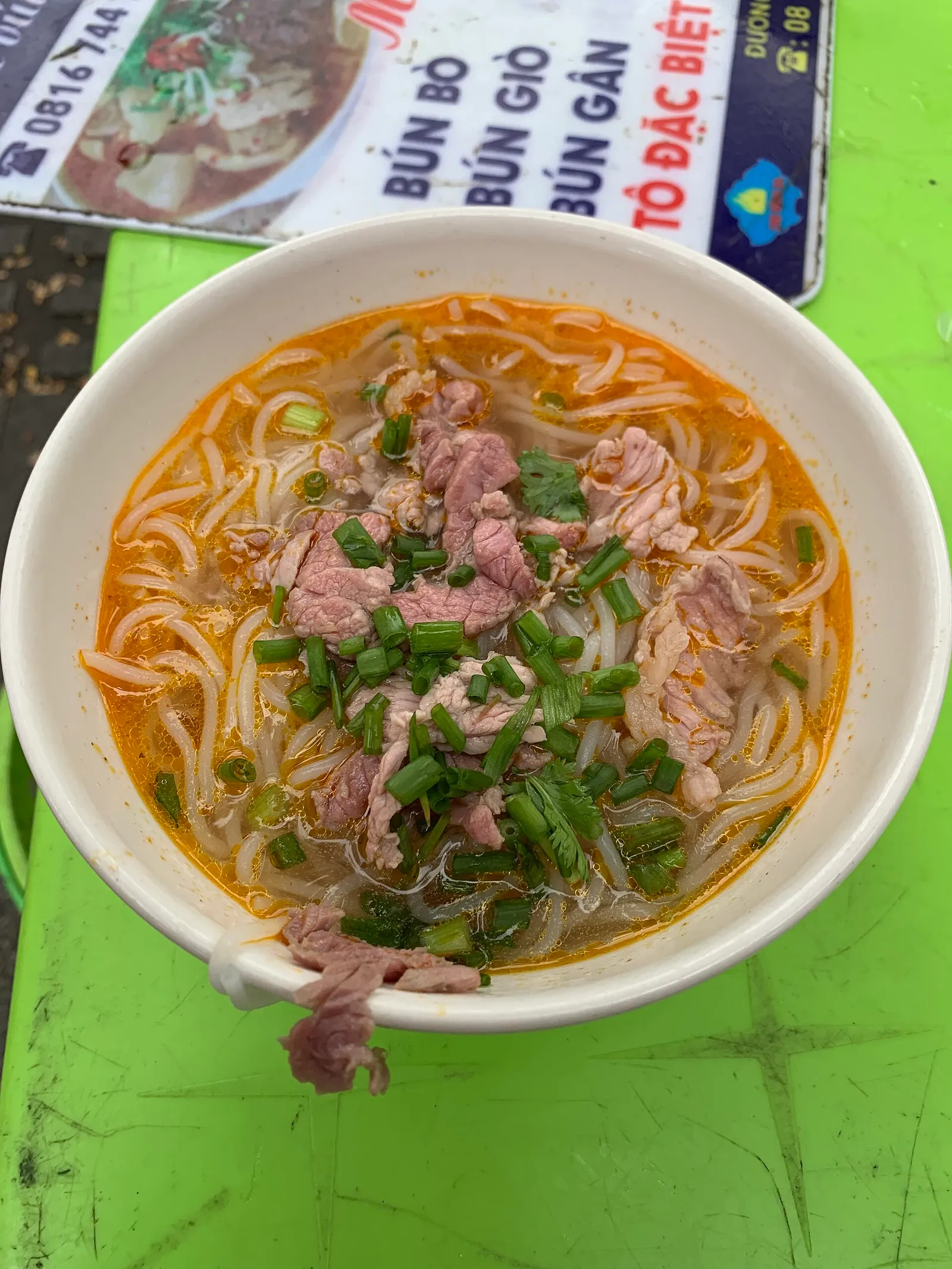
Hue's cooking descends from the royal court and it tastes different — spicier, more intricate, more small plates. If you go, eat these:
- Bún bò Huế — the lemongrass-and-chilli beef noodle soup, the city's signature and nothing like phở.
- Cơm hến — rice with tiny river clams, herbs and crackling. A breakfast dish.
- Bánh bèo, bánh nậm, bánh lọc — small steamed rice and tapioca cakes, usually ordered as a set to share.
- Bánh khoái — Hue's crisp pancake, served with a thick peanut-and-liver dipping sauce.
Hoi An's answer is cao lầu, white rose dumplings and mì Quảng — lighter and simpler. The two cities are only a few hours apart and eat completely differently, which is one of the better arguments for seeing both.
The Hải Vân Pass is the bonus
Whichever order you choose, if you travel between the two by road, take the pass rather than the tunnel. It adds under an hour and it is one of the most spectacular coastal roads in Vietnam — cloud at the top, the bay of Đà Nẵng on one side and Lăng Cô lagoon on the other. Drivers take the tunnel by default because it is faster, so ask for the pass when you book.
Related planning notes: best time to visit Hoi An, Hoi An itinerary for first-timers, where to stay in Hoi An or Da Nang, Da Nang airport to Hoi An, and Hoi An Old Town guide.
Want help shaping your Central Vietnam route?
If you are still weighing Hoi An vs Hue and want a local opinion on what fits your dates, group size, and pace, the simplest next step is a short WhatsApp message. I can help you compare a Hoi An-only trip with a combined route, and point out the practical trade-offs without turning planning into a long back-and-forth.
FAQ
A few practical follow-up questions
Only the questions that sit naturally inside this article are shown here, so the page stays focused.
Article FAQ
Hoi An is usually the easier first stop for most travellers — smaller, walkable, and famous for its lantern-lit Old Town. Hue suits travellers whose main interest is imperial history.
Around 120 kilometres by road, typically 3 to 4 hours by private car including the Hai Van Pass. Train and bus options also exist; the train along this coastline is one of Vietnam's most scenic stretches.
Yes, but expect a full day — usually 11 to 12 hours total. A day trip works for travellers who only want to see the Imperial Citadel and one or two royal tombs.
Day-to-day costs are broadly similar across both cities. Hoi An tends to be slightly more tourist-priced because of its smaller, more concentrated Old Town. Local food remains affordable in both.
Different, not better. Hoi An is famous for cao lau, white rose, banh mi, and mi Quang. Hue is famous for bun bo Hue, royal cuisine, and com hen. Most travellers enjoy tasting both styles.
If 5 days is your total Central Vietnam window, 3 nights in Hoi An plus 1 to 2 nights in Hue is a balanced split. If history is not a priority, you can stay all 5 nights in Hoi An and add countryside, beach, or My Son day trips instead.
Same topic
More in this topic
If this topic is close to your trip, these notes stay within the same planning lane without sending you off into a wider archive.



Related tours
If you want to turn the note into a real plan
These tours sit closest to the topic you just read, so the next step stays grounded in the actual route options.

Walking & Street Food Tour
Hoi An Ancient Town Walking & Street Food Tour
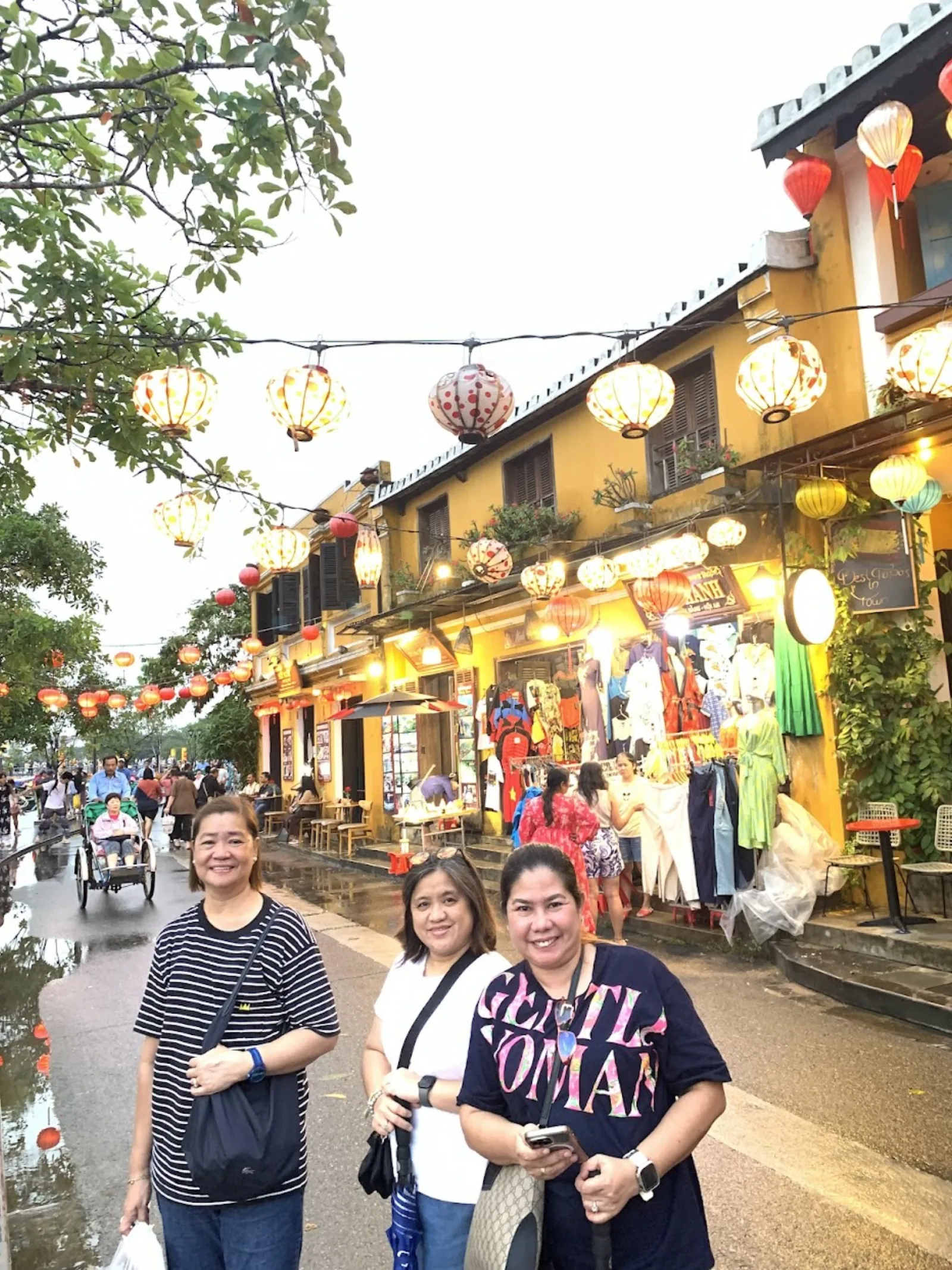
Join our half-day tour to explore the best of Hội An. Walk through lantern-lit streets, visit iconic landmarks, and enjoy delicious local food.
3 to 4 hours
Explore the Hoi An Ancient Town Walking & Street Food Tour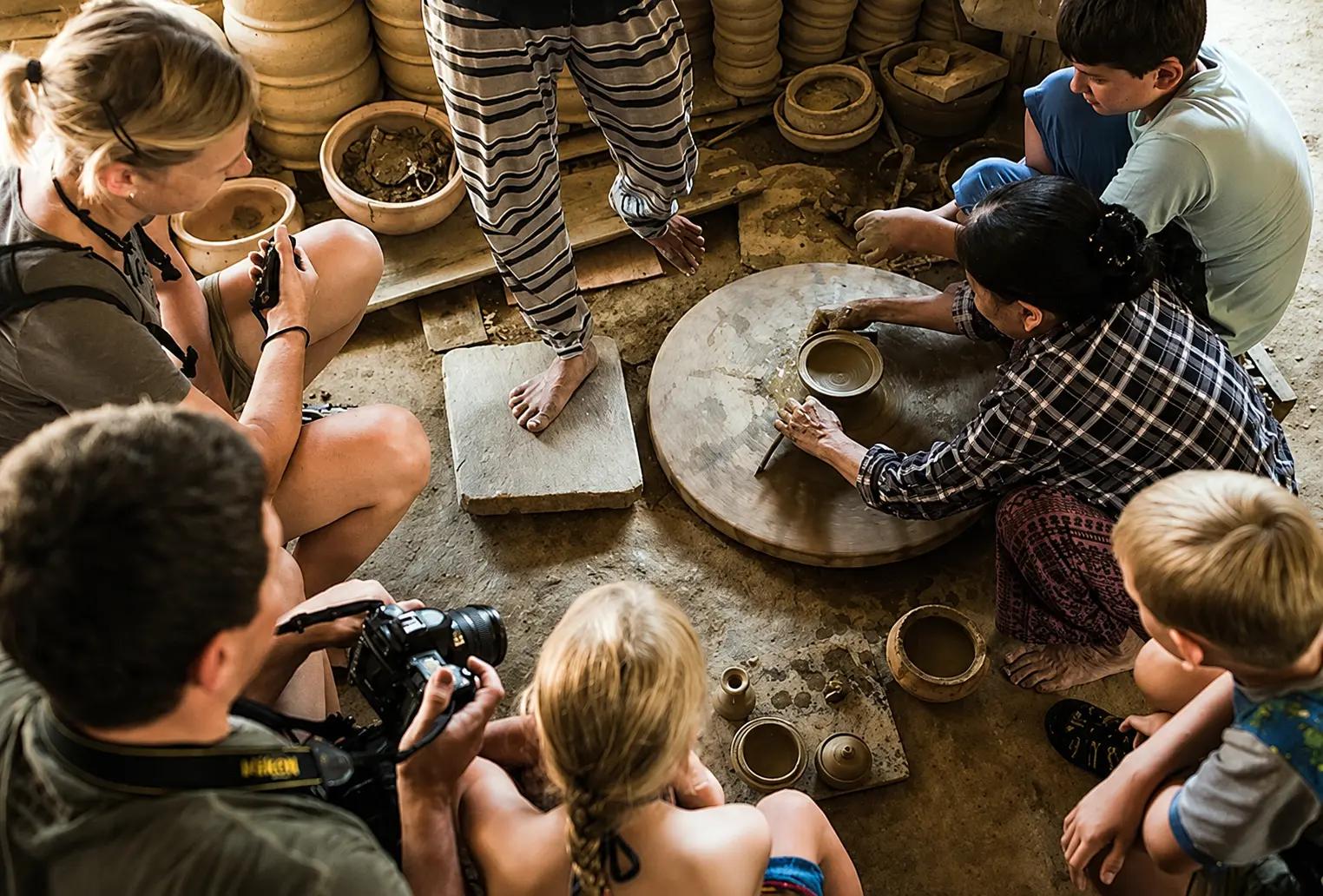
FULL-DAY TRIP
Hoi An Full-Day Old Town and Villages Tour
One full day covering the Ancient Town on foot and the craft villages across the river: Japanese Bridge, merchant houses, Kim Bong carpentry, Thanh Ha pottery and a riverside lunch.
About 8 hours
Explore the Hoi An Full-Day Old Town and Villages TourHelpful next step
Use the article for context, then move into the part that fits your trip best
Some travellers want to compare tours next, while others just want to send a quick message with dates and questions. Both paths stay open here.