
Dish guide
Banh Mi Phuong: The Hoi An Sandwich Bourdain Made Famous (and the One Most Locals Eat Instead)
Banh mi Phuong is on every Hoi An food list — and most travellers queue 30 minutes for one. Here's the sandwich's story, the local alternatives that taste just as good, and how to order without speaking Vietnamese.
May 29, 2026 · 6 min read
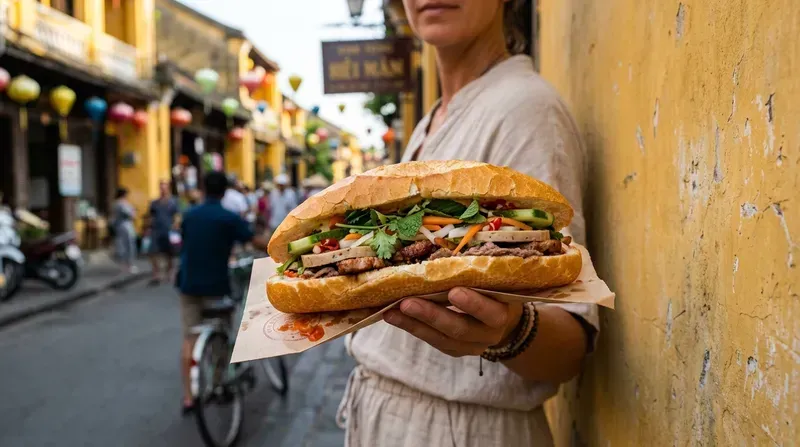
Last updated: 9 September 2026 — written by Fin, a local guide in Hoi An.
Quick answer: is Banh Mi Phuong worth the queue?
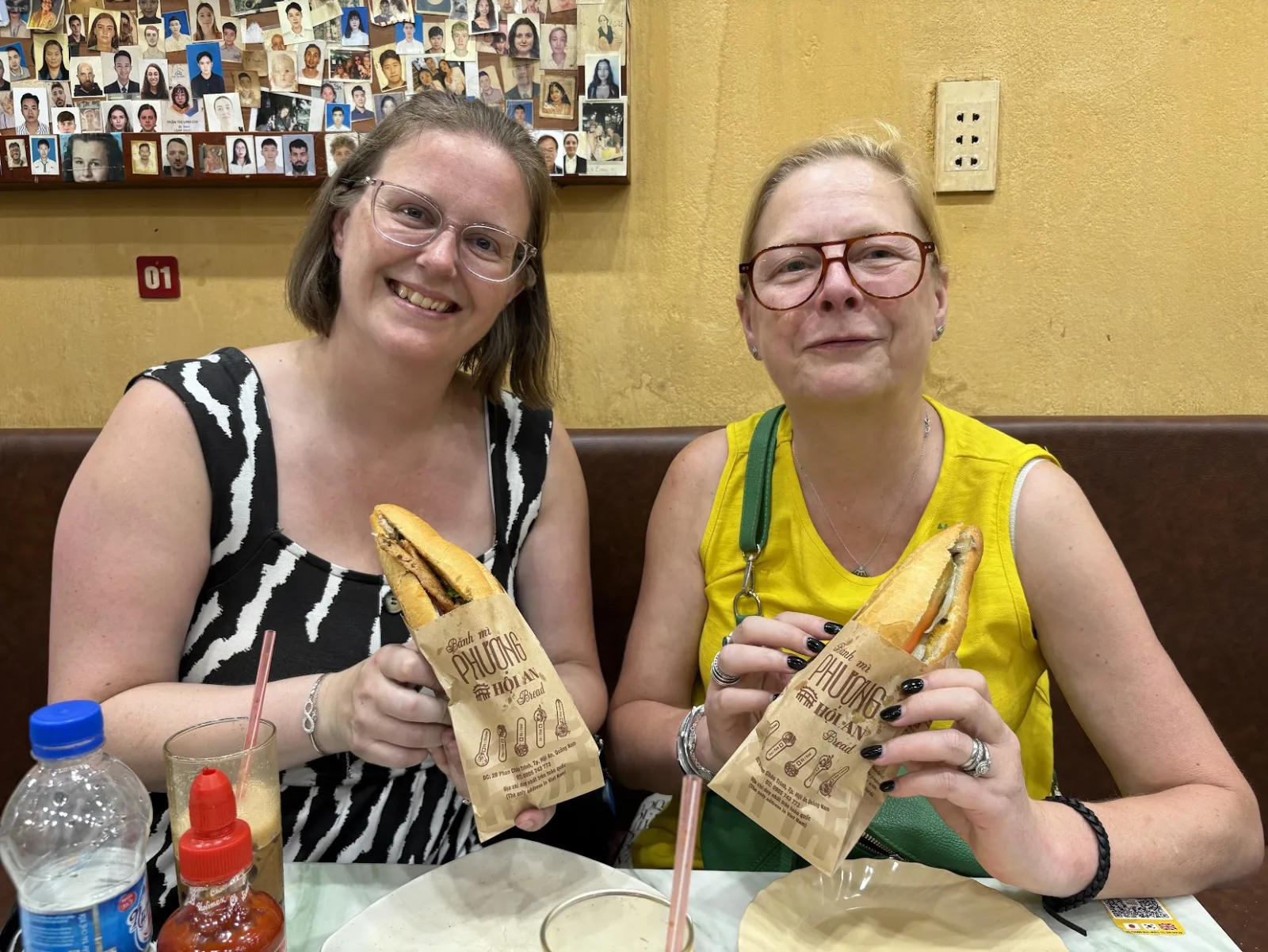
Bánh Mì Phượng at 2B Phan Chu Trinh is the sandwich shop Anthony Bourdain filmed in 2009 and called "a symphony in a sandwich." The queue now runs 20–30 minutes at peak times. The bánh mì is genuinely excellent — crisp bread, rich pâté, grilled pork, pickled vegetables, chilli, and a house sauce the family has made the same way for thirty years. A sandwich costs 30,000–45,000 VND ($1.30–$1.90).
Here is the part most travel blogs leave out: Madam Khanh — The Banh Mi Queen, four blocks away at 115 Trần Cao Vân, makes a bánh mì just as good with a five-minute wait. Locals split roughly evenly between the two. If you want the Bourdain story, queue at Phượng. If you want the better half-hour, walk to Madam Khanh.
Key takeaways
- Both shops are excellent. The difference is the queue, not the sandwich.
- Order the mixed (thập cẩm) at Phượng, the grilled pork (thịt nướng) at Madam Khanh.
- Go at 8–9am or 2–4pm. The queue at Phượng roughly triples over lunch and again at 6pm.
- Cash only at both. No dining room at either — you eat standing or on a plastic stool.
- Tourist restaurants on Trần Phú charge double for a worse sandwich.
What makes a Hoi An bánh mì different
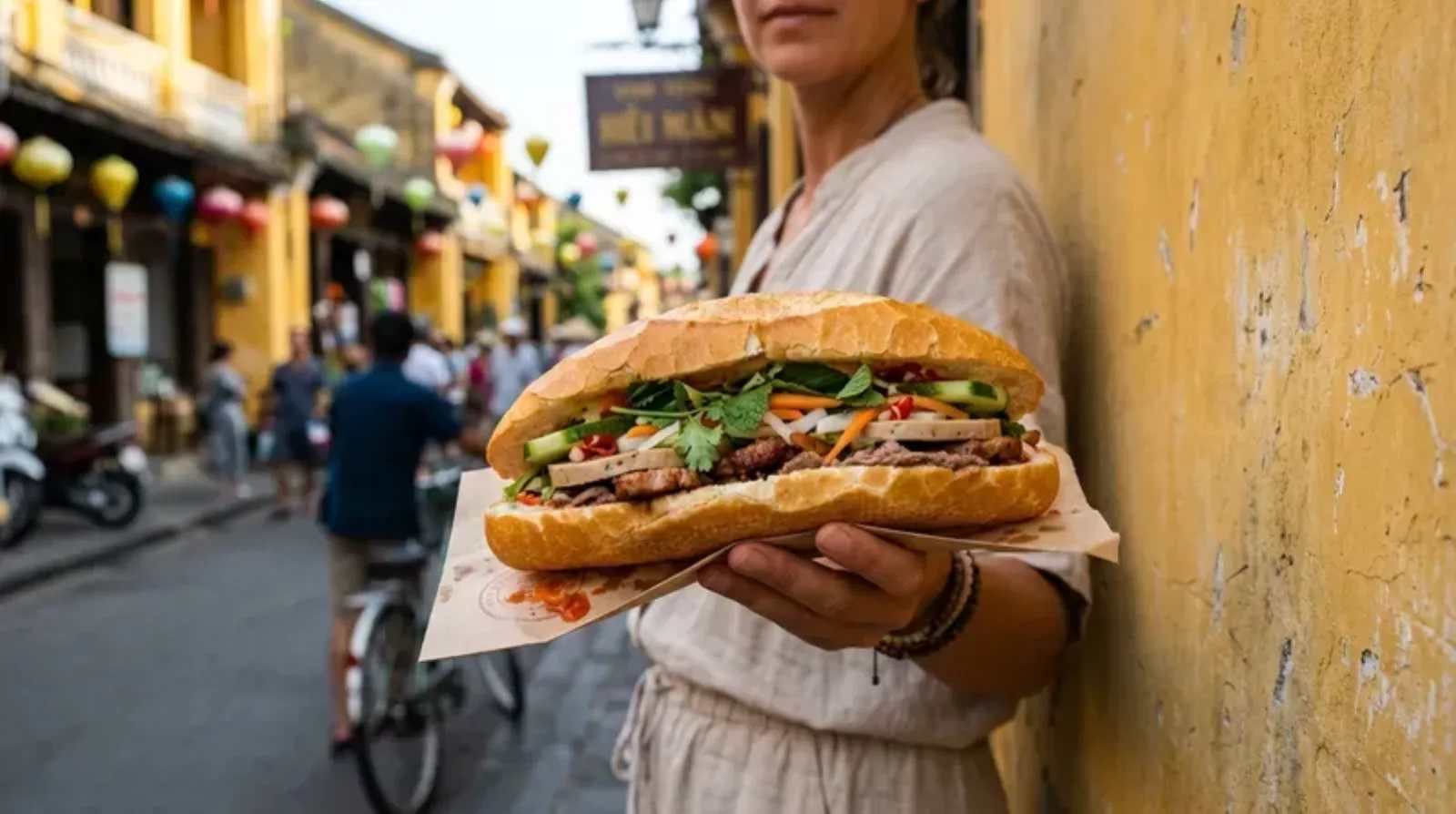
Hoi An bánh mì differs from the Saigon version in three ways.
The bread. Hoi An loaves are lighter and thinner-crusted, because local bakeries use a higher proportion of rice flour in the dough. The result shatters rather than tears. It also goes stale fast, which is why the shops bake several times a day and why a bánh mì eaten at 11am is a different sandwich from one eaten at 4pm.
The fillings. Fewer, and more precise: usually two or three proteins — grilled pork, pâté, sometimes a slice of Vietnamese ham — rather than the five-to-seven-protein pile of a Saigon bánh mì. The herbs are local, mostly from Tra Que, three kilometres up the road.
The sauce. This is what people actually queue for. Phượng's is a slow-reduced mixture built on pork broth, sweeter and thicker than the mayonnaise-and-Maggi standard elsewhere in Vietnam. It is the single element neither shop will discuss in detail, and the reason a bánh mì here does not taste like a bánh mì in Hanoi.
Phượng vs Madam Khanh — the honest comparison
| Bánh Mì Phượng | Madam Khanh | |
|---|---|---|
| Address | 2B Phan Chu Trinh | 115 Trần Cao Vân |
| Queue | 20–30 min at peak | About 5 min |
| Price | 30,000–45,000 VND | 25,000–40,000 VND |
| Famous for | The Bourdain visit, 2009 | Locals' choice, 40+ years |
| Best order | Mixed (thập cẩm) | Grilled pork (thịt nướng) |
| Vegetarian | Yes (bánh mì chay) | Yes (bánh mì chay) |
| Best hour | 8–9am, before the coach groups | Any hour it is open |
If you make me choose: Madam Khanh, on a weekday afternoon, eaten on the stool outside. Phượng is not overrated — it is over-queued, which is a different problem, and it is worst exactly when most visitors turn up.
When to go, and how the queue works
Phượng opens around 6:30am and runs until roughly 9:30pm. The queue is shortest between 8am and 9am and again from about 2pm to 4pm. It is worst from 11:30am to 1:30pm and from 6pm, when the walking groups come off the Old Town streets together.
The queue moves faster than it looks: the shop assembles four or five sandwiches at once, and twenty minutes of standing usually turns out to be twelve. You order at the front, pay in cash, and step aside. There is no seating worth the name at either shop — a few plastic stools on the pavement, and most people eat walking.
One practical note travellers ask about: Phượng closed briefly in September 2023 after a food-poisoning incident that made national news, reopened after inspection, and has run normally since. It is a fair question to have and the honest answer is that the shop is busy enough that nothing sits around. If you want the general rules for eating street food here safely, the street food timing guide covers them properly.
How to order and what to expect
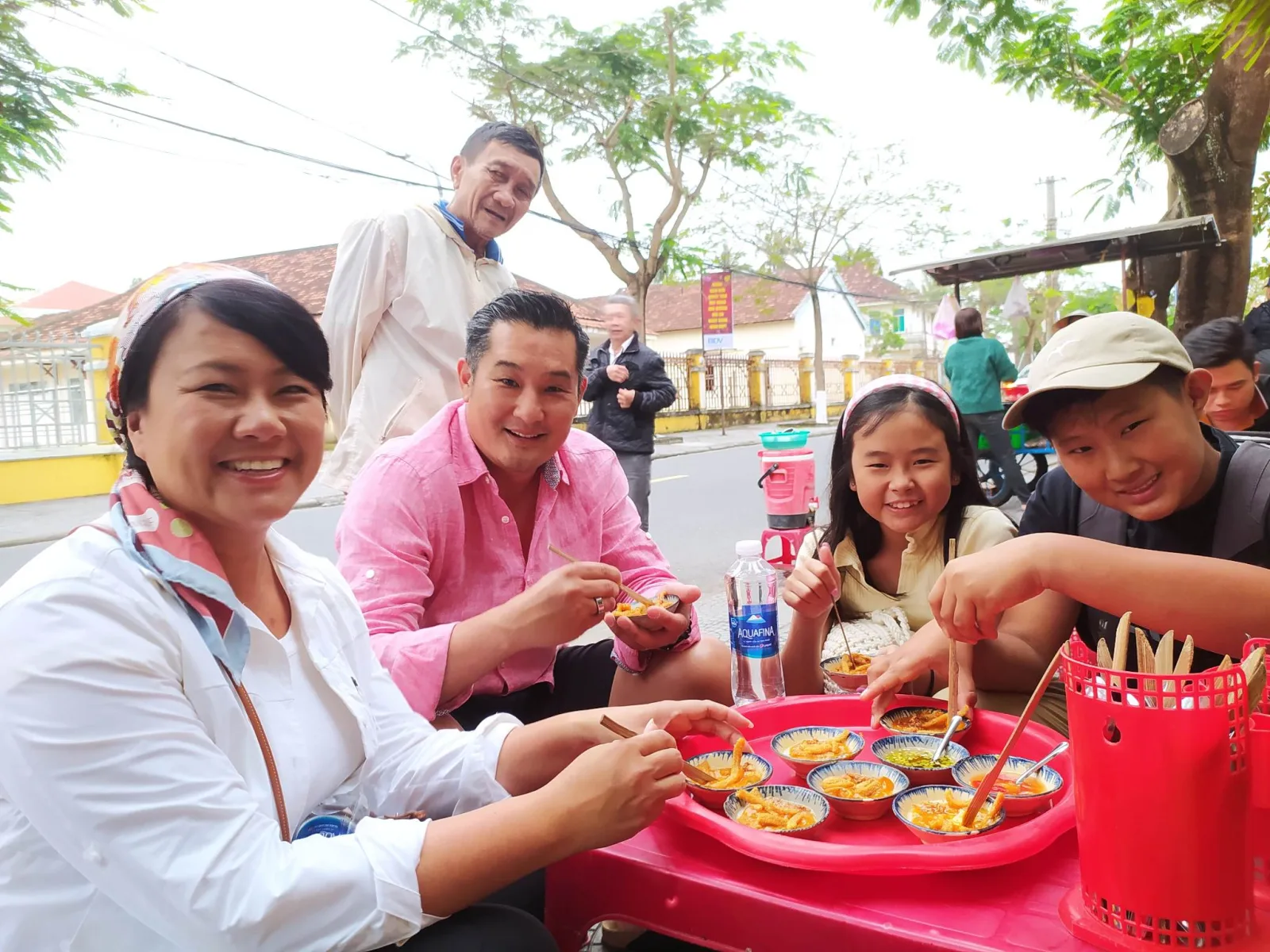
At Phượng, join the queue — the menu is on the wall in English and Vietnamese. Order "mixed" (thập cẩm) for the full version: grilled pork, pâté, ham, pickled vegetables, herbs, chilli and the house sauce. Say "không ớt" if you do not want chilli; the default is more than most visitors expect. Pay cash — neither shop takes cards.
Unwrap the paper slowly and eat from the top down, or the fillings end up on the street. If you are taking it away to eat later, ask for the sauce on the side ("sốt riêng") — otherwise the bread is soft within fifteen minutes.
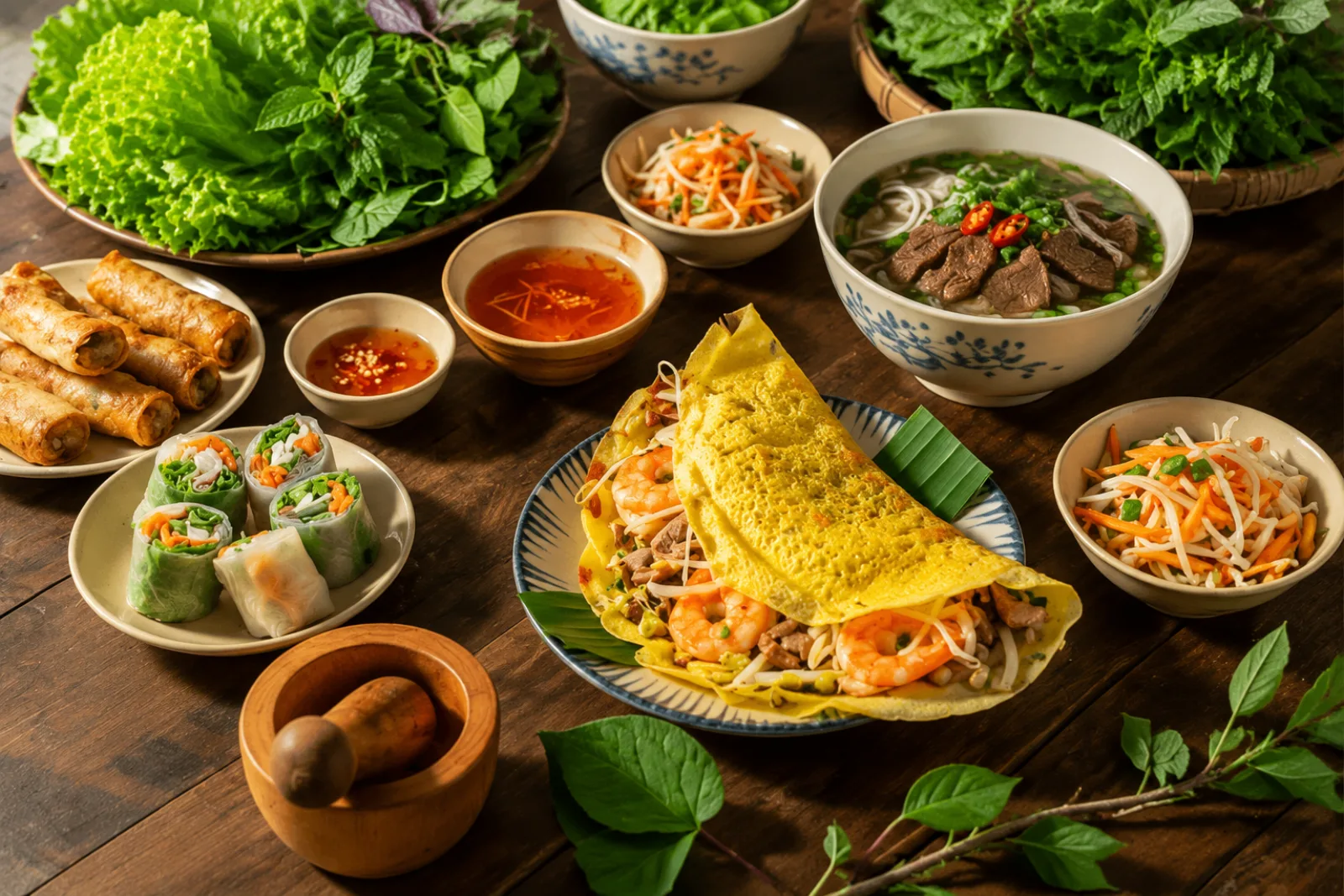
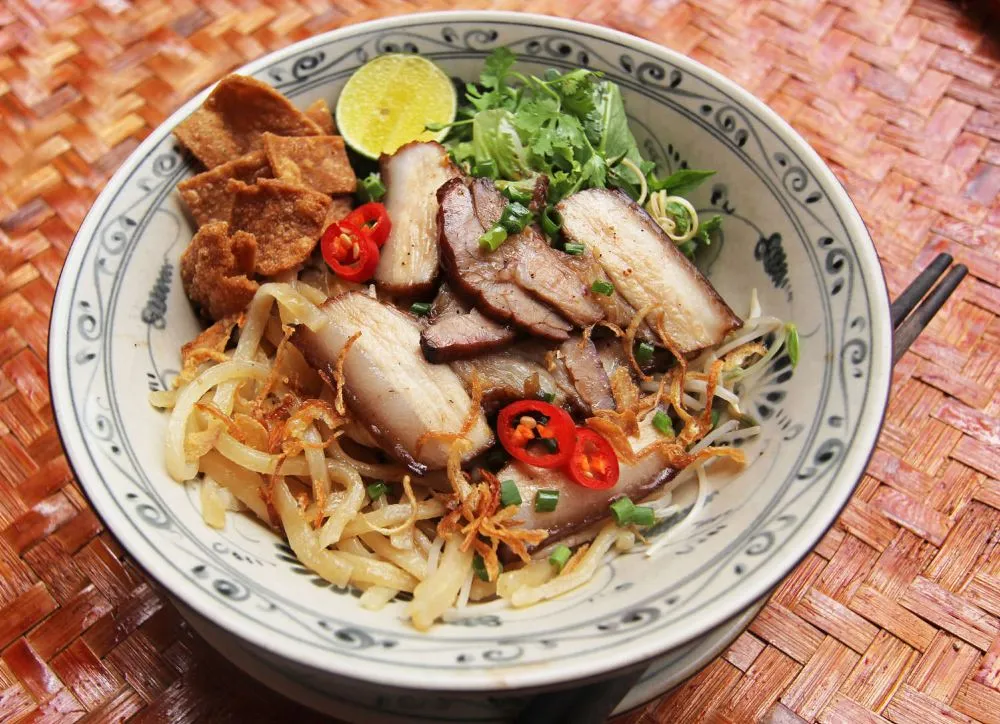
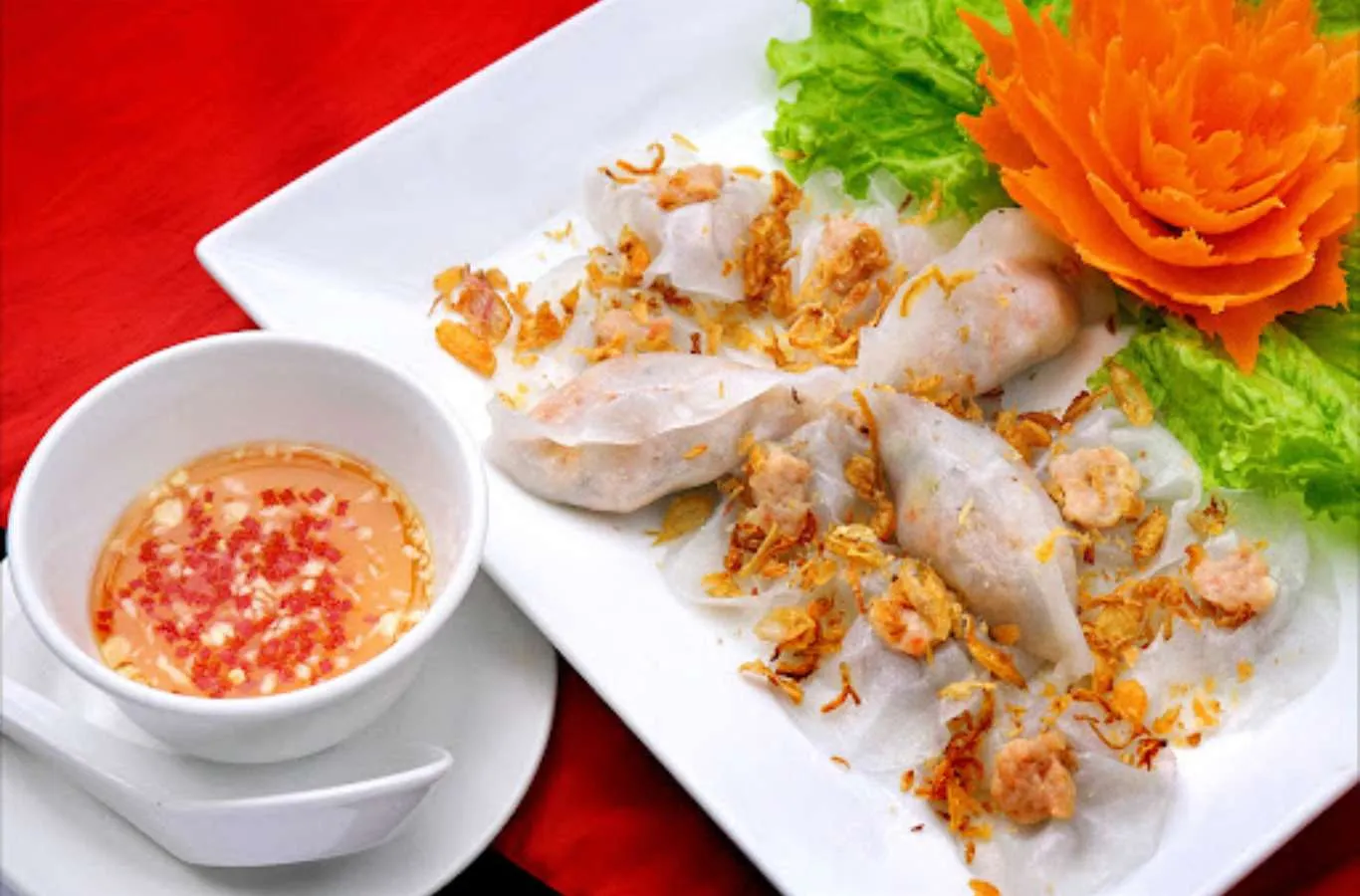
What else to eat on the same walk: white rose dumplings two streets over, cao lầu for something that exists nowhere else, and chè bắp from a cart on the riverside afterwards. The full food guide lays out an evening's worth in order.
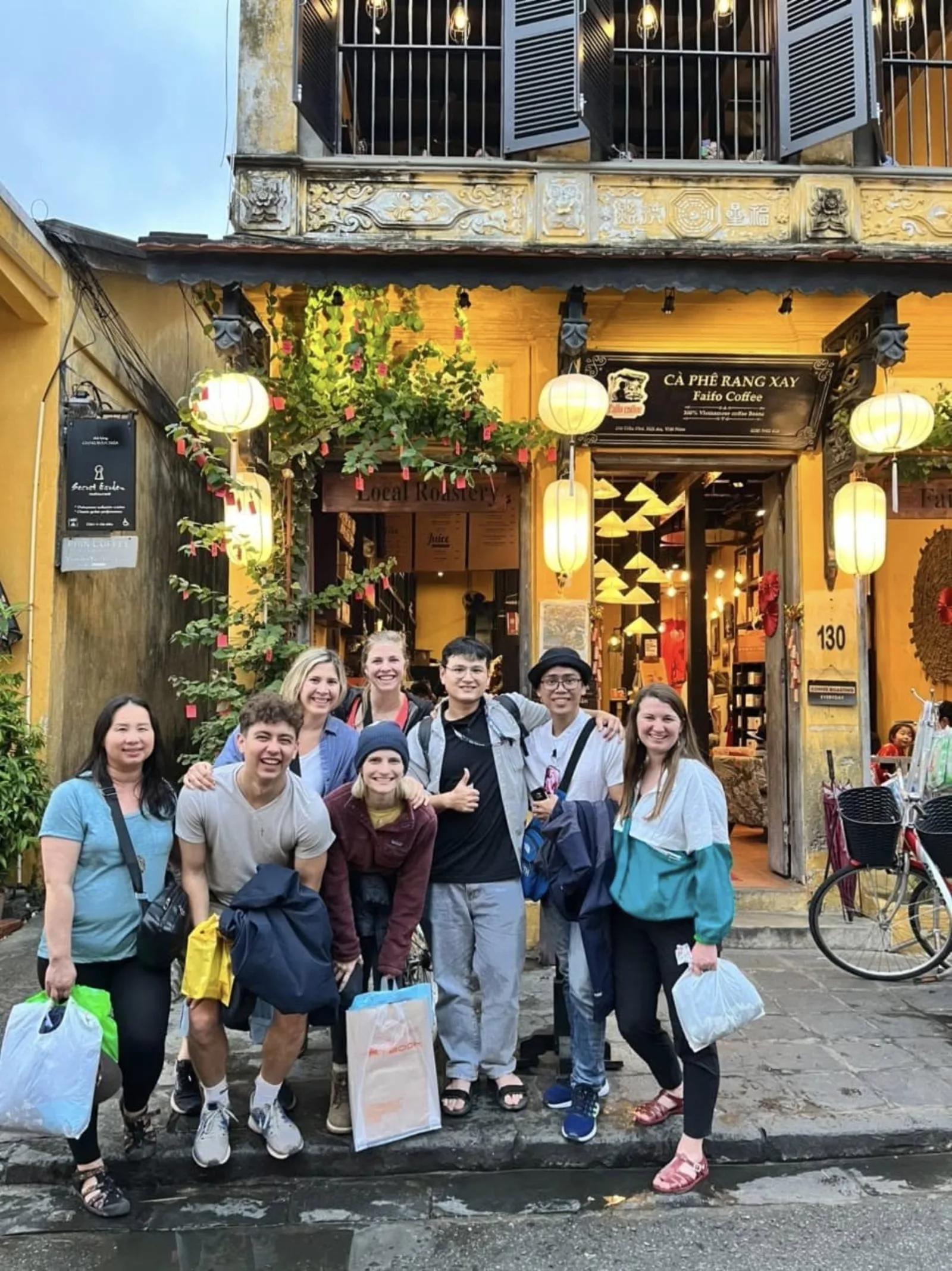
On the Hoi An food tour we stop at whichever of the two has the shorter queue that night — the bánh mì is one of five to seven tastings on the route, and standing in line for half an hour is not one of them.
How a Hoi An bánh mì is built, in order
Watching the assembly is half the reason to stand at the counter rather than sit down. It runs in the same sequence every time, and the order matters.
- The bread is split and warmed — briefly, on a charcoal grill or in the oven behind the counter. A cold loaf is a sign the batch is old; at Phượng they bake through the day so it rarely happens.
- Pâté goes on the bottom half, thick, while the bread is still warm enough to soften it.
- The meat — grilled pork, ham, sometimes chả (steamed pork roll) — laid the length of the loaf so every bite has some.
- Pickled carrot and daikon, then cucumber, then coriander. The pickle is what keeps the sandwich from being heavy, and skipping it is the most common mistake visitors make when they order.
- Chilli, then the sauce, spooned along the top. The sauce goes last so it does not soak the bread on the way to you.
If you want to understand why the same five ingredients taste different here, it is the pickle and the sauce, not the meat. Every bánh mì shop in Vietnam has grilled pork. Very few have a sauce that has been reduced since the morning.
Bánh mì beyond the two famous shops
Phượng and Madam Khanh are the names, but most of the bánh mì eaten in Hoi An every day comes from neither. It comes from carts, and the carts change with the hour.
- Early morning (6–8am): breakfast carts near the market and the schools, selling bánh mì with a fried egg (ốp la) or just pâté and chilli. The cheapest and often the freshest bread of the day.
- Midday: the two famous shops, and the hotel-lane carts doing a steady trade in grilled pork.
- Evening (from about 5pm): charcoal carts along the river and near the night market, grilling pork to order. Slower, smokier, and a completely different sandwich from the lunchtime one.
A cart with a queue of locals and a charcoal grill going is a safer bet than any ranking. A cart with a laminated English menu and no customers is not.
What Bourdain actually changed
Before 2009 Phượng was a good neighbourhood bánh mì shop with a loyal local following. After the episode aired it became a pilgrimage, and the shop adapted: longer hours, more staff, a menu on the wall in English, and a production line that turns out several sandwiches a minute.
That is worth knowing because it explains both the queue and the quality. The sandwich did not get worse — the volume means the bread is always fresh and the grill never stops. What changed is the experience of buying it. If what you want is the neighbourhood-shop version Bourdain walked into, that is closer to what Madam Khanh still is.
The same thing has happened, more quietly, to several places in town that appear in guidebooks. The local guide piece covers why the best food stop on a given day is often the one nobody has written about.
Is it a meal or a snack?
Locally, a bánh mì is breakfast or a quick lunch, eaten standing, in about five minutes. Visitors tend to treat it as a destination and then eat a full dinner an hour later. If you are planning an evening of eating, treat it the local way: split one between two people, eat it early in the evening, and leave room for the dishes that only exist here. A whole bánh mì at 6pm is how people end up too full for cao lầu at 7. Save the full sandwich for the morning, when it is what everyone around you is eating too. It tastes better in that company. Truly.
Related planning notes: what to eat in Hoi An, street food timing guide, and things to do in Hoi An.
FAQ
A few practical follow-up questions
Only the questions that sit naturally inside this article are shown here, so the page stays focused.
Article FAQ
20 to 40 minutes during peak windows (11:00 to 14:00 and 18:00 to 20:00). Off-peak (09:30 to 10:30 and 14:30 to 17:00) the queue drops to 5 to 10 minutes. The shop's location at 2B Phan Chu Trinh street has no seating — most travellers eat the sandwich walking back to a nearby cafe.
Subjective. The sandwich is genuinely good (rated 4.5 on Tripadvisor across 6,000+ reviews) but it is not categorically different from other Hoi An banh mi. If you have an extra 30 minutes and want the photo at the Bourdain-famous shop, go. If you are time-constrained, Madam Khanh four blocks north sells a near-identical sandwich with no queue.
30,000 to 45,000 VND ($1.30 to $1.90) at family shops like Phuong and Madam Khanh. Tourist restaurants on Tran Phu charge 60,000 to 90,000 VND for similar sandwiches with thinner bread. Riverside carts at night sell banh mi for 25,000 to 35,000 VND.
Yes — both Phuong and Madam Khanh make banh mi chay (vegetarian) on request, with tofu, mushroom, herbs and pickled vegetables instead of pork and pate. Same price. Karma Waters on Phan Chau Trinh street specialises in vegetarian and serves an upgraded version with mock-meat patty.
The mixed (thap cam) is the one to have on a first visit — it carries all the fillings and the house sauce. Add "khong ot" if you want it without chilli. At Madam Khanh, four blocks away with no queue, order the grilled pork.
Same topic
More in this topic
If this topic is close to your trip, these notes stay within the same planning lane without sending you off into a wider archive.
Related tours
If you want to turn the note into a real plan
These tours sit closest to the topic you just read, so the next step stays grounded in the actual route options.
Food Tour
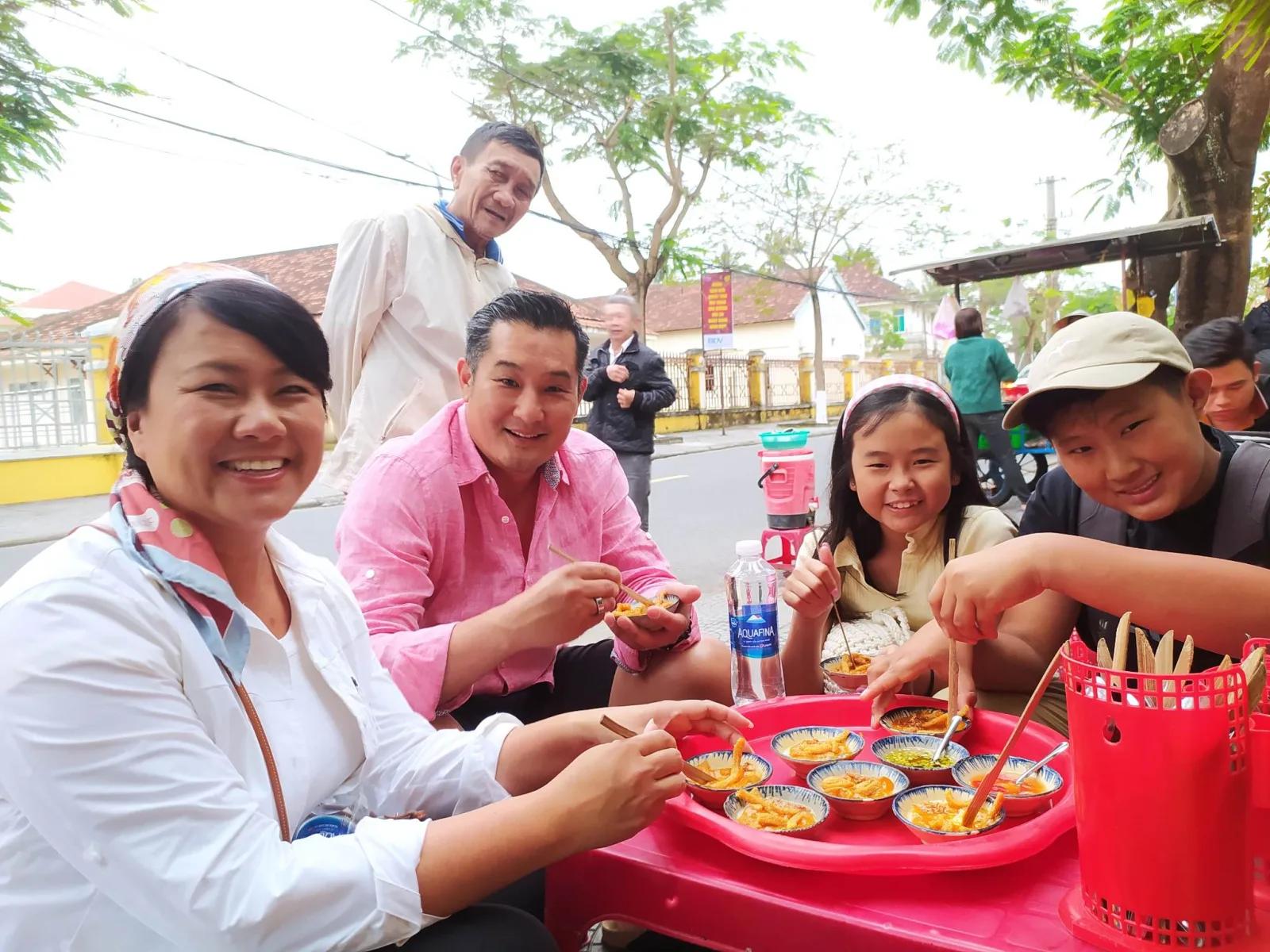
Hoi An Street Food Tour with Local Expert
A private evening route for flavour, conversation, and a softer look at Hoi An after dark.
3 hours
Explore the Hoi An Street Food Tour with Local Expert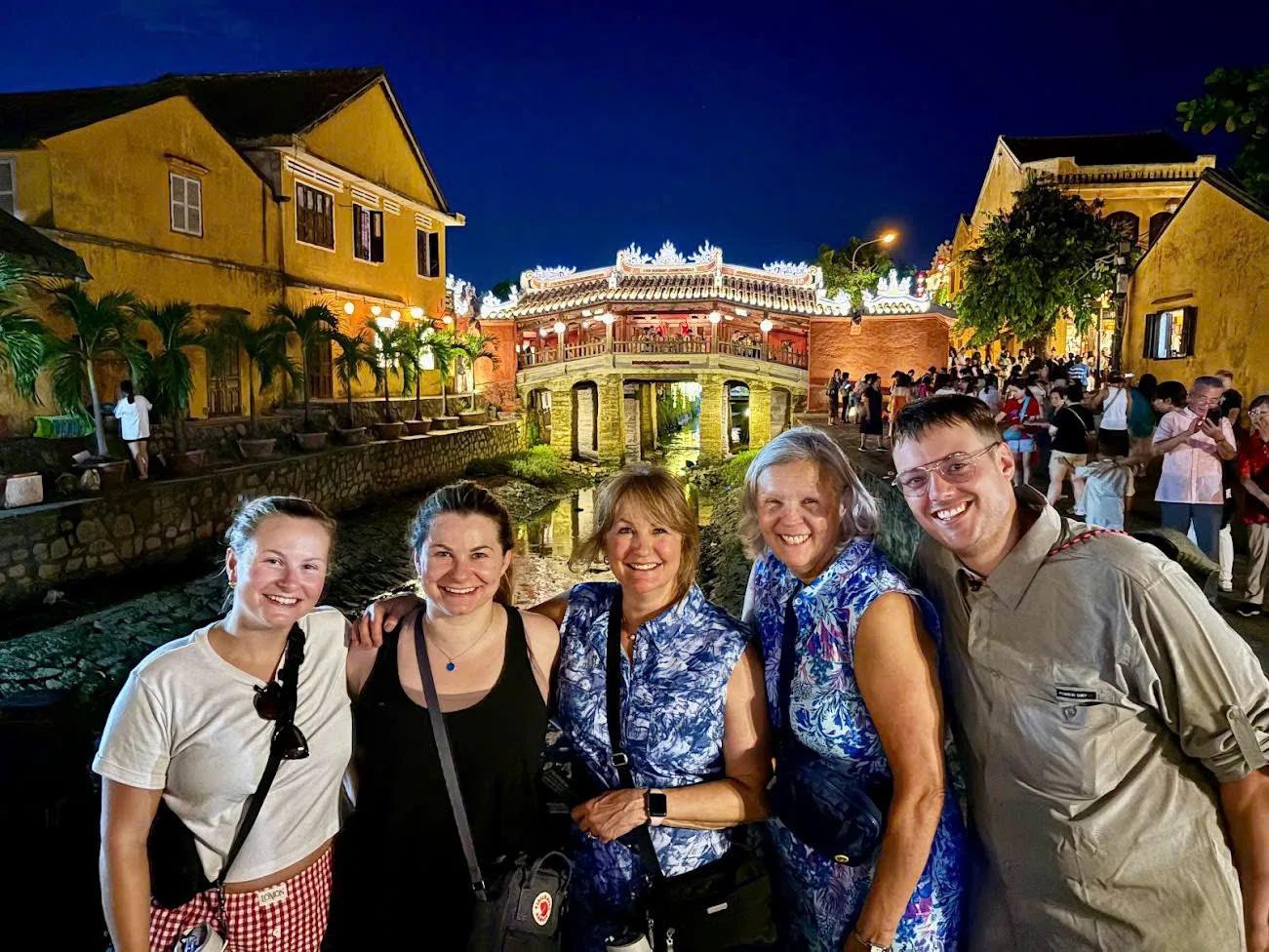
Walking & Street Food Tour
Hoi An Ancient Town Walking & Street Food Tour
Join our half-day tour to explore the best of Hội An. Walk through lantern-lit streets, visit iconic landmarks, and enjoy delicious local food.
3 to 4 hours
Explore the Hoi An Ancient Town Walking & Street Food TourNext step
If you want to turn this into a real route, start with the tours
Use the article for context, then move into the private tour pages when you want to compare the actual route styles more directly.