
Cultural experiences
Hoi An Lantern Festival Guide: What Actually Happens on the 14th Night
A local guide to the Hoi An Lantern Festival — 2026 dates, what happens when the lights go off, where to stand, and the difference between the 14th and a regular night.
Jul 23, 2026 · 9 min read

Last updated: 23 July 2026 — written by Fin, a local guide in Hoi An.
What is the Hoi An Lantern Festival?
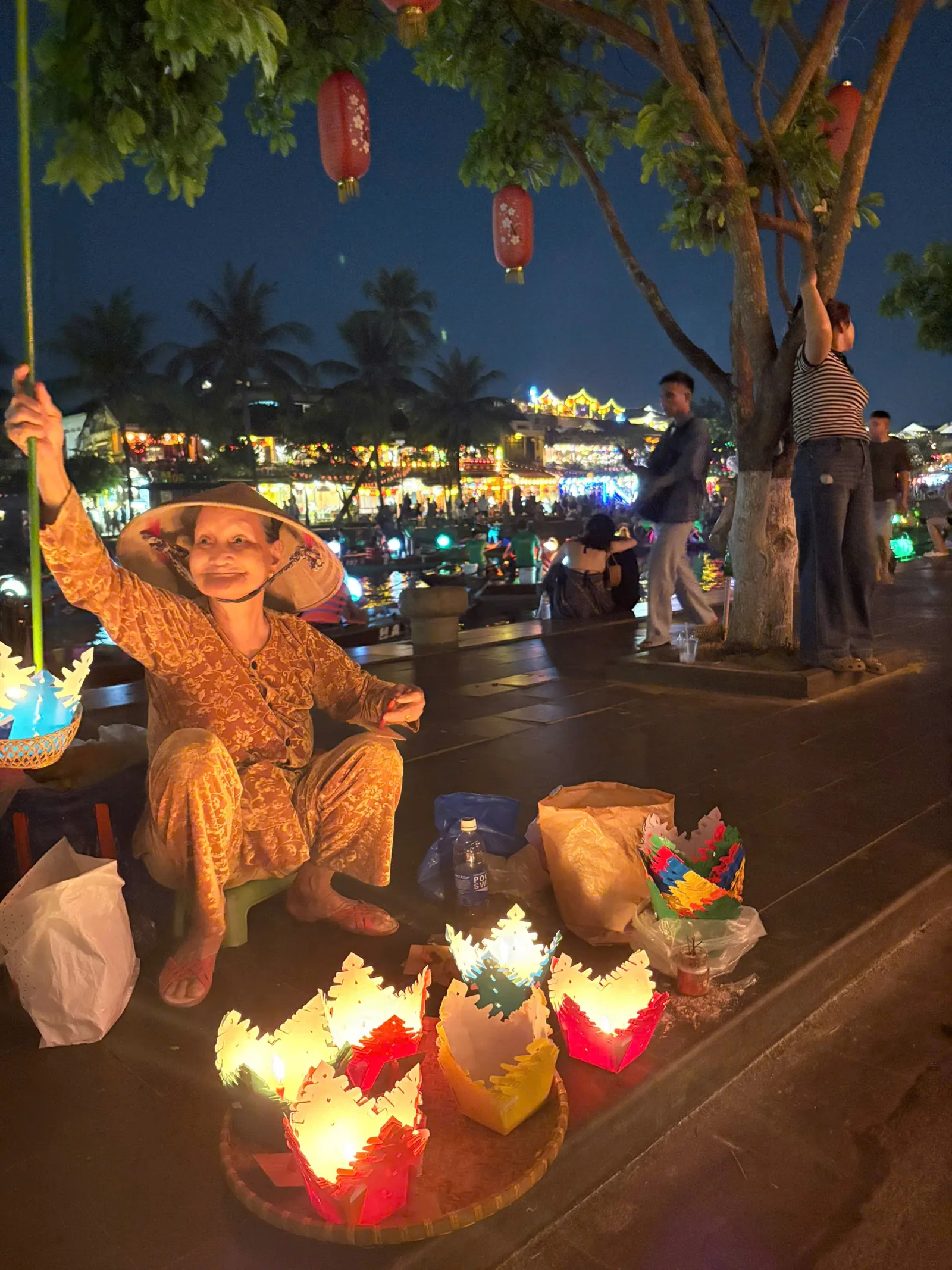
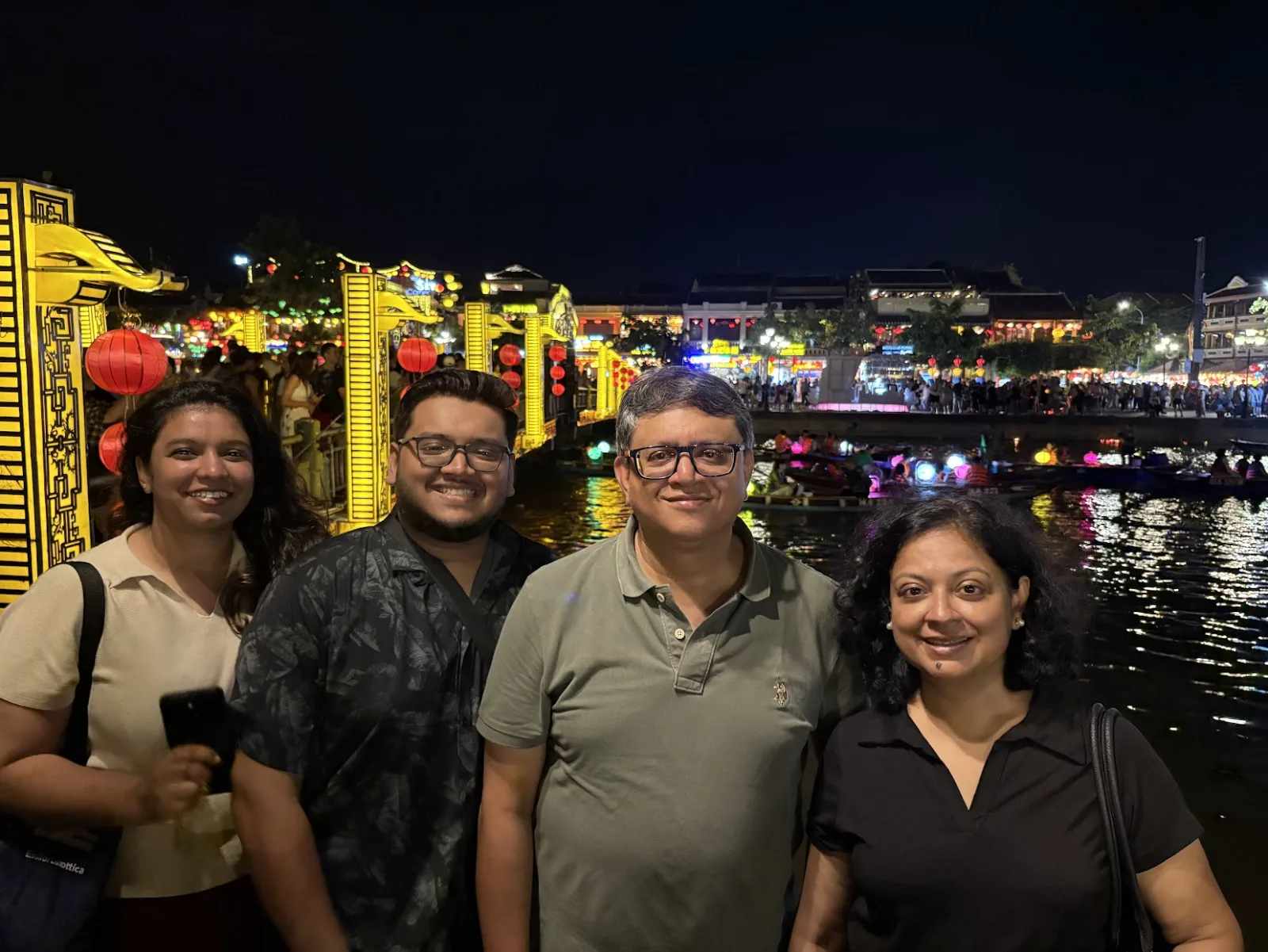
The Hoi An Lantern Festival takes place on the 14th day of every lunar month, when the moon is full. On this night, the Old Town dims its electric lights and thousands of silk lanterns — red, gold, blue, green — become the primary illumination along Nguyễn Thái Học, Trần Phú, and Bạch Đằng streets. Locals and visitors release small paper lanterns onto the Thu Bồn River from the banks, creating a slow-moving field of candlelight that drifts toward the Cửa Đại estuary.
The tradition is not a tourism invention. It descends from the Chinese and Japanese merchant communities who settled in Hoi An from the 15th century onward. Full moon nights were sacred in both cultures — a time for ancestor worship, temple offerings, and communal gathering. The lanterns were originally oil lamps placed at doorways and on the river as offerings to the water spirits and to guide ancestral souls home. The silk lanterns that now define Hoi An's visual identity evolved from those original oil lamps, and the craft of making them has been passed through local families for generations.
The festival is not a performance. There is no stage, no ticket, no scheduled program. It is a town turning down its modern volume and letting an older rhythm take over. That is what makes it different from every other "festival" marketed to tourists in Southeast Asia.
When is the Hoi An Lantern Festival in 2026?
The festival follows the lunar calendar, so the Gregorian dates shift each year. It falls on the 14th day of each lunar month — one day before the full moon.
2026 Lantern Festival dates:
| Lunar Month | Gregorian Date |
|---|---|
| January | January 2 |
| February | February 1 |
| March | March 13 |
| April | April 11 |
| May | May 11 |
| June | June 9 |
| July | July 8 |
| August | August 7 |
| September | September 5 |
| October | October 5 |
| November | November 22 |
| December | December 22 |
The biggest celebration of the year is the first Lantern Festival after Tết (Lunar New Year) — typically the February or March date. The entire riverfront glows, traditional music drifts from the assembly halls, and the crowd is a mix of locals performing ancestral rites and visitors watching in silence.
For the other 27 nights of the month, the lanterns still glow — just without the full electric-light shutdown. More on that below.
What actually happens on the 14th night?
There is no official start time. The transition happens gradually, and that gradualness is part of the experience.
Before sunset (5–6pm): The streets look normal. Shops are open, traffic flows, and nothing suggests that anything unusual is about to happen. The silk lanterns hanging from every storefront are unlit.
At sunset (around 6pm): The electric streetlights along the main Old Town streets are switched off. Not dimmed — off. The sudden absence of artificial light is the first signal. The silk lanterns, lit by bulbs inside, become the dominant glow. The color temperature of the entire streetscape shifts from white fluorescent to warm amber and red.
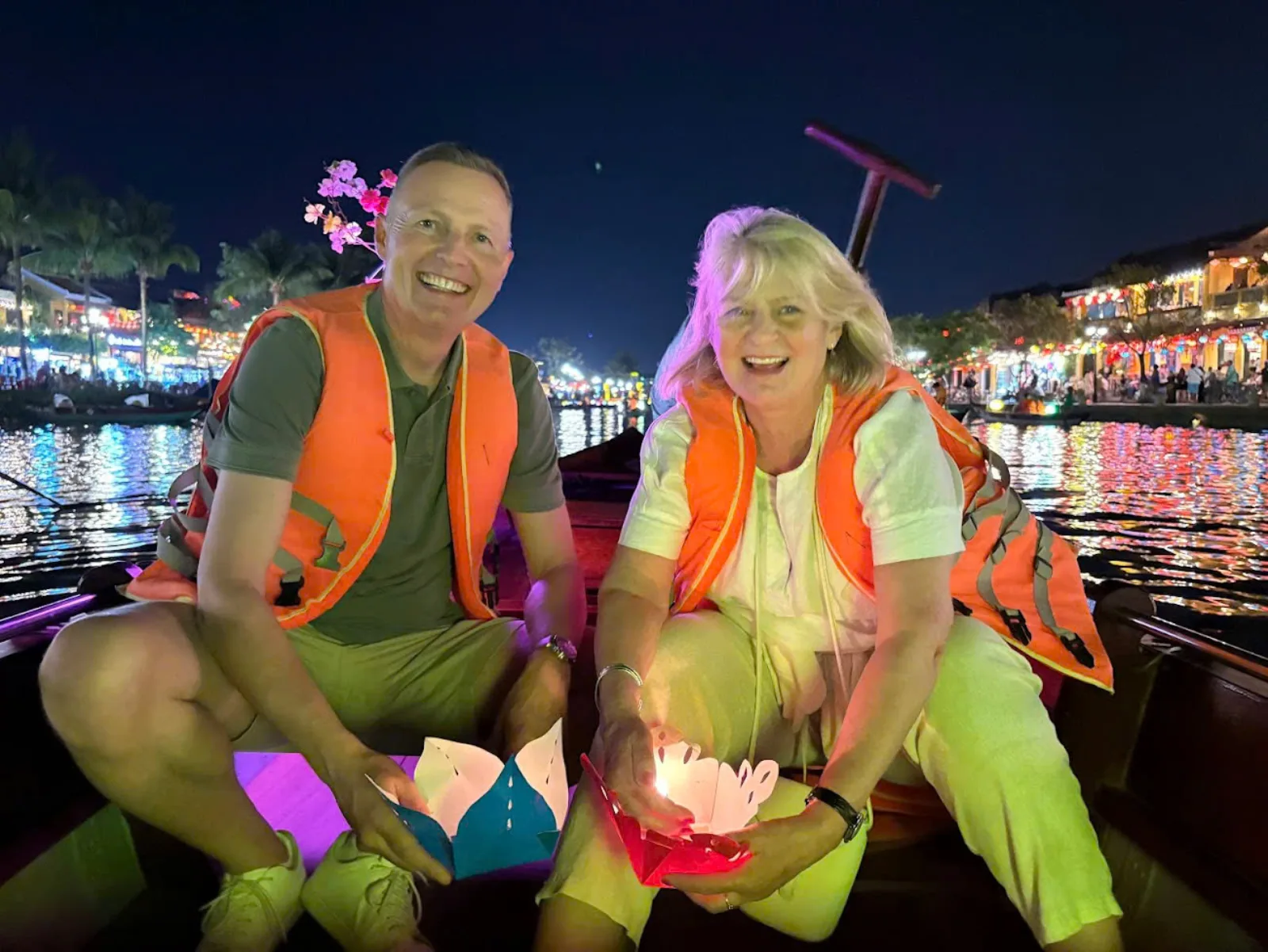
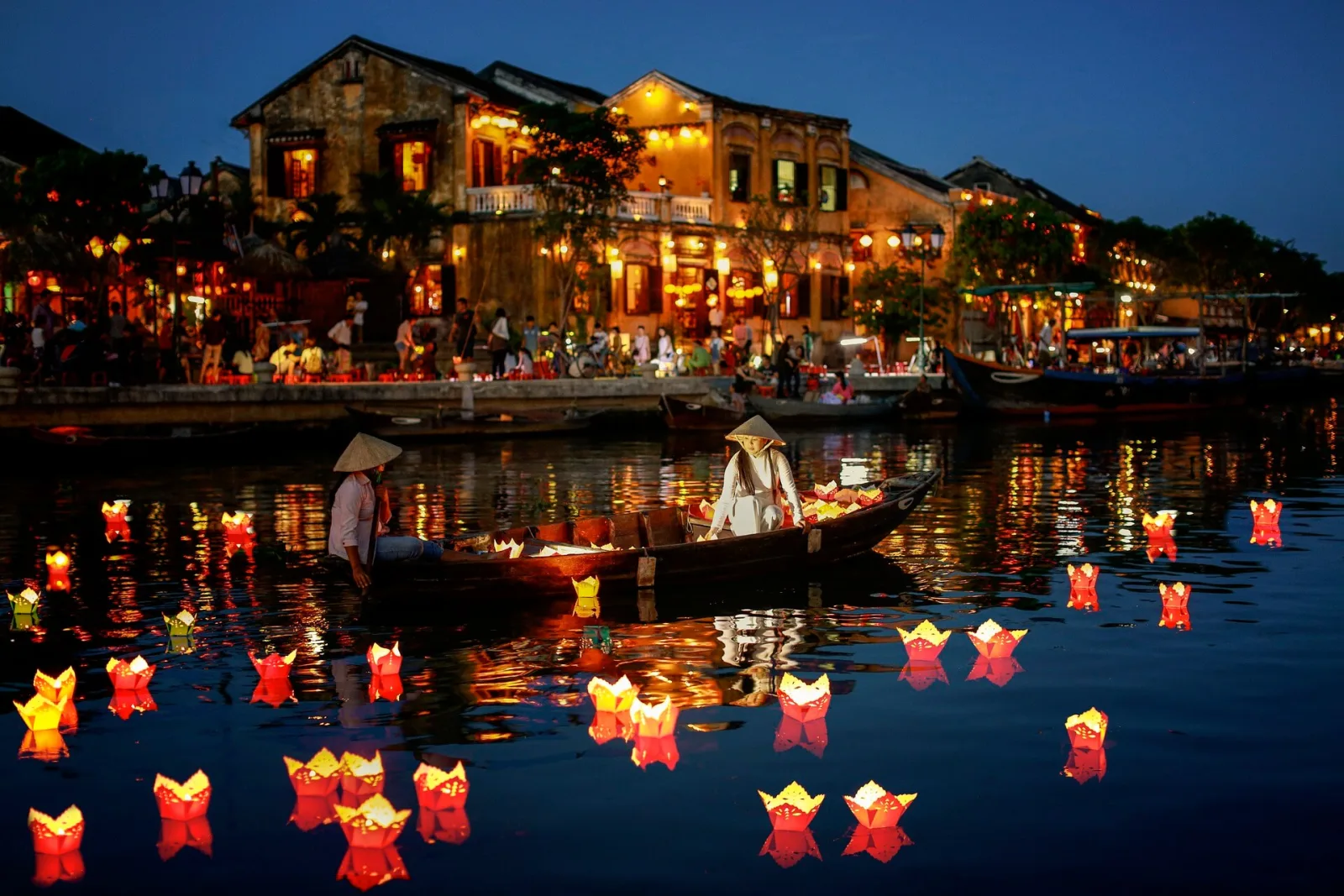
6–8pm — the river ceremony: Locals gather on the Bạch Đằng riverbank with small paper lanterns (đèn hoa đăng) — lotus-shaped or cylindrical, with a candle inside. They wade to the water's edge, light the candle, whisper a prayer or a wish, and set the lantern on the current. The river fills with hundreds, then thousands, of floating lights. The current carries them slowly downstream, and from the Japanese Bridge, the effect is a river of fire moving toward the sea.
6–10pm — the street atmosphere: The pedestrian-only zone expands. Traditional music — hát bội (classical opera) fragments, bài chòi folk songs — plays from speakers near the assembly halls. The night market along Bạch Đằng is at its busiest. Children run between the crowds with sparklers. The assembly halls themselves are open, with incense burning and families making offerings.
After 10pm: The crowd thins. The lanterns stay lit. The river carries the last floating candles out of sight. The town returns to its regular nighttime quiet, but the silk lanterns remain on until the shops close.
Where is the best place to see the Lantern Festival?
The answer depends on what you want from the night.
For the river ceremony: Stand on the Bạch Đằng riverbank, between the Japanese Bridge and the night market. This is where locals release their lanterns, and you are close enough to see the prayers on their lips. Arrive by 5:45pm to secure a spot at the water's edge. The crowd builds fast after 6pm.
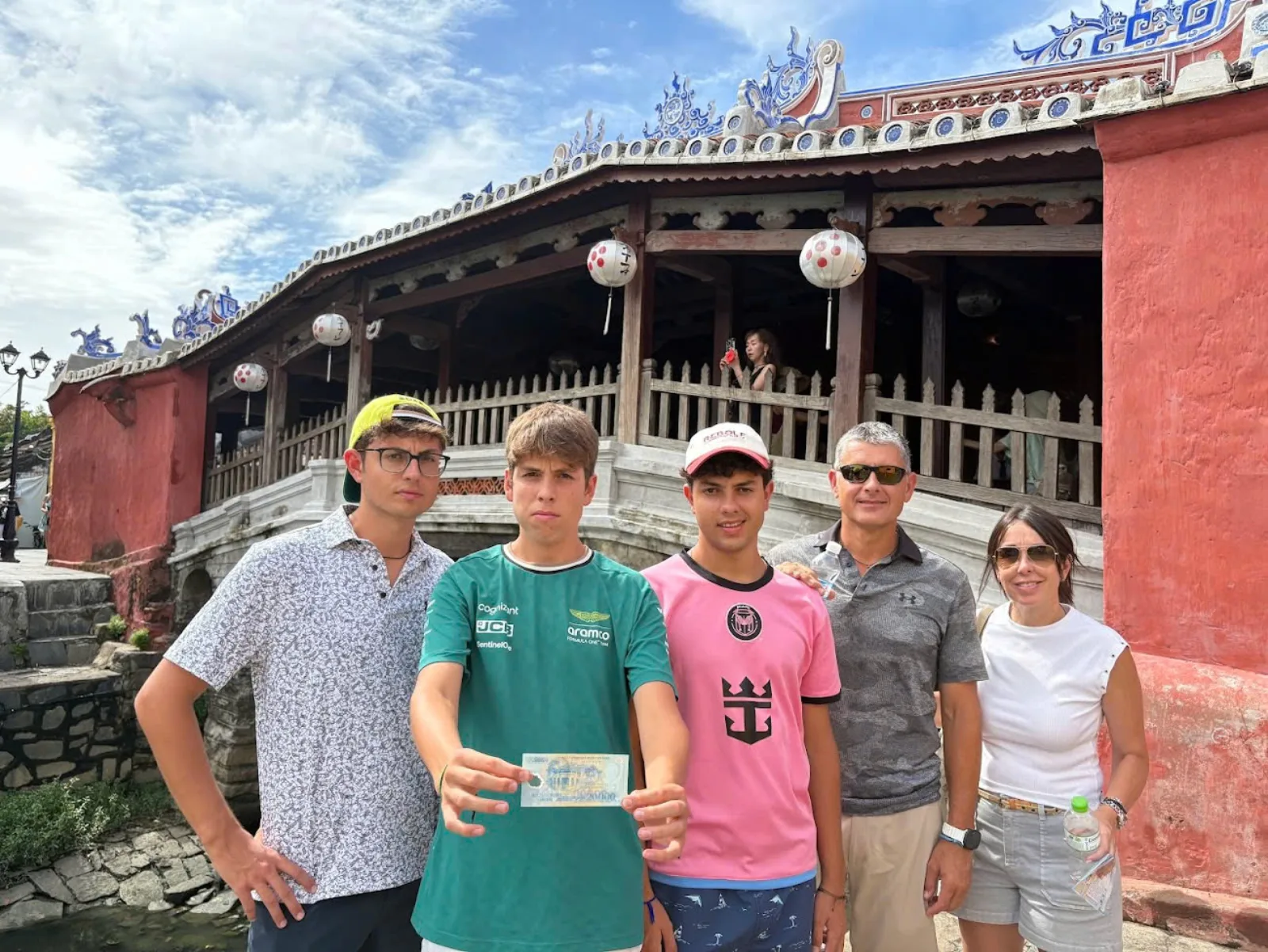
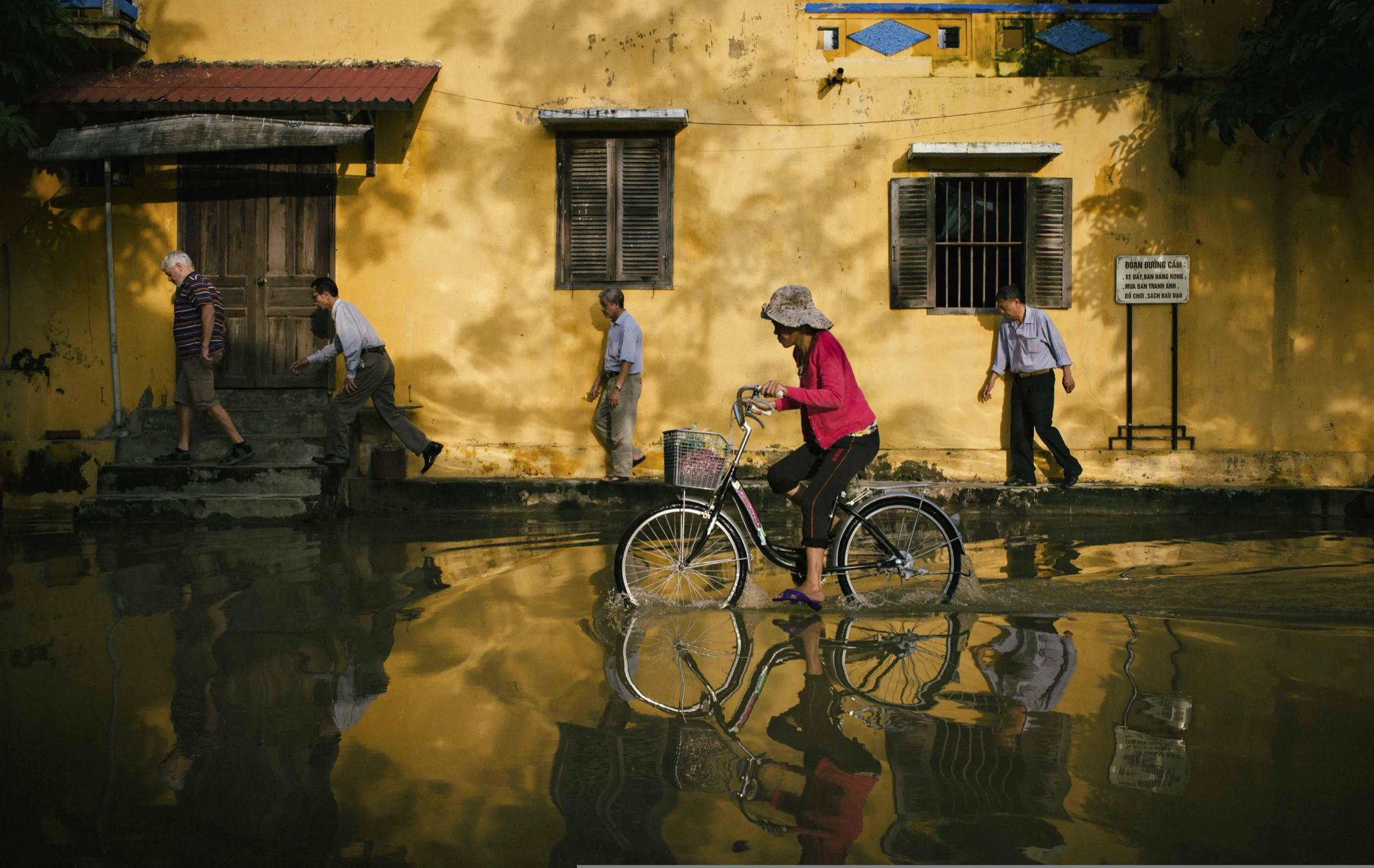
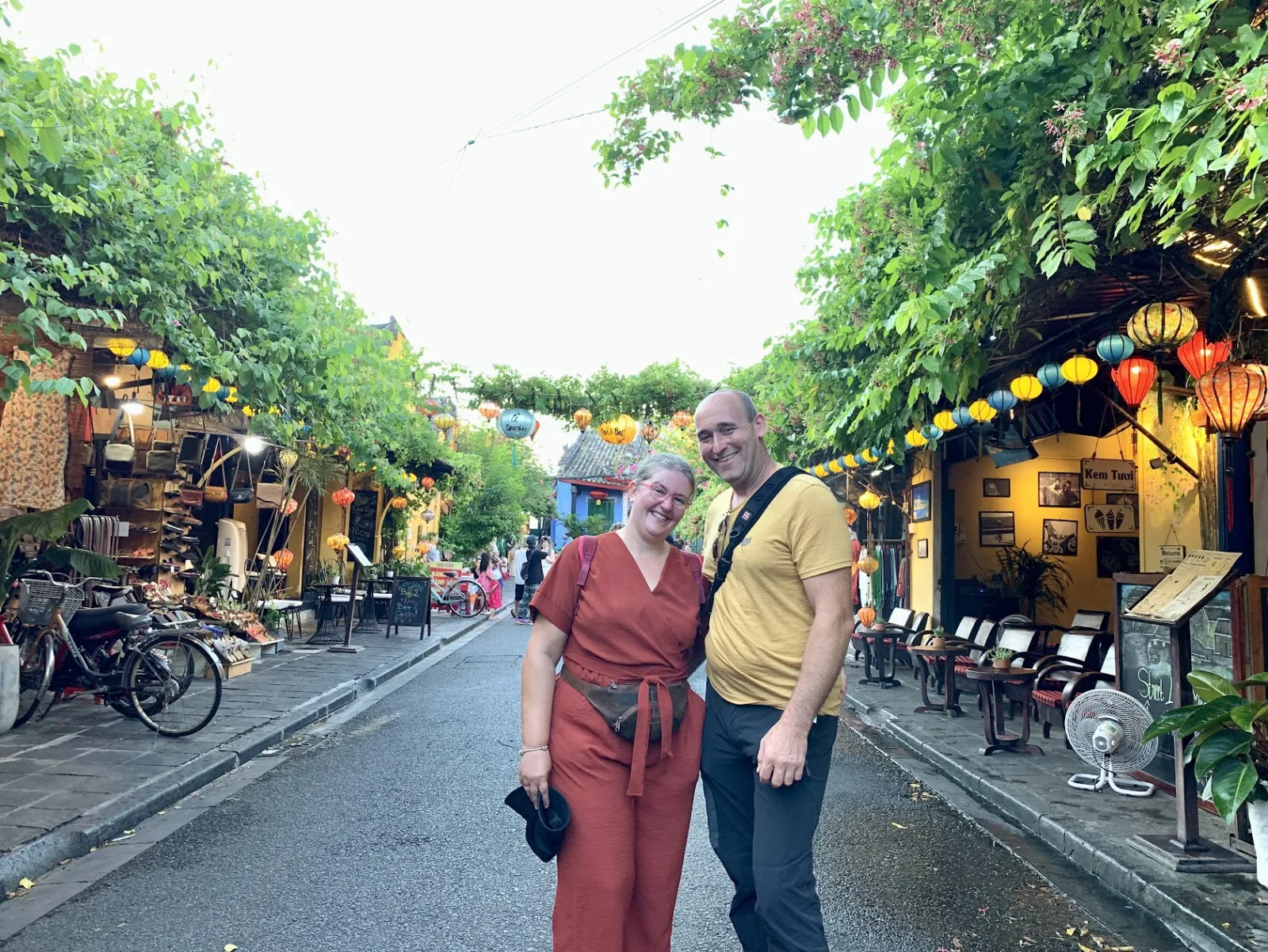
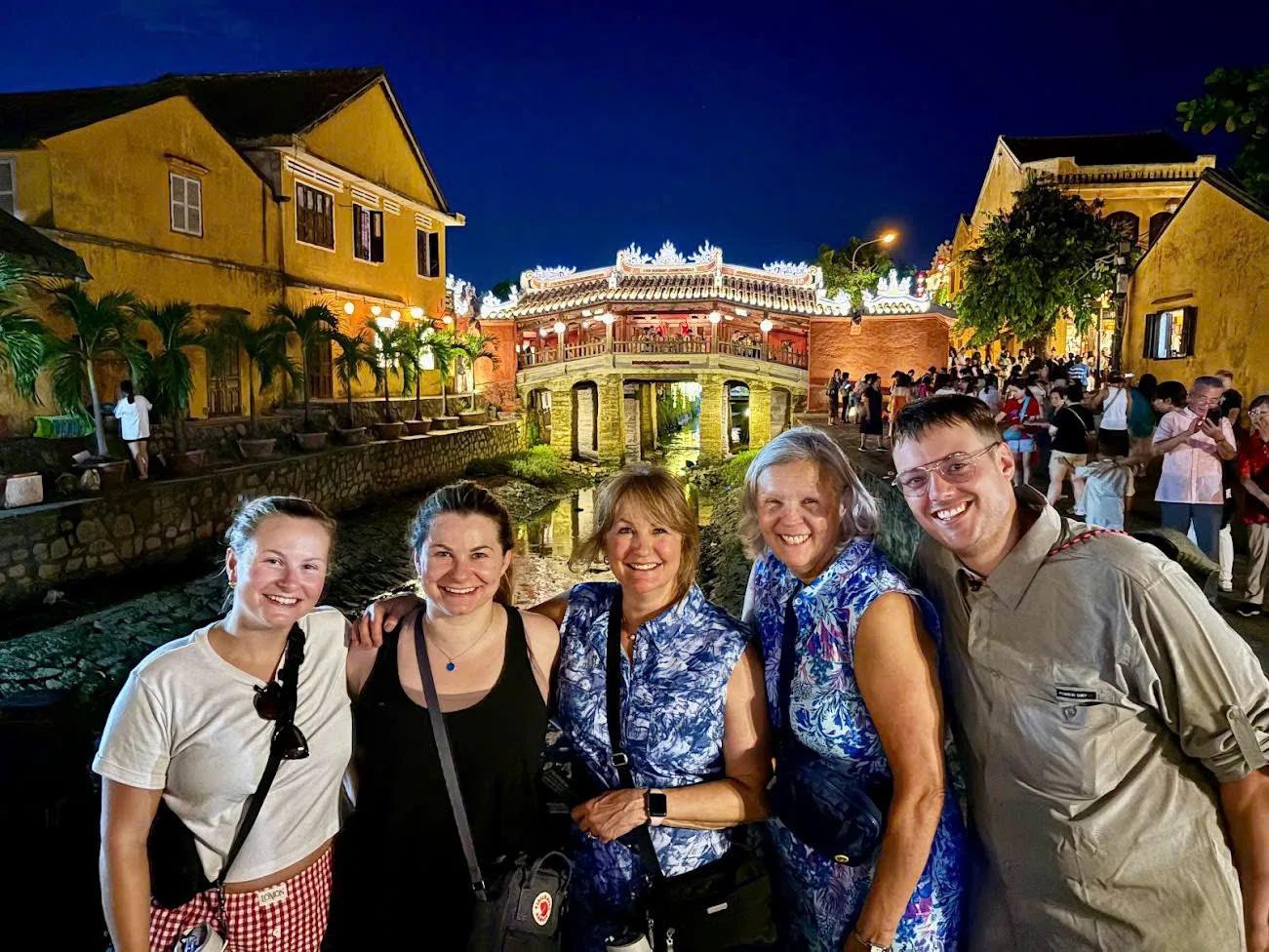
For the full streetscape: Walk Nguyễn Thái Học from the Japanese Bridge eastward. This stretch has the densest concentration of silk lanterns and the oldest shop house facades. The yellow walls under lantern light are the image you have seen in photographs — and they look better in person.
For photography without crowds: Cross the Japanese Bridge to Nguyễn Thị Minh Khai street. The western side of the Old Town has fewer tourists, and the bridge itself — lit from within — makes a foreground element with the lantern-lit streets behind it.
For the floating lanterns from above: The An Hội bridge (the pedestrian bridge east of the Old Town) gives an elevated view of the river. The floating lanterns pass underneath in a continuous stream. This is also where you can buy lanterns from the boat vendors below.
For a quiet, local experience: Walk to the Cẩm Nam side of the river, opposite the Old Town. The view back across the water shows the entire lantern-lit townscape reflected in the river. The KB describes it as "appearing and disappearing, shimmering through the water surface." Few tourists make this crossing. The locals who fish here at night — lantern-lit boats, net-casting sounds, bamboo groves creaking — continue their work as if the festival on the other bank is a distant rumor.
What is the difference between the Lantern Festival and a regular night?
This is the question most travel blogs skip, and it matters for planning.
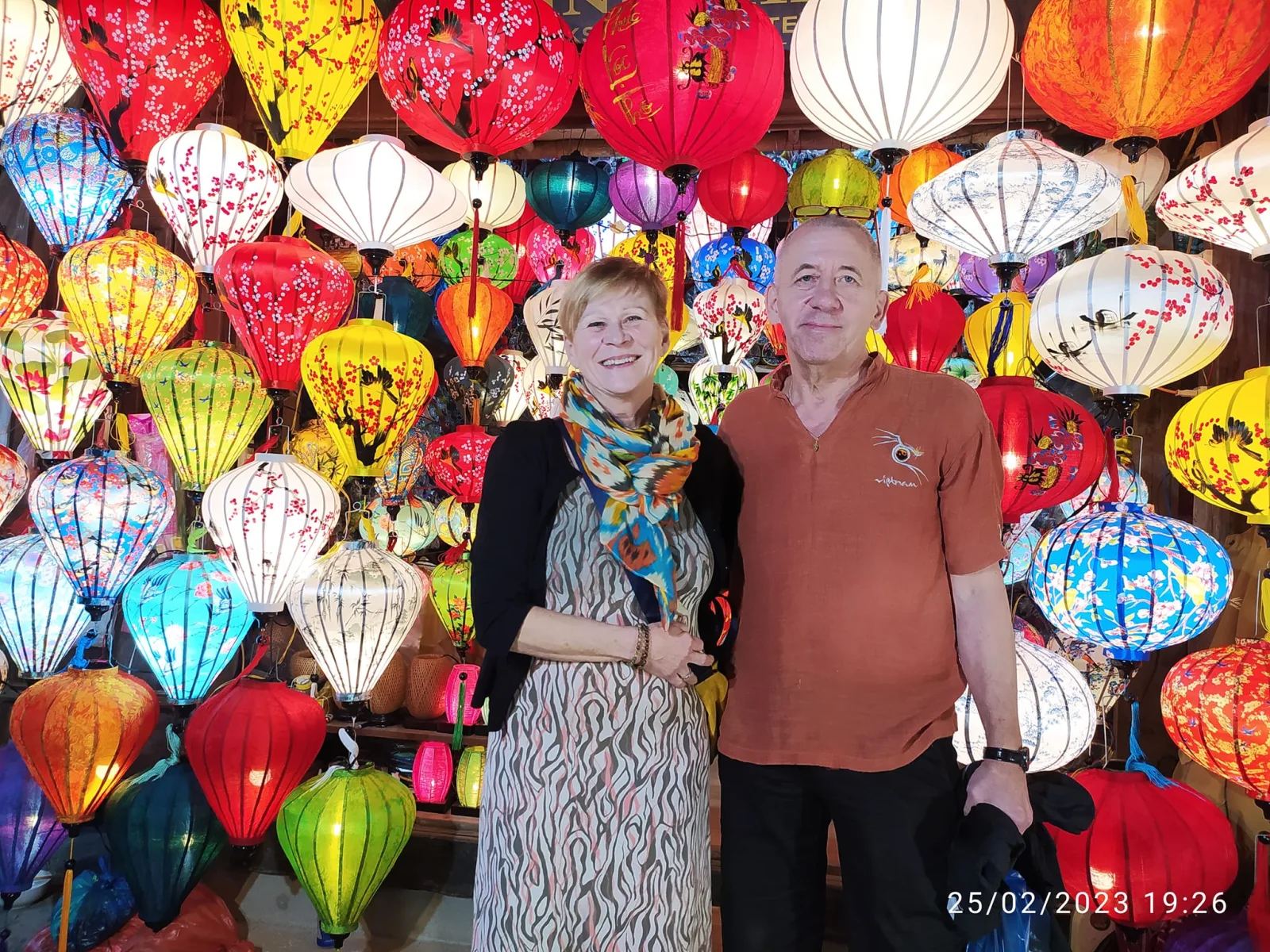
On a regular night (any night that is not the 14th), the Old Town is still atmospheric. The silk lanterns are lit, the night market operates, and boat rides with lantern releases run from the riverbank. The electric streetlights stay on, so the effect is lanterns-plus-modern-light rather than lanterns-only. The floating lanterns on the river are present but fewer — mostly tourists rather than locals performing a rite.
On the 14th, the electric lights go off. The difference is not subtle. The entire color palette of the town changes. The crowd is larger and more mixed — locals performing ancestral rites alongside visitors. The assembly halls are open and active with incense and offerings. The traditional music is louder and more present. The floating lanterns number in the thousands rather than the hundreds.
If you can time your visit to the 14th, do. If you cannot, a regular night is still worth 90 minutes of your evening. The lanterns do not care about the calendar.
For the broader evening experience — night market, boat rides, food stalls — see our Hoi An Old Town guide.
What should you know before going?
Buying floating lanterns: Small paper lanterns cost 10,000–20,000 VND ($0.40–$0.80 USD) from vendors along the riverbank. Boat vendors on the river sell them for slightly more. You do not need to buy one to watch — the spectacle is visible from the bank without participating.
Boat rides: Sampan boats with lantern releases run every evening from around 6pm, costing 50,000–100,000 VND ($2–$4 USD) per person. On the 14th, boats sell out by 6:30pm — a private walking tour that ends at the river is the easiest way to secure a boat without queuing. Prices may rise slightly and queues form, so book through your hotel or walk to the Bạch Đằng wharf early.
Crowds: The 14th draws the largest monthly crowd. Arrive before 6pm if you want a riverside spot. The streets are pedestrian-only, but the density can be uncomfortable for those who dislike crowds. The Cẩm Nam side of the river is the escape valve.
Weather: October to January brings rain. The festival happens rain or shine — locals do not cancel for weather. Bring a light rain jacket if visiting in the wet season. The lanterns are treated to resist light rain, but heavy downpours will shorten the evening.
Photography: A tripod helps for the river shots. The light is warm and low — phone cameras handle it reasonably well, but a dedicated camera with a wide aperture (f/1.8 or lower) captures the lantern glow without blowing out the highlights. Shoot between 6:15 and 7:30pm for the best balance of ambient light and lantern glow.
For more practical tips on visiting Hoi An, see our Hoi An itinerary guide.
Related planning notes: best time to visit Hoi An, Hoi An Old Town guide, things to do in Hoi An, and Hoi An itinerary for first-timers.
FAQ
A few practical follow-up questions
Only the questions that sit naturally inside this article are shown here, so the page stays focused.
Article FAQ
The festival takes place on the 14th day of each lunar month. In 2026, the dates are: January 2, February 1, March 13, April 11, May 11, June 9, July 8, August 7, September 5, October 5, November 22, and December 22.
There is no official start time. The electric streetlights are switched off at sunset (around 6pm), and the river ceremony begins shortly after. The peak atmosphere is between 6pm and 8pm. Arrive by 5:45pm to secure a riverside spot.
Yes. It is one of the few remaining festivals in Southeast Asia that is a genuine community practice rather than a tourism performance. Even on non-festival nights, the lantern-lit streets are atmospheric — but the 14th is the full experience.
For the river ceremony, stand on the Bach Dang riverbank between the Japanese Bridge and the night market. For the full streetscape, walk Nguyen Thai Hoc from the bridge eastward. For an elevated view of the floating lanterns, use the An Hoi pedestrian bridge.
On the 14th, the electric streetlights are switched off entirely, and the silk lanterns become the only illumination. The crowd is larger, the assembly halls are open with incense and offerings, and the floating lanterns number in the thousands. On regular nights, the lanterns are still lit but the streetlights remain on.
Same topic
More in this topic
If this topic is close to your trip, these notes stay within the same planning lane without sending you off into a wider archive.
Related tours
If you want to turn the note into a real plan
These tours sit closest to the topic you just read, so the next step stays grounded in the actual route options.
Walking & Street Food Tour
Hoi An Ancient Town Walking & Street Food Tour
Join our half-day tour to explore the best of Hội An. Walk through lantern-lit streets, visit iconic landmarks, and enjoy delicious local food.
3 to 4 hours
Explore the Hoi An Ancient Town Walking & Street Food Tour
FULL-DAY TRIP
Hoi An Countryside by Motorbike: Craft Villages, River Life & Home-Cooked Lunch
Ride beyond the ancient town to meet local craft families, take a basket boat or fishing boat on the river, and share a home-cooked lunch with a farming host.
About 5 hours
Explore the Hoi An Countryside by Motorbike: Craft Villages, River Life & Home-Cooked LunchHelpful next step
Use the article for context, then move into the part that fits your trip best
Some travellers want to compare tours next, while others just want to send a quick message with dates and questions. Both paths stay open here.