
Food and local tastes
Pho in Hoi An: A Local Guide to the City's Own Noodle Style
Hoi An developed its own pho style over a century — dried noodles, fat-free clear broth, peanut saté, papaya pickle. The story of the Liến pho family and the bowl we rate above all.
Aug 6, 2026 · 12 min read
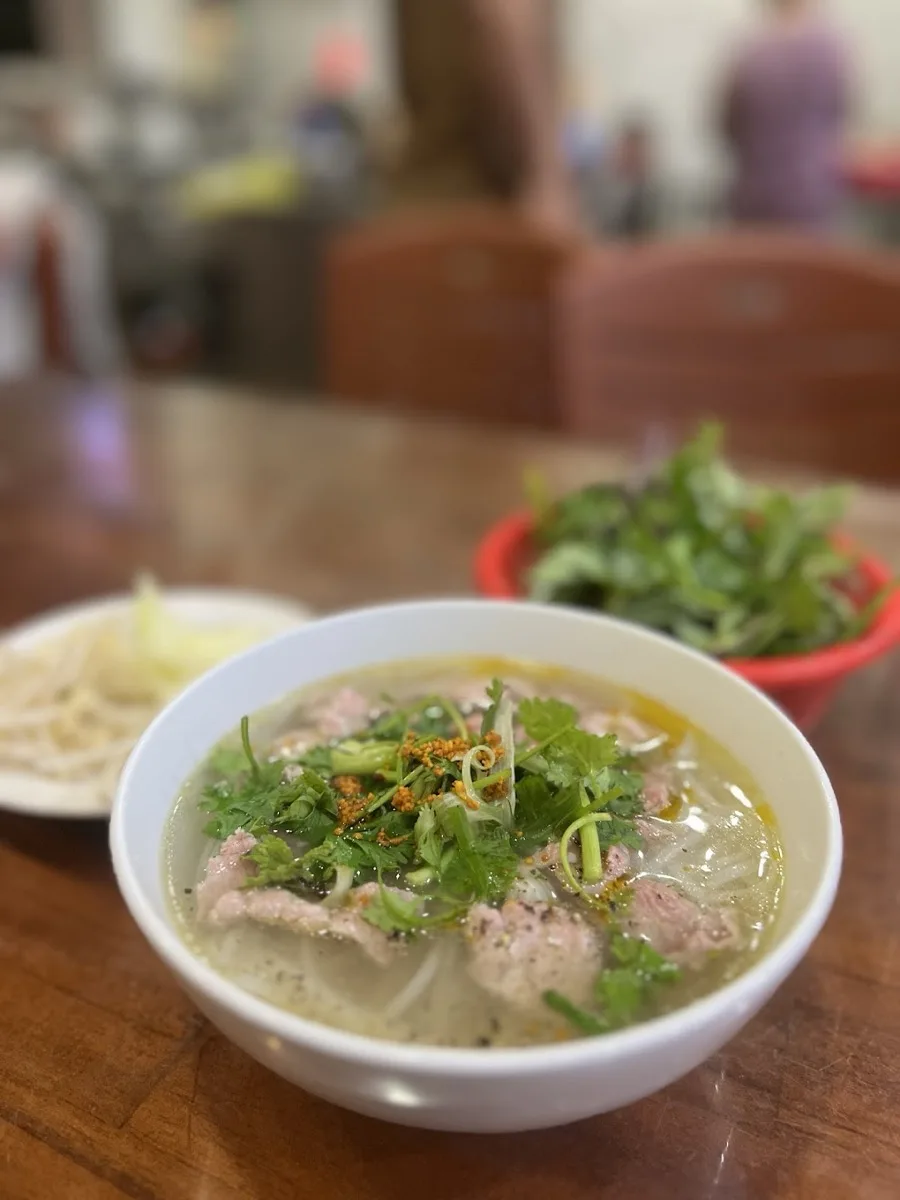
Most visitors come to Hoi An for cao lầu and bánh mì, and they are right to. But pho in Hoi An is a story almost nobody tells — because the pho served in this town is not the pho of Hanoi or Saigon. It never was. Hoi An developed its own way of eating pho over more than a century of street-side pots, and locals will politely decline any other version. This is that story: the style, the family of pho houses that defined it, and the bowl we personally rate above all the rest.
How is Hoi An pho different from pho elsewhere?
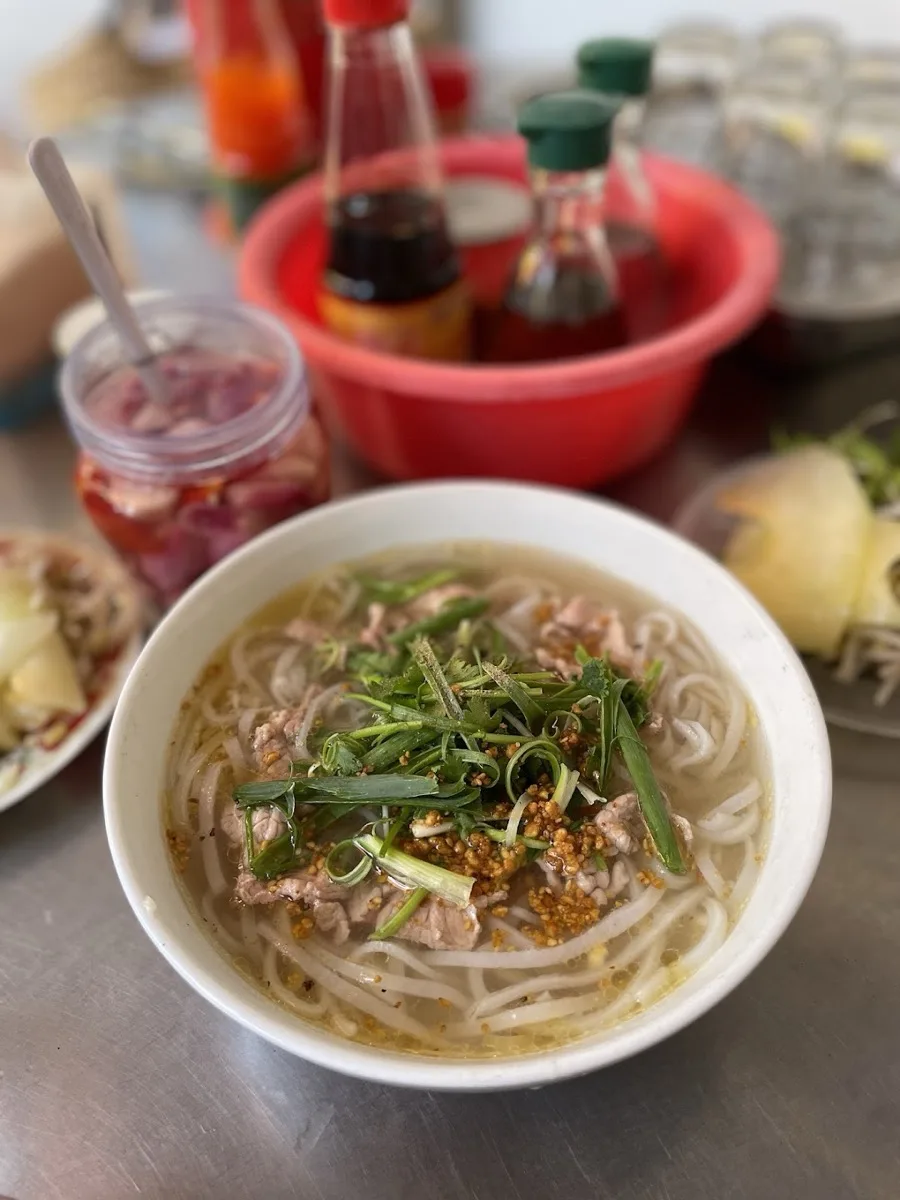
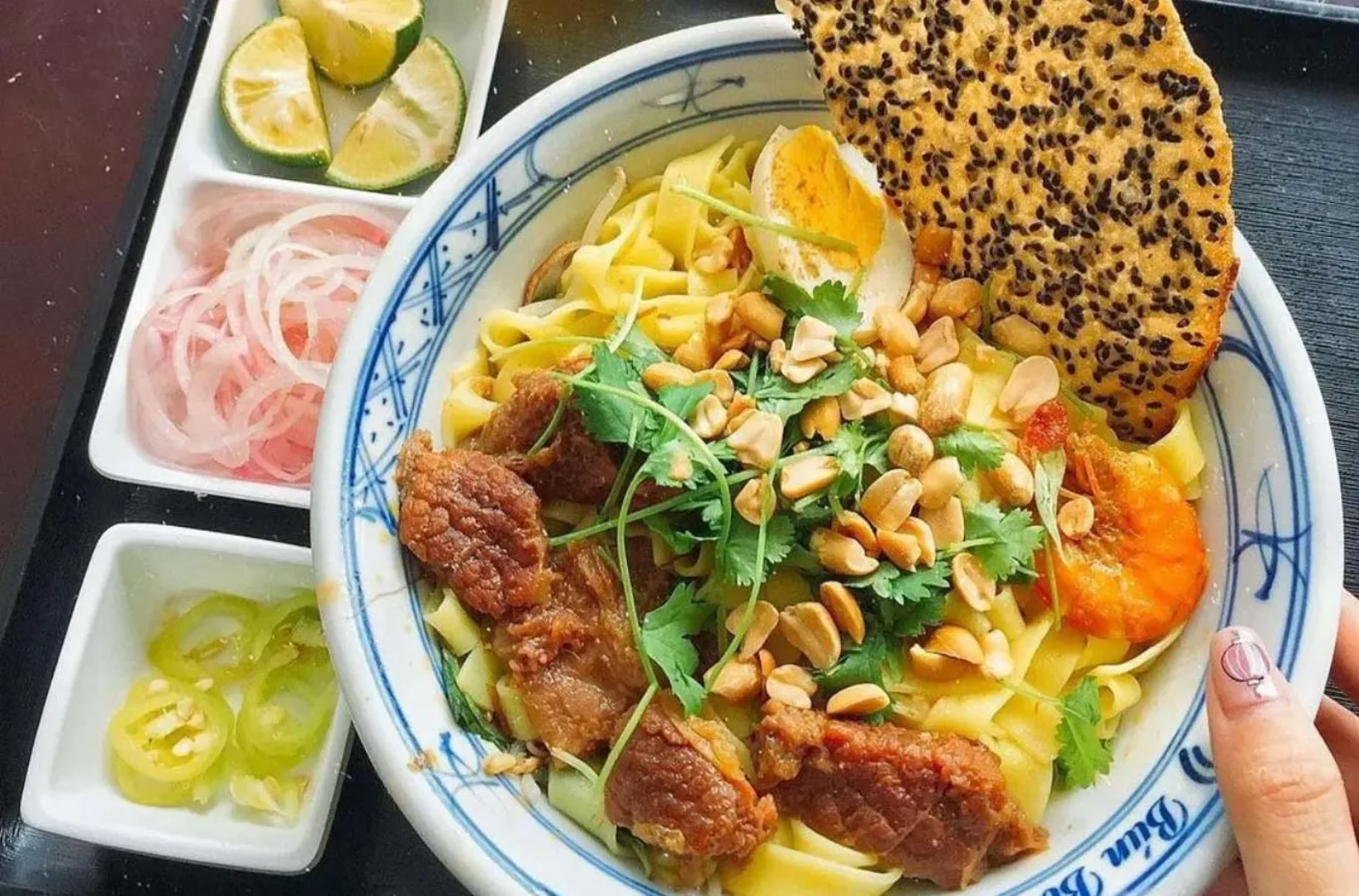
Hoi An pho differs from Hanoi and Saigon pho in three things you can see immediately: the noodles, the broth, and the orange powder on top. Start with the noodles. Hanoi pho uses fresh rice noodles, soft and thin. Hoi An does the opposite. The rice cakes are made from local rice, steamed, then sun-dried for one day until slightly wilted before being cut into strands. That drying step gives Hoi An pho its signature chew — firmer, thicker, and more resilient than northern pho, with no additives involved. Before serving, the cook dips the dried strands into boiling water for a few seconds in a perforated ladle, longer if you like them soft, shorter if you like them chewy.
The broth is the second difference, and it is a matter of local pride. The bowls here are clear and clean-tasting, sweet from bones rather than seasoning — and they carry no beef-fat smell at all. Hanoi tradition treats beef-fat aroma as the mark of a good pot (the writer Nguyễn Tuân famously said so); Hoi An diners refuse it outright. The cooks get there the old way: marrow-rich bones simmered for an hour and a half over low heat, lid off, foam skimmed continuously, with ripe papaya, onion, and grilled squid adding sweetness, and ginger, star anise, black cardamom, coriander seed, and cinnamon keeping the fat smell away.
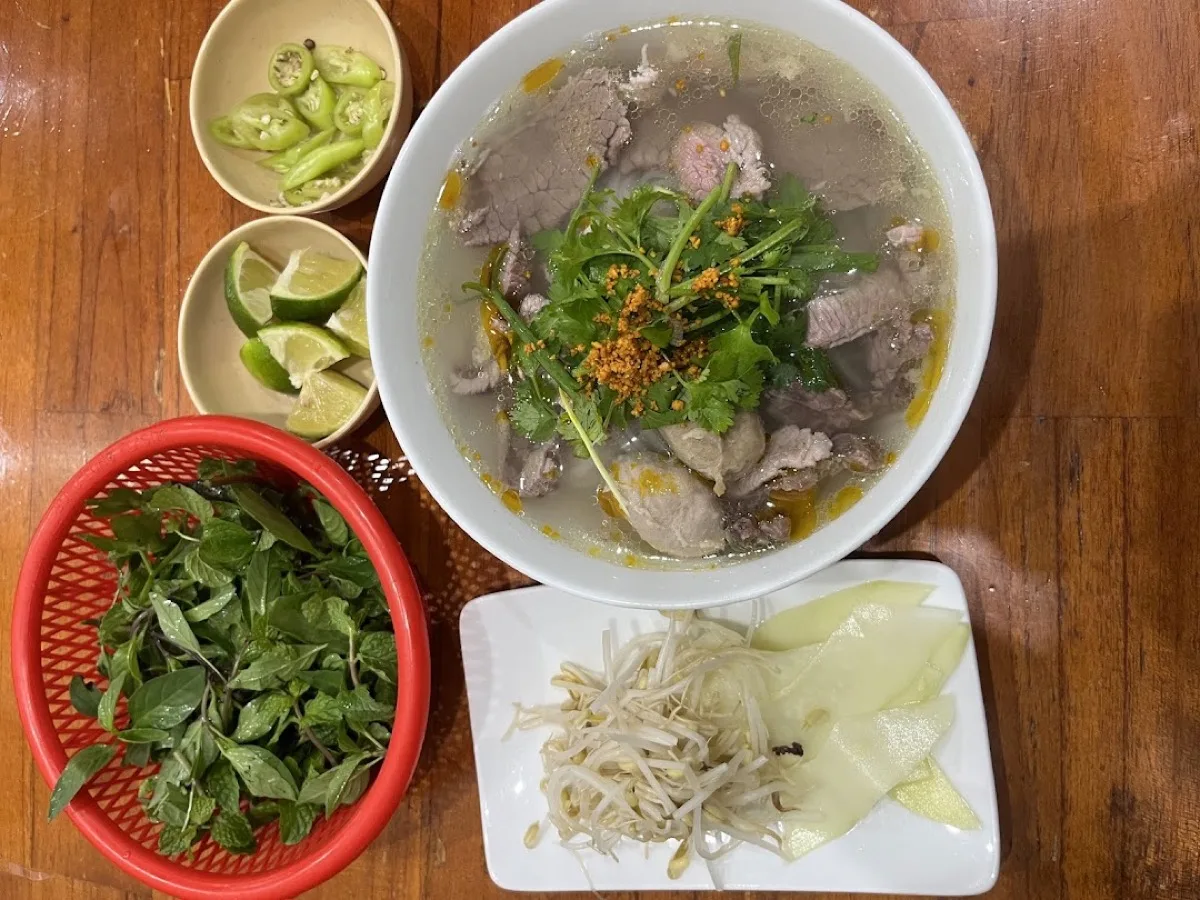
The third difference is what makes the bowl unmistakably Hoi An: a sprinkle of peanut saté, an orange, crumbly mix of roasted peanuts and spices descended from a Chinese-style dry saté, scattered over the surface along with crushed roasted peanuts, annatto oil, and fried shallots. Travel writers have called it "the biggest difference between Hoi An pho and every other pho" — and they are right. Only in Hoi An does it go on pho.
Then come the table rituals. Every bowl arrives with a plate of pickled green papaya — sour, sweet, sharp with ginger — which cuts the richness of the broth. There is no quẩy (fried dough stick) here; instead you get a small roll of beef chả wrapped in banana leaves, or bread with chả. And if you want more without more noodles, you order a chén xáo: just beef and broth, dressed exactly like a bowl. Pho is treated as something slightly elevated in this town — eaten at proper tables with chopsticks and a spoon, broth sipped a little at a time, never lifted to the lips.
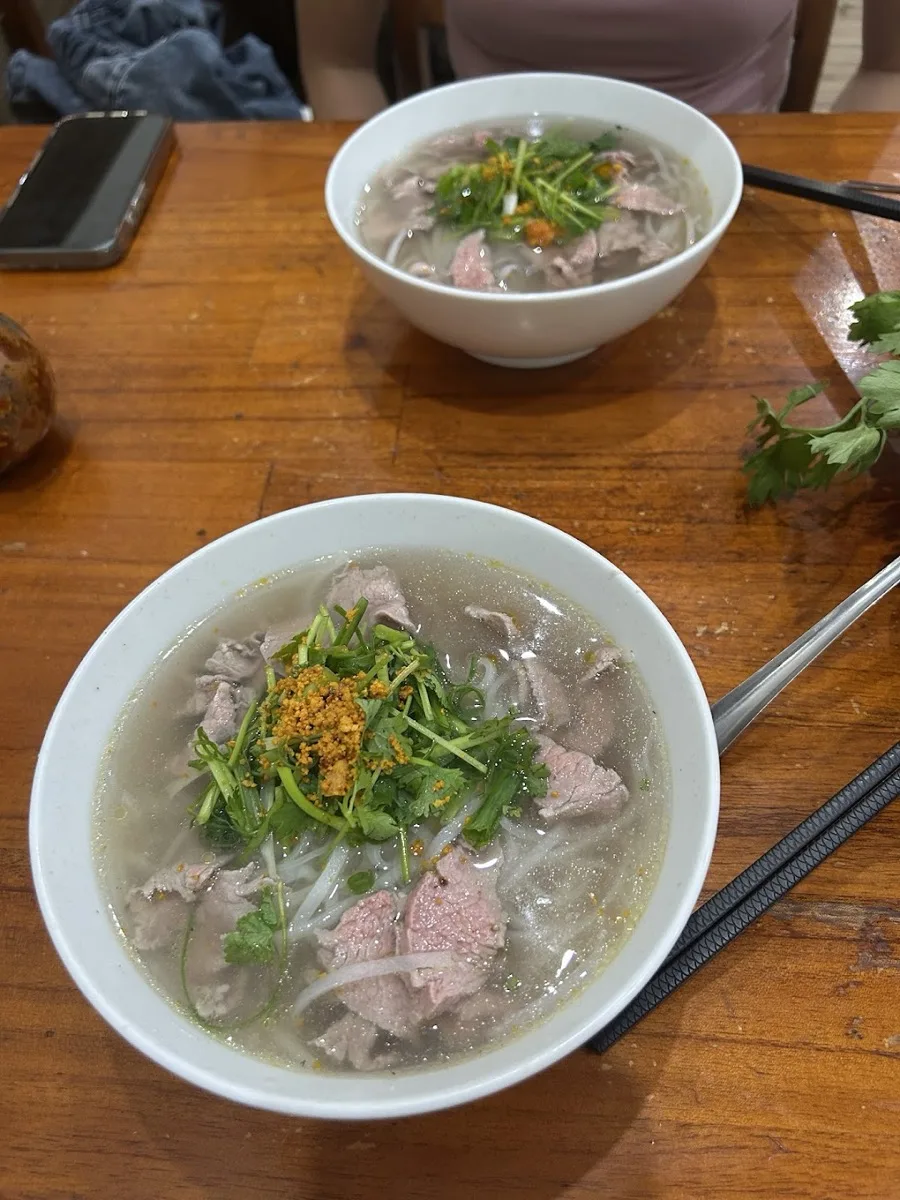
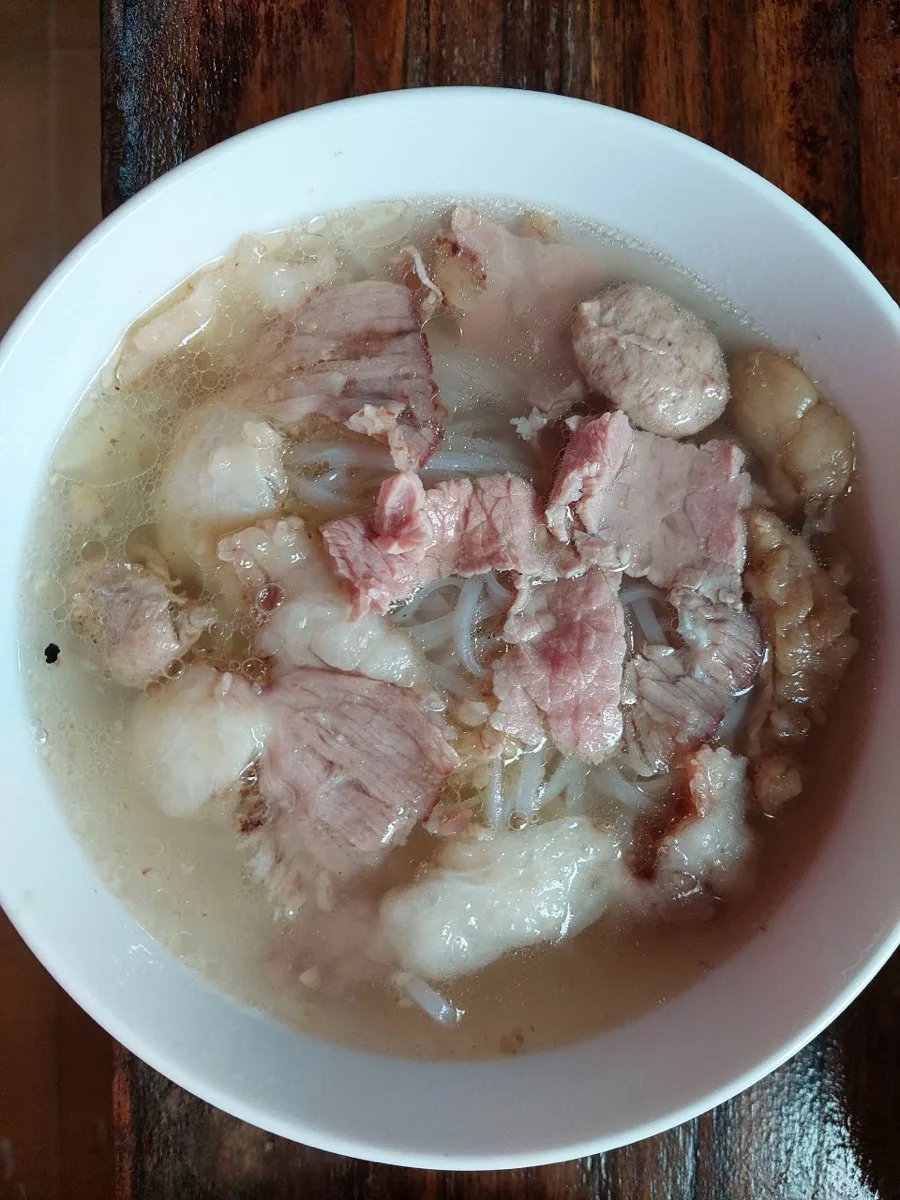
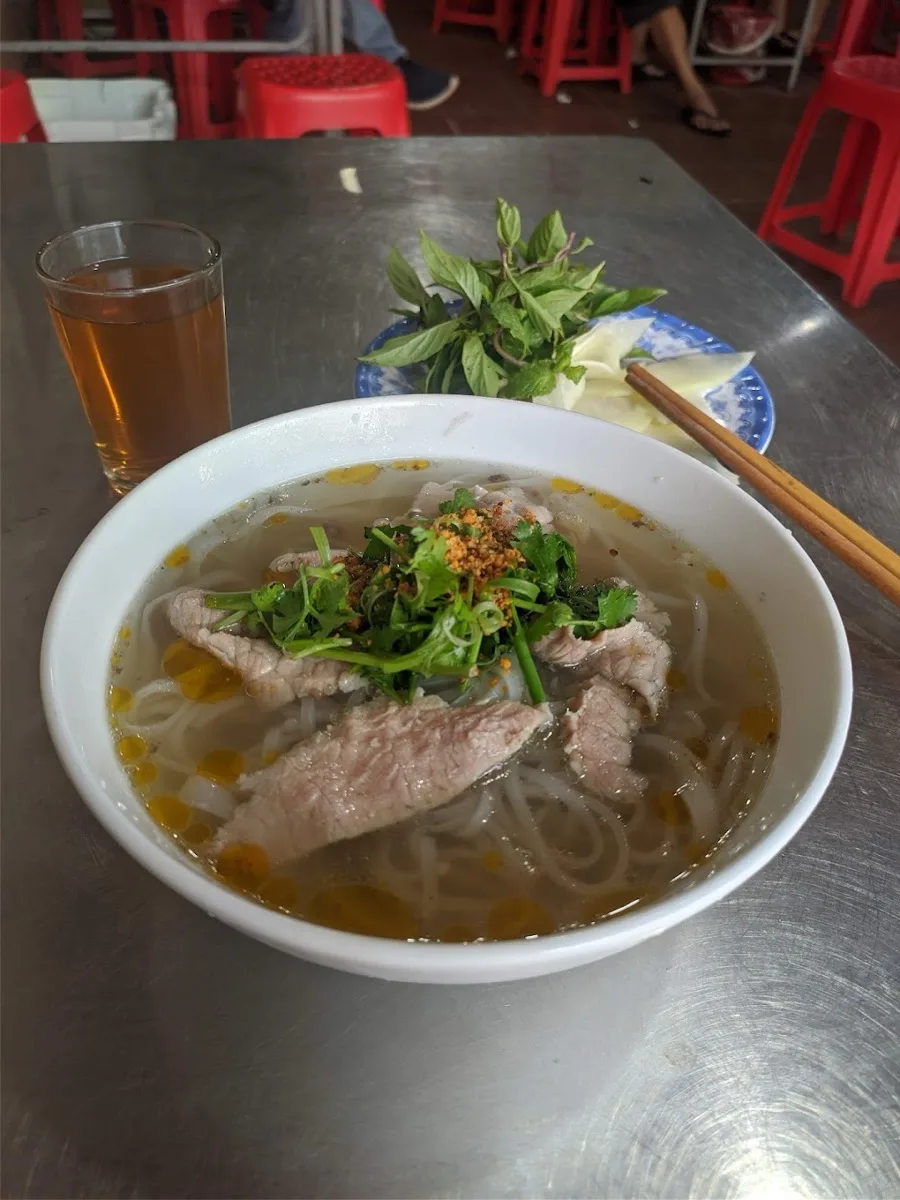
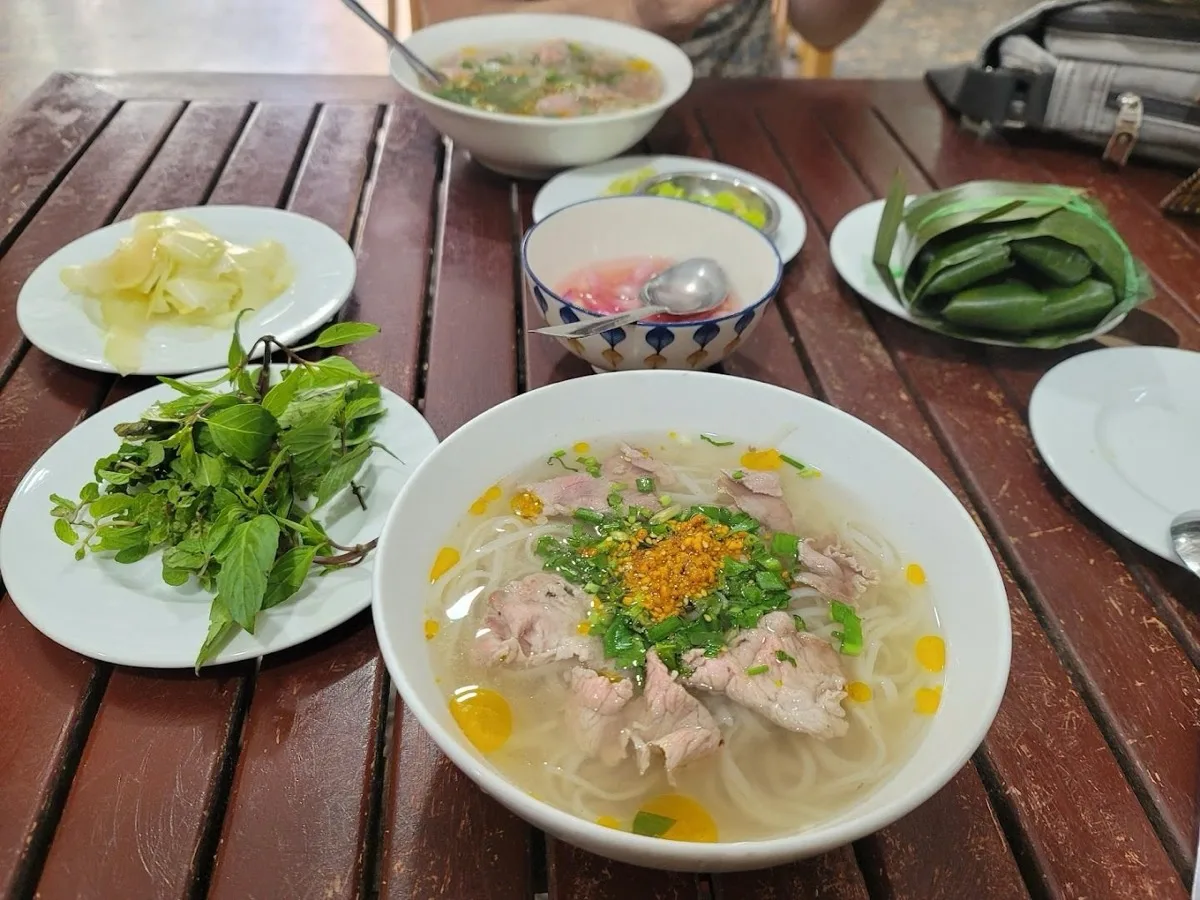
Anatomy of a Hoi An bowl — swipe → · Photos via Google Maps
Where did pho in Hoi An come from?
Pho arrived in Hoi An in the early 20th century — later than in Hanoi — and it began as street food for the night. The first vendors were wandering shoulder-pole sellers serving late shifts from around 7pm to one or two in the morning, feeding laborers and well-off families inside the old quarter. According to oral histories recorded by the Hoi An Cultural Heritage Conservation Center, the first named carts were ông Hai Ta's (before 1945), ông Giàu's (around 1953), bà Thông's (before 1954), then ông Liễu and ông Liến. The carts had their regular corners — Hai Ta and Giàu at the Nguyễn Thái Học and Lê Lợi intersection; Liến's cart parked near the gate of the Dương Thương Assembly Hall.
Every one of those early shops made its own noodles. Drying the rice cakes was the hardest, most secretive part of the trade — the step that separated a good pot from a great one. Today almost every shop buys noodles from specialist makers (the largest, ông Huỳnh Tải's workshop, produces over 200 kg a day), and the family secrets live entirely in the broth.
What happened to the original Phở Liến at 25 Lê Lợi?
The name that matters most in this history is Lưu Liến, who started selling pho in 1968. He was the one who moved the trade from shoulder poles to wheeled carts, and then into a fixed shop at 25 Lê Lợi, Minh An — right inside the ancient town. From a small wandering pot, Phở Liến became the pho house of Hoi An, the bowl that locals who moved away came home for. In 2017, action star Donnie Yen stopped for a bowl while filming in town, a story locals still tell with pleasure.
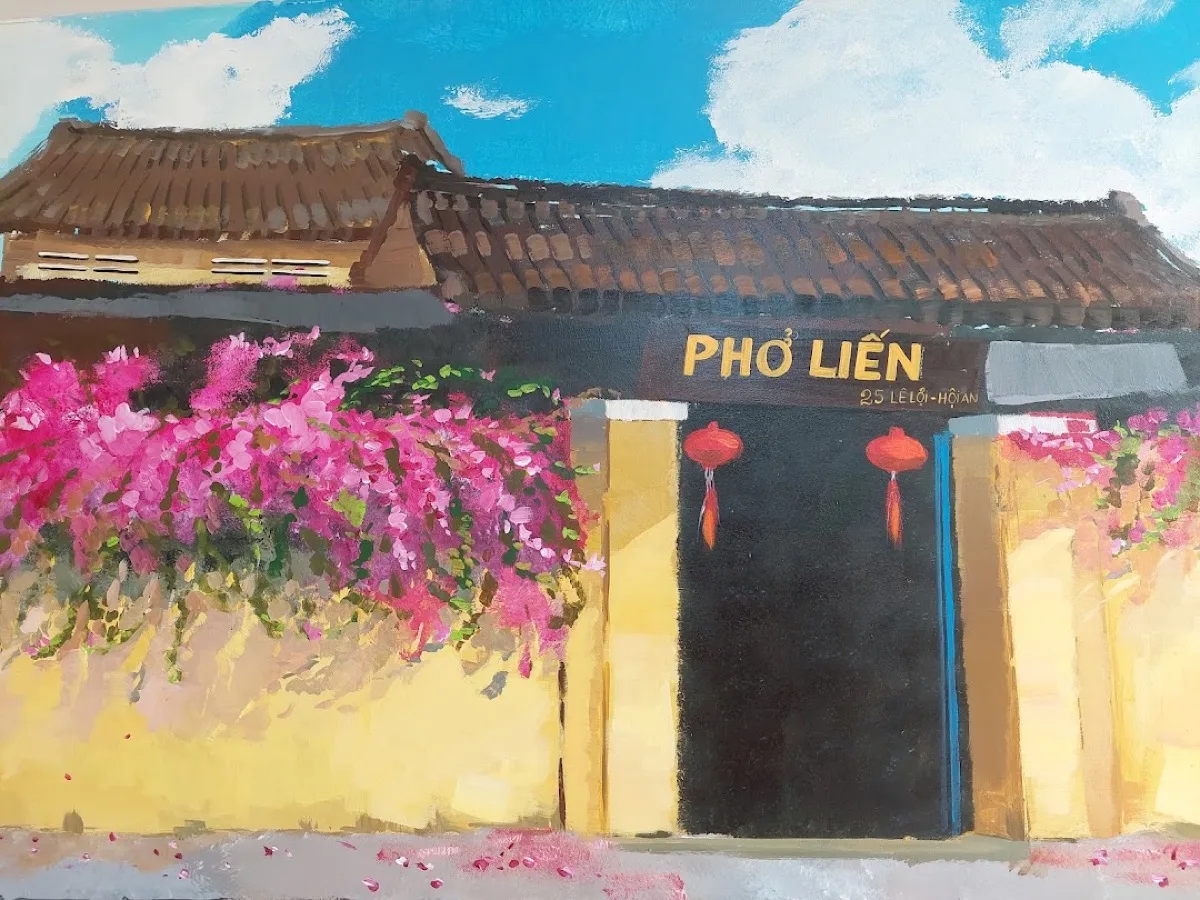
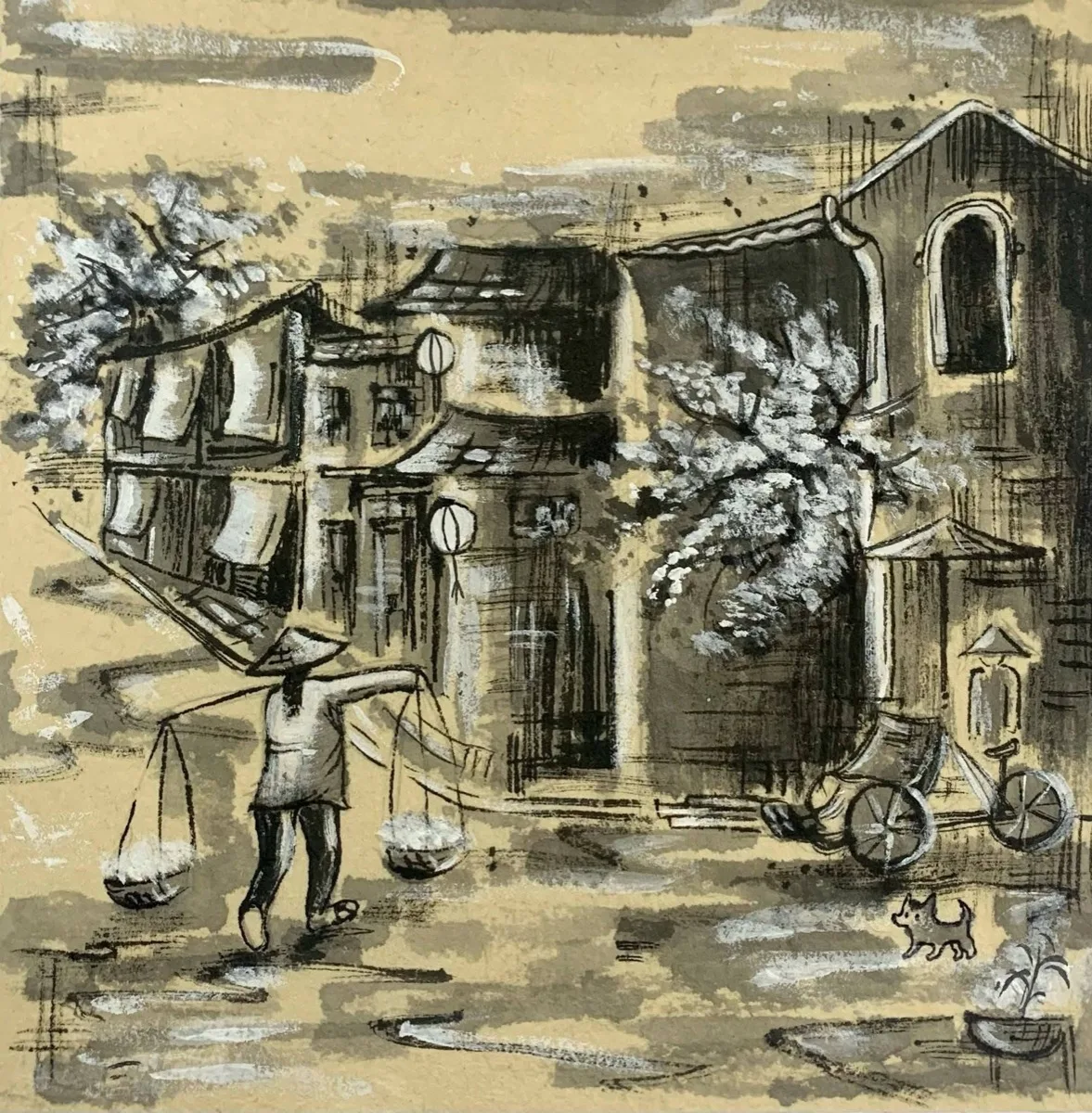
That original address no longer operates as the pho house it was — you will find it remembered in paintings of the old storefront, and in a 2017 photograph from the crew of a pho documentary, who shot Liến's noodle-making operation while it still ran. Local food writers put it plainly: "If you miss the old Phở Liến, the original shop, you could sit and eat two bowls out of nostalgia — because the old one is gone." The family's pho, however, is not. The Liến household "branched out and founded" several of the shops that cook in the same style today, and the name Liến still stands — now at 165 Lê Hồng Phong, open 5:30–10:30 in the morning and again from 16:30–20:30 in the evening, bowls from 25,000đ and a loaded special at 55,000đ.
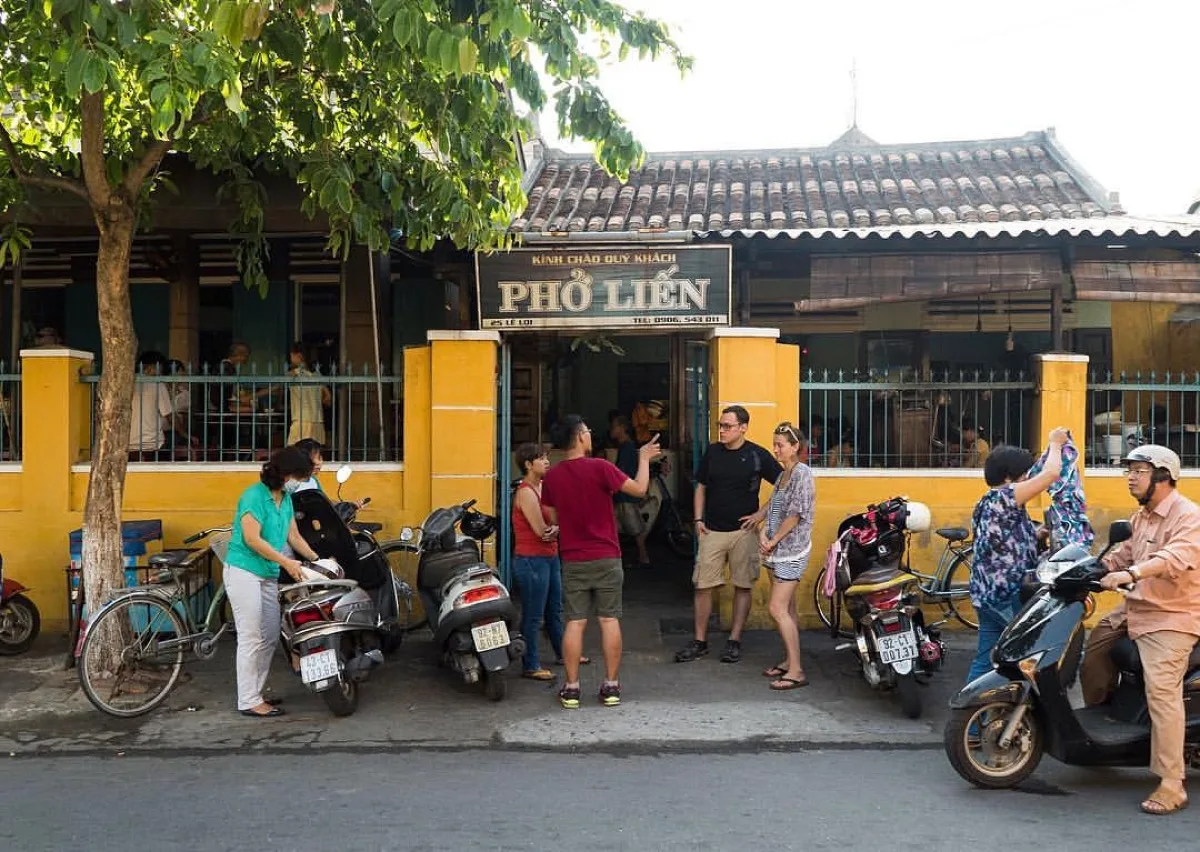
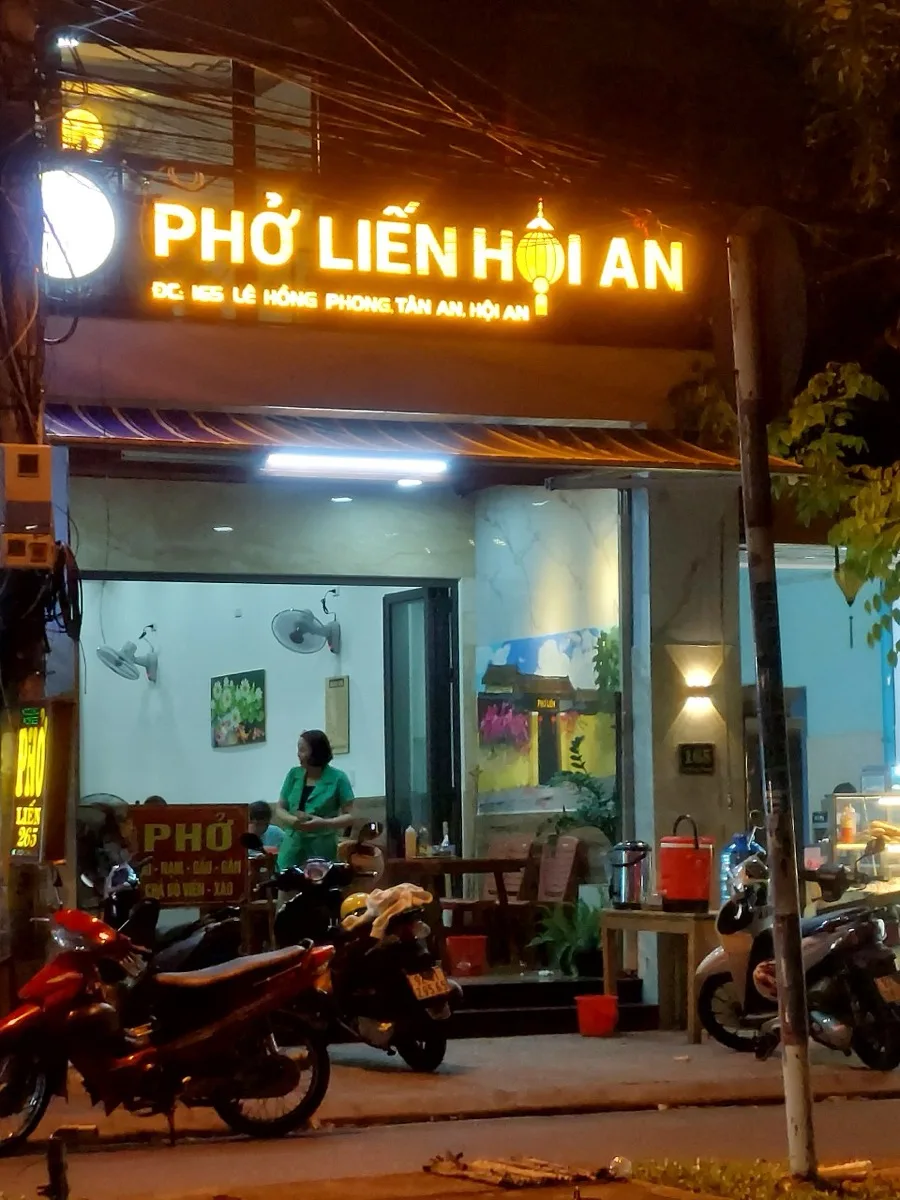
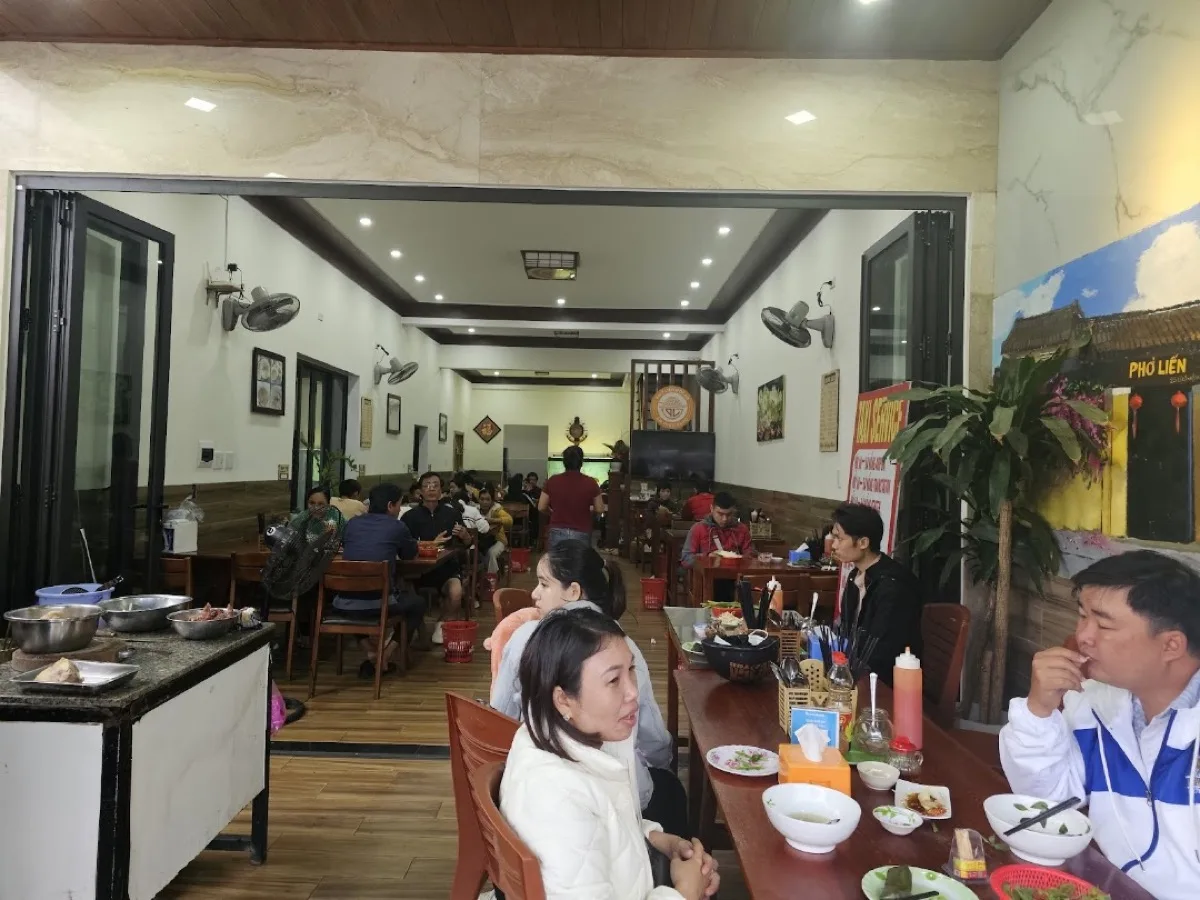
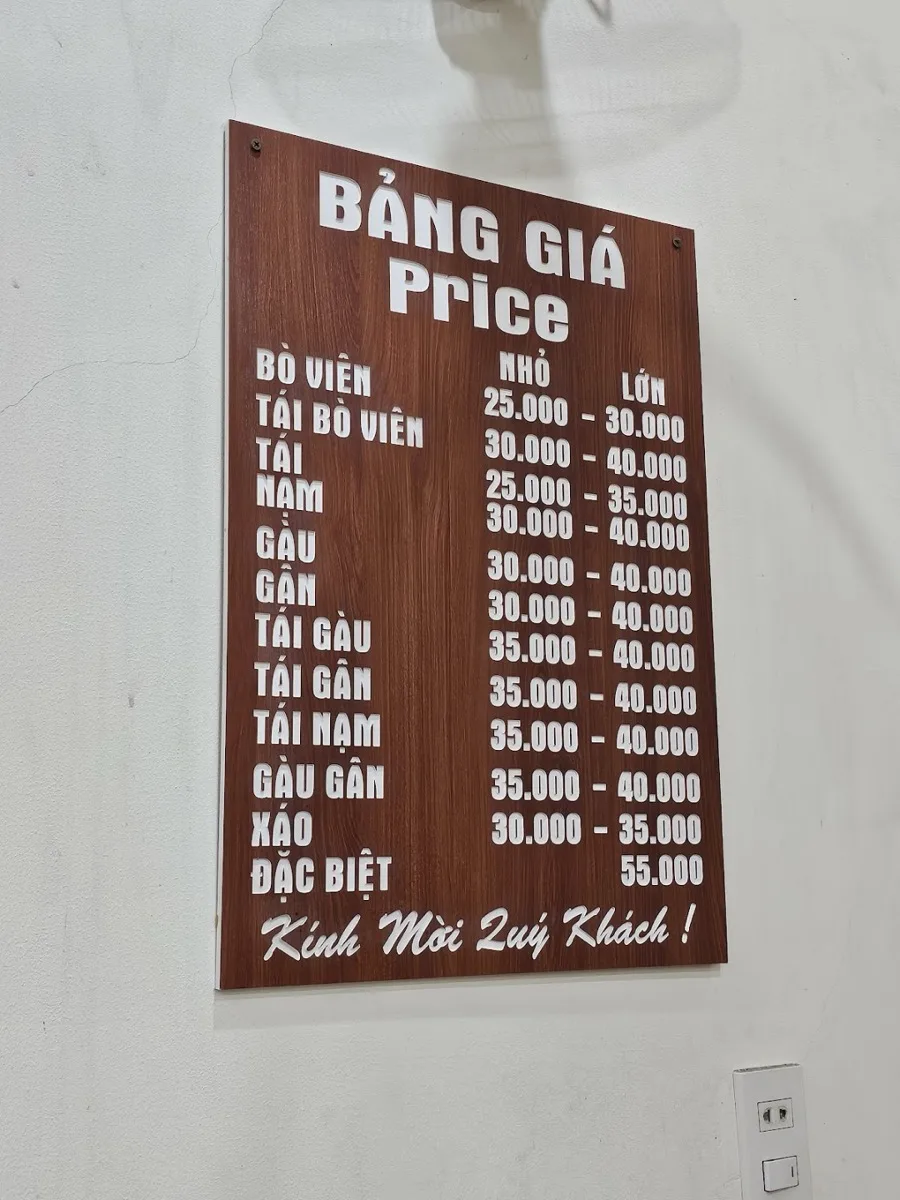
Phở Liến, past and present — swipe → · Photos via Google Maps
Who carries the Liến family recipe today?
The pho houses locals trust most form a loose family tree rooted in those first carts. Phở Tùng and Phở Mai, tucked in the lane behind đình Ông Voi on Phan Châu Trinh, descend from the old Phở Liễu line. From ông Liến's own household came Phở Tuấn, Phở Đồng Liến, Phở Tiến on Trần Hưng Đạo — and, according to local accounts, likely Phở Mười at An Hội as well. Each keeps part of the inherited craft; all of them cook to the same Hoi An palate. If a northern-style pho shop opens in town, locals say it rarely survives six months to a year. The town only eats its own.
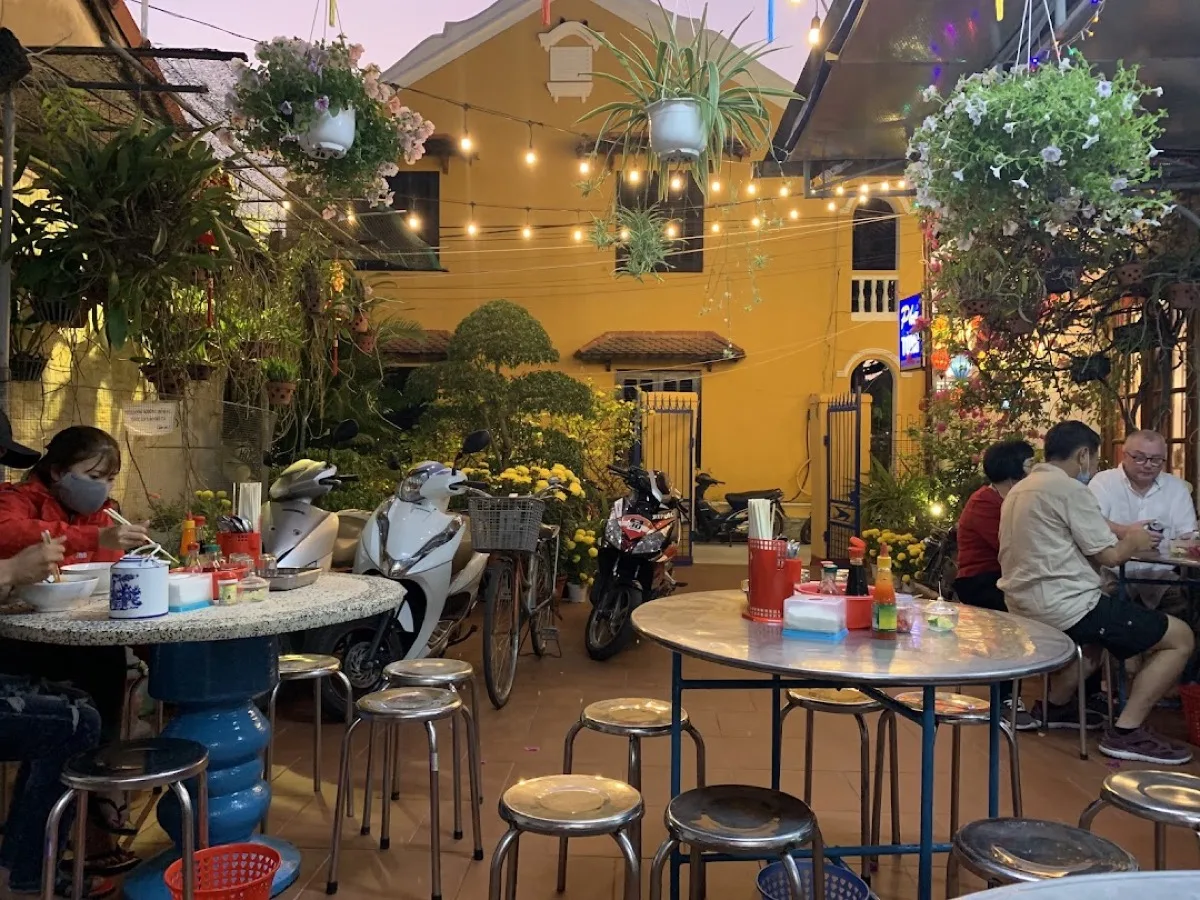
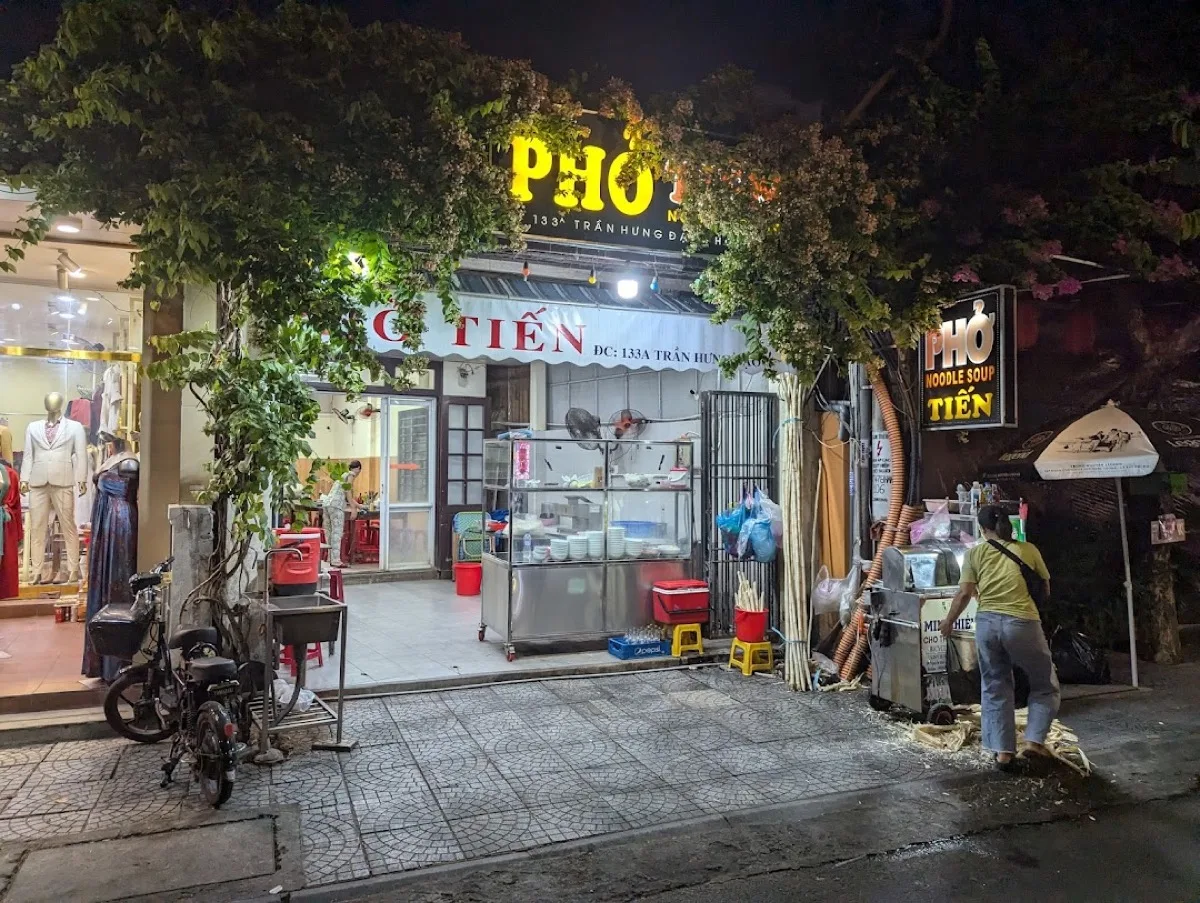
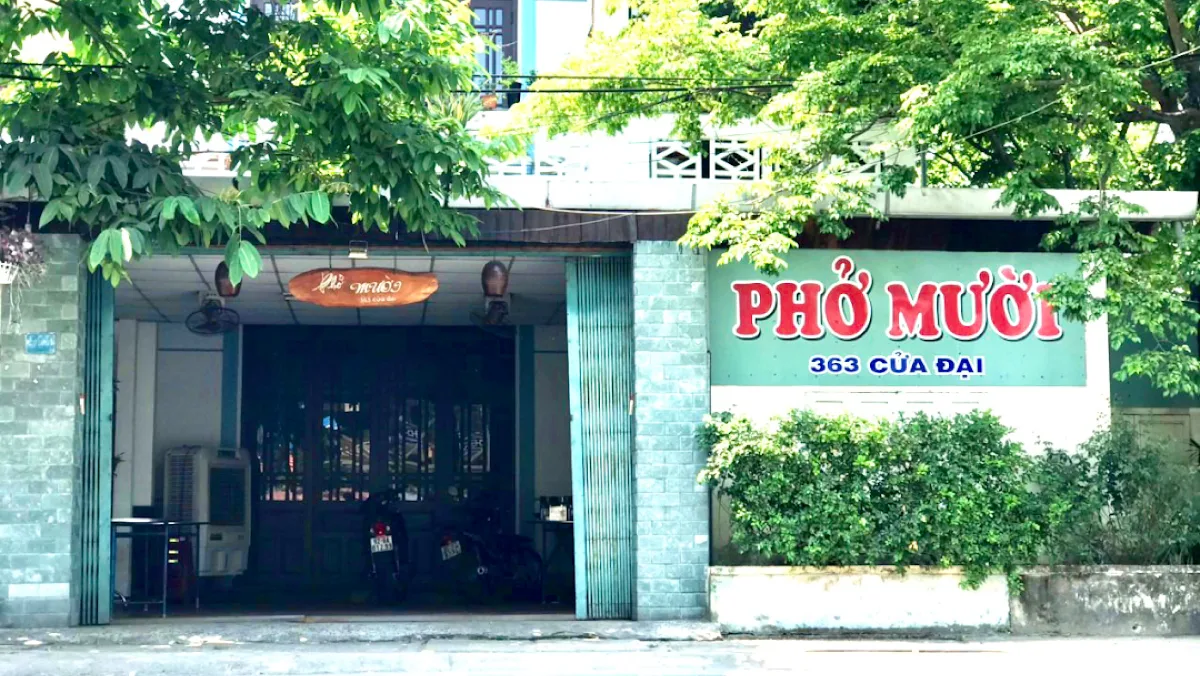
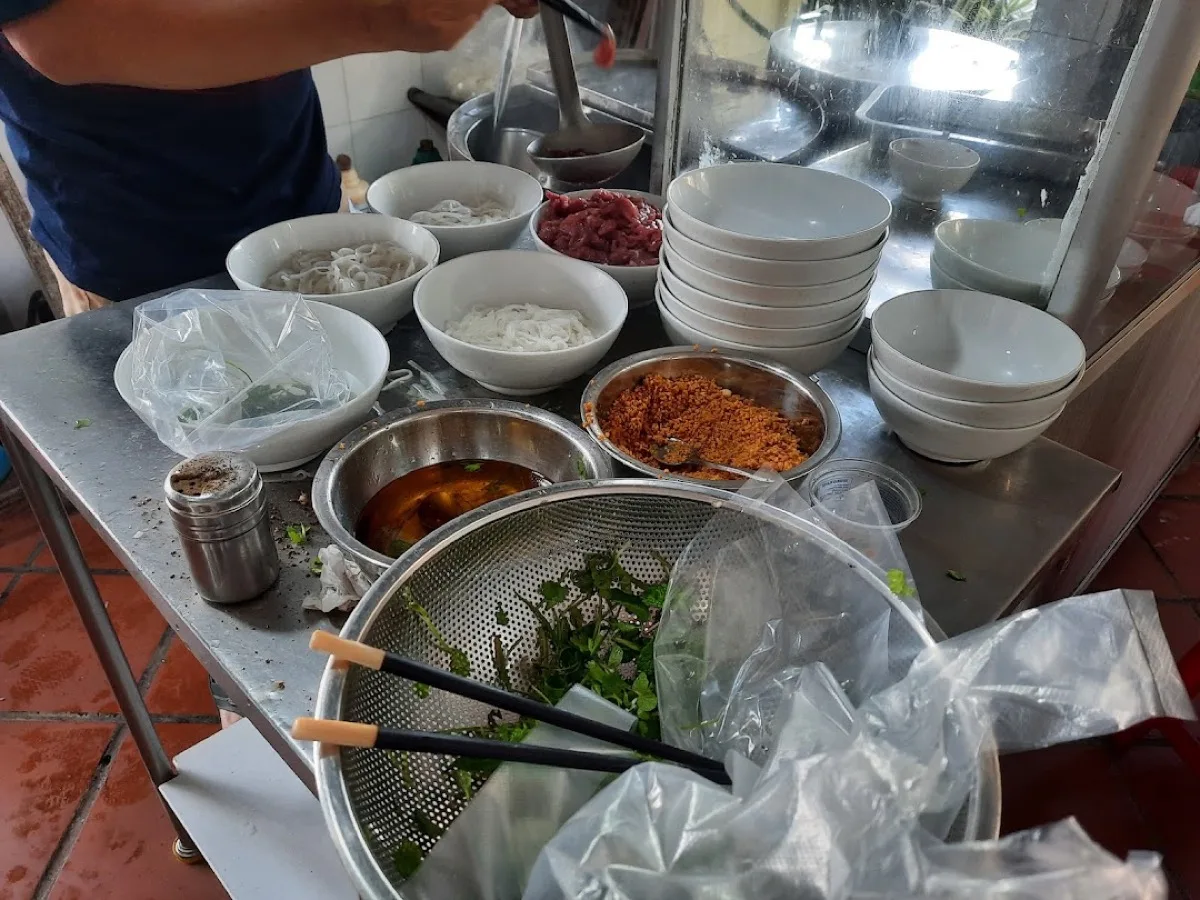
The family shops — swipe → · Photos via Google Maps
Where is Phở Đồng Liến now?
Phở Đồng Liến is one of the Liến family's most loved branches, and its address has moved. The old shop at 482 Cửa Đại is gone — its listing on review sites now carries a warning that nobody has checked in for months. The present Đồng Liến stands at 371 Cửa Đại, Cẩm Châu, open daily from 6:00 to 21:00 (phone 0982 053 442), with a 4.8-star rating on Google Maps. Its business card reads "Điểm hẹn của những kỉ niệm" — a rendezvous of memories — since 2000.
The old premises are gone, but the flavor and the family craft remain, carried by the people who inherited them. Walk in and you will see it in the details visitors mention: old photographs of the cook on the wall, a recipe that has stood the test of time, and a loyal local crowd that shows up from early morning.
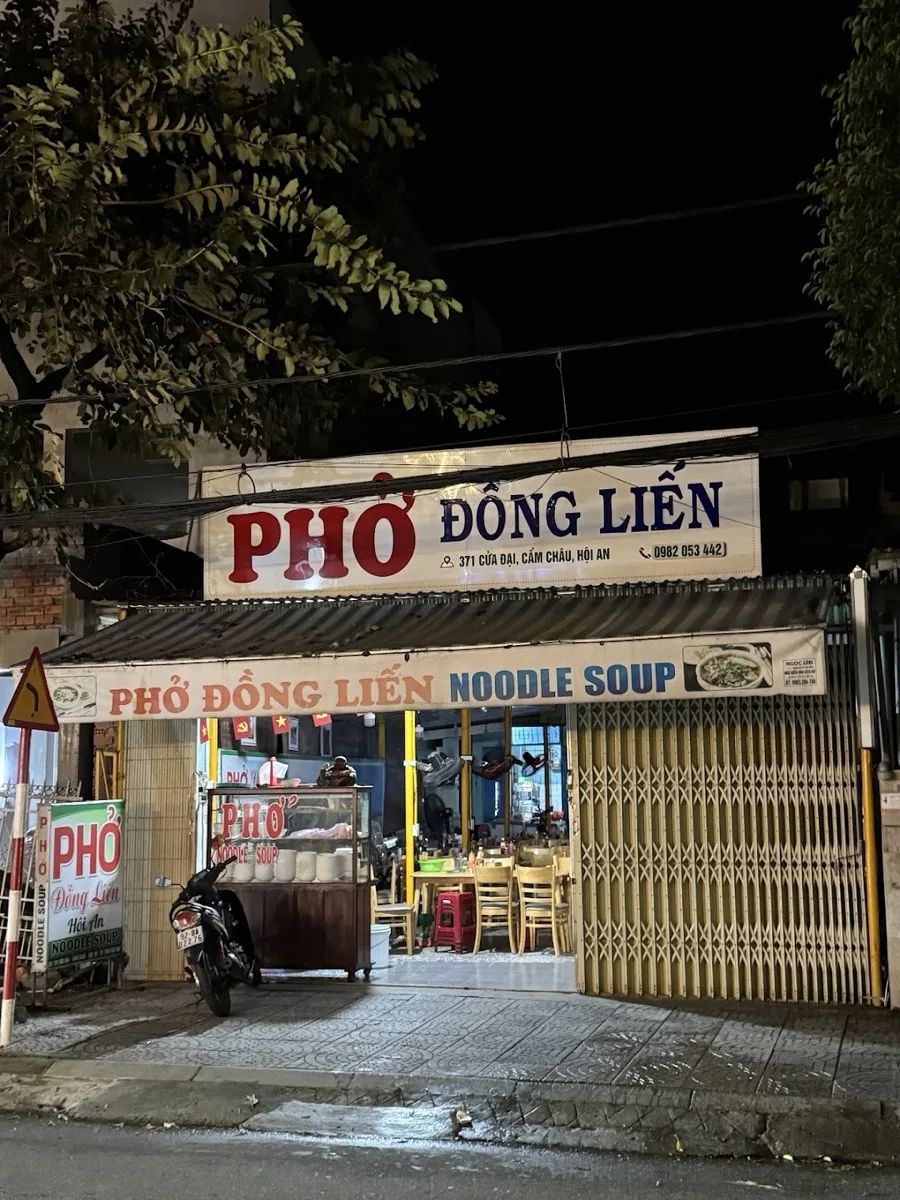
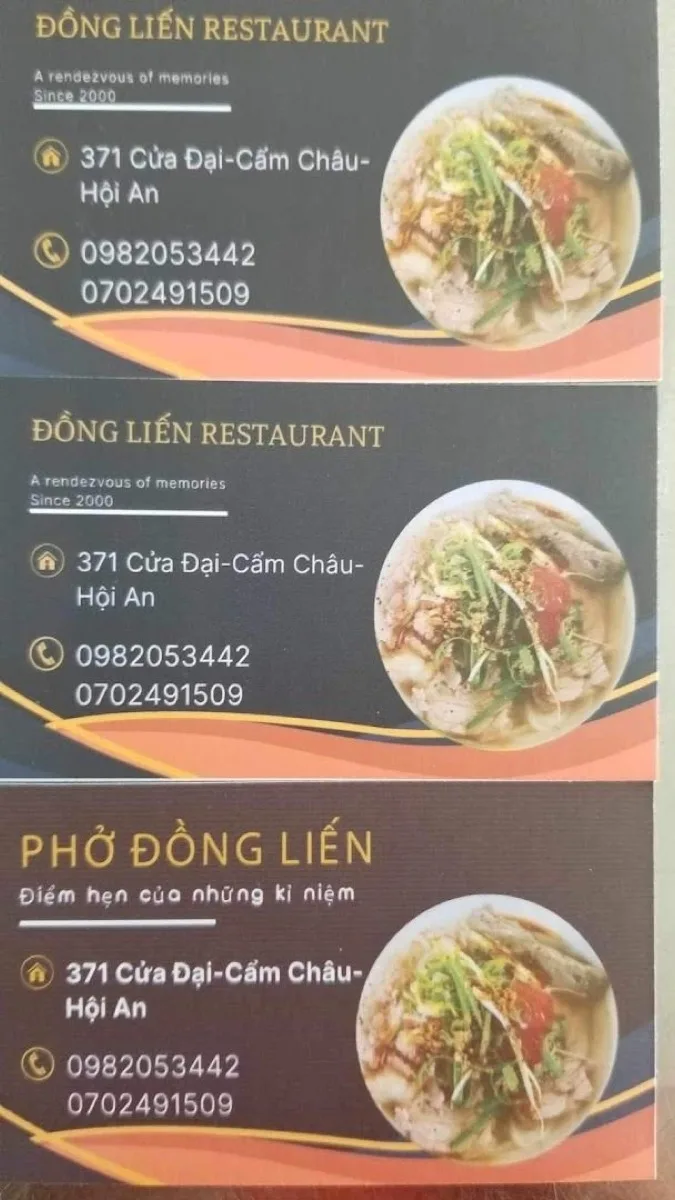
Phở Đồng Liến — swipe → · Photos via Google Maps
Which pho shop is our favorite? Fingo's personal ratings
We eat at all of these shops. These are our honest ratings as locals, not rankings borrowed from anywhere else.
| Shop | Address | Our rating | Order this |
|---|---|---|---|
| Phở Tuấn | 323 Cửa Đại | ★★★★★++ | Phở gàu nạm — our favourite bowl in town. |
| Phở Liến | 165 Lê Hồng Phong | ★★★★★ | The mother line. Go in the morning, for the story as much as the bowl. |
| Phở Đồng Liến | 371 Cửa Đại | ★★★★★ | The family flavour since 2000, and the most convenient hours. |
| Phở Tùng | 51/7 Phan Châu Trinh | ★★★★★ | Clean, true Hoi An palate. |
| Phở Tiến | 133 Trần Hưng Đạo | ★★★★★ | Same — you will not eat badly here. |
| Phở Mười | 363 Cửa Đại | ★★★★★ | The third of the Cửa Đại street shops. |
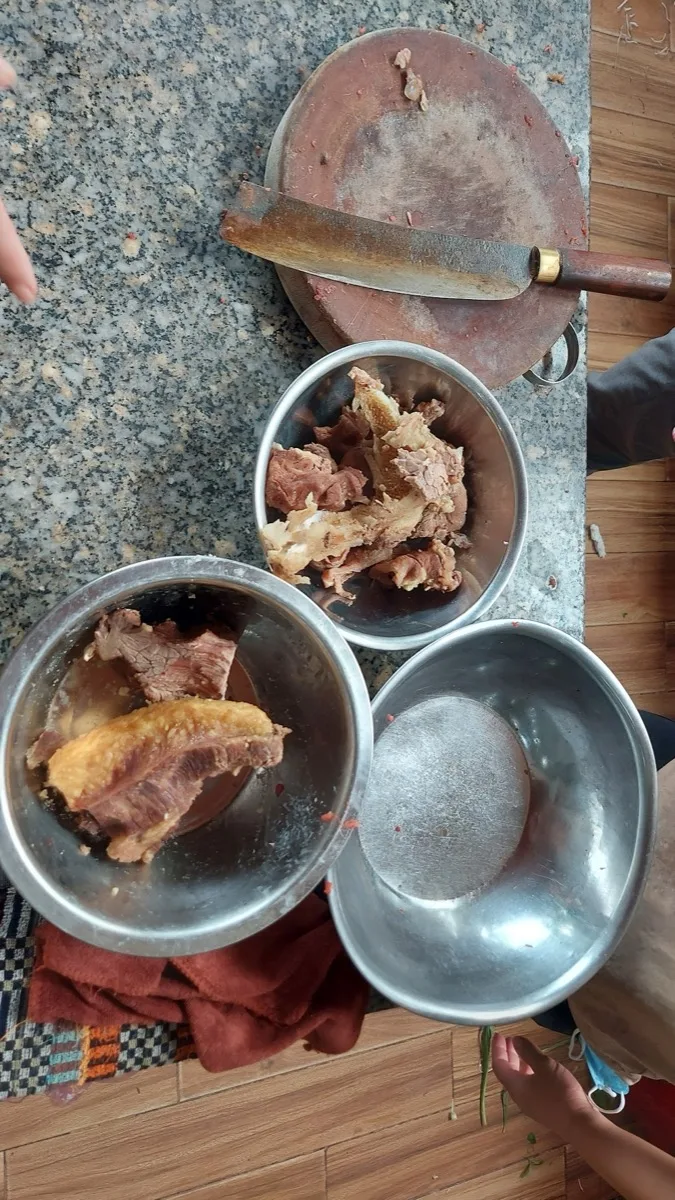
★★★★★++ — Phở Tuấn (323 Cửa Đại): our personal favorite. Tuấn's broth is the most richly flavored of any pho house in town — deep, savory, and unmistakably beefy while staying clean on the palate. Order the phở gàu nạm: the slices strike a balance between lean and fat that no other shop gets quite right, and the beef aroma runs a level above what you'll find elsewhere. For us, this is the bowl of Hoi An.
★★★★★ — Phở Liến (165 Lê Hồng Phong). The mother line of Hoi An pho. Go for the story as much as the bowl, and go in the morning.
★★★★★ — Phở Đồng Liến (371 Cửa Đại). The family flavor carried forward since 2000; the most convenient hours of the serious shops.
★★★★★ — Phở Tùng (51/7 Phan Châu Trinh), Phở Tiến (133 Trần Hưng Đạo), Phở Mười (363 Cửa Đại). Each is a clean, true expression of the Hoi An palate. You will not eat badly at any of them.
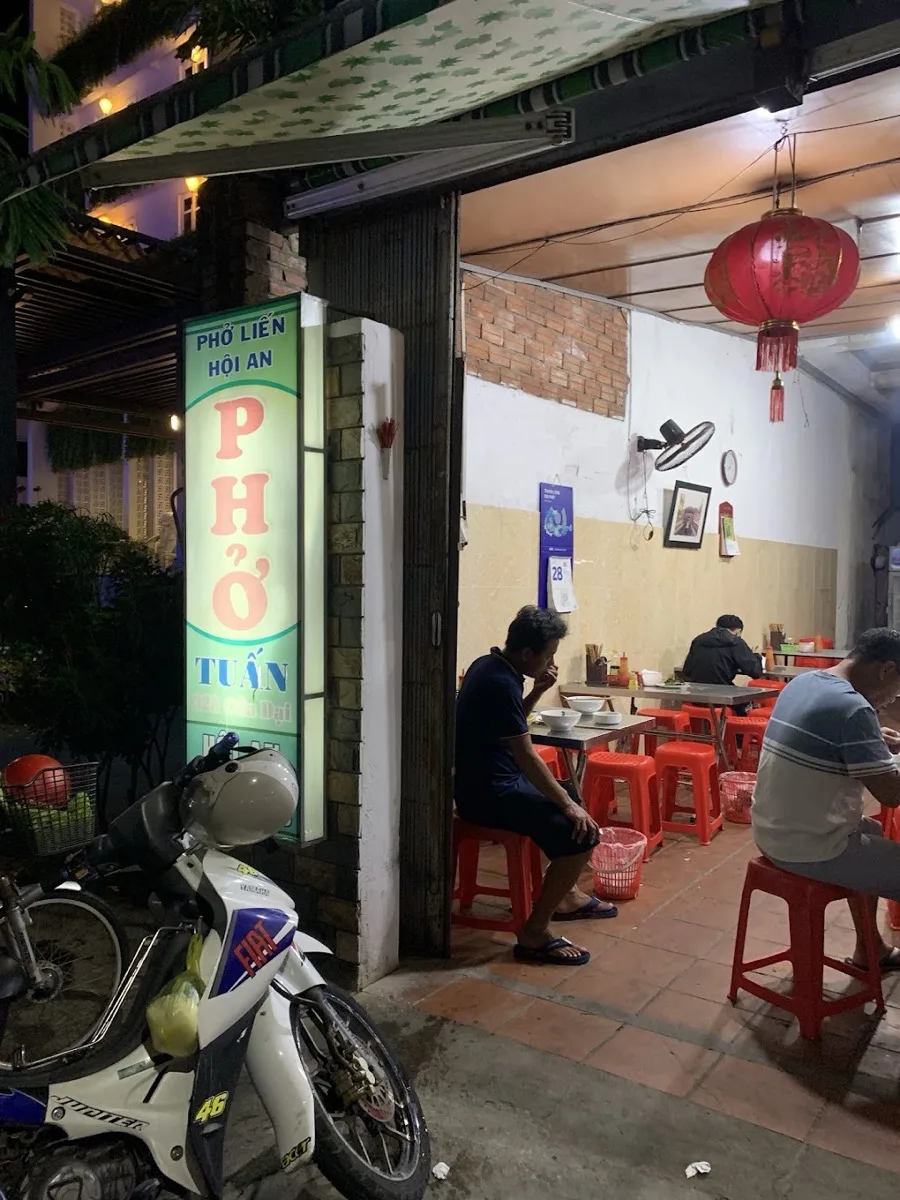
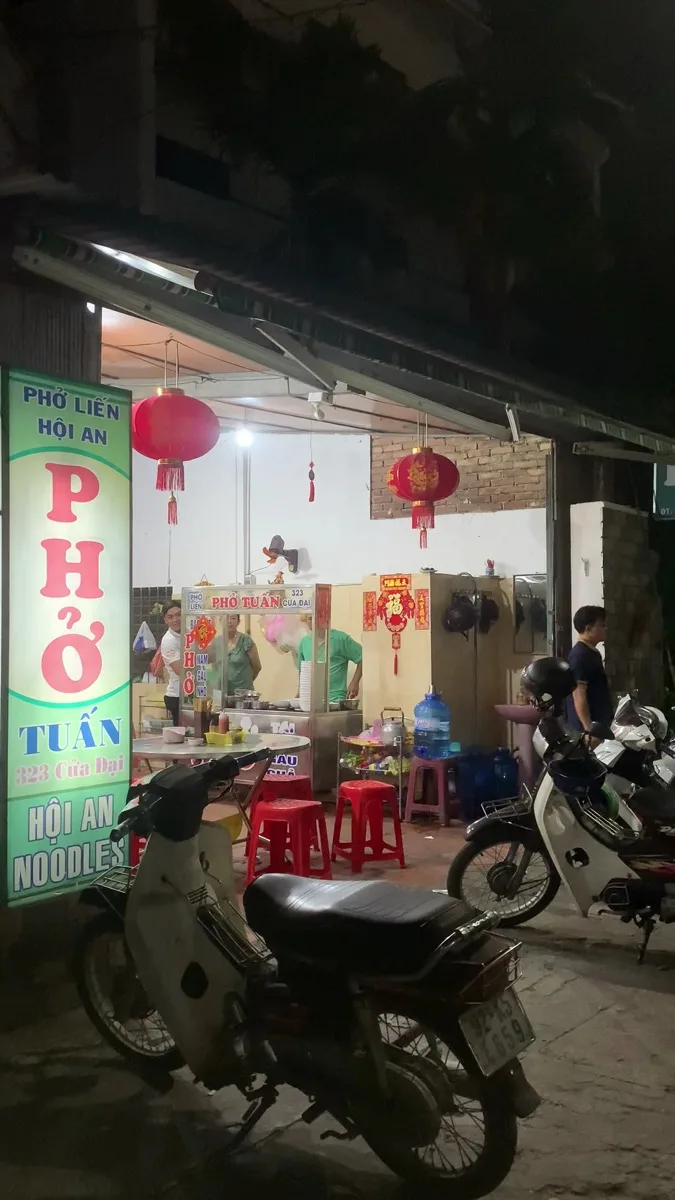
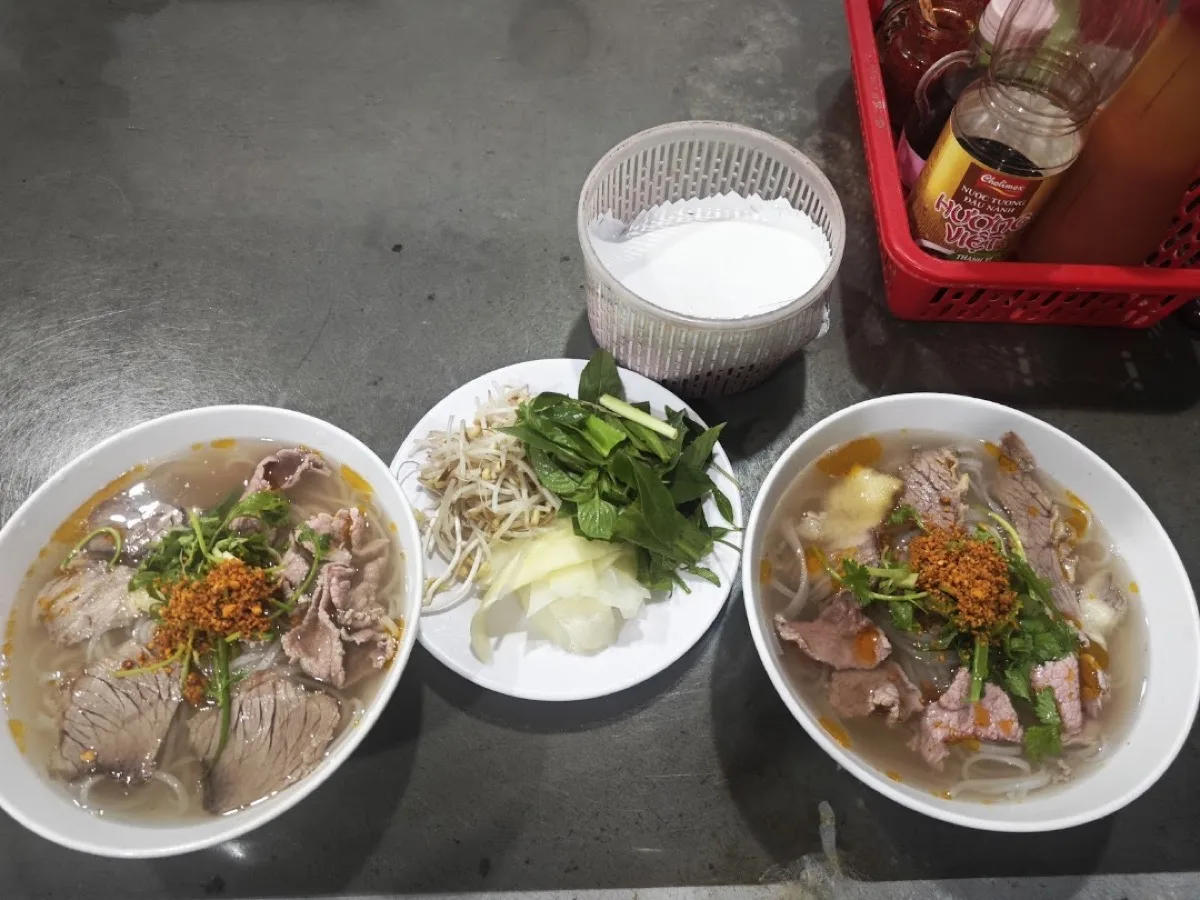
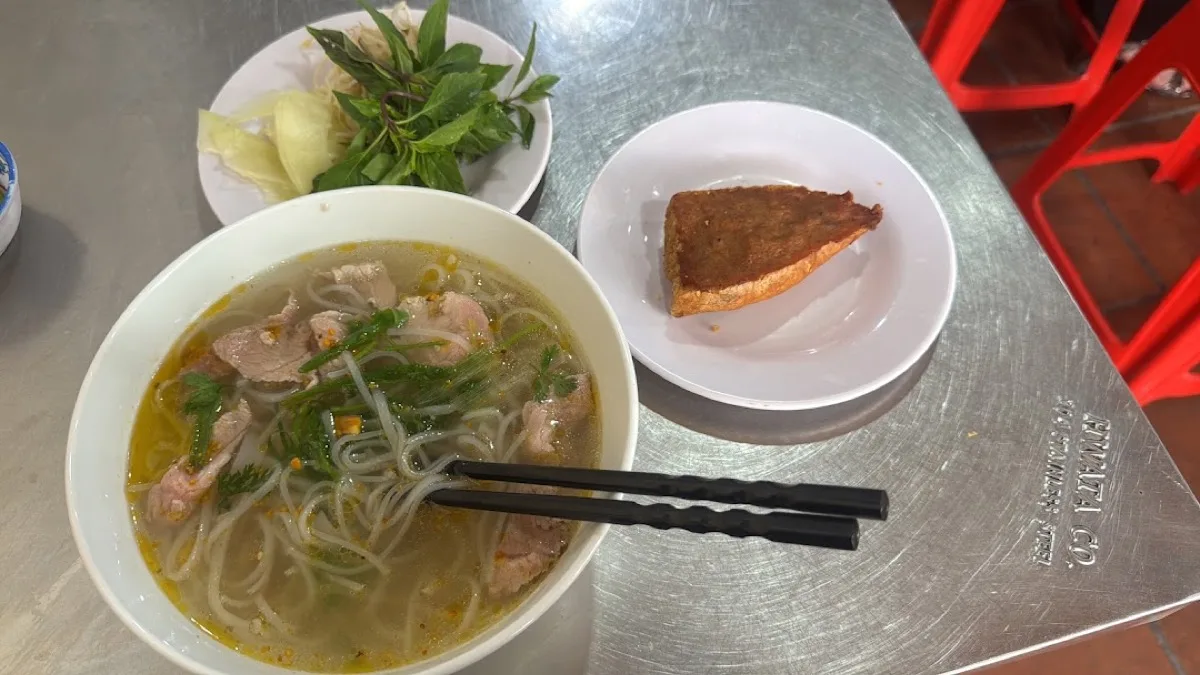
Phở Tuấn — the 5-star++ bowl — swipe → · Photos via Google Maps
What should you order, and when should you go?
Order phở tái (rare beef) for the classic experience, or gàu nạm if you want the cut of beef this town does best. Add a chén xáo if you are still hungry. Prices run 25,000–55,000 VND ($1–$2.20) a bowl almost everywhere; a fully loaded special tops out near 55,000đ at Liến.
Timing matters. Most serious shops open between 5:30 and 6:00 and sell until the stockpot runs dry — they do not brew a second pot. Before 8am you get the day's best broth. If you are planning your eating around the town's street-food clock, our Hoi An street food timing guide maps out when each vendor appears. A few shops (Liến, Tiến, Cồ Thắng, and the late-night phở spots) also serve evenings, and Đồng Liến runs straight through to 21:00. Eat the way locals do: drop the papaya pickle in a few bites at a time, tear the herbs in yourself, and let the saté dissolve before you judge the bowl.
If you want the whole picture of eating in this town — which vendor appears at which hour, and the stories behind the streets — our Hoi An food guide covers the eating clock from afternoon snacks to late-night bowls, and the Hoi An Old Town guide places it all in a day's route through the ancient town.
Fingo Private Tour — we eat these bowls most mornings, and we know which pot is freshest at which hour. Join our food tour and taste Hoi An the way locals do.
Sources: Hoi An Cultural Heritage Conservation Center research archive (hoianheritage.net, 2021–2022); Người Lao Động/Tuổi Trẻ (2021); VnExpress (2022); soi.today local accounts (2016); Google Maps listings verified July 2026.
Related planning notes: what to eat in Hoi An, Hoi An street food timing guide, Hoi An Old Town guide, and Hoi An itinerary for first-timers.
FAQ
A few practical follow-up questions
Only the questions that sit naturally inside this article are shown here, so the page stays focused.
Article FAQ
Three things: sun-dried chewy noodles instead of fresh soft ones; a clear broth with no beef-fat smell, sweetened with ripe papaya, onion, and grilled squid; and a topping of orange peanut saté with crushed peanuts, served alongside pickled green papaya instead of fried dough sticks.
The old premises at 482 Cửa Đại have closed. Phở Đồng Liến now serves at 371 Cửa Đại, Cẩm Châu, open daily 6:00–21:00, phone 0982 053 442 — the family recipe running since 2000.
No — the original 25 Lê Lợi address no longer operates as the old pho house. The Liến name continues at 165 Lê Hồng Phong, open 5:30–10:30 and 16:30–20:30, and through family branches like Phở Tuấn and Phở Đồng Liến.
Before 8am. Most shops open around 5:30–6:00 and stop when the broth runs out — there is no second pot. For evening bowls, go to Liến (from 16:30), Tiến, or Đồng Liến (until 21:00).
Between 25,000 and 55,000 VND (roughly $1–$2.20). A standard bowl is 30,000–40,000đ; a loaded special with extra beef reaches about 55,000đ.
Same topic
More in this topic
If this topic is close to your trip, these notes stay within the same planning lane without sending you off into a wider archive.
Related tours
If you want to turn the note into a real plan
These tours sit closest to the topic you just read, so the next step stays grounded in the actual route options.
Food Tour
Hoi An Street Food Tour with Local Expert
A private evening route for flavour, conversation, and a softer look at Hoi An after dark.
3 hours
Explore the Hoi An Street Food Tour with Local Expert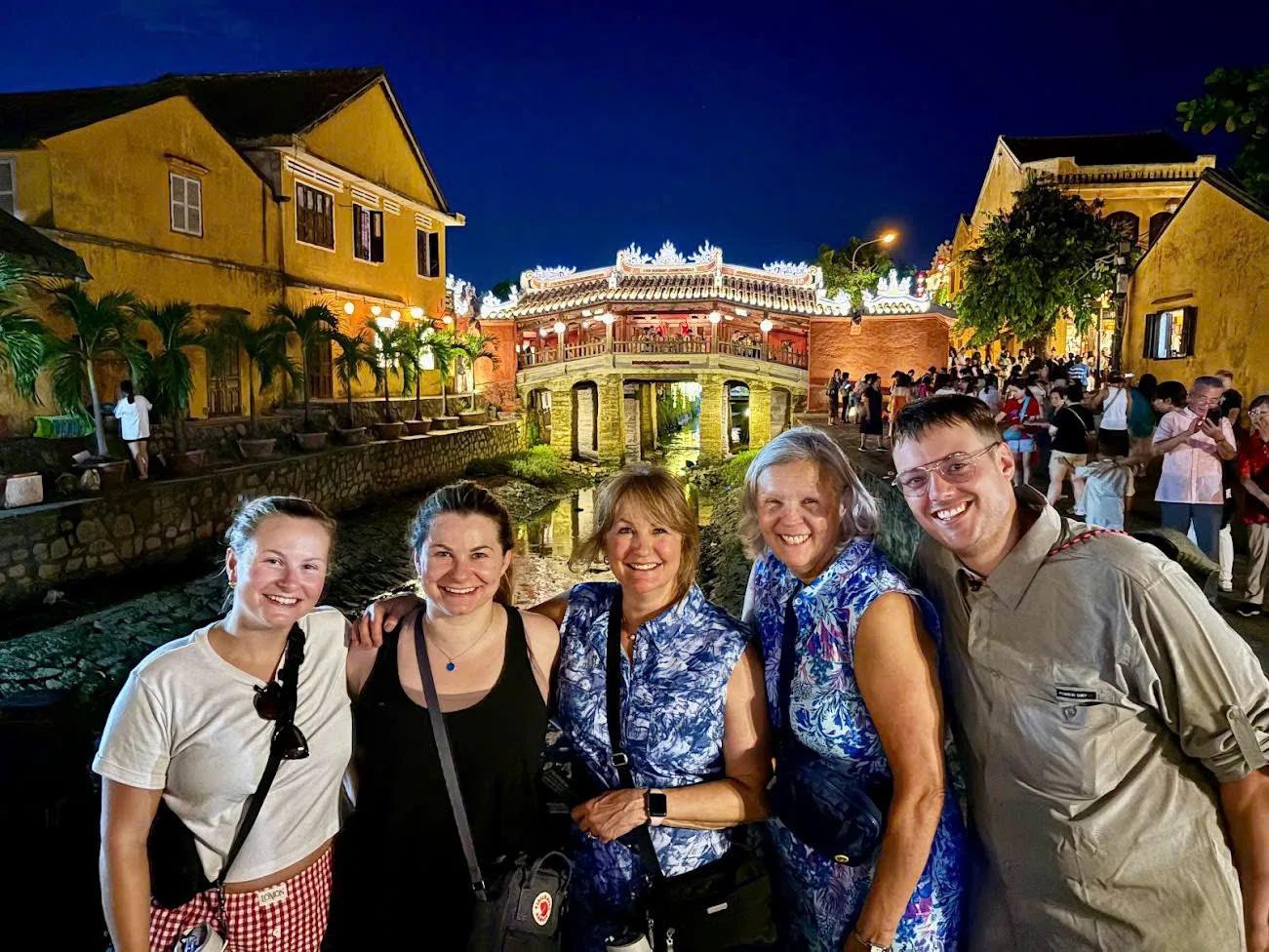
Walking & Street Food Tour
Hoi An Ancient Town Walking & Street Food Tour
Join our half-day tour to explore the best of Hội An. Walk through lantern-lit streets, visit iconic landmarks, and enjoy delicious local food.
3 to 4 hours
Explore the Hoi An Ancient Town Walking & Street Food TourHelpful next step
Use the article for context, then move into the part that fits your trip best
Some travellers want to compare tours next, while others just want to send a quick message with dates and questions. Both paths stay open here.