
Local experiences
Hoi An Local Guide: Why It Changes Your Entire Trip
Why a Hoi An local guide changes your entire trip — food vendor timing, stories behind the yellow walls, and the difference between a tour company and someone who grew up here.
Jul 23, 2026 · 12 min read

Last updated: 23 July 2026 — written by Fin, a local guide in Hoi An.
Why a Hoi An Local Guide Matters More Than a Guidebook
Most travelers arrive in Hoi An with a list: Japanese Bridge, lanterns, cao lầu. A hoi an local guide changes the entire equation. Not because the bridge is hard to find — it is not — but because the stories behind it take 400 years to unpack, and no plaque on the wall will tell you about the 8 renovations recorded since 1855, or why Lord Nguyễn Phúc Chu named it Lai Viễn Kiều in 1719.
We grew up on these streets. The yellow walls of Trần Phú, the yin-yang tile roofs darkened with moss on Nguyễn Thái Học — these are not scenery to us. They are memory. And that is exactly what a local guide gives you: context that turns a walk into a conversation with the town itself.
The Ancient Town is only 2 square kilometers. You can walk across it in 20 minutes. But walking across it and understanding it are two completely different experiences. A hoi an local guide does not add distance to your walk — they add depth.
What a Hoi An Local Guide Actually Does Differently
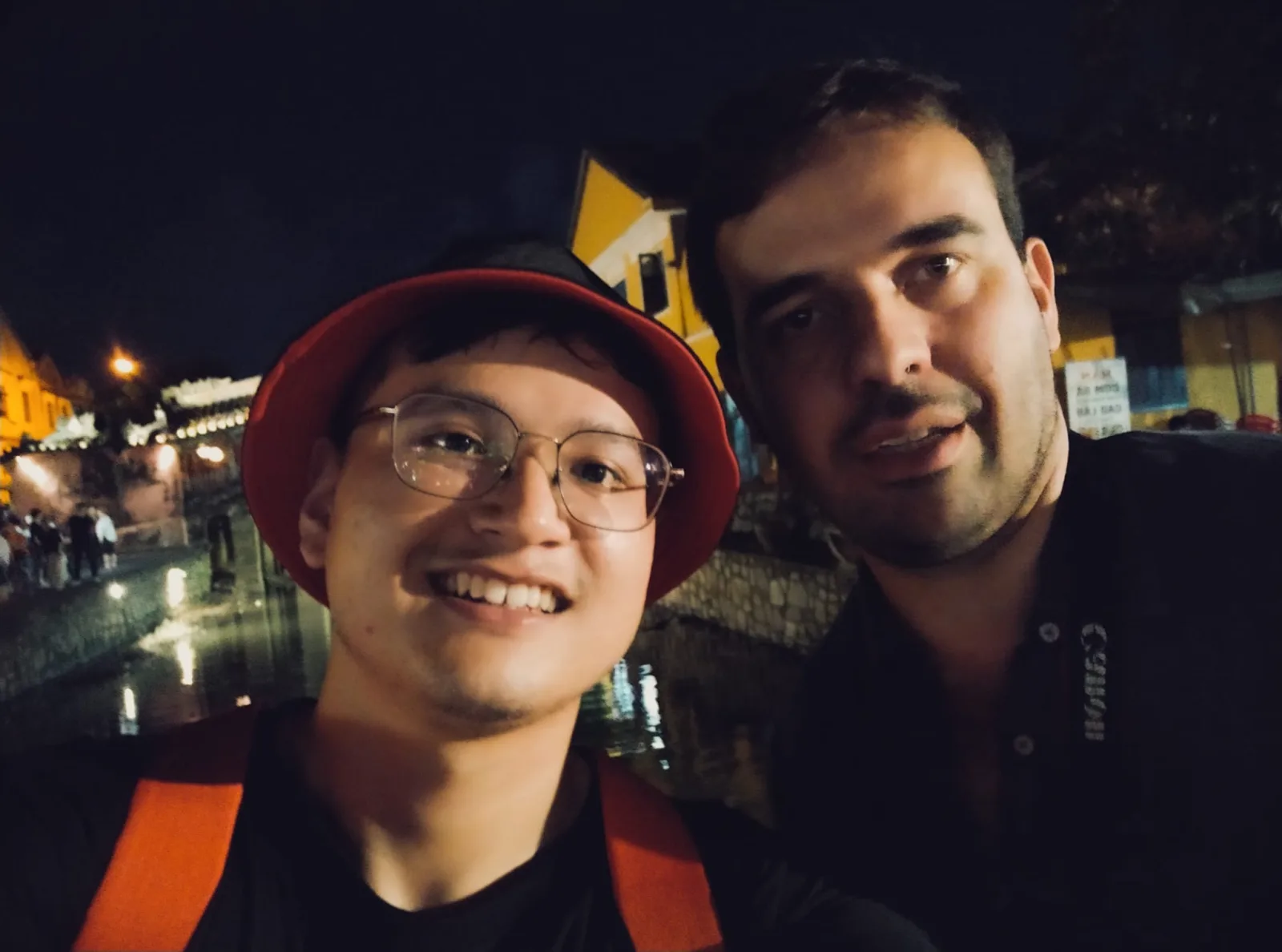
A guidebook tells you what to see. A local guide tells you when to be there, who to talk to, and what to eat at 2:30pm when the bún seller appears on Lê Lợi street.
The street food timing alone is worth it. Vendors arrive at 1pm. The bún lòng bò seller — famous for never washing her pot with soap, only boiling water, letting the beef flavor build over years — appears at 2:30pm. By 3pm, the corner of Nguyễn Thái Học and Lê Lợi is peak hour for bánh tiêu and kẹo kéo.
You will not find this in any travel blog. You find it because someone who grew up here remembers the rhythm.
Here is what a typical half-day with a hoi an local guide looks like, compared to going alone:
| Going Alone | With a Local Guide | |
|---|---|---|
| Japanese Bridge | Photo, read plaque, 10 min | 25 min — 8 renovations, Cham-Japanese trade, why the roof exists |
| Food | Eat where it looks busy | Eat where the vendor has been there 30+ years, at the right hour |
| Assembly Halls | Walk through, read English signs | Sun Yat-sen's cement-carved will behind the temple, Minh Hương history |
| Lanterns | Buy from any shop | Know which families still make them by hand vs factory imports |
| Route | Fixed, from a blog post | Adjusted to your pace, interests, and the weather that day |
The difference is not information. It is curation. A local guide filters 500 years of history into the 3 stories that will actually stick with you.
The Stories Behind the Yellow Walls
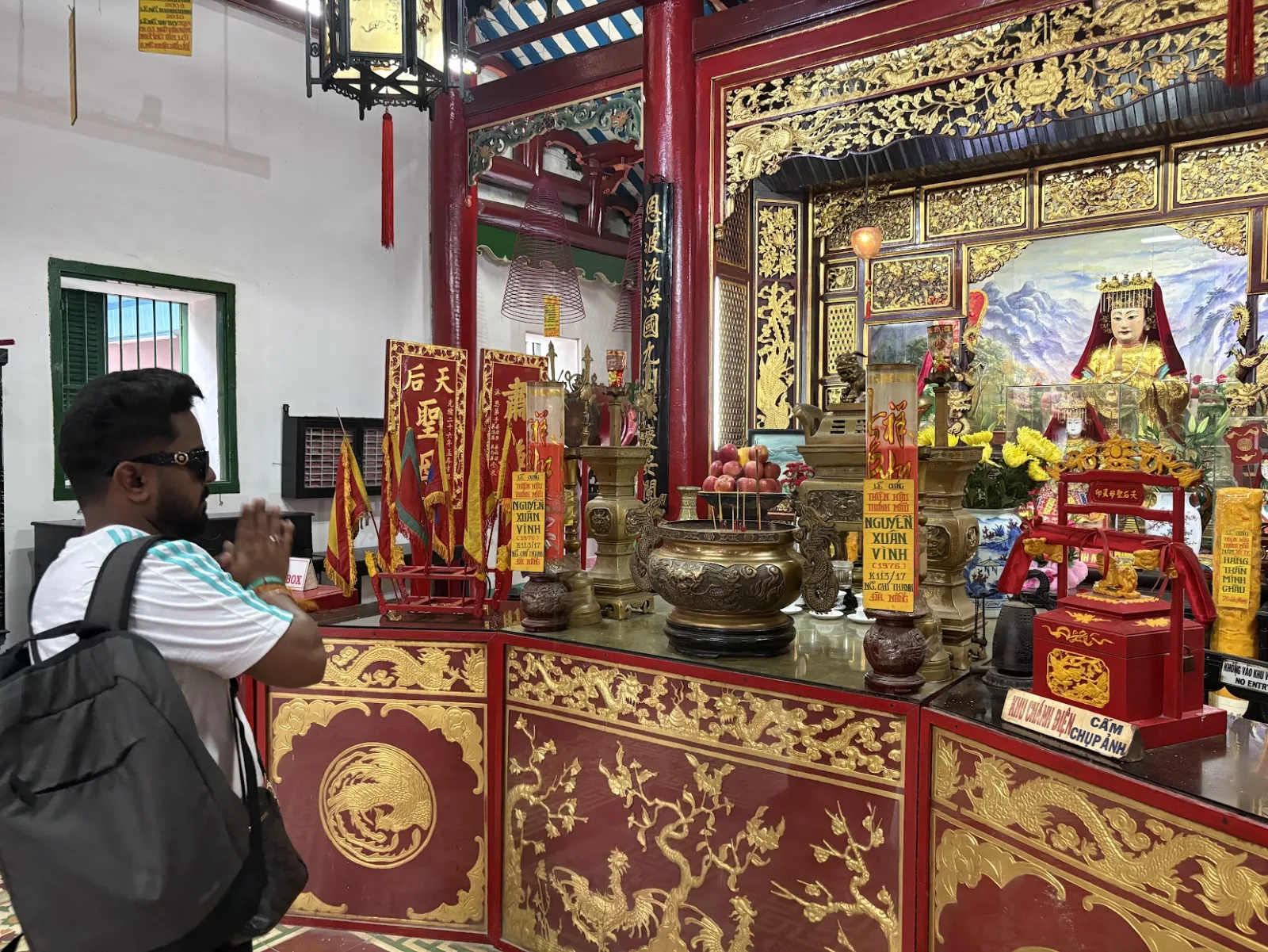
Hoi An's Ancient Town is a UNESCO World Heritage Site, but the designation barely scratches the surface. The Trung Hoa Assembly Hall at 64 Trần Phú was possibly built during the Ming Dynasty (1465-1487). It served as a wholesale market and warehouse 350+ years ago for trade between Cham people and foreign merchants — European, Asian, Middle Eastern, Indian.
Behind the temple sits Sun Yat-sen's cement-carved will. Most visitors walk right past it. A hoi an local guide will stop you at the doorway, point to the back courtyard, and tell you why a Chinese revolutionary's last words are carved in cement in a small Vietnamese town.
Then there is Kazik — Kazimierz Kwiatkowski, the Polish architect who dedicated 16 years to preserving Mỹ Sơn and Hoi An. His principle of maximum preservation of original structures is the reason Hoi An looks the way it does today. Without him, there would be no UNESCO recognition. His memorial sits at Kazik Park, 138 Trần Phú. Most tourists walk past it daily without knowing who he was.
The Phùng Hưng Old House has been lived in by the same family for 8 generations. The current owner will tell you about the flood marks on the second floor — water levels from 1964, 1999, 2007. No museum exhibit captures that. A conversation does.
A local guide weaves these stories into the walk naturally. You do not get a lecture. You get a conversation that happens to pass through 500 years of history.
Food: Where and When, Not Just What
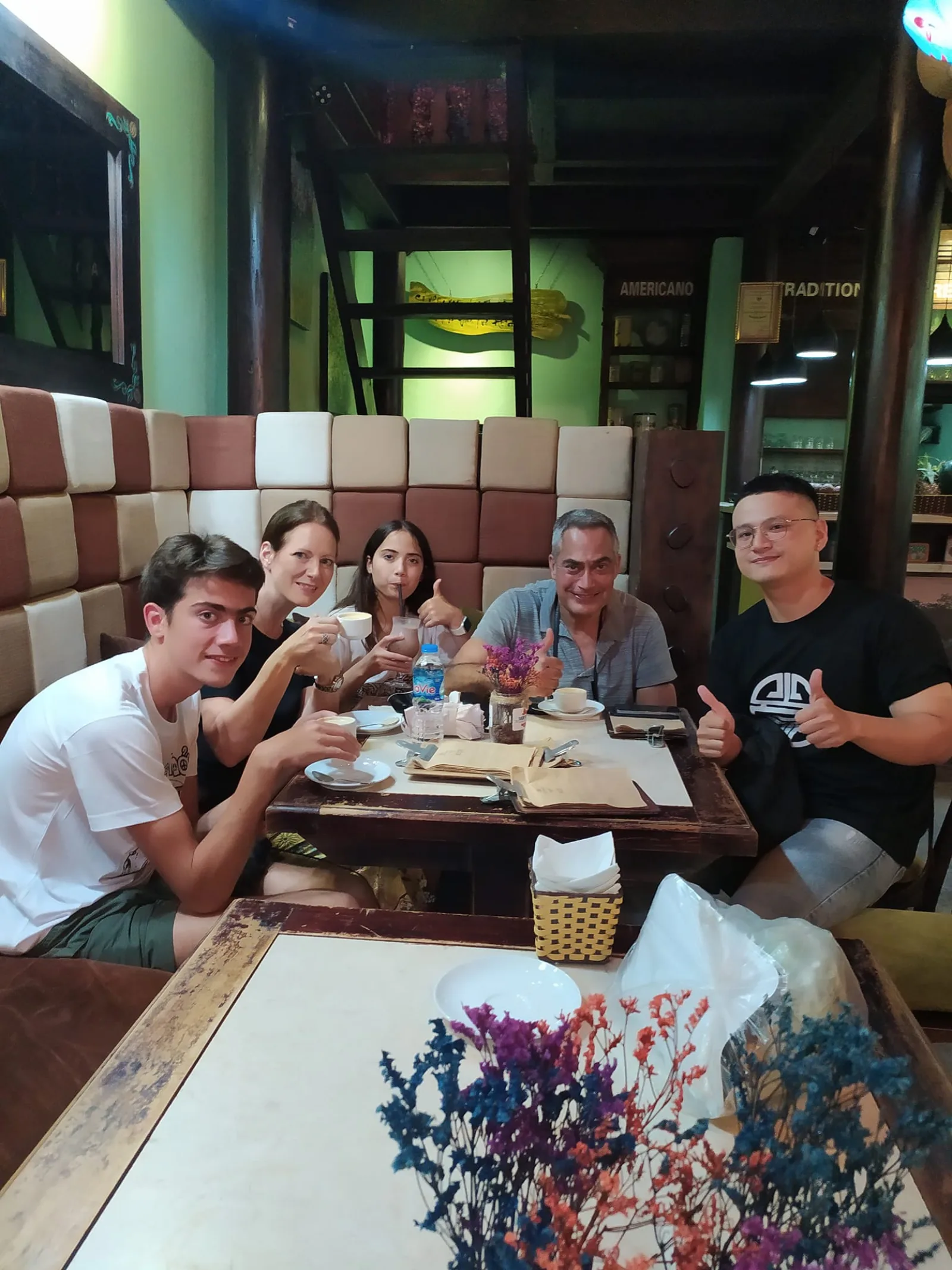
Cao lầu is Hoi An's signature noodle dish. Every blog tells you that. What they do not tell you is that the best bánh bao bánh vạc (White Rose) was named after the shape of old money pouches and wok handles — and that the translation origin is still unclear even to locals.
Bà Mẹo's bánh bèo tôm chấy — tiny rice cakes the size of bottle caps with dried shrimp topping — was a recipe lost when she passed. No one replicated it exactly. A hoi an local guide knows which current vendors come closest, and which ones to skip.
The food timing is the real secret. Hoi An eats on a schedule that has not changed in decades:
- 6:00–8:00am: Bánh mì stalls open. The famous ones sell out by 9am.
- 11:00am–1:00pm: Cao lầu and cơm gà. The broth for cao lầu must use water from the Bá Lễ well — a local guide knows which vendors still source it.
- 1:00–2:30pm: Street vendors appear. Bún, bánh xèo, chè.
- 2:30–4:00pm: Peak street food hour. Bánh tiêu, kẹo kéo, tàu hủ.
- 5:00–9:00pm: Night market and riverside. Lantern-lit, tourist-heavy, but the good stalls are still there if you know where to look.
This is the difference between eating in Hoi An and eating with Hoi An. A food tour with a local guide is not a restaurant list — it is a clock.
How to Find a Genuine Hoi An Local Guide (Not a Salesperson)
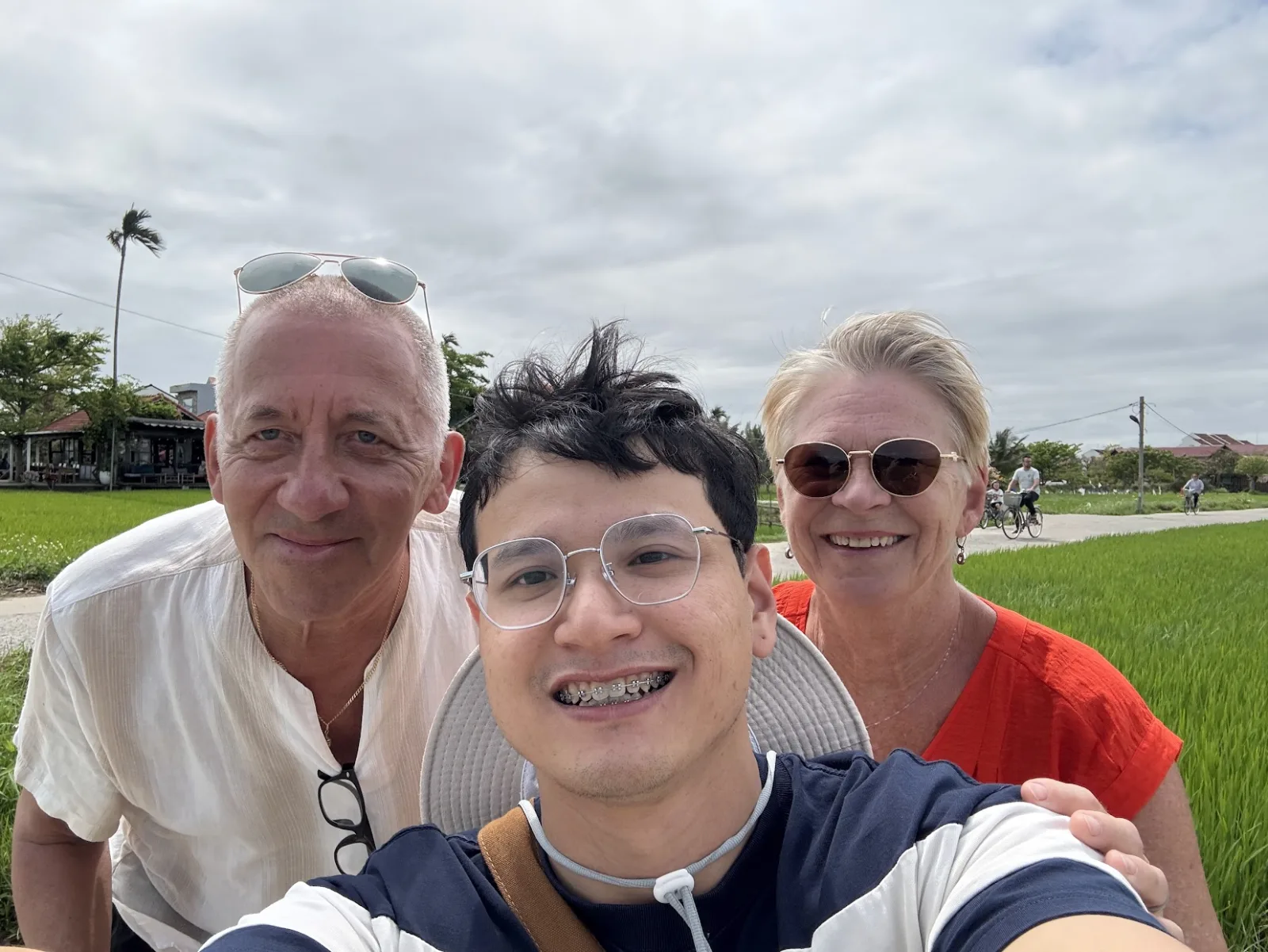
Not every "local guide" is local. Some are salespeople with a script. Here is how to tell the difference:
- They mention specific streets, timings, and names — not just "ancient town" and "lanterns"
- They adjust the route based on your interests, not a fixed script
- They know the food vendors by name and schedule — "the bún seller appears at 2:30" not "we will try local food"
- They can tell you the story behind a building without reading from a phone
- They grew up here — ask where they went to school. A real local guide will name a specific school on a specific street.
Red flags to watch for:
- Guides who steer you toward specific shops for commission
- "Tours" that are mostly shopping stops
- Anyone who cannot name a single food vendor by name
- Fixed itineraries that do not change based on weather, time, or your interests
We are a team born and raised in Hoi An. Our walking routes are not itineraries — they are the paths we took to school, to the market, to the river. See our walking tour route or browse all tours.
Local Guide vs Tour Company: What Is the Actual Difference?
This is the question travelers ask most, and the answer matters for your budget and your experience.
Tour companies (GetYourGuide, Klook, Viator) sell standardized products. You get a fixed itinerary, a group of 10-20 people, and a guide who may or may not be from Hoi An. The price includes their platform commission (20-30%). You cannot customize the route, and the food stops are pre-arranged restaurants, not street vendors.
A hoi an local guide working directly (like us) offers:
- Private groups (just your party, no strangers)
- Routes adjusted to your interests, pace, and the weather
- Street food vendors, not tourist restaurants
- Direct WhatsApp booking — no platform commission, lower price
- The guide's actual childhood memories, not a company script
The price difference is real: a private walking tour with a local guide starts at $22 per person. The same route through a platform costs $35-50, and you share the guide with 15 other people.
A Day in the Life: What You Actually Experience
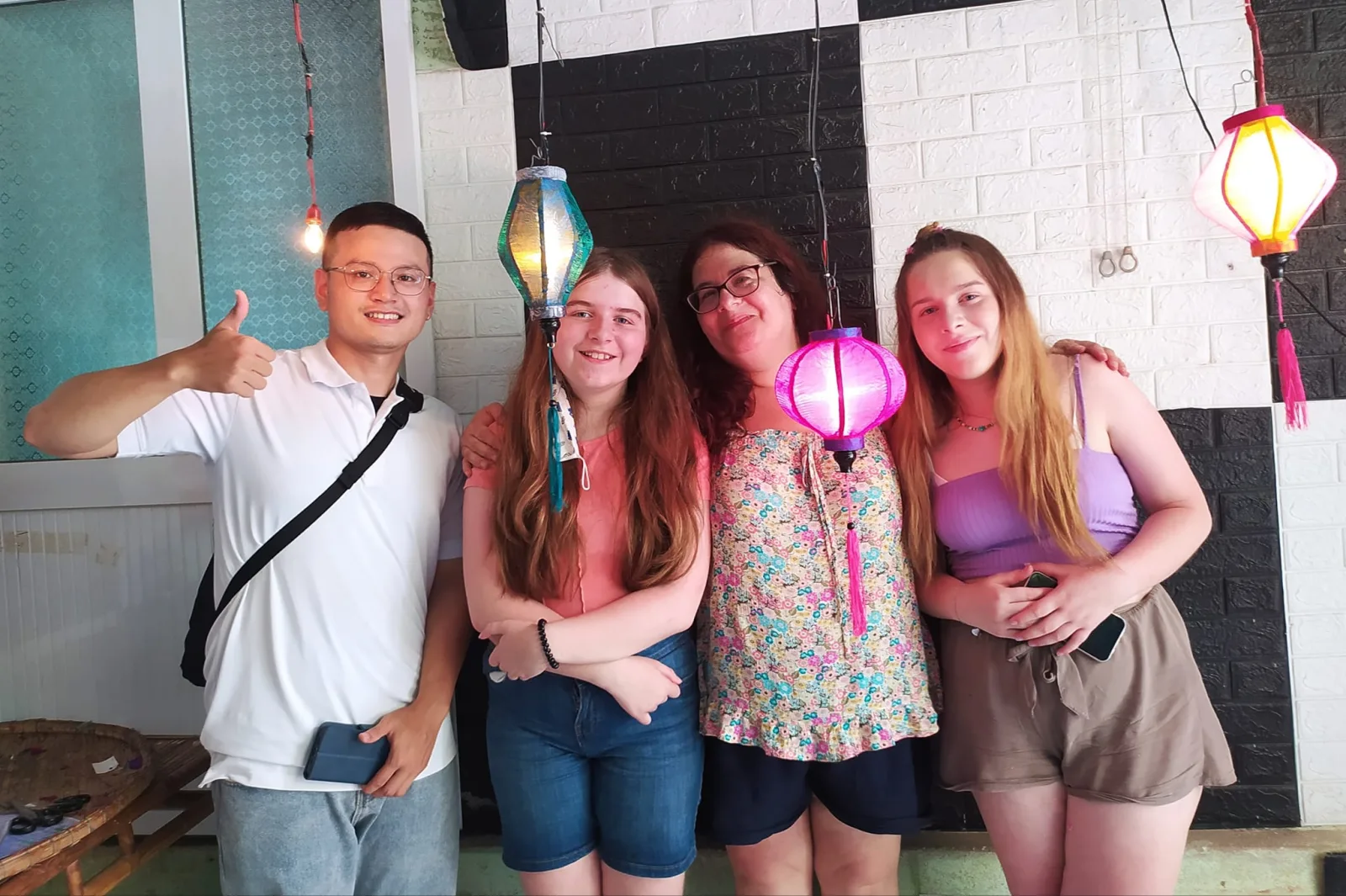
Let us walk through a real morning with a hoi an local guide, so you know exactly what to expect.
7:00am — Meet at the Japanese Bridge. The Old Town is empty. No tourists, no lantern sellers, no selfie sticks. Just the sound of brooms on tile floors and the smell of phở from a stall on Nguyễn Thái Học. Your guide — someone who walked this bridge to school every day for 12 years — tells you about the 1719 renovation, the Cham-Japanese trade route, and why the small temple attached to the bridge faces north.
8:00am — Trần Phú street. The assembly halls are opening. You walk into the Phúc Kiến Assembly Hall before the tour groups arrive. Your guide points to the incense coils hanging from the ceiling — each one burns for 30 days, sponsored by a family. The smoke is not decoration. It is a prayer with a deadline.
9:30am — Back alleys. This is where the guidebook ends. You walk through a 200-year-old house where a family still makes lanterns by hand. The grandmother bends bamboo frames while her daughter paints silk. No ticket, no museum sign. Just a conversation in a workshop that has operated since before the French arrived.
11:00am — Food. You sit on a plastic stool at a cao lầu stall where the owner's family has used the same recipe for three generations. The noodles are made with water from the Bá Lễ well and ash from Cham Island trees. Your guide orders for you in Vietnamese, and the owner brings an extra plate of herbs because "the foreigner looks hungry." This does not happen when you order from an English menu.
1:00pm — The rhythm shifts. Vendors appear. Your guide knows exactly where the bánh xèo seller sets up (corner of Lê Lợi and Nguyễn Thái Học), and that she sells out by 2:30pm. You eat standing up, watching the town transition from morning commerce to afternoon rest.
3:00pm — The river. You end at the Thu Bồn river. Fishermen are mending nets. A woman is washing vegetables in the shallows. Your guide tells you about the flood of 1999 — water up to the second floor of every house on Bạch Đằng street. The marks are still there if you know where to look.
This is not a tour. This is a Tuesday.
When You Do NOT Need a Local Guide
Honesty matters. You do not need a hoi an local guide if:
- You only want photos of lanterns and the bridge — those are visible from any angle
- You prefer complete silence and solitude — the Old Town at 6am is empty and beautiful
- You are a history researcher with access to academic archives — you already know more than we do
- You have lived in Hoi An before and just want to revisit familiar streets
For everyone else — first-time visitors, food lovers, history-curious travelers, families with kids who ask "why?" at every building — a hoi an local guide turns a nice walk into a story you will retell for years.
The investment is small. A half-day private walking tour costs less than a cocktail at a beach resort. The stories last longer than any souvenir. And the food — eaten at the right time, at the right stall, ordered in the right language — tastes different when someone explains why it exists.
Hoi An has been welcoming traders, travelers, and curious strangers for 500 years. The town does not need another tourist. It needs someone willing to listen. A hoi an local guide is the translator between you and a town that has been telling its story for five centuries — you just need someone who speaks its language.
If you are planning a trip to Hoi An and want to experience the town the way locals do — the food timing, the hidden courtyards, the stories behind every yellow wall — message us on WhatsApp. We will build a route around your interests, your pace, and the weather that day. No scripts, no shopping stops, no strangers in your group.
Related planning notes: things to do in Hoi An, what to eat in Hoi An, Hoi An Old Town guide, and Hoi An itinerary for first-timers.
FAQ
A few practical follow-up questions
Only the questions that sit naturally inside this article are shown here, so the page stays focused.
Article FAQ
Yes, especially if you want context beyond the surface. The Old Town is small enough to walk alone, but the stories, food timing, and hidden details are what make the trip memorable. A local guide turns a 2-hour walk into a half-day conversation with the town.
Private walking tours typically range from $22-50 per person for a half-day group tour, or $80-150 for a fully private experience. Food tours add $10-20 for tastings. Booking directly via WhatsApp avoids platform commissions.
Food vendor timing (specific sellers appear at specific hours), building stories not on any plaque (like the 8 renovations of the Assembly Hall since 1855), artisan workshops still operating, and the rhythm of daily life.
Ask specific questions before booking: Where did you grow up? Name a food vendor you recommend and what time they appear. Can you adjust the route if it rains? A genuine local guide will answer with specifics, not generalities.
A tour company sells standardized itineraries to groups of 10-20 people through platforms that take 20-30% commission. A local guide works directly with your private group, adjusts routes in real time, and charges less because there is no platform middleman.
Same topic
More in this topic
If this topic is close to your trip, these notes stay within the same planning lane without sending you off into a wider archive.
Related tours
If you want to turn the note into a real plan
These tours sit closest to the topic you just read, so the next step stays grounded in the actual route options.
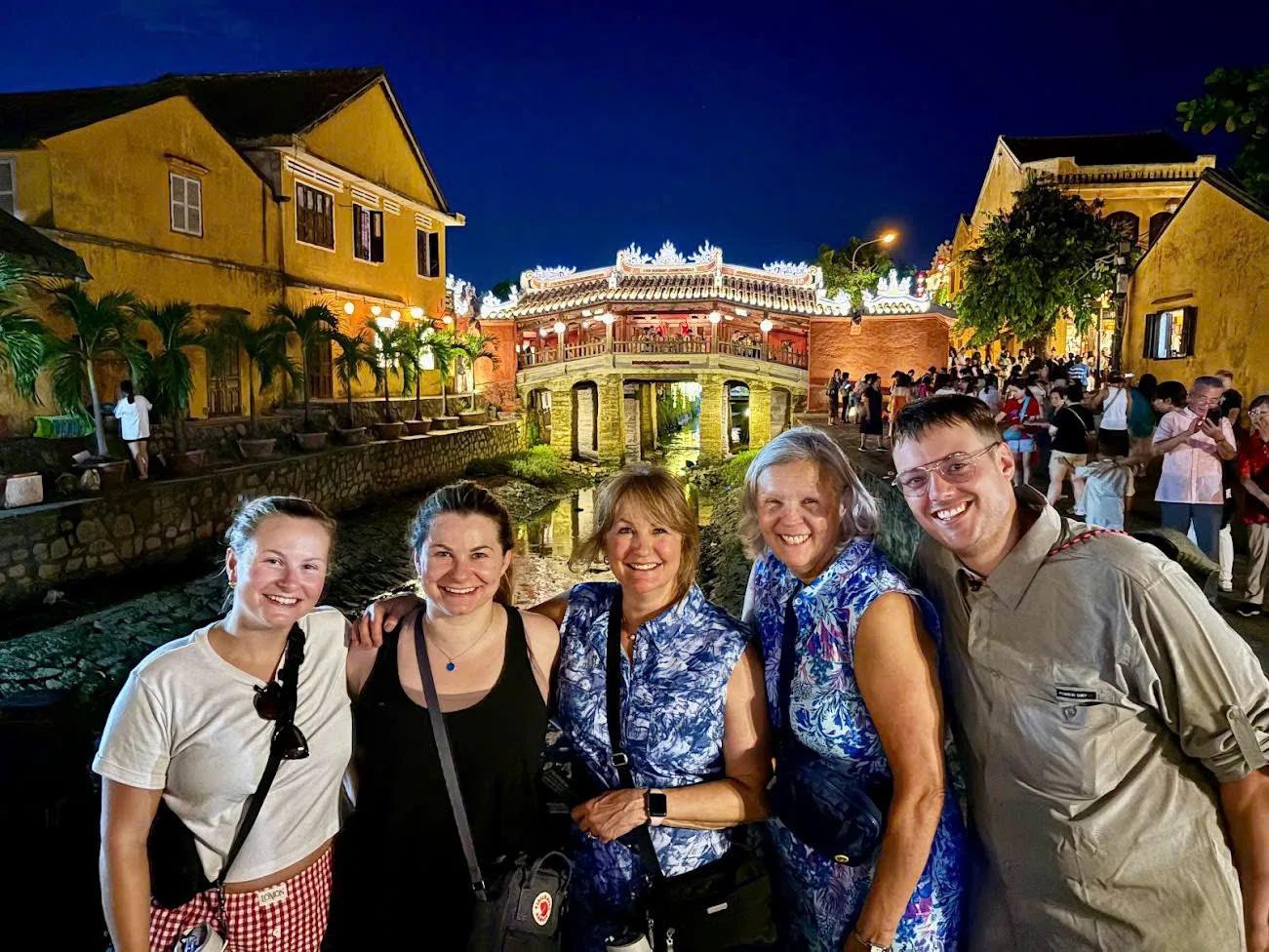
Walking & Street Food Tour
Hoi An Ancient Town Walking & Street Food Tour
Join our half-day tour to explore the best of Hội An. Walk through lantern-lit streets, visit iconic landmarks, and enjoy delicious local food.
3 to 4 hours
Explore the Hoi An Ancient Town Walking & Street Food Tour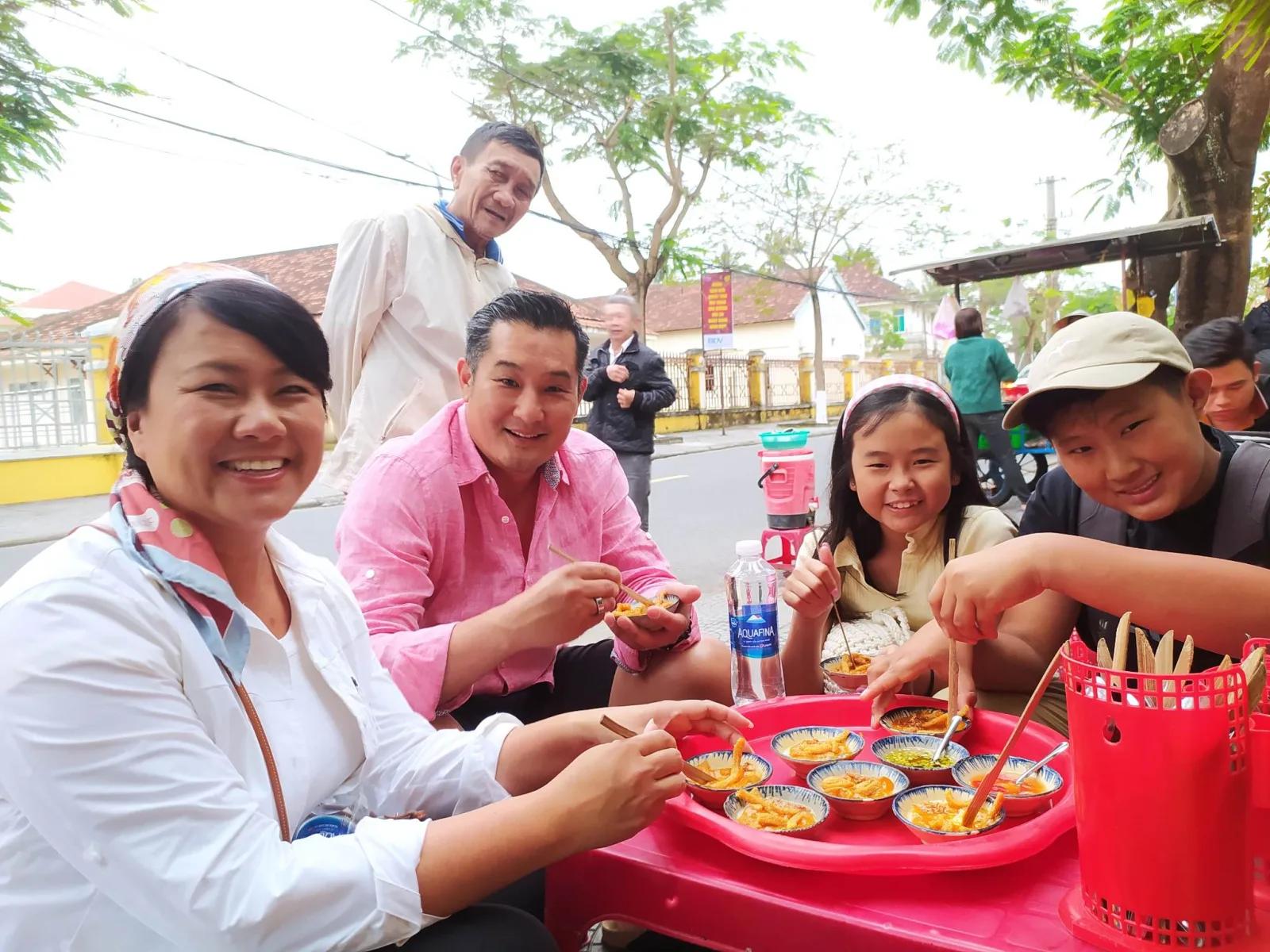
Food Tour
Hoi An Street Food Tour with Local Expert
A private evening route for flavour, conversation, and a softer look at Hoi An after dark.
3 hours
Explore the Hoi An Street Food Tour with Local ExpertHelpful next step
Use the article for context, then move into the part that fits your trip best
Some travellers want to compare tours next, while others just want to send a quick message with dates and questions. Both paths stay open here.